English
 Español
 Français
 Deutsch
 Italiano
 Português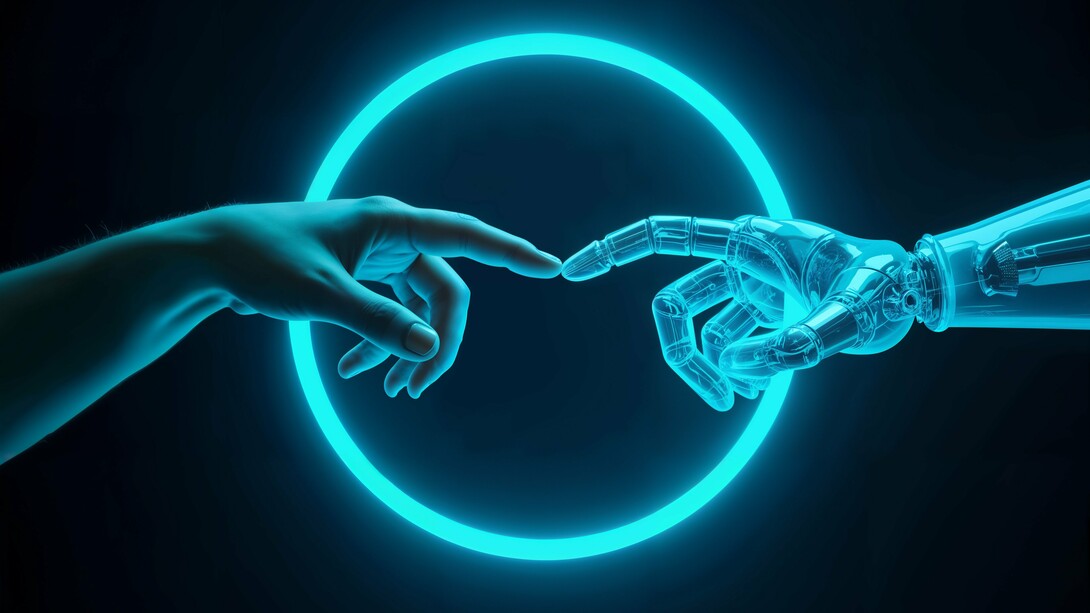
In love, nothing exists between heart and heart.
Speech is born out of longing,
True description from the real taste.
The one who tastes, knows;
the one who explains, lies.
How can you describe the true form of Something
In whose presence you are blotted out?
And in whose being you still exist?
And who lives as a sign for your journey?(Rabia Al Basri)
Consciousness of being alive happens to all of us, without knowing why. It is called birth. It is a feeling of being, where one witnesses the apparition of an individuality and a surrounding universe, and develops a personality with mind, body, and circumstance.
During the early time after birth, there are no thoughts, just a faint, subtle sense of being. A feeling of having suddenly landed somewhere, like when you wake up from deep sleep in a foreign land, after a long journey, and you do not know who you are, or where you are, you are just aware of being.
The evolution of consciousness seems to be the direction of the evolution of the universe; From nebulae, to stars, atoms, molecules, unicellular and multicellular organisms, the awareness and capacity to manage the surroundings evolve. The apparition of self-awareness in humans elevates this capacity to astounding levels, and the evolution of human civilization, from paleolithic to present, has expanded it to unimaginable levels. And it seems that more is yet to come.
Rationality is a component of self-awareness, a tool for the understanding and manipulation of the physical environment, but the evolution of consciousness also includes a sense of feeling, an emotional capacity operating at another level, other than the manipulation of the environment, and which is the source of empathy, altruism, and love. Beyond rationality lies a sense that generates compassion, love, self-sacrifice, and deepening dimensions of consciousness, which reveals our inherent continuum of being.
Maybe the whole purpose of the universe is to evolve self-consciousness, allowing consciousness to perceive the unified field, rather than the fragmented ego perception that we are subject to. What is evolving is not just matter, not just life, but awareness itself — towards universal self-knowing.
Technological revolutions have always changed human civilization. The agricultural and industrial revolutions are examples of this. Changes happen gradually, although it would seem that the impact of the industrial revolution was manifested faster than the agricultural one. Humanity moved from tribal to urban settlements, nation-states, empires, and geopolitical blocks. The informatics revolution is leading to a new civilizational change, like Teilhard de Chardin said, “The age of nations is past. The task before us now, if we would not perish, is to build the Earth.” In all civilizational changes, there is a resistance of people to adapt to the social changes generated by new technologies.
The informatics or digital revolution is another civilizational shift, on par with the agricultural and industrial revolutions, but unfolding on a much shorter timescale. We are entering a planetary-scale interconnected civilization, where human consciousness, information flows, and technological capacity are becoming deeply intertwined.
If the evolution of consciousness is the purpose of the universe, for Existence to become conscious of itself, all evolving particles, from the primeval units to star formations, forms of life, and human and civilizational evolution, do not arrive at full consciousness at the same time. Like not all plants bloom at the same time in a garden, but still the garden as a whole evolves. A mythical gardener once said:
“... you have to see the process in its totality, like a seed and a blooming tree, it is all one self-contained cycle. Why do you insist on looking at it like a still photo when it is a motion picture? You are looking statically at a frame of the film and reacting to it as if it were the whole. But there is nothing in the universe that is not in constant motion and change; all is in a cycle, all. That is the design of all things”.
The universe is not just a physical system, but a field of consciousness in evolution. Matter, life, mind, and society are successive expressions — like waves cresting from a deeper ocean of Existence. Technological revolutions involve not only material transformations, but milestones in consciousness expressing itself through matter. But not all seeds germinate at the same moment. Not all buds open at the same time. Some flowers mature earlier, others later – likewise, human individuals, cultures, and civilizations come into fuller awareness at different paces.
This explains why some parts of humanity embrace and integrate new insights quickly (both scientifically and spiritually), while others remain in earlier stages, not because they are “lesser,” but because their timing in the evolutionary unfolding is different.
The agricultural revolution led consciousness to learning stability, permanence, and coordinated collective effort. The industrial revolution: to the exploration and mastery of material processes, specialization, and mechanistic thinking. The informatics revolution is leading to consciousness turning toward integration and interconnection — to networks and an emergent global awareness. In each case, the outer technology results in an expression of an inner shift in human consciousness’ perception and potential.
The internet and mobile technology can usher, a more distributed, empathetic, networked civilization, just as earlier regimes laid the foundation for a centralized industrial society.
But like every manifestation in life’s duality, technology brings both light and shadow. The hammer can be used for construction or for breaking someone’s head, for nuclear fission to generate electricity, or to destroy life in wars. Modern internet technology and social networking can link people, accelerate collective collaboration, or create a state of "absent presence", and highlight appearance online, over lived experience, eroding civility, solitude, and the depth of human experience.
Shifts in communication, mobility, and media are reshaping our cognition, social structures, and even our sense of identity. Technology isn’t just a tool—it alters how we relate to the world and to each other. Still, I believe that with all of its dangers, as with all previous technological pulses, the informatic age is heralding a new civilization. The civilizational change approaching humanity will facilitate it to become global, instead of nationalistic and tribal, and to consciously become aware of the continuity of the life system, not just in facts but in consciousness. Most of the rational intellectual processing will be done by instruments like ChatGPT, as when muscular effort was released by machinery. And we will evolve from: “My people, my religion, my nation to “My species, my Earth, my future…”
The resistance to this by the present power structure is visible in many aspects:
Western science has been built on reductionism — the assumption that all phenomena can be explained by breaking them down into measurable, physical parts. This has yielded incredible advances, but it also excludes entire dimensions of experience.
Research is funded primarily through corporate and military interests, with its focus: How can this technology be monetized? How can it be weaponized? Political power and propagandistic media are part of these interests.
The science that reveals the global impacts of present models is being silenced; efforts are being made to prevent focus on climate change, migration, and intercultural mixing.
Past models of nationalistic hegemony are being used, as calls to go back to the past, to make it great again, and to oppose globalization.
The powers that are want to keep the globalization model as a machinery to make profits, not as a new consciousness and geopolitical organizational tool.
But I believe that new information technologies not just create new tools for information research, analysis, to satisfy the corporate and military complex. They also liberate mental energy to focus on other areas of consciousness: intuition, premonition, empathy, altered states, and spiritual insight. The subtler layers of consciousness that make us human. And that globalization, in terms of us consciously realizing that we are all on the same planet, will prevail. Just like when through agriculture, the instinctual hunting-gathering energies were refocused on the development of language, thought process, and the development of intellectual skills.
The use of the term artificial intelligence by the corporate-political complex is misleading. It implies a likeness to intelligence in the human sense, when in fact what they call AI is primarily pattern recognition, prediction, and recombination of data in forms that can be useful or expressive.
But natural intelligence is not confined to logic, language, or calculable processes. It includes experiential depth: the immediacy of being present, tasting, feeling, sensing things that words can never fully capture, embodied knowing: the tacit knowledge of the body, intuition, instinct, resonance with others, and transformative insight. Those sudden flashes of understanding or vision that aren’t just the result of linear reasoning. Presence and being, that whole dimension of consciousness—silence, longing, awe, and love that makes human life so much more than data processing. I think that the forces inherent in that mystery, which has taken us from nebulae to ourselves, will continue advancing our awareness in that direction.
Just yesterday, I found the following message on Facebook. It might be a hoax or not. It said it was a beta test of a social network called Timepost, which was sending text messages across time. I feel what it says can be true.
“It is now the year 2075. The world survived the major crises of the beginning of the third millennium. Consciousness of the inseparability of all life became the organizing principle for the new world. True, there are still pockets of resistance, since the old paradigm had created enormous differences and polarities, and healing these would take a longer time.
Nevertheless, the major drivers for social agreements are now based on cooperation rather than competitiveness, on intuition, on distributed global governance, on the empowerment of women, and on educational systems that recognize the importance of art and music as tools for sound human development. It is a new world, where hunger for material acquisition, beyond the satisfaction of basic needs, has been replaced in large measure by assigning value to cultural assets, spiritual wisdom, and inner well-being. These are the highly valued pursuits of these times.
Technology is understood as an instrument to serve happiness, but not as the means to acquire it. Every child born is recognized to have the right to education, health, and the pursuit of happiness, as established by the Welcome to Earth Declaration signed in the year 2057 by the Planetary Council (the body that replaced the United Nations). Each birth is now widely celebrated by communities and headlined in the day-to-day newscasts.
The recovery of the Earth's environment is now a major policy principle at local, regional, and global levels. Recycling and the use of noninvasive material technologies have been instituted through a change in consciousness, social incentives, and strict enforcement. Since 2068, newsprint has been replaced by e-books, and newspapers are electronic circulars that people can read in their solar-operated handheld computers, or in public solar-operated plasma screens.”