Virág Dvorácskó is best known for her stories, not defined by sharp labels or professions. She has dabbled in many areas of life and embarked on projects that were completely new and challenging for her.
She was born in a small town in Hungary, in the Southern Great Plain region. Here she began dancing with a teacher of Ukrainian origin, on whose advice she continued her studies at the dance art high school and completed her graduation studies in contemporary dance at the age of 18. Without turning away from art but putting professional dance on hold, she continued her studies at the Sociology Department of Eötvös Loránd University of Budapest. Here, her main project was the narrative of the relationship between the Catholic Church and homosexuality, after which she moved on to cultural anthropology. She graduated in 2022 with a degree in cultural anthropology in English. Here, she examined the connections between contemporary spiritual practices and capitalism.
Religions, humans's turn to the supernatural, capitalism, and the exercise of political power in everyday life all occupied her. After her master's studies, she traveled to the Netherlands on a gap year, where she was organized by the European Corps. She worked on the theme of homelessness in dance form with the help of local and international choreographers and dancers. This experience later served as a margin and embodied the root of the current project: the examination of the everyday presence of social themes and the representation of problems on stage.
Communication and critical thinking are the main values and motivations in her work. She had the opportunity to live with Berber communities in the village of Tagounite in the middle of the desert, to live with spiritual path-seeking communities in the remote villages of Portugal in the Vila Longa region, to live in small villages in Romania and talk about the image of God and the evolution of the everyday image of the enemy, and to learn about the path-seeking of people wandering in the mountains of Galicia.
All these experiences have confirmed that communication and an open, cultural relativist approach should not only be given an important and prominent role in understanding coexistence, but also that getting to know each other's thinking and life is an experience that simultaneously gives us strength, understanding, or a counterexample. All of these are important for developing and maintaining our own moral and ethical values.
The beauty of the simplicity of human functioning is embodied in phenomena that can easily be overcomplicated. This is why thoughts and science must go hand in hand, since emotions can sweep away rationality if they are not rooted in observations that strive for objectivity.
In addition to all these observations, the opposite pole is equally important: the natural narration of art and small life is a spiritual refreshment that is both earthly and otherworldly. The world of music, dance, nature, literature, and photography provides insight into the functioning of the mind. And this brings us back to where we started: to the wonderful world of getting to know each other.
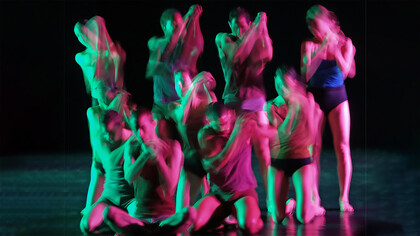
The return to the beginnings in Virág's life can now be demonstrated through dance, as she continues her fieldwork at the Jerusalem Dance Academy after her studies. Here, the main themes are physical and spiritual suffering, rootlessness, religion and origin presented by bodies, and the social consequences caused by them, which she explores through the methods of dance and anthropology.
As I mentioned, Virág is best known for her stories. Her philosophy of life is to pursue what interests her, even if it may seem scary or meaningless from the outside. At the end of the day, there will be a story from which you can learn, reflect, and understand.
Tight boxes and terms narrow the individual. The fluid quality of boundaries also gives life its constantly changing quality: everything is in motion. Every movement is a perfectly created choreography, whether it is breathing, a sunset, or a ride on a crowded subway. The world can be observed, and if we concentrate enough, we can notice much more than we thought we could see.
Virág tries to collect and publish these observations on the Meer website and invites you to spend a bit more time to search for a meaning and look a little closer.



 English
 Español
 Français
 Deutsch
 Italiano
 Português