English
 Español
 Français
 Deutsch
 Italiano
 Português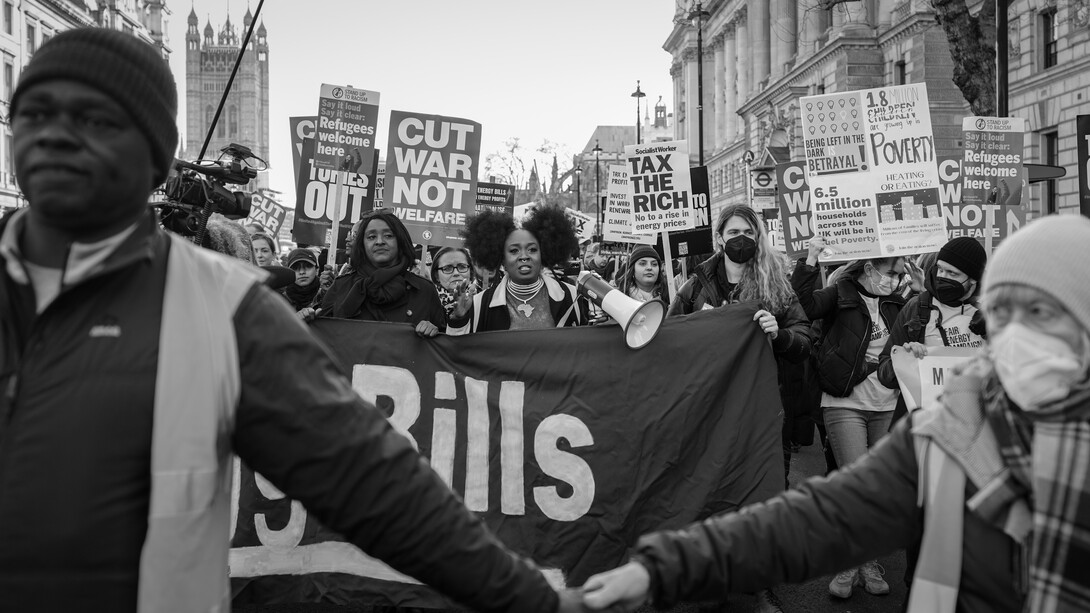
Both politically and linguistically, ‘affordability’ as a ‘big idea’ is having something of a moment. Until the middle of last year, it was always somewhere in the background, a bit-part singer in the political chorus. Then it started to move center stage—and is now right up there, an ever-present lead in the cacophony of political noises off. There's not a politician who hasn't got her/his own affordability riff—and it's all getting rather heated.
With inflation in the US staying stubbornly high, and the Donald getting more aggressive in rubbing salt into that suppurating sore, he decided to go on the attack back in December: ”Affordability is a Democratic con job.” In other words, nothing to see here, so let's be done with all this nonsense about affordability.
But it's clearly still weighing on his mind. And it may well explain one of the more surreal helpings of Trumpian word salad back in December. After he visited Japan, he became briefly obsessed with their ‘kei cars’—the micro-cars that are so popular in Japan’s intractably congested city centers: ‘I have just approved tiny cars to be built here in America. Start building them now!”
Kei cars really do rock from an affordability point of view. There are mighty few cars in the USA that can be bought (or acquired on loan) for less than $25,000, and kei cars could fit right in there for budget-conscious city-dwellers. That said, despite this brief stab at ‘making motoring for the masses’ cheap again, we can assume that size-obsessed Americans are going to stick with their preference for SUVs and urban tanks. And when the President remembers just how much more gas such vehicles consume, I imagine we'll hear no more about super-affordable kei cars.
Here in the UK we have our own affordability wars. Nigel Farage, leader of the Reform Party, continues to ride so high in the polls partly because he's always banging on about the UK’s cost-of-living crisis, a massive priority for the vast majority of voters. Farage would have us believe that the crisis is caused by an uncontrolled numbers of immigrants invading our country, though it has to be said that there is zero evidence for such an assertion.
Moreover, he’s no longer getting away with such arrant affordability nonsense as he once did. The new leader of the Green Party, Zack Polanski, is regularly calling him out on this whilst offering up his own little affordability trope: ‘Cut Bills. Tax Billionaires.’
If only it were that easy! In reality, affordability is a difficult, slippery notion, posing all sorts of dilemmas when you dig down into it. In an earlier piece for this platform1, I touched on the phenomenon of ‘climateflation’—the contribution to obstinately rising food prices that climate-related factors are already making. Delve a little deeper into the whole food production system, from an affordability point of view, and it gets even more problematic.
Can you imagine any politician out on the stump calling for an end to that universally supported idea of ‘cheap food’?
It’s just taken for granted that food prices should be kept as low as possible, specifically to ease the burden on less well-off families and citizens. Farmers and food manufacturers are therefore encouraged to use whatever means they need to help achieve that goal—including vast quantities of chemicals. Herbicides, pesticides, fungicides—bring it on! And when it comes to processing and packaging, with all those phthalates, bisphenols, and increasingly ubiquitous ‘forever chemicals,’ or PFAs—knock yourself out!
It's incontestable that this increasingly sophisticated chemicalization of the entire food system does help keep food prices down. But at what cost? In a new mega-study published just before Xmas last year, dozens of scientists from various universities (including Duke University and the University of Sussex), as well as prestigious bodies like the Institute of Preventive Health, calculated the total ‘health burden’ of this chemicalization at $2.2 trillion a year.
One of the lead authors, Philip Landrigan, Professor of Public Health at Boston University, singled out both the most commonly used chemicals in agriculture (‘the evidence is very clear that increasing exposure to hundreds of manufactured chemicals is a very important cause of disease, especially in children’) and all the endocrine disruptors like bisphenols (‘that get into people's bodies at every age, damage the liver, change cholesterol metabolism, and result in increased obesity and diabetes’). The whole purpose of the report was to stress just how big a deal this is: ‘I would argue that chemical pollution is every bit as serious as the problem with climate change.’
That $2.2 trillion bill is not paid for directly by us as food consumers, but it is paid for by us as taxpayers and citizens facing ever-mounting health costs in society as a whole. How do we address that little affordability dilemma? Cheap food: good. Rising health costs as a direct consequence of keeping food cheap: bad. And according to Professor Landrigan and all his colleagues, getting worse by the day.
The problem is that our entire way of life is built on these trade-offs—and that's where the deception comes into it. Politicians have no interest in opening up such bisphenol-ridden cans of worms. Better by far to stay shtum, to keep people marinated in such convenient ignorance.
Which is exactly what’s happening with another whole suite of affordability dilemmas in the world of energy. At the heart of today's continuing political support for the use of fossil fuels is the desire to keep energy bills down. The fact that this doesn't actually stack up in reality (given that renewables, storage, and efficiency—as a package—are outcompeting fossil fuels in almost every country) seems irrelevant. “Keep bills down; burn more coal and gas” remains an ever-popular affordability imperative.
And that means more greenhouse gas emissions. Which means more warming in the atmosphere. Which means more climate-induced disasters here on Earth. Which means—and you know what's coming next!—more costs to be paid by homeowners and by all of us as taxpayers.
A fascinating little paper published by Heatmap Daily in December last year (based on work by economists at UCLA and MIT) had a stab at calculating the existing financial burden on all US households (not just those directly affected) from recent climate-induced disasters—extreme weather events, storms, floods, and especially wildfires. “Those started at $400 per household per annum and went as high as $900, adding up to an aggregate cost for the nation of about $50 billion to $110 billion every year.”
Let’s not sweat the methodology. The point is the same whether we're talking about cheap food or cheap energy: efforts to keep the cost of living as low as possible may already be making our lives much more expensive.
There are no easy answers here: just good old-fashioned trade-offs and dilemmas. So let's all keep that in mind when listening to politicians going to ever greater lengths to prove their somewhat questionable affordability credentials.