English
 Español
 Français
 Deutsch
 Italiano
 Português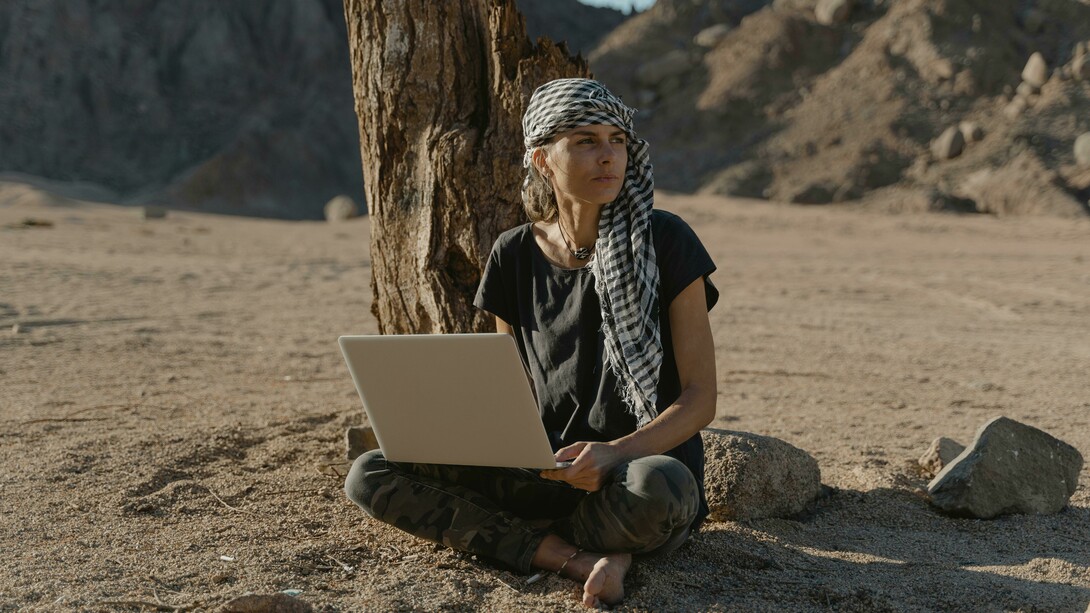
Once, travel was an interlude, a break from work, a temporary escape from routine. But in the wake of global digitalization and the remote work revolution, travel has evolved from a leisure pursuit into a lifestyle. A growing class of “new nomads” now blends work and wanderlust seamlessly, swapping office cubicles for coworking spaces in Bali, Lisbon cafés, or cabins in the Alps. This shift isn’t just a product of technological convenience; it’s a cultural and economic transformation. The traditional markers of work—the office, the commute, the timecard—are dissolving, giving rise to an era where productivity is untethered from geography. The implications for how we live, travel, and perceive “home” are profound.
The pandemic as a catalyst, not a cause
Although the seeds of digital nomadism were sown long before COVID-19, the pandemic accelerated their germination. Millions of professionals, forced into home offices, discovered that their work could be done from virtually anywhere with Wi-Fi. This realization dismantled decades of corporate orthodoxy about physical presence equating to productivity. Companies that once resisted remote arrangements began embracing flexible work models to attract and retain talent. Platforms like Zoom, Slack, and Notion became the new offices, while Google Docs replaced boardrooms. For many, the idea of returning to the rigidity of the nine-to-five grind felt antiquated. As travel restrictions lifted, a wave of workers took their laptops on the road. They weren’t tourists, at least not in the traditional sense. They were digital nomads, or, as we can say, professionals building careers while exploring the world.
Remote work has decoupled labor from location. But this freedom has also transformed our understanding of place. For the new nomad, place is no longer defined by permanence but by possibility. Cities are chosen for their quality of life, time zones, cultural energy, or natural beauty. A month in Mexico City for the food and culture might be followed by three in Chiang Mai for affordability and community, then a stint in Berlin for networking. This transience has birthed a new geography of work, one not drawn by borders but by bandwidth.
Fast internet, reliable infrastructure, and vibrant communities are now as essential as beaches and good coffee. Governments have noticed, too. From Estonia to Costa Rica, a growing number of nations have introduced digital nomad visas, inviting professionals to live and work legally while contributing to local economies. In this context, the idea of “home” becomes fluid. It’s not a fixed address but a feeling of belonging, one that can be reassembled anywhere a person opens their laptop.
Behind this lifestyle shift lies an ecosystem that has rapidly evolved to support it. Coworking spaces have become the new cultural centers of the digital age. Once dominated by startups, these spaces now host designers, writers, engineers, consultants, and entrepreneurs from around the globe. They provide not just a desk and Wi-Fi, but also community, a place to meet collaborators, share ideas, and combat the solitude that can accompany mobility. What we’re witnessing is the creation of a parallel infrastructure, a network of spaces, services, and tools designed to make mobility sustainable. It’s the scaffolding of a new social order built around flexibility, independence, and digital connection.
Economies on the move
The rise of remote work is reshaping not just individual lifestyles but also local economies and global mobility patterns. Traditionally, tourism economies relied on short-term visitors, travelers who came, spent, and left. The new nomads disrupt this cycle. They stay longer, often for months, and integrate more deeply into the fabric of local life. They rent apartments, frequent neighborhood cafés, join gyms, and shop at local markets. Their spending patterns blend the consistency of residents with the curiosity of travelers. This hybrid consumer behavior has significant economic implications.
Destinations once dependent on seasonal tourism are now cultivating year-round digital nomad communities. However, this transformation also raises questions about sustainability and equity. As wealthier nomads move into developing cities, the influx of foreign income can drive up housing costs and strain local infrastructure. The challenge lies in balancing opportunity with responsibility, ensuring that digital nomadism enriches communities rather than displacing them.
Culture in motion
The life of a digital nomad is an experiment in cultural exchange. Moving across borders exposes individuals to diverse worldviews, design sensibilities, and social systems. In turn, they carry these influences into their work, fostering cross-cultural creativity and innovation. Yet this mobility can also breed detachment. When one’s life is lived in transit, the depth of engagement with any given place may suffer. Friendships can be transient, routines perpetually in flux. The very freedom that empowers can also isolate. To counteract this, many nomads are seeking hybrid rhythms, traveling more slowly, staying longer, and investing emotionally in local communities. Terms like “slowmad” or “conscious traveler” are emerging to describe this more sustainable approach to mobility. It’s a recalibration, a way to blend freedom with belonging.
Designing for the nomadic life
As this new culture of work and movement takes hold, designers and architects are reimagining how spaces can accommodate fluid lifestyles. The architecture of workspaces is evolving. Remote workers need environments that balance focus with flexibility and spaces that foster creativity, connection, and rest. Co-living and coworking developments are blending hospitality with productivity, offering modular layouts, shared amenities, and adaptable zones. Interior design, too, reflects the ethos of mobility. Lightweight, multifunctional furniture, integrated tech hubs, and biophilic design elements cater to a generation that values balance and flexibility. Even digital products, from task management apps to virtual collaboration platforms, are being designed with the needs of global workers in mind. In essence, we are witnessing the emergence of a “nomadic design philosophy”—one that emphasizes adaptability, simplicity, and human connection. It’s not just about creating spaces to work in, but ecosystems to live fully from anywhere.
For many, becoming a digital nomad begins as an act of liberation, an escape from monotony, hierarchy, or burnout. The fantasy is seductive: work on the beach, sip coconuts, chase sunsets. But as countless travelers have discovered, mobility alone doesn’t guarantee meaning. The constant flux can blur purpose. When every place becomes temporary, identity can feel unanchored. What anchors the new nomad, then, isn’t geography but intentionality, the conscious design of a life that balances freedom with purpose. In this way, remote work is not just a logistical shift but a philosophical one. It forces a reckoning with questions that traditional work structures once obscured: What do I value? What kind of community do I want to build? How do I define success when location and status no longer dictate it?
The environmental dilemma
The freedom to roam comes at an ecological cost. Frequent flights, transient housing, and resource consumption contribute to carbon emissions and local strain. For a generation that often champions sustainability, this presents a moral paradox. Some digital nomads are responding by adopting slow travel, prioritizing overland routes and longer stays. Others are offsetting carbon footprints or choosing destinations with strong sustainability practices. A growing awareness is pushing the movement toward more responsible forms of mobility, ones that respect the environments and communities they inhabit. Ultimately, the challenge is to align the values of flexibility and sustainability, to prove that global freedom need not come at planetary expense.
The psychological landscape of mobility
Working remotely across time zones and cultures can be exhilarating—but it’s also mentally demanding. Constant adaptation, irregular schedules, and social displacement can lead to burnout and loneliness. To thrive, digital nomads must develop emotional resilience and structure. Communities, both online and offline, play a crucial role here. Nomad hubs often become sanctuaries, spaces where shared experience breeds belonging. Rituals, even the small ones such as the morning coffee spot, the weekly video call with family, and the familiar rhythm of unpacking a bag, all become anchors in a drifting life.
Conclusion
Work, home, and travel are no longer distinct categories but interwoven dimensions of a mobile existence. In the coming years, maybe we can expect to see a global reorganization of space, cities designed for flexibility, homes optimized for remote productivity, and infrastructure built to support the perpetual traveler. The future workplace may not be a place at all but a network, a constellation of connected environments stretching across continents. This shift also redefines success. Instead of stability, many will seek adaptability. Instead of ownership, experience. Instead of career ladders, journeys.
The new nomads are not merely workers on the move; they are the architects of a new way of living. They embody the convergence of technology, freedom, and global curiosity. Their lives blur the boundaries between work and play, between travel and home, and between being local and global. Yet their greatest innovation may not be mobility itself, but the mindset that underpins it, one that values connection over possession, flexibility over rigidity, and meaning over routine. In redefining how we work, they are also redefining how we live. The world, once divided by distance, is now woven together by Wi-Fi, wanderlust, and work. The office has no walls. The map has no edges. And for the new nomads, the journey, quite literally, is the destination.