English
 Español
 Français
 Deutsch
 Italiano
 Português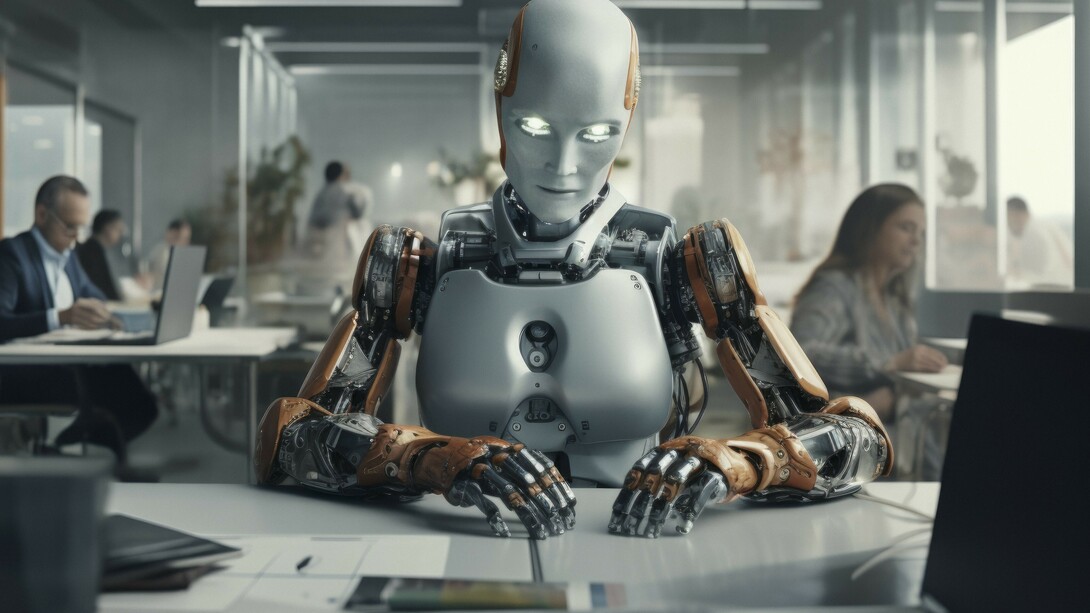
Artificial intelligence (AI) refers to machines that are designed to act like humans. These technologies can perform tasks that people typically do, such as thinking, learning, and making decisions. By taking on responsibilities once handled by humans, AI is changing the way jobs are performed in various industries.
Like any major topic that people disagree on, there are always people who support AI and those who do not. Artificial intelligence is no exception. As new AI tools continue to emerge and more news about them appears, the divide between supporters and critics is likely to grow.
Many market research experts believe AI could bring positive changes, such as making work more efficient, improving healthcare, and making education more accessible. However, it is important to prepare for these changes now.
On the other hand, some people—especially those in repetitive or manual jobs—worry that AI and robots will negatively affect the job market. They fear that AI may replace jobs in the future.
However, AI and robotics can also create new types of jobs and help solve complex problems, making everyday life easier and more convenient.
Some facts and statistics
According to a report from Goldman Sachs, artificial intelligence could replace the work of about 300 million full-time workers worldwide. This suggests that a quarter of work tasks in the United States and Europe could be taken over by AI. At the same time, the report notes that AI may create new job opportunities and lead to significant increases in productivity.
The report also states that AI could raise the global value of goods and services by around 7% each year. It adds that two-thirds of jobs in the U.S. and Europe are likely to be affected by AI automation in some way, while about a quarter of all jobs could be performed entirely by AI.
A study by researchers from the University of Pennsylvania and OpenAI found that educated white-collar workers earning up to $80,000 per year may be among those most at risk of being replaced by AI. Forbes also reports that, according to a study from MIT and Boston University, up to two million manufacturing workers could be replaced by AI by 2026.
Another study from the McKinsey Global Institute suggests that by 2030, at least 14% of workers worldwide may need to switch careers due to changes brought about by digitisation, robotics, and AI.
The impact of AI on jobs
AI brings both challenges and opportunities to the workforce. While some jobs may be replaced by AI systems, new roles are also emerging, and overall workplace efficiency is improving. This section explores how AI affects different professions and what these changes mean for workers.
Positive changes from AI
Faster and better work: companies use AI to process large amounts of customer and market data. This can significantly speed up data analysis, sometimes reducing the time required by up to 80%. As a result, businesses can introduce new products and services more quickly and gain a competitive edge.
Smarter decision-making: AI can analyse vast amounts of data to identify patterns and trends more efficiently and accurately than humans. This helps companies predict customer behaviour, allocate advertising budgets, and estimate product demand.
Better customer experience: AI streamlines customer support by offering assistance around the clock and providing personalised recommendations. This improves customer satisfaction and reduces the workload for customer service teams.
Jobs at risk of being replaced by AI
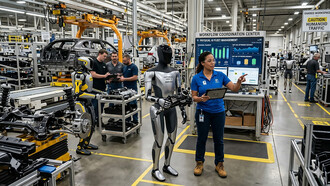
Assembly and factory workers: in many regions, manufacturing and assembly roles have already been automated. AI is making these processes even more efficient, which means fewer workers are needed.
Drivers: as self-driving and electric vehicles become more common, jobs such as taxi, bus, and truck driving may decline. Autonomous vehicles can operate for long periods without fatigue and reduce human error, improving safety and efficiency.
Receptionists: automated systems can handle tasks such as answering calls and scheduling appointments, making these roles less essential in some workplaces.
Computer support specialists: many technical issues can now be solved using online guides and AI-powered support tools, which may reduce demand for these positions.
Jobs that are safe or growing with AI
Roles that require human judgment, creativity, and empathy are difficult for AI to replace. These include careers in healthcare, education, skilled trades, and creative fields. For example, while AI can assist doctors by analysing patient data, personal care and critical decision-making still depend on human expertise.
Skilled trades such as electricians and plumbers require hands-on experience and complex problem-solving skills that AI cannot easily replicate. Similarly, creative professions like art and writing continue to rely on human imagination and originality.
New opportunities created by AI
As AI transforms the employment landscape, it also opens new career paths. Understanding these changes allows individuals to adapt by learning new skills and exploring emerging opportunities.
Steps to stay competitive in the AI era
Having a growth mindset: embracing learning and personal development is essential in a rapidly changing world. A growth mindset helps individuals adapt to new technologies and continuously build new skills.
Using AI for job searches: AI can help identify job opportunities, prepare applications, and improve visibility to employers.
Investing in continuous learning: as workplace skills evolve alongside AI, ongoing learning is necessary to remain competitive.
Developing digital literacy: understanding how to use digital tools and AI platforms is increasingly important, even in non-technical roles.
Final thoughts on AI and the job market
AI is reshaping the job market in many ways. While it may replace certain roles, it also creates new opportunities and changes how companies operate and hire. By recognising these changes and investing in training and skills development, businesses and workers can adapt more effectively to the future of work.