English
 Español
 Français
 Deutsch
 Italiano
 Português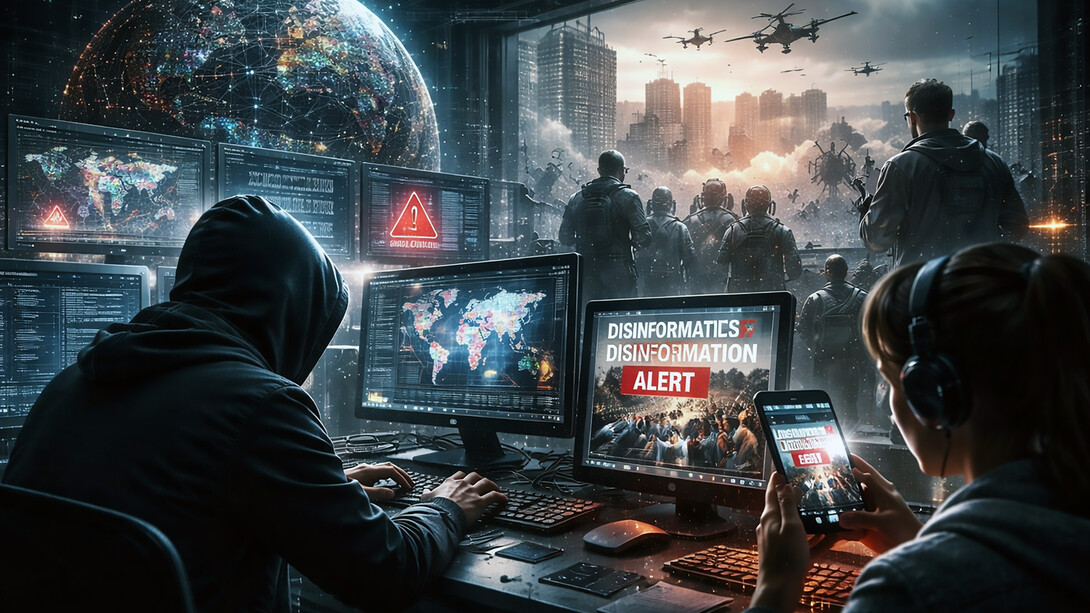
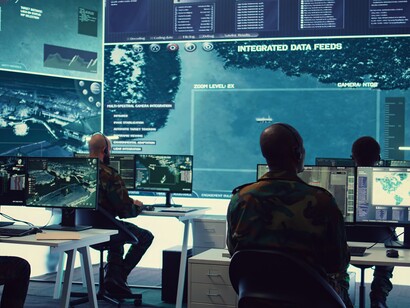
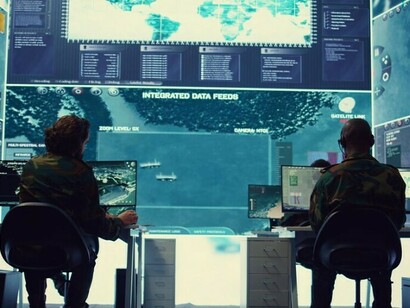
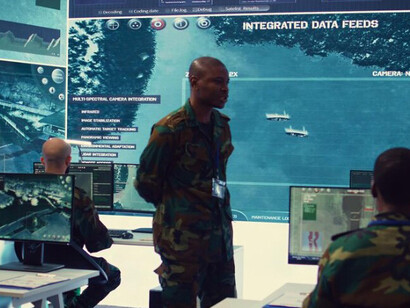
This article will be explaining why the classic images that come to mind when we hear the word “war”—trenches, tanks, missiles, and front lines—are no longer enough on their own. Security is increasingly being tested in an “invisible” space, a battlefield shaped by flows of information, networks, and digital behavior. NATO’s official documents in recent years clearly acknowledge that strategic competition is no longer measured only by military power. Hybrid methods such as cyber activities, disinformation campaigns, and interference in democratic processes directly target the resilience of the Alliance.
On this invisible battlefield, Russia stands out as the “main antagonist.” The information operations carried out during the annexation of Crimea in 2014, the later systematic activities of troll factories (especially the Internet Research Agency), and attempts to interfere in election processes provide short but instructive examples of how the digital space can be used as a tool of “strategic influence.”
NATO’s response cannot be reduced to a simple list of institutions. The approach that considers cyber defense as part of collective defense, the growing role of the “hybrid threats” framework, the doctrinal development of strategic communication (StratCom), and the inclusion of both technical and communication/perception dimensions in large-scale exercises all show that the institutional reflexes of the Alliance are evolving. The step taken at the Washington Summit to establish the “Integrated Cyber Defence Centre” is a recent example of this transformation.
The final reminder of this article is the following: on the invisible battlefield, democratic societies are both strong and vulnerable. Openness, pluralism, and freedom of expression are not only sources of NATO’s legitimacy, but they also create a surface that can be exploited for manipulation. For this reason, NATO’s official approach cannot rely on “forbidding what can be said" but must instead focus on building resilience and promoting communication based on facts. This is the fundamental tension between authoritarian regimes being able to act more aggressively and NATO operating under democratic constraints.
The invisible digital front
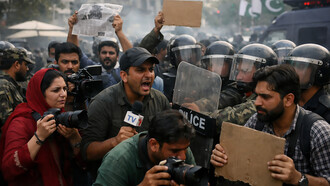
You reach for your phone in the morning. Weather, traffic, a few messages; then a video, followed by a “breaking news” notification. Within a few minutes, the same headline appears on different channels: a major data leak in one country, a claim of an attack on critical infrastructure somewhere else, and in another place a debate about “foreign interference in elections.” By the end of the day, two separate communities appear, arguing about whether something actually “happened” or not: people looking at the same screens but living in two different realities.
At first glance, connecting this situation with war may seem like an exaggeration. However, NATO’s official documents increasingly state clearly that “strategic competitors” target democratic processes, conduct malicious activities in cyberspace, and try to influence the decision-making processes of societies through disinformation campaigns.
The main feature of this invisible war is the change of the “line of fire.” A traditional front line can be drawn on a map, but the digital front is built both in network topologies and in people’s minds. The goal of hybrid methods is already to blur the line between war and peace, to create doubt among target audiences, weaken social trust, and keep decision-makers under constant pressure in a gray zone. When NATO defines hybrid threats, it directly lists disinformation and cyber attacks as components of the same framework. The issue here is not only individual incidents but also the creation of a continuous strategic effect.
For this reason, NATO’s cyber defense approach is not simply a reaction that begins when war starts. In NATO’s own words, cyberspace is “contested at all times.” Actions aimed at weakening critical infrastructure, disrupting state services, collecting intelligence, or interfering with military activities can create a conflict dynamic even during peacetime.
Russia’s digital game plan
What makes Russia the “main antagonist” in this article is not only its capacity but also the way its methods are connected to a consistent strategic purpose. The example of Crimea in 2014 is a turning point in this sense. Analyses produced within NATO’s strategic communication ecosystem describe Crimea not only as a military operation but also as a “hybrid testing ground” where an intensive information campaign, psychological influence, cyber elements, and special forces worked together. In particular, the emphasis that the “main battlefield shifted from the physical ground to hearts and minds” summarizes the logic of that period.
The key to such campaigns is speed and uncertainty. Several narratives about the same event are released at the same time; while one narrative is disproved, another one survives. In strategic communication literature, the tactics of “deception” and “distraction/diversion” are often discussed. The goal is not only to persuade the target but also to exhaust the opponent so that defending the truth becomes difficult. This is different from the classic image of propaganda. The aim is not to make people accept one big lie but to make the public sphere “unreliable” and paralyze decision-making processes.
Another aspect that makes the Crimea case important is that it made patterns of “modern information warfare” more visible. Studies such as Decoding Crimea, published within the NATO StratCom ecosystem, present Crimea as an example of modern influence operations and also draw attention to a problem of common language and classification in this field. Even describing influence campaigns becomes a challenge. Without clear concepts, it becomes difficult to define threats, set priorities, and coordinate responses.
The second example is the troll factories that have almost become part of popular culture: the Internet Research Agency (IRA). Behind what is sometimes described as an “interesting internet story” lies a capacity for influence operations that appears non-state but is connected to the state, documented by official investigations. The 2018 indictment by the U.S. Department of Justice clearly states that the IRA and related actors aimed to interfere in U.S. political and election processes while hiding their Russian connections, using fake identities, online organizations, and financial arrangements.
The 2019 Mueller Report (Volume I) places this official picture into a wider framework. Its assessment that Russia’s interference in the 2016 election was “sweeping and systematic” shows that this was not only a story about hacking; it also highlights the central role of influence operations carried out through social media campaigns.
Reports of the U.S. Senate Intelligence Committee focus on the scale and continuity of activities conducted through IRA social media accounts, describing a mechanism that continued to produce discord even after the election. The important point here is that the operations were not simply about making a single candidate “win.” Instead, the strategic effects included deepening social polarization, poisoning public debate, and weakening trust in the democratic process.
The third example is the broader issue of “election interference.” Policy analyses written in the European context explain that Russia can target election processes through methods such as disinformation, cyber attacks, the timed release of leaked documents, and the triggering of online echo chambers. For the transatlantic area, which forms the core of NATO, this becomes a direct security issue. Elections are not only part of domestic politics; they are decision-making mechanisms that shape the strategic direction of the Alliance.
When all these examples are considered together, Russia’s activities in the digital domain begin to look less like an “additional activity” and more like a complementary set of tools serving military and political goals. NATO’s 2022 Strategic Concept defines Russia as “the most significant and direct threat” and emphasizes that it uses “conventional, cyber, and hybrid” tools. This shows the official reflection of this interpretation within NATO.
NATO’s strategic response
Reading NATO’s response as if it “created its own propaganda machine” would be misleading because the Alliance faces two goals at the same time. On the one hand, it must strengthen the attack surface (networks, infrastructure, and the information ecosystem). On the other hand, it must do this without damaging “democratic legitimacy.” For this reason, NATO’s response often develops not as a direct “counterattack,” but as an institutional evolution aimed at building resilience and coordination. The emphasis in the documents of the 2016 Warsaw Summit that cyber defense would be integrated into operational planning, together with the “Cyber Defence Pledge” to increase the resilience of national networks and infrastructure, are early and clear signs of this evolution.
One part of this framework is the recognition of cyberspace as a component of collective defense. In its cyber defense approach, NATO has created permanent mechanisms both at the policy level (national responsibilities, cooperation, and the applicability of international law) and at the practical level (training, exercises, and technical protection). NATO’s current cyber defense page clearly notes that a comprehensive cyber defense policy was approved in 2021, that a new concept increasing the contribution of cyber defense to deterrence and defense was adopted in Vilnius in 2023, and that the “Virtual Cyber Incident Support Capability (VCISC)” was launched.
More importantly, with the Washington Summit, the institutional backbone of NATO’s cyber defense architecture was strengthened. The 2024 Washington Summit Declaration states that the “NATO Integrated Cyber Defence Centre” will be established and that it will contribute to the application of cyberspace as an operational domain during peace, crisis, and conflict. NATO’s own cyber defense page also indicates that this center will be located within SHAPE (Mons, Belgium).
Reducing these steps to simple “IT security” would miss the real transformation. For NATO, cyber defense is no longer only about protecting networks. It also includes a security layer that protects the Alliance’s command and control capacity, the functioning of critical infrastructure, and public trust during crises. NATO’s cyber defense narrative clearly lists targets such as attacks on critical infrastructure, disruption of state services, and intelligence collection, placing cyberspace as a daily element of strategic competition.
The second pillar is strategic communication and awareness of the information environment. In this area, NATO tries to place the concept of “information threats” within a more systematic framework. A NATO official text from 2024 defines information threats as intentional, harmful, manipulative, and coordinated activities; it also notes that these may include information operations, “information manipulation and interference,” and disinformation. The same text emphasizes that strategic competitors exploit the openness and digitalization of societies and can interfere in democratic processes, moving the problem beyond the traditional concept of “propaganda.”
In practice, one of the key nodes of this framework is the NATO Strategic Communications Centre of Excellence. Even the center's own description states that it is not part of NATO’s command chain but a multinational center of expertise accredited by NATO. In other words, it functions like an “intellectual infrastructure” that provides knowledge and conceptual capacity to the Alliance.
Strategic communication also has a doctrinal dimension. In the NATO context, AJP-10 (Allied Joint Doctrine for Strategic Communications) outlines the main principles for integrating strategic communication into planning and execution. This shows that the field is not simply an “art of speaking well" but an operational component.
The third pillar is the “hybrid threats” framework. When NATO defines hybrid threats, it considers disinformation and cyber attacks within the same package. The goal is to prepare for attacks that are carried out not in a single domain but in different domains in a synchronized way. NATO’s hybrid threats page lists steps such as the creation of counter-hybrid support teams in 2018 and the approval of comprehensive preventive and response options in 2022. It also highlights the role of training and exercises in coordinating decision-making processes and civil-military responses.
Exercises go beyond simple “technical training.” For example, the description of the Locked Shields exercise, organized since 2010 by the NATO Cooperative Cyber Defence Centre of Excellence, states that it simulates the defense of national IT systems and critical infrastructure under real-time attack pressure. At the same time, it also includes strategic decision-making, legal issues, and communication dimensions in the scenario. This detail is important. NATO’s response on the digital front is not only about firewalls and log analysis; it also includes the question of “what you say” and “how you say it” during a crisis.
The vulnerability of democratic societies and the consequences
The most painful aspect of digital war is that the target is often not a “military unit,” but public trust. Here, democratic societies face a structural dilemma. Openness and pluralism are the oxygen of the democratic system, but they also create a wide space for manipulation. NATO’s official approach document from 2024 clearly describes this tension. Strategic competitors exploit the “openness, interconnection, and digitalization” of societies; they interfere in democratic processes and institutions, sometimes directly and sometimes through proxies.
At this point, a common mistake is to call every piece of false information “disinformation.” NATO’s more recent language prefers to use a broader term such as “information threats” for conceptual clarity. It also clearly states that the approach protects freedom of expression and does not impose what people can or cannot say. In NATO’s own words, the solution is not based on prohibitions. Instead, it focuses on understanding the information environment, preventing harmful effects, limiting damage in specific cases, and becoming more resilient through learning.
This is also where the asymmetric advantage between authoritarian regimes and democratic alliances appears. Authoritarian regimes can act more aggressively in “information warfare” because they have stronger tools to control public opinion and media. They can carry out external operations while limiting the domestic cost. NATO, however, faces serious problems when trying to use similar tools while defending open societies. Legal limits, concerns about legitimacy, expectations of transparency, and the need for coordination within the Alliance make it difficult to “play the same games.” It is not a coincidence that doctrinal work inside NATO and discussions on strategic communication often focus on the themes of “rule-based action” and “legitimacy.”
A sentence on NATO’s hybrid threats page almost summarizes this strategic approach like a slogan. The Alliance states that it responds to disinformation and propaganda “not with more propaganda, but with facts.” This may sound like a simple principle, but in practice it creates a heavy burden. Responding with facts takes time, requires coordination, and often cannot stop the first shock. Manipulation, however, spreads quickly, appeals to emotions, and is amplified by algorithms.
For this reason, the “vulnerability of open societies” is not only a technical security problem. It is also an issue of political psychology and social resilience. Studies on resilience in the Euro-Atlantic area show that disinformation can increase polarization and destabilize democracies. In this sense, the problem goes beyond simply “correcting individual lies.” It moves to the level of social identities and relations of trust. Manipulation tries to turn democratic processes themselves into a security vulnerability.
For NATO, the conclusion is clear. Digital war is not just a “new item” on the security agenda; it represents a shift that places digital issues at the center of security. The Strategic Concept lists cyber and hybrid activities, disinformation, and interference in democratic processes in the same paragraph. This shows that these areas are no longer seen as separate sectors.
For this reason, NATO’s invisible war often continues without becoming a headline: network resilience, joint analysis, exercises, strategic communication, and decision-making processes for hybrid threats. All of these may look routine. But what looks routine today is actually the foundation of collective security in the new era.