English
 Español
 Français
 Deutsch
 Italiano
 Português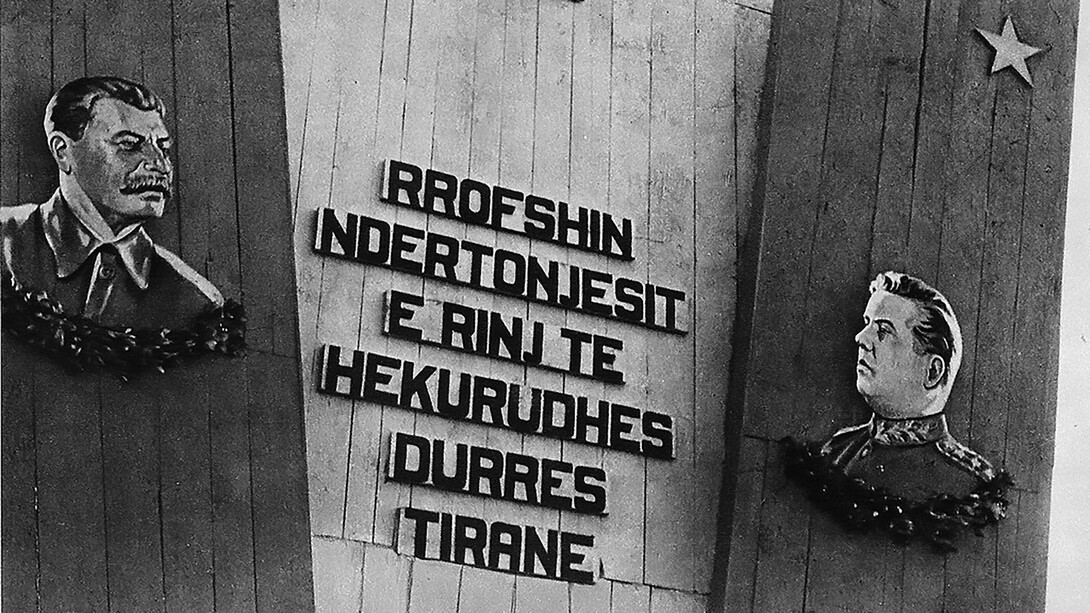
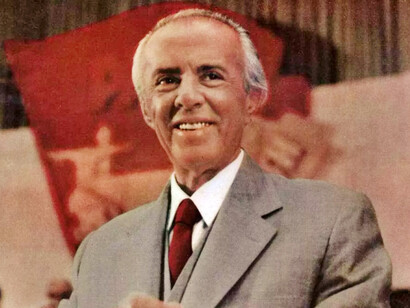
In the panorama of 20th-century European communism, Albania occupies a unique and often overlooked position. Under the leadership of Enver Hoxha, the country endured one of the most repressive and ideologically rigid regimes on the continent. For over four decades, from 1944 to 1991, Albania transformed into a totalitarian state defined by isolation, purges, and systemic repression.1 While other Eastern Bloc nations maintained varying degrees of openness or economic exchange, Albania withdrew entirely from the world. It became, in effect, a prison state, where ideology dictated every facet of life and deviation from orthodoxy invited immediate and severe punishment.2
An ideology of isolation
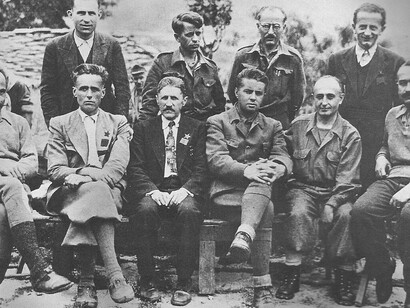
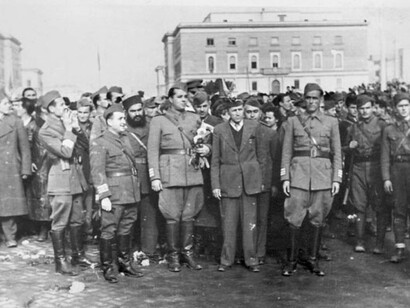
Hoxha came to power in the aftermath of the Second World War, consolidating control through his Party of Labour. He initially aligned Albania with the Soviet Union and later with Maoist China but ultimately broke ties with both, denouncing them as ideologically impure. The result was an extreme form of autarky: economic, political, and cultural isolation on a scale unseen elsewhere in Europe.3
Hoxha justified this rupture by accusing Yugoslavia, the USSR, and China of betraying Marxist-Leninist principles through their adoption of more moderate policies; Albania, he insisted, would remain the world’s only truly orthodox communist state, capable of leading the greatest communist revolution.4 This uncompromising stance not only isolated Albania politically and economically but also entrenched a cult of ideological purity that suppressed dissent and justified extreme measures to maintain absolute control.
Citizens were not allowed to travel abroad and foreign media was banned. Contact with outsiders, including correspondence with pen pals, could potentially be interpreted as espionage.5 The regime maintained strict control over education, religion, and culture, enforcing Marxist-Leninist principles with unyielding rigidity.
State surveillance and repression
At the heart of this regime was the Sigurimi, the state’s feared Directorate of State Security. Modeled loosely on Stalin’s NKVD, it maintained a dense network of informants throughout the country. Approximately one in four Albanians was employed by the agency, typically serving in the capacity of informants. Trust between neighbors, colleagues, and even family members was eroded, as anyone could be an informant.6
The Sigurimi infiltrated all levels of society, monitoring speech, dress, reading habits, and associations. Citizens could be arrested for minor infractions, listening to foreign music, making an offhand joke about the regime, or wearing jeans. Those deemed disloyal were sent to prison camps, sentenced to internal exile, or disappeared entirely.7
Burrel and Spaç were among the most notorious prison camps, where inmates, many of them intellectuals, clerics, or perceived dissidents, endured forced labor, torture, and inhumane conditions.8 Their existence illustrates how authoritarian regimes target not only political opponents but also societal pillars whose influence threatens centralized power. By isolating and brutalizing these groups, the regime sought to eliminate alternative voices and enforce ideological conformity through fear and repression.
War on religion
Perhaps the most dramatic expression of Hoxha’s ideological extremism was his campaign against religion. In 1967, Albania declared itself the world’s first officially atheist state.9 The destruction of religious heritage, architectural, cultural, and spiritual, was both systematic and severe. Generations grew up without access to formal religious education or rituals. This rupture continues to shape the role of religion in Albanian society today. It highlights how totalitarian regimes manipulate belief systems to consolidate control, erasing foundational aspects of identity to enforce ideological homogeneity.
The bunker state
No physical symbol better encapsulates Albania’s communist era than its ubiquitous concrete bunkers. Between the 1960s and 1980s, Hoxha ordered the construction of over 170,000 bunkers, convinced that Albania faced imminent invasion from hostile powers. These structures, scattered across beaches, hillsides, and city streets, became symbols of paranoia. Entire sectors of the economy were redirected to produce the materials required to build them. They served no practical military purpose, but their psychological effect, instilling fear and a sense of siege, was profound. 10
Everyday life under surveillance
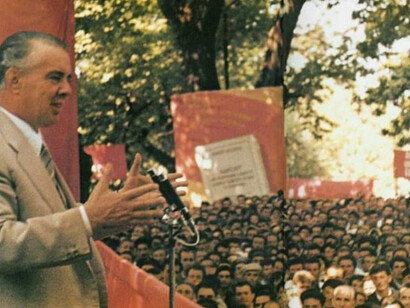
Daily life under the regime was characterized by scarcity and fear. Shortages of basic goods were common. Foreign literature, films, and music were banned. Citizens were subject to constant ideological re-education and expected to participate in state-sponsored rallies and public denunciations. Cultural life was tightly controlled, allowed only within rigid ideological limits. Even the smallest acts, such as wearing a Western haircut or quietly humming a foreign song, were seen as acts of defiance against the regime. Such perceived transgressions were met with swift and harsh punishment. This atmosphere of constant surveillance and fear stifled creativity and enforced conformity at every level of society.
The aftermath of dictatorship
Enver Hoxha died in 1985, but it was not until 1991 that Albania officially abandoned communism. The transition to democracy was turbulent. Protests escalated into violence. The country experienced economic collapse, institutional breakdown, and a series of political crises that shook the new republic. Many of the former communist elite quietly retained influence. The Sigurimi archives remained closed for years, delaying efforts at lustration and reconciliation. Even today, access to secret police files is limited, and accusations of collaboration with the former regime periodically surface in political discourse.
Present-day reflections
Albania’s current political landscape remains marked by the legacy of its communist past. While the country has made progress toward Euro-Atlantic integration and has been granted candidate status for EU accession, the lingering effects of decades-long totalitarianism are visible in the public’s relationship with institutions, the media, and civil society. Skepticism toward authority, low trust in political parties, and a culture of silence around historical trauma continue to shape public life. Commemoration efforts, such as the transformation of former surveillance buildings into museums, most notably the “House of Leaves” in Tirana, represent steps toward national reckoning. Yet, for many, the reckoning is incomplete.
Conclusion
Albania’s communist era was not merely a chapter of ideological rule, it was a machinery of total control that infiltrated language, thought, memory, and fear. Its buildings still loom over cityscapes, its victims still seek recognition, and its legacy remains embedded in the country’s institutions and psyche. Reckoning with this past is not only crucial for Albania, but for Europe as a whole. It stands as a stark reminder of how entrenched ideological extremism can reshape an entire society, and how the silence it imposes can endure long after the regime has fallen.
References
1 Jonila Godole, “Albania: Coming to Terms with the Communist Dictatorship,” in After Dictatorship: Instruments of Transitional Justice in Post-Authoritarian Systems, ed. Peter Hoeres and Hubertus Knabe (Berlin and Boston: De Gruyter Oldenbourg, 2023), 209.
2 Belina Bedini, “The Legitimation of the Albanian Totalitarian Regime,” Mediterranean Journal of Social Sciences 5, no. 16 (July 4, 2014): 500.
3 Bedini, “The Legitimation of the Albanian Totalitarian Regime,” 501.
4 Bedini, “The Legitimation of the Albanian Totalitarian Regime,” 501.
5 Andrew Hosken, “Albania's communist dictator Enver Hoxha: A legacy of isolation,” BBC News, last accessed July 16, 2025.
6 Fred C. Abrahams, Modern Albania: From Dictatorship to Democracy in Europe (New York: NYU Press, 2015), 19.
7 Enri Zhulati, “Life in Communist Albania,” Albania Visit, accessed July 10, 2025.
8 Rexhep Gashi, “Types of Prisons and Labour Camps and the Position of Convicted Persons in Albania During the Communist Dictatorship,” Thesis 1 (2012): 37 and 38.
9 Bernhard Tonnes, “Albania: An atheist state,” Religion in Communist Lands 3, no. 1-3 (1975): 7.
10 Jason Payne, “Projekti Bunkerizimit: The Strange Case of the Albanian Bunker,” Log, no. 31 (2014): 161.