English
 Español
 Français
 Deutsch
 Italiano
 Português
Before I could even spell my own name, I learned the world could hate me for the color of my skin. I didn’t quite understand it as a little girl, but as I grew, I soon found out about the stares, the whispers, being talked about by my teachers, always feeling like the odd one out in predominantly white spaces, and feeling like I didn't belong. Those were the warnings. Warnings that no matter how brightly I shined, no matter how wide I smiled or how much I gave, some people would never look past the color stitched into my skin, they would never see the aching, the fighting, beautiful heartbreaking just beneath it. I quickly adapted that I would have to work twice as hard just to be seen as half as good. I learned that just existing would feel like a battle I never asked to fight.
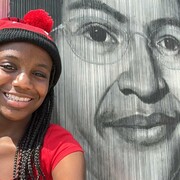
Since middle school, I’ve had to deal with something that I’ll never truly understand, the so-called “N-word pass.” What’s the “N-word pass,” you ask? It’s when a white person asks a Black person for permission to say the word "nigga." They’ll say it and act like they’ve earned some sort of privilege, like they’re entitled to use a word loaded with pain and history. But here’s the thing: did Dr. Martin Luther King Jr. march to get freedom for my people just for the race that used to insult, degrade, and dehumanize my people for centuries say the N-word with a “pass”? Did Rosa Parks refuse to give up her seat just for people to turn around and still call us that? No. Yet to this day, you think it’s a joke, you think it's funny, you think it's a game. I still haven't come to terms with accepting how they think it’s okay to ask for permission to say something that’s been embedded in the trauma of our history, something that’s been weaponized against us for so long. The N-word isn’t just a word. It's painful. It’s power. It’s a part of who I am, of who we are, and I’ll never let anyone trivialize it or take it from me.
And then there’s school. When you’re Black and in school, it feels like you’re never really taught about your history or culture. They skip over the stories of our ancestors, erase our backgrounds, and leave out the truth about what Black people have endured and achieved. They don’t care about our history, or worse, they don’t want us to know it. Because if they did, they might see how powerful we truly are. Instead, they take Black history out of the curriculum, and we’re left to piece our history together ourselves. Being a Black student in a predominantly white school makes you feel like you’re fighting for your place every single day. It’s not just about acing the tests, doing the work, or trying to fit in. It’s about constantly proving you belong when the world keeps telling you that you don’t.
Ever since 8th grade, I’ve tried out for the Charlotte High School cheer team multiple times. Spring for football cheer: didn’t make it. Fall for basketball cheer: didn’t make it. This year, 9th grade: tried again for football cheer, still no. Why? Because I’m not white enough. I don’t look like the other girls on the team. My skin is too dark, I’m not white enough for them, and my parents aren’t rich. I don’t have connections. They never said it outright, but I felt it. I felt it in the way they looked at me, I could feel it in the way I was always pushed to the back, like I didn’t deserve a spot up front, even when I tried harder than anyone else, even when I was louder than everyone else. They say, “If you don't make the team, it's not biased.” But if that’s true, why are the same judges used every year? Why is there never a fully Black girl on the team? Are we too ghetto? Too loud? Too dark? I heard a cheer coach once tell a white girl to take down her TikTok videos because they were “too ghetto.” Really? I’m done keeping quiet about how I’ve been treated, now I'm coming to the stands.
Let’s talk about crushes. If I like a Black boy, he’s probably going to choose a “snow bunny”, a white girl who only dates Black guys. If I like a white boy, he won’t even look my way. I’m “too dark.” Or worse, his parents wouldn’t approve. I’ve always had a thing for white boys. But the older I get, the more I realize how much of a losing game it is. I’ve had guys say, “I don’t date Black girls,” like I’m some kind of challenge. Then they turn around and date girls with lighter skin and softer features. It’s not just about preference; it’s the painful truth that no matter what I do, I’ll never fit the narrow mold of what’s considered “beautiful.” I can’t change my skin, my lips, or my nose. It’s all I’ve got, and some days it feels like I'll never be enough. But no matter how much it stings, no matter how much I wish I could just be someone else for a second, this is me, Raina Coleman. It’s the only version of myself I’ll ever get, and I have to learn to carry it, to love it, because it’s the one thing in this world that’s completely mine, something no one can ever take away from me.
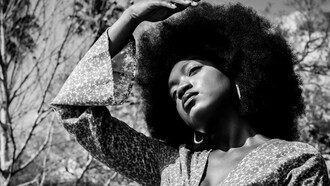
People always have something to say about my hair, and it cuts deeper than they realize. My braids, my curls, they don’t look like the smooth, straight hair you see in magazines or on the heads of white girls. They ask, "Is your hair fake?" or “Why isn’t your hair straight?” or “Why does your hair look like that?” They act like they get to decide what my hair should look like. Why is it so wrong for me to wear my hair the way it naturally grows, the way it’s been worn for centuries in my culture? My braids aren’t just “cute” or “different.” They’re tradition. But people judge them like a joke, like something to laugh at, like I’ll never be enough no matter what I do. It’s not just a style, it's a reflection of who I am. And still, they judge it like it’s something to laugh at, something to degrade. Worse, they make me feel like it’s never enough, like nothing about me is ever good enough.
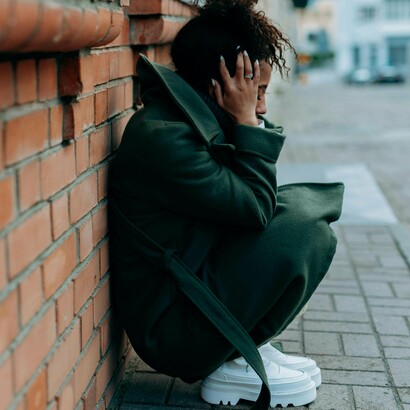
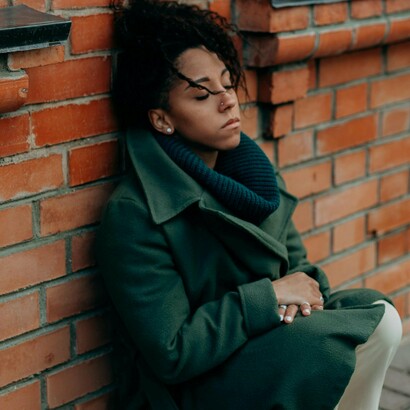
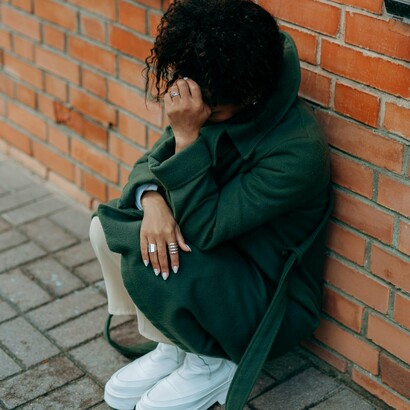
Sometimes the sadness hits like a heavy weight pressed against my chest, making it hard to breathe, like I’m drowning in a storm that never ends. It’s like carrying around a suitcase full of stones, and every whisper, every side-eye, every comment about my skin or my hair just adds another rock. Some days, it feels like the sky is falling only on me, and no matter how fast I run or how hard I pray, the clouds won’t clear. It’s not just feeling “sad.” It’s feeling invisible and exposed at the same time, like screaming in a crowded room and nobody even turning to look because you're “not up to their standards.”
Racism didn’t just hurt me, it rippled out and touched everybody I love. It’s the reason my grandma, Ollie Coleman, always told me to keep my head high even when the world tried to break me down. It’s why my grandpa, Abraham Coleman, had to work twice as hard for half the credit, coming home with PTSD and trauma from being in the war and wearing his pride like armor. It’s why my cousins second-guess their worth before they even step into a room, learning too early that the world might judge the color of their skin before the strength of their character. It’s why every dream we dream feels like it comes stitched with fear, fear of being “too loud,” “too Black,” “too much,” or not enough to be loved, to be chosen, to be safe.
Racism lives in our houses, in our schools, in the way we move through the world, like a ghost that never quite leaves, haunting our steps, whispering doubts into our ears, trying to snatch hope out of our hands before we can even close our fingers around it. It’s in the warnings passed down like heirlooms, in the stories shared between generations, in the silent prayers our parents whisper over us before we walk out the door. It tries to drown us in fear, but somehow, some way, we keep finding a way to breathe.
Even with all the hurt, the rejection, the weight of history pressing down on my shoulders, I am still here. We are still here. My story is one of many, woven into the fabric of a people who have been bruised but never broken. I carry the voices of my grandparents, the strength of my grandfather, the hope of my cousins, all of them stitched into my skin like armor. The world has tried to tell me that I am too dark, too loud, too much, not enough. But I’ve learned to stand tall in the very things they tried to use against me. My hair, my skin, my voice, it’s all mine, and it’s beautiful. I am learning, every single day, to love the girl in the mirror, not because the world tells me to, but because she deserves it. We all do. And no matter how many doors are slammed, how many names are called, how many times we’re overlooked, we will keep rising. Because this isn’t just about pain, it’s about pride. It’s about power. And it’s about the unshakable truth that being Black is not a burden, it’s a blessing.