English
 Español
 Français
 Deutsch
 Italiano
 Português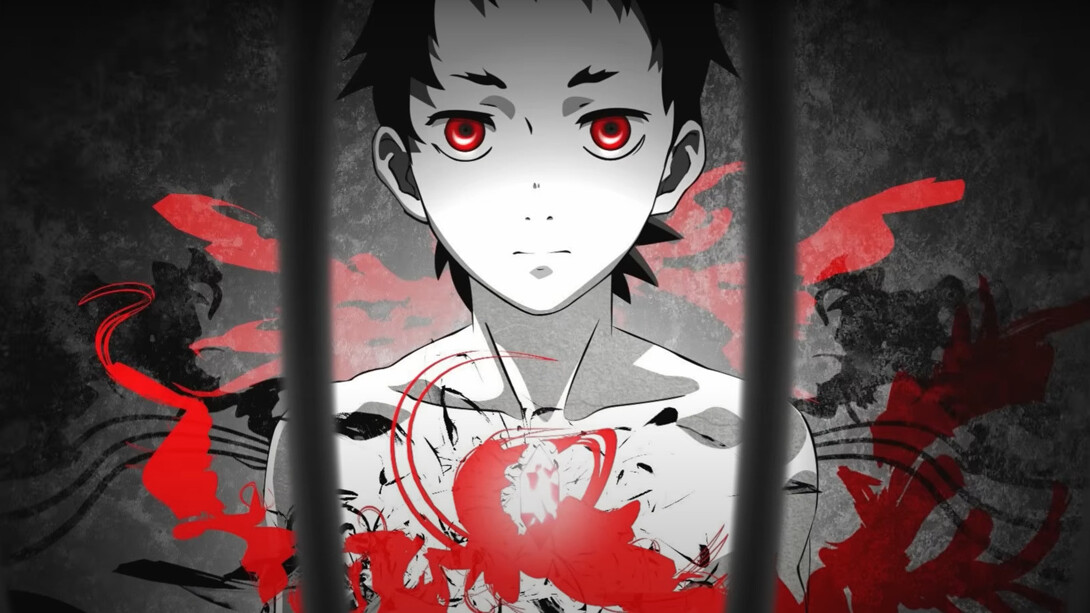
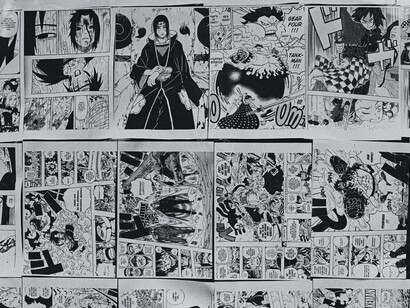
Anime and manga created for the shōnen demographic have been the most popular titles of Japan’s biggest cultural export for decades. With Jump’s rule as the best-selling manga magazine in history1, the magazine’s most popular titles became something akin to the very face of anime and manga, particularly in the world beyond Japan.
In the several decades since Weekly Shōnen Jump’s inception in the 1960s, shōnen manga has undergone several changes, with its trajectory largely determined by the impact and influence of titles that were released during the magazine’s Golden Age of the 1980s to mid-1990s. This trajectory in shonen narratives continued through to the mid-2010s and early 2020s, giving rise to the “shōnen formula"2 as we’ve come to know it.
With the establishment of Jump+, Weekly Shōnen Jump’s digital counterpart, a new, grittier formula was being established, thereby introducing the “Dark Shōnen” Era, a wave that I think is very closely tied to the increased incidence of graphic imagery, more specifically, body horror.
Hasn’t shōnen always been dark?
The idea of “dark” shōnen might sound redundant because battle shōnen has always harboured some dark elements. Some of these elements can have greater appeal to fans than most western animation due to their ability to grapple with mature themes more effectively. One could say this darkness was part of the reason that we had a kind of Satanic Panic around anime, comics, and video games where I’m from. Anime and manga, especially shonen, can present elements that can make people uncomfortable.
Dragon Ball, while lauded as a brilliant adventure title that leaned more towards humour, has a particularly major tone shift during the Demon King Piccolo arc. Moments like Krillin’s death stand out in Dragon Ball because of their sobering gravity compared to the generally comedic lightheartedness of the early series. In the anime, the way Krillin’s corpse is animated is haunting, with the lifelessness in his eyes shown by the lack of colour in his irises. There is also the telltale limpness of his arm when Goku cradles him. It’s a jarring moment because Krillin’s death happened off-screen, and shortly before it happened, he was laughing with Goku and the others. The tragedy came not long after Goku narrowly lost to Tien Shinhan in the World Tournament, which was a rather positive point in the narrative because Tien's character went from foe to friend.3 Where main characters are generally expected to stick around for the duration of the narrative, Krillin’s death creates the shift in tone necessary to bring in the sense of rising stakes relevant to Demon King Piccolo’s reign over Earth.
In One Piece, the death of Luffy’s brother, Portgas D. Ace, is a similar turning point in the series. Ace’s death was tragic and graphic, as Akainu tore a hole through his chest right in front of Luffy.4 What makes this scene particularly impactful is how Ace’s death was the result of his attempt to protect Luffy but also because of the fact that Luffy ignored Ace’s advice to leave during the invasion of Marineford. It’s even more tragic that it happens after Luffy manages to pull off Ace’s rescue from the custody of the Marines. In response to his grief, Luffy put his journey on hold so that he and his crew may train themselves for battles to come, while the existence of the One Piece was confirmed, bringing in a new age of piracy. Luffy’s wailing at his brother’s death is an image that burns itself into your mind when you first see it, especially because of Ace’s parting words: "Thank you for loving me."
In Hunter x Hunter, Gon’s happy-go-lucky personality is completely flipped on its head after he learns of Kite’s death at the hands of Neferpitou during the Chimera Ant Arc. Gon’s seething rage at seeing Pitou worry for the wellbeing of Komugi showed off a side to Gon that we hadn’t really seen before. Kite’s death was abrupt, and to make things worse, Pitou kept his body, later reviving him as a Chimera Ant.5 When Gon encountered Pitou again, he wound up putting all of his grief and strength, present and future, into the Chimera Ant’s destruction. It was a final standoff that remains one of the character’s most terrifying moments and almost made me feel bad for Pitou, a character I very badly wanted to see taste defeat for their lack of respect for the lives of their victims. Their desperation to protect a fragile Komugi and fear of Gon made me sympathetic towards her despite the cruelty.
There are several examples of classic shōnen having dark moments; however, what qualifies the so-called “dark shōnen” as such is its emphasis on more morbid or “difficult” core themes. Brian Stableton, author of the A to Z of Fantasy, describes “dark fantasy” as a description of a nebulous set of stories that incorporate horror elements into the standard formulae found in fantasy narratives.6 These then take on a more “sinister” feel as they engage with more complex or even disturbing topics and imagery. This modification of the core genre is what’s happening when we refer to dark shonen.
The influence of the Big Three
Popular shōnen manga are largely built upon the shoulders of some of the medium’s most celebrated titles. These titles, especially in the case of Shōnen Jump magazine, have their path set for them as descendants of the Golden Era of the mid-80s to mid-90s. Dragon Ball is massively influential in the lives of the mangaka who were the forerunners of the magazine’s “Big Three” era. This was a time when Jump’s grasp on the manga industry in Japan was in jeopardy as the Golden Age came to an end.7
Shōnen Jump’s Big Three: Tite Kubo’s Bleach, Kishimoto Masashi’s Naruto and Oda Eiichiro’s One Piece, were titles that arose in the late 1990s/early 2000s and were exalted by Shueisha executives. They were considered successors of the magazine’s most successful series up to that point for the ways they captured the attention of readers and won back the magazine’s pole position in the industry after briefly losing it to Weekly Shōnen Magazine between 1998 and 2003.8
They also seemed to capture the same spirit as their predecessors with their high-energy, lovable protagonists complete with lofty goals and emphasis on friendship and camaraderie. An adventurous, at times comedic and deeply engrossing hero’s journey is what the shōnen manga became known for.9 However, the emergence of dark shōnen was already at hand. In The Big Three, Bleach featured a story that had many darker elements than older shonen, and various other titles within this niche began to emerge.
Bleach presented a different kind of journey to its peers in The Big Three. This drearier, grittier approach to the core themes of the story, its developments and the desires of the protagonist are all aspects that went on to have, potentially, the greatest level of influence from this era. Bleach’s supernatural, horror-inspired plotline, semi-realistic art style, and thematic content deviate from the norm of the shonen adventure. Usually, viewers and readers are witnessing a friend grow through various difficult situations to achieve their dreams, but this is different because the protagonist has to reckon with his uniqueness bringing him into a dangerous hidden reality.
Not long after the serialisation of Bleach in 2001 came the arrival of Katsura Hoshino’s D-Gray Man, a manga with gothic themes inspired by horror set in Victorian England. In the same year as Bleach’s serialisation, Jump Norihiro Yagi’s dark fantasy, Claymore, began its serialisation. It was an exceptionally violent series about female knights who are turned into living weapons against the Yoma, foul shapeshifting demonic beasts that feast on humans. Like Bleach, D-Gray Man is also a departure from what people generally came to expect from popular Shonen Jump titles because of its graphic content, which was also in the realm of dark fantasy. Tite Kubo’s Bleach could perhaps be referred to as a proto-dark shōnen. The series inspired the likes of Yuki Tabata’s Black Clover (which can sometimes read as Naruto with magic) and Akutami Gege’s Jujutsu Kaisen, which is the basis for Fujimoto Tatsuki’s Chainsaw Man. Aesthetic similarities between Bleach and several post-Big Three titles are evident in aspects like character designs and themes, but the series that took the most inspiration from Bleach is Jujutsu Kaisen.10
The post-Big Three era
The reason for focusing on Bleach at this point in this discussion is its position as a cultural moment for the manga that followed, particularly in Shōnen Jump. From new-gen titles emerging with protagonists who wield gigantic swords to the exploration of mature themes like the amorality of authority figures and genocide, there are several visual, thematic and narrative shifts that are evident in post-Big Three shōnen titles and beyond.
In between all those major titles, the battle shōnen subgenre was punctuated by the emergence of titles both within Jump and in the magazines of other major Japanese publishers, like Q Hayashida’s Dorohedoro, Hiromu Arakawa’s Fullmetal Alchemist, Yana Toboso’s Black Butler and even Hajime Isayama’s Attack on Titan. These titles represented a shift from the somewhat happy-go-lucky, inspirational adventures that we’ve come to understand shōnen to be into something even more dramatic. Not to say battle shōnen lost their charm or sense of humour, but the look, feel and thematic content are a very different approach to what has been the case for battle shōnen manga in the past.
“Unsurprisingly, this Dark Trio is a resounding success, they are the natural evolution of those shows that made a generation of kids fall in love with anime, all of whom are now grown-ups and want something similar but that appeals to their adult sensibilities.”
(Amílcar Trejo Mosquera)
The Shōnen Jump “Dark Trio”
The biggest difference between Weekly Shōnen Jump magazine and its digital counterpart is how content is handled. The physical magazine has particular restrictions on the kind of content it is allowed to show, given its target audience. With Jump+, things are a little looser when it comes to the target demographic. Some of the works are aimed at adults or a feminine audience. It's full of new and different styles of manga that you haven't seen before, fighting at the front lines,” says former Weekly Shōnen Jump editor-in-chief Hiroyuki Nakano.11
This looseness of the boundaries found in the physical magazine gave a home to titles that had more violent or sexual themes and imagery but also brought in a different readership. During this period, which overlapped with the Post-Big Three Era, both the physical magazine and its digital counterpart ran titles like Jujutsu Kaisen by Gege Akutami, Hell’s Paradise: Jigokuraku by Yuji Kaku, and Tatsuki Fujimoto’s Chainsaw Man. These three came to be known as the Shōnen Jump “Dark Trio”.12
Jujutsu Kaisen has a plot that is not unlike that of Naruto in that an evil force is sealed within the body of the protagonist. Yuji Itadori, by a series of unfortunate events, consumes one of the twenty fingers of the legendary Jujutsu Sorcerer known as Ryōmen Sukuna. While the “Devil Within” trope has been explored in various shōnen titles, including Naruto and Kazuhiro Fujita’s Ushio and Tora, Jujutsu Kaisen and Chainsaw Man take the trope in divergent but interesting directions.
Many of the titles that make use of this trope follow the trajectory of having the protagonist gain mastery over the entity or otherwise befriend it. The entity also usually ends up changing alignment from evil to good over the course of the series. What made Jujutsu Kaisen particularly dark, aside from the horror-themed atmosphere, gore and terrifying Curses, was the development of Sukuna from a fallen evil force to the overarching antagonist of the series who ends up executing a plot to take on a completely different vessel and succeeds. It quickly became the series where death is constantly around the corner in ways that previous shonen did not communicate quite as viscerally.
Hell’s Paradise: Jigokuraku had a battle royale-esque plot where various criminals in Edo Japan are sent to a mysterious island filled with horrors beyond our comprehension. The protagonist is the legendary ninja known as Gabimaru, who has a nihilistic worldview until he recalls that he has something to live for: his wife, who may or may not be real. The level of violence and depictions of nudity and/or sexual activity in Hell’s Paradise make it unsuitable for publication in the physical Jump but a perfect candidate for the digital magazine.
Finally, Chainsaw Man is an absurdist exploration of a tortured protagonist’s life after being revived as a legendary devil from Hell: Chainsaw Man. Denji aims to experience the facets of a normal life of which he’d been deprived his entire life (particularly when it comes to sex), but due to the incredible power he possesses, he is almost condemned to a life of constant loss and being used as a pawn in countless agendas and is constantly lied to, manipulated and controlled by some of the people he was the closest to. The approach to Denji’s troubled past, particularly when it comes to his relationship with women and various experiences of abuse, makes for a great exploration of themes that weren’t explored so deeply in past shōnen.
Nakano’s identification of some works being aimed at adults is true of the Dark Trio, the digital generation’s first analogue to The Big Three. Up to this point, this discussion has been mostly, if not entirely, set upon the journey of a single publication in the shōnen manga industry in Japan, but given Shōnen Jump’s overwhelming grip on the industry, the focus is largely on Jump titles. One interesting effect of this current rise in grittier shōnen manga is the potential for a shift in the power balance of the major shōnen manga magazines, something that was seen briefly between 1997 and 2003, a timeline that coincides with the end of Jump’s Golden Age and the earliest beginnings of The Big Three Era.
The emergence of titles like Hajime Isayama’s Attack on Titan during the early Post-Big Three Era was yet another departure from “traditional” shōnen, presenting an intense gorefest that develops from a tale of humanity’s survival against a “natural” predator to one of geopolitical strife and a comment on the cyclical nature of humanity’s violent history. Attack on Titan was initially pitched to Weekly Shōnen Jump back in 2006, but after editors asked him to alter certain aspects of the story, Isayama brought it to Kodansha’s Weekly Shōnen Magazine and it eventually found a home in the publisher’s Bessatsu Shōnen Magazine. Attack on Titan’s pre-serialisation story serves as an example of the kind of content restrictions, with Isayama detailing his experience in an archived 2009 blog post.
...the reason I didn't stick to Jump, which I've been reading since I was a child… aside from my lack of ability, was that I was told to bring ‘Jump’ instead of ‘manga’, which may be natural, because the editor was looking for the genre ‘Shonen Jump’.13
The current state of gritty shōnen manga
One of the most exciting titles in this regard is the graffiti-covered, visual feast that is Kei Urana’s Gachiakuta. Urana, a former assistant (and major fan) of the one and only Atsushi Okubo of Soul Eater and Fire Force fame, created a masterpiece in battle shōnen storytelling that presents a visual identity that immediately sets it apart from its predecessors and contemporaries.
Fujimoto, with his simple but highly effective use of panelling, seems to be inspiring a new niche of “cinematic” battle manga, a drawing philosophy we’re seeing in another WSJ hit, Takeru Hokazono’s Kagurabachi. However, Gachiakuta creates an entirely unique atmosphere through visual storytelling and a unique exploration of a well-documented battle shōnen phenomenon: the power system. The title is published in Kodansha’s Weekly Shōnen Magazine, an older publication than Jump that was in fact the first weekly shōnen magazine in the industry.
WSM has featured several classics like Go Nagai’s Devilman, Ken Akamatsu’s Love Hina and Negima and Makoto Yukimura’s Vinland Saga. It was one of the first to embrace the “gekiga” movement of the 1960s, which saw manga begin to develop more complex and mature thematic content, storylines and overall grittier approaches to the visual aspects and writing that made manga more dramatic. This movement was a shift in the medium from being almost wholly targeted towards the demographic of young children in the wake of legend Osamu Tezuka’s reign, to one directed towards more mature readers.14
…gekiga is intended for an adult readership. It illustrates themes of serious intent, narratives with psychological nuance and compelling realistic artwork.
(Ananya Saha, Manga tends to Modernity: Negotiating Transformation through the Lens of Yoshihiro Tatsumi’s A Drifting Life (2017) )
The rise of gritty shōnen manga is partly the evolution of the battle shōnen formula in response to a generation of fans who grew up with the medium and are still hooked on stories within the shōnen demographic despite supposedly ageing out of being the target market.15 This group of people in their 20s and older makes up the largest portion of shōnen manga fans, according to Shueisha’s Media Guide 2020, which reported that 27.4% of Weekly Shōnen Jump readers are 25 years old or older, compared to 25.8% in the bracket of 19-24 years old, 17.6% are between 16 and 18, 16.4% are between 13 and 15 years old, and 12.8% are 12 and younger.16
Perhaps the tendency towards grittier stories in battle shōnen is a kind of gekiga revolution within the subgenre/demographic. This is at least true of Gachiakuta, a story in which the main character’s world is one of decay, filth and trash, a society of poverty on the fringes of one of immense wealth and opulence. Within his enclave, sifting through the tonnes of garbage sent their way from the rich is seen as a crime, and criminals are deemed the lowest of the low: a kind of “human garbage”. With this kind of worldview, there’s a message there about how society views its fringe members. Rudo, the son of a heinous criminal, is forced to reckon with a conspiracy and injustice as he is framed for the murder of his adoptive father, Regto.
Cast down into “The Pit”, an abyss where the worst of the worst are sent to die, Rudo must survive in a world literally made up of trash, but here’s the clincher: there’s a belief in this world that objects, when cared for and used enough, develop souls of their own, so what becomes of the soul within objects tossed aside as trash? Gachiakuta presents flashes of the familiar battle shōnen beats, like an underdog protagonist, a fantastical yet unjust world hinging on a central rule, and interesting special abilities afforded to its characters, with absolutely gorgeous art that features a grungy graffiti style courtesy of Hideyoshi Ando that greatly complements the thematic and visual content of the series.
The brilliant visual identity and dark content of the series make it feel like a departure from the shonen of the past. These are aspects that were true of the 1960s gekiga revolution, pioneered by artists like Yoshihiro Tatsumi and Masahiko Matsumoto, as well as the “Year 24 Group” or “Magnificent 24s", female mangaka who pioneered a dramatic change in manga aimed at young girls towards more mature themes and delving into topics like politics, psychology and sexuality.17 This group includes Heart of Thomas author Moto Hagio, Rose of Versailles author Riyoko Ikeda and Maihime Terpischora author Ryōko Yamagishi.
Gachiakuta’s grappling with themes like structural inequality and prejudice, the relationship between human and object and the viewing of the former as the latter, revenge and ideas of justice are not new to shonen, but their presentation is more grim. Looking back, it’s clear that other manga publications tapped into the emergence of darker battle shonen earlier on, with magazines like Square Enix’s Gangan series of magazines serving as hosts to titles like Arakawa Hiromu’s Fullmetal Alchemist, Yana Toboso’s Black Butler, Atsushi Okubo’s Soul Eater and Fire Force and many others, while a title like Deadman Wonderland was serialised in Kodansha’s Monthly Shonen Ace.
How body horror is central to shonen’s darkening
What I have been building towards is that the prominence of dark shonen in this current generation of manga is something that is directly tied to a growing incidence of more graphic, gory, violent and explicit stories. I don’t want to make the claim that violence is all that makes something dark, but rather that the increased gravity of the violence we’re seeing in shonen manga is the primary vehicle through which titles aimed at a younger audience turn into titles for older audiences. The reason for this is body horror, which is also called biological horror, defined as the various ways that living bodies are violated in horror films to elicit a psychological response in the audience.18
It is grotesque and gratuitous violence, like mutilation and maiming, mutation, disease and other violations that can create sensations like disgust as the body is pushed to and beyond its limits.
The grotesqueries of body horror are evident in all the dark shonen coming up nowadays. For example, Jujutsu Kaisen delivers the gravity of the plot through jarring, violent deaths or injuries, like the death of Nobara Kugisaki, which saw her left eye get completely blown out. When she hit the ground, the anime showed us Yuji’s horrified face through the gaping hole in Nobara’s face, which added another disturbing layer to the loss of a main character. In Fire Force, human beings spontaneously combust and become terrifying flaming monsters known as Infernals, while Chainsaw Man is a known gorefest with one of the core themes built around the horrifying original purpose of the chainsaw as a medical instrument used for symphysiotomies – the widening of the birth canal. Hell’s Paradise: Jigokuraku features several horrifying creatures on an island that are all revealed to be the horribly contorted and disfigured living remains of human beings, but it takes it a step further by combining body horror with natural beauty. Some characters die from plant matter bursting forth from their orifices and brain matter whittled away by adventitious roots, making it grotesque but oddly beautiful.
Gachiakuta protagonist Rudo has arms that appear to have been burnt to a crisp, which he hides with the gloves he received from his adoptive father. Their blackened, sinewy form invokes disgust in the other characters who see it, while it creates a sense of mystery about the character’s origins. The reason why body horror is at the core of the dark shonen wave is because of the ideas it brings forth about the limitations of the narrative. All the dark moments in classic shonen I mentioned earlier are all concerning death, which is generally a topic a lot of media aimed at younger audiences attempts to steer clear of or present very lightly. The permanence of death in these fantastical, adventurous, happy-go-lucky or inspirational stories is a raising of stakes that stands out as a sobering moment for the audience.
However, in dark shonen, the death of main characters is a given. I think on one level, the permanence of death in narratives that don’t generally get into topics that grave or do so at a lower intensity is important. It is an ultimate and inescapable consequence, and to some extent, body horror communicates the idea of consequences and mortality that a lot of older shonen don’t quite deal with as much. Death has completely lost its significance in the Dragon Ball story, as the Z-Fighters (yes, I still call them that) have permanent access to the titular wish-granting orbs. The morbidity of graphic mutilation, mutation, or presentation of gross concepts presented on a body (think of Deidara making his hand-mouths French-kiss each other on that one Naruto cover – mouths shouldn’t be on palms; it’s weird) creates a physical and psychological reaction in the audience.
David Huckvale, author of Terrors of the Flesh, believes “the horror and psychological denial we have of our mortality, along with the corruptibility of our flesh, are persistent themes in all drama, which body horror films have, of course, intensified in increasingly graphic terms over the years.”19 While we’re on the topic of the gross, one body horror moment that really sticks out to me is the cleansing of Yukine in Noragami. Due to his negative beliefs and sinful behaviour, Yukine winds up catching the Blight, a condition in which maligned supernatural entities called Ayakashi (they use “Phantom” in the anime) literally infect the spiritual body. This manifested in a horrific mutation in which his skin turned purple and was littered with giant, inhuman eyes that squealed and lolled all over his body. The image of eyes popping up on one’s face, arms and back is burnt into my mind as a disgusting visual of the consequences of Yukine’s actions.19
It is not merely the presence of intense violence that makes dark shonen what it is, but the seeping of immutable, pervasive, unselective consequences on the lives of the characters who carry the narrative. One of the aspects David Huckvale describes as a tenet of body horror is disintegration. While he was talking about the physical, I think it also applies to more abstract forms, like how Megumi Fushiguro’s soul was put under intense strain and forced into submission by Sukuna, who had been plotting on taking the sorcerer's body since the early narrative. Yuji experiences unspeakable horror during the Shibuya Incident when his body is used to wreak havoc on Shibuya.
Body horror isn’t only about graphic imagery but also uncomfortable ideas having inescapable effects on how the characters move within the story. However, body horror is one of the simplest ways to intensify the idea of consequence in a narrative aimed at an adolescent or young adult audience used to the safety of plot armour. In Fullmetal Alchemist, we learn that the Elric brothers’ attempt to perform the alchemical taboo that is human transmutation led to the permanent mutilation (and in Alphonse’s case, destruction) of their bodies. When Ace dies in One Piece, he has a hole torn into his chest, a phenomenon fans have hilariously dubbed “being turned into a doughnut”. When characters have their bodies contorted into impossible forms, revealing viscera like they do when Asa/Yoru turns them into weapons in Chainsaw Man, it’s disturbing but incredible.
These examples are an attempt to illustrate the centrality of body horror in dark shonen’s rise, a phenomenon I believe is a kind of renaissance because of how shonen’s darkening is akin to a gekiga revolution within a particular niche of manga aimed at a certain demographic. These are explorations into grittier stories that are being assisted by individual authors’ artistic and storytelling abilities being able to communicate more difficult topics with more difficult imagery: a kind of body horror renaissance of shonen manga.
Notes
1 Japanese Manga Publishers Association.
2 Gravett, Paul (2005). Manga: Sixty Years of Japanese Comics, 52.
3 Toriyama, Akira (1987). Dragon Ball, Ch. 134-135.
4 Oda, Eiichiro (2010). One Piece, Ch. 574.
5 Togashi, Yoshihiro (2003). Hunter x Hunter, Ch. 199.
6 Stableton, Brian. (2009). The A to Z of Fantasy, 97.
7 Hatai, Takashi.
8 Loo, Egan (2010). 2009 Japanese Manga Magazine Circulation Numbers. Anime News Network.
9 Drummond-Matthews, Angela; Johnson-Woods, Toni (2007). Manga: An Anthology of Global and Cultural Perspectives, 70.
10 Jujutsu Kaisen: The Official Character Guide (2024), 213.
11 Morrissey, Kim (2019). Weekly Shonen Jump Editor-in-Chief Hiroyuki Nakano. Anime News Network.
12 Mosquera, Amilcar Trejo (2023). Deep dive: Why Shonen Jump’s Dark Trio is Anime's New Big 3. Crunchyroll.
13 Isayama, Hajime (2009). Personal blog
14 Embassy of Japan in the UK (2014). Gekiga: Alternative Manga from Japan Exhibition
15 Mosquera, Amilcar Trejo (2023). Deep dive: Why Shonen Jump’s Dark Trio is Anime's New Big 3. Crunchyroll.
16 Shueisha (2025). Manga Plus By Shueisha Media Guide, 12.
17 Saha, Ananya (2017). Manga tends to Modernity: Negotiating Transformation through the Lens of Yoshihiro Tatsumi’s A Drifting Life. The Criterion: An International Journal in English Vol. 8, Issue-IV, August 2017, 808.
18 Yamada, Tomoko (1998). Who Does the Manga Term "24-Year Group" Refer To?.
19 Huckvale, David (2020). Terrors of the Flesh: The Philosophy of Body Horror in Film, 5-6.