English
 Español
 Français
 Deutsch
 Italiano
 Português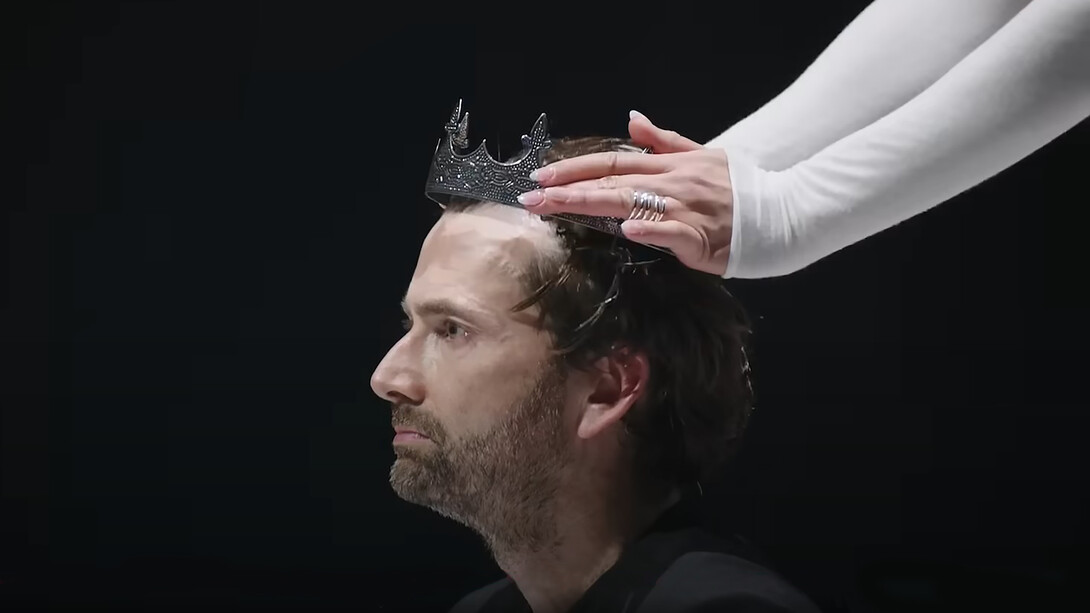
Macbeth, by Tony and Olivier-award winner Max Webster, is a bold adaptation of the classic play and one of the most acclaimed of the recent takes on Shakespeare's works.
Directed by the Donmar Associate Director, the star-studded production was the second adaptation of Shakespeare’s words in a month, following Simon Godwin’s production. When Godwin’s production lacked innovation, Webster (Life of Pi) impressed us by being a master of storytelling.
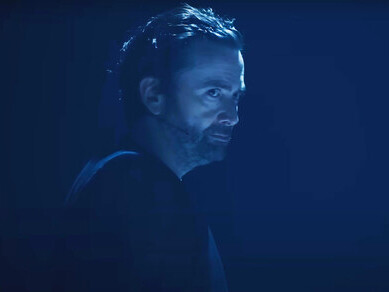
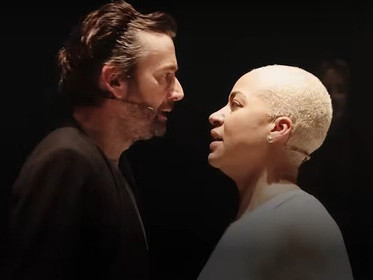
The 2023 revival of Shakespeare’s drama, which stars Cush Jumbo (The Good Fight, Vera) as Lady Macbeth and David Tennant (Doctor Who, Broadchurch) as Macbeth, was adapted for screens and released in February 2025 in specially booked cinemas.
The filmed version almost perfectly cuts together the best takes captured over several performances.
But as Shakespeare’s most extraordinary play, Macbeth was adapted time and again; comparisons were unavoidable. So how does Max Webster’s rendition differentiate itself from the Sea of Macbeth?
Most of it comes from the simplicity of its visual presentation, focused on the actors, and the deeply human take they give to Shakespeare’s bloodiest play.
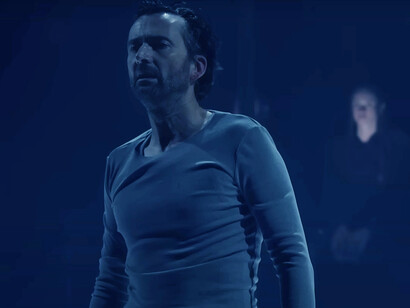
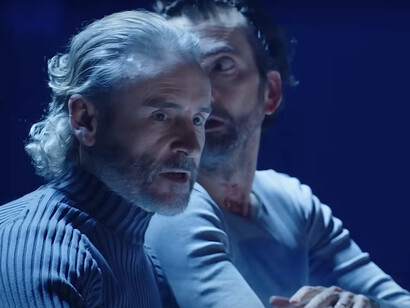
In Webster’s MacBeth, the colorful stage of Godwin or others is replaced by a minimalist white stage. Rosanna Vize’s design is monochrome. The stage’s stark layout, hard spotlights, and whispering sounds are accompanied by modern and minimalist costumes: grey t-shirts, dark kilts, semi-structured jackets, and Lady Macbeth in a deceptive white dress.
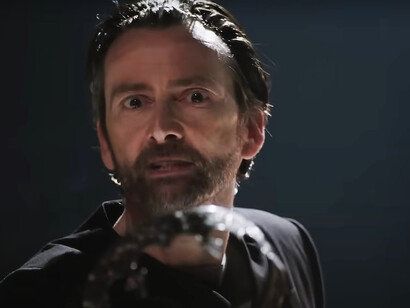
This version of the play begins with the simple image of a lone metallic bowl, above which Macbeth washes the blood off his hand and face of murders that are to come. In the background, the haunting laughs of the three witches, speaking their favorite opening lines, and the praise of Macbeth and Banquo.
When shall we three meet again?
In thunder, lightning, or in rain?
The whispers of the witches accompany the cast and audience throughout the play, adding to the eerie stage an aura of surreality and madness.
Sonically, the cinematographic version has much to envy from the play. Webster and sound designer Olivier Award winner Gareth Fry have used a cutting-edge binaural sound system, requiring the audience to wear headphones throughout the play. An immersive experience that magnified each breath and whisper from the stages but did not leave everyone satisfied. Some spectators argued that the headphones created a distance between the actors and the sounds and found it distracting.
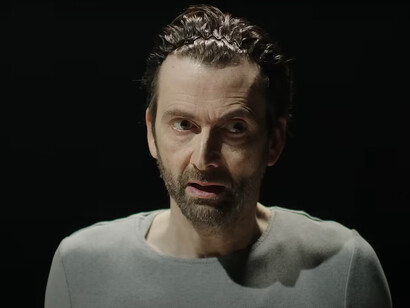
While the sonic aspect is lacking in the screen adaptation, the performance of the cast is enough to bring us to another world. To say that David Tennant has reached new heights would not give credit to this enormously talented actor, who has impressed us with many Shakespeare plays. As with his still-famous Hamlet soliloquy, his interpretation of the treacherous and tormented Macbeth compels the viewer to hang onto his every word.
Conscience doth make cowards of us all.1
Tennant’s MacBeth is jittery, but the performance is intense and controlled. It is easy to forget he is only acting. If the screen version lacks the sensory experience, the play lacks the intense feeling the viewer has when Macbeth is talking directly to the camera, as if talking to the public helps him maintain his sanity. As he shares his thoughts with the public, the insidious madness of the character makes the performance both hypnotic and unsettling. The tenant is inviting the public to understand his point of view, as twisted as it is.
Like Tennant, Cush Jumbo carves her own space with her interpretation of Lady Macbeth. The only character with an English accent, and dressed in a deceptive white, representing a purity that remains despite her sinister scheme, Jumbo’s calm descent into insanity is even more intense as it is slow, subtle, and reaches its peak in the iconic “out, damned spot” monologue. This performance is so unique in its quietness that it overshadows any preconceptions that might have existed to the viewer. Watched by an audience of two behind the glass wall, she is in her exit unapproachable, unsavable, and already gone.
To bed, to bed! There's knocking at the gate:
Come, come, come, come, give me your hand.
What's done cannot be undone.
To bed, to bed, to bed!
The rest of the cast, which includes Cal Macaninch as Banco and Jatinder Singh Randhawa as the drunken porter (who offers the public a surprising moment of respite, not to everyone’s taste), is chosen to perfection, although the deliveries do not always do justice to the magic of Shakespeare’s words. Shelley Maxwell’s choreographies turn the bloodiest and most dramatic scenes into elegant dance through the movements of the actors and the notes of Celtic music played by the orchestra behind a glass wall. The young Casper Knopf, in the role of Macduff's son, is one of the new talents to watch.
This adaptation of Macbeth leaves all your senses on high alert. In this 110-minute production, not a single one is wasted. The filmed adaptation made the play available to those who could not see it in the theater, and the play became a truly remarkable movie.
References
1 David Tennant, Hamlet, To be, or not to be, Soliloquy, 2009.