English
 Español
 Français
 Deutsch
 Italiano
 Português
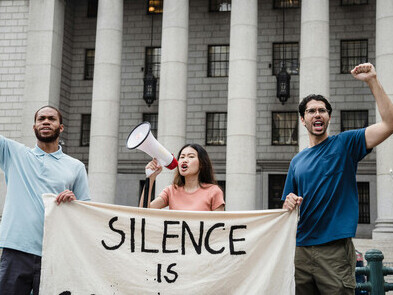
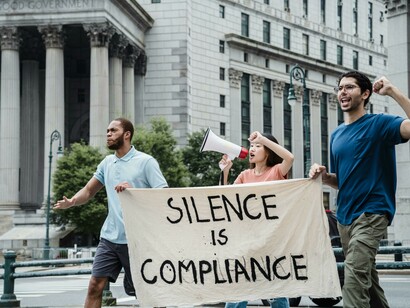
Freedom of speech is the cornerstone of any free society. The right for any person to speak their mind is what distinguishes free countries from their authoritarian counterparts. Britain seems to have forgotten this. Incidents over the last few weeks have steered us onto a slippery slope. If the UK wants to have any hope of escaping this path, it must stand up for the rights of its people.
After Graham Linehan was arrested by armed police officers at Heathrow Airport, the government said1 its online speech laws needed to be reviewed. Whatever one thinks of Linehan’s virulent activism, we should all care about free speech. It is ironic the government adopted the position that free speech should be more clearly stated in law so soon after the Online Safety Act came into force. The Online Safety Act contains a wide variety of rules that raise concerns for those of us worried about free speech. It remains to be seen if the government is serious about putting the right to free speech into British law.
The story of Allison Pearson2 dominated headlines back in 2024. Pearson has claimed the police accused her of violating the Public Order Act after uploading a post to social media that was viewed to be “racist and inflammatory.” Meanwhile, police probed the case of a nine-year-old3who said to a fellow classmate that they smelled like “fish.” It’s ridiculous that such a scenario is even being investigated, but when you police people’s speech, these are the consequences.
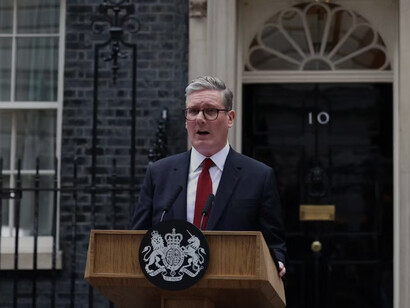
The government’s decision to police what can and cannot be said through so-called ‘non-crime hate incidents’ is a fundamental overreach of its powers. Through legislating what people are able to say, Starmer and his government have taken on the role of judge, jury, and executioner.
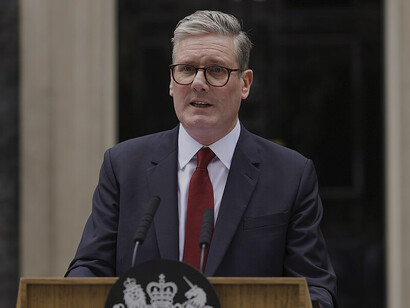
Starmer’s track record makes matters worse. He has done little to ease the concerns of civil liberty groups and freedom of speech campaigners. His decision to scrap3 the Higher Education Act, which sought to protect freedom of speech on university campuses, is a worrying sign. When it comes to freedom of speech, the prime minister appears happy to flout personal freedoms if it makes his job easier.
But the government’s hand isn’t forced on this matter. It doesn’t have to take such an Orwellian approach. If it really wants to protect people’s right to speech, it can take sensible steps to ensure this. The first of these is through redefining, or even decriminalizing, what we mean by “hate speech.”
The Public Order Act4 states that a “person who uses threatening, abusive, or insulting words… is guilty of an offense.” The phrase “insulting” lends itself to legal ambiguity. What constitutes insulting language? Is it whether someone felt insulted, or is it perhaps reliant on the intent behind what was said? If the person involved is “likely to be caused harassment, alarm, or distress,”this is too broad a definition to be substantial in any capacity.
The government should take steps to reevaluate the status quo of Britain’s free speech laws and change what constitutes hateful language. That is not to say the government should do away with all laws that restrict speech. Falsely shouting “fire” in a crowded theater, for example, should remain illegal. But when a law is dependent on subjective feelings rather than objective facts, governance becomes impossible, and free speech suffers as a result.
What Starmer shouldn’t do, however, is double down as the Scottish Government did. The meaning behind the Hate Crime Bill was well-founded. Then First Minister Hamza Yousaf took steps that he believed would protect minority rights in Scotland. But in doing so, he took other groups’ rights away in the process. Ardent critics of the bill, such as J.K. Rowling, argued5 that the law was “wide open to abuse,” and she is correct in this claim.
The bill would take legal power out of the hands of the police and judiciary and hand it to ordinary people. Whilst this may sound empowering on paper, power in the wrong hands can be dangerous. Overnight, the act of taking offense at something could become a weapon if misused. Whilst the bill never came to fruition, Mr. Yousaf’s desire to push it through Holyrood sent a stark message to Keir Starmer: you can try to limit people’s speech, but freedom will win.
Britain is at a crossroads, and Starmer is behind the wheel. To the left is an Orwellian-esque society where the reach of the police and state is extended far beyond what it should ever be. To the right, a society that fosters discussion and debates, where people are free to spout and exchange ideas as they wish. The British public has its fingers crossed that Keir Starmer will make the right choice, but with his current track record nobody knows which way the prime minister will go.
This article was written by Oliver Dean. Oliver is a British writer and student at the London School of Economics and Political Science, where he works with the Hayek Society.
References
1 Online speech laws need to be reviewed after Linehan arrest, says Streeting.
2 What is the Allison Pearson ‘racist’ tweet incident all about?
3 Children as young as nine being probed by police for classroom ‘non-crime hate incidents’.
4 Public Order Act 1986.
5 Scottish Hate Crime Law Takes Effect as Critics Warn It Will Stifle Speech.