English
 Español
 Français
 Deutsch
 Italiano
 Português
I have written before on this subject, but now I'd like to expand further on it.
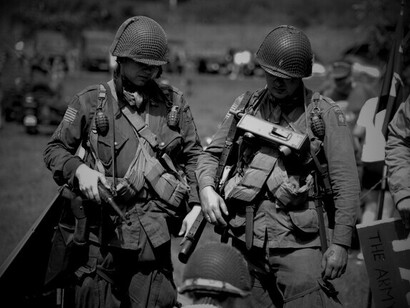
The First World War was a disaster for Victorian/Edwardian Britain and for the British Empire. Over a million British and colonial soldiers died in the conflict, and a hundred thousand civilians. The nation was practically bankrupted by the terrifying cost of the conflict, as were most other European states, especially the instigators, Germany and Austria-Hungary. The Treaty of Versailles was supposed to redefine borders in a way that would remedy the iniquity of the invasions, and to recompense the victors for the outrage caused. However, all it did was bankrupt Germany, pave the way for Hitler to become Chancellor, and create the conditions for World War II some twenty years later.
The appalling feebleness that enabled Adolf Hitler to rise unchallenged through the thirties decade was due to the loss of so many stalwart minds during the earlier conflict and the abandonment of the tough, pragmatic politics that had enabled the functioning of history's most successful empire throughout two centuries (which, despite modern criticisms, was largely a force for good in many corners of the globe). The terrible toll created by the Great War had so appalled the victors and so demoralized the survivors that nobody could imagine such a catastrophe could ever be recreated. It was indeed supposed to be the 'war to end all wars.
Disillusionment came all too soon.
Germany was equally dispirited by her defeat, and so when Hitler refuelled the fires and revived the patriotic spirit with his fanatical oratory, the German people, always prone to a herdlike disposition, responded to his deranged vision like corralled beasts suddenly released from their stockade. Adolf's egomania was given free rein, and his despot's dreams of world domination were kindled.
Had Britain stood up to the dictator when first he invaded Austria, then Czechoslovakia, then Poland, as Winston Churchill constantly advocated, there is little doubt that the full tragedy of the Second World War would have been avoided. But the waverers, the appeasers, and the highbrows won the day, Winston himself was excluded from Cabinet for a decade, and the seeds of the disaster were allowed to flourish.
After six tragic years the war was finally won, thanks to the late intervention of America, but the cost was terrible. The destruction of the British and European economies was profound, the fracturing of empire was initiated, not always to the benefit of the 'liberated', and the resilient nature of the British character, so steadfast since Tudor times, was undermined to a huge extent by the endless ordeal.
This revision was illustrated graphically by the growth of socialism and the effects of the Welfare State. No one would contest the morality of that enterprise, initiated as it was by the need for healing and restitution after the ordeals of the previous decades. However, the unforeseen effect was that the relationship between the populace and the administration was fundamentally altered.
Instead of being simply the guardian of law and order, the new British state became the guarantor against penury and affliction—the rescuer from hardship, ill health, and joblessness. All good things in themselves, but ultimately the destroyers of resilience and self-reliance. Gradually the system created much greater government interference, a vast financial commitment, and the loss of individual initiative and independence. The movers and shakers were replaced by loungers and dependents.
Established with the best of intentions, the Welfare State marked the erosion of Britain’s moral fibre and backbone and the loss of its global role and reputation. Of course safety nets are necessary in a civilised society, but a nation that spends such an amount of time, money, and energy pandering to itself is no longer capable of setting examples for others, and henceforth, Britain would not greatly do so. Even the potential benefits of Brexit—a last desperate attempt perhaps to rekindle her independent spirit—were squandered by a reluctance to fully grasp the advantages.
So many of the measures taken by the current Labour government—the attacks on private pensions, on private schools, on private healthcare, on property, on farming, on wealth creation, and on the gold reserves—all are indicative of the politics of resentment, and all are destructive of the driving forces of the economy. They are a negation of the ambition and invention that once made Britain the envy of the world.
The lesson, as always, is that the secret of good government is to enable, not to control. If you give individuals the permission and the conditions to utilise their skills to their own best advantage, then you will energise the economy. If you supervise them, and constrain them, and overtax them, and direct them, you will stultify all ambition and enterprise. You will ultimately emasculate them, as China will surely discover in the long run. You cannot regulate for perfection.
What Britain crucially needs at this challenging time in its history is a visionary who understands the needs of a world that is in crisis on many fronts, and who can promote a philosophy to deal with it. Someone to consolidate the nations of the United Kingdom again, and rekindle the true British spirit of old as Churchill did in that former time of dire crisis, and Thatcher did in the homegrown crisis of the seventies.
Is he or she there, hiding unrecognised somewhere amongst today's ranks of parliamentarians?