English
 Español
 Français
 Deutsch
 Italiano
 Português
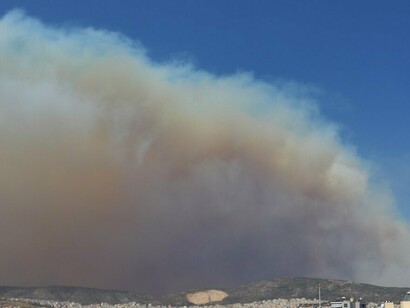
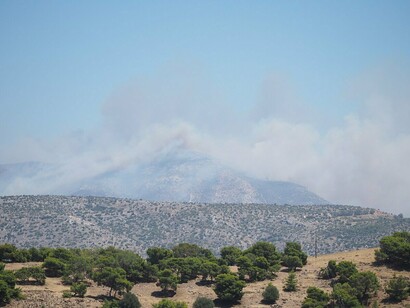
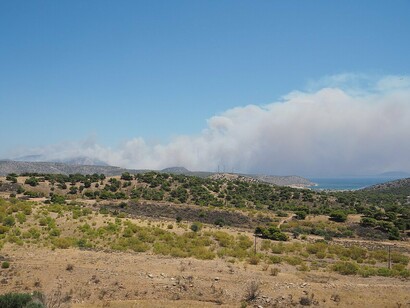
As I spend my summer in Greece sitting in a quiet barraki–beach bar, I can’t help but notice a problem that I’ve encountered all too many times. That problem being the pervasive threat of forest fires and the risks they present to communities such as the one I am currently located in. I still remember getting off the port of Rafina back in 2018 with thick black smoke blanketing the skies from the Mati fires. Or even more recently, in summer 2023, when I remember watching fires in Loutraki eviscerate the countryside just barely avoiding the nearby oil refinery. Fires like these have the potential to devastate towns and, in the case of Mati, kill over 100 people. In fact, from the time this was being written (July 2025), several fires have broken out all over Greece, making headlines around the world. What this makes me wonder is how local communities can be more resilient in the face of potentially existential threats such as fires?
Current strengths
In some areas, steps have been made in improving fire-fighting efforts, and the speed to initiate fire evacuations has shown significant strides in reducing fatalities–I get texts from the government to evacuate if I am in a dangerous area, as one anecdotal example. On the other hand, efforts have also targeted the clearing of overgrown, fire-prone plots of land, demonstrating a greater focus on preventative efforts, another case in point being my house needed its plots cleared to avoid fines from the city government. Investments in new technologies such as drones and sensors to scan for potential fires in high-risk areas have also been utilized for greater lengths than ever before. These new technologies enable a faster mobilization of firefighting forces as more fires are detected earlier, which can save countless lives and millions in damages. Still, these efforts, especially the plot clearing, will take years for it to come to complete fruition.
Shortcomings
On the other hand, little has been done in improving coordination between local and national authorities, which consists of a highly centralized command structure with little regional input. This can slow response times while also severely limiting regional authorities' governance over their own jurisdictions in time of emergency. As noted, the General Secretariat for Civil Protection, in coordination with the fire services, oversees all fire responses. It is because of this that what appears to be a highly coordinated response is, in reality, highly fragmented. This is reported by the OECD, where several national agencies have an overlap of responsibility, leading to severe communication issues in combating fast-spreading fires.
And lastly, firefighting efforts over the past 25 years have largely focused on suppression rather than prevention, while there have been some changes, such as brush clearing, suppression is still the main focus in Greece. In fact, for every 20 euros spent on fire suppression, only 1 euro is spent on prevention, far beyond the EU recommendation. A fire-fighting effort that revolves around suppression is only half the battle, as without widespread brush clearing along with other measures, the fires will keep coming back with more severity. This will only be exacerbated by the hotter and drier summers that are expected to hit Greece in the coming years, highlighting the importance of streamlined communication and faster response times.
A potential solution
To improve cross-agency communication, thus enabling faster deployment of firefighting forces, more needs to be done in the sphere of involving regional governments and their communities. Involving smaller governments and local networks can significantly increase response times and provide for more coordination while alleviating the burden on national agencies. For example, in the United States, wildfire response is regionally and locally organized with municipalities and states running departments through a mix of volunteer and professional forces.
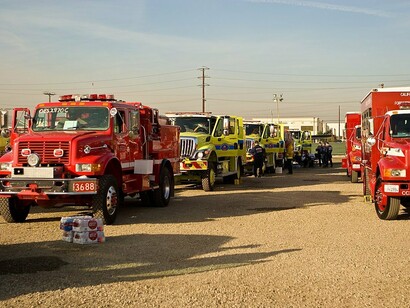
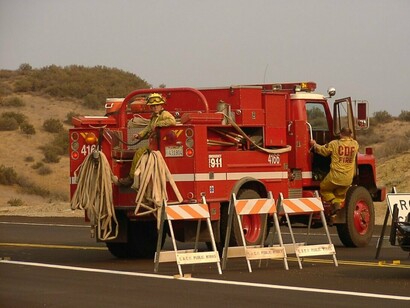
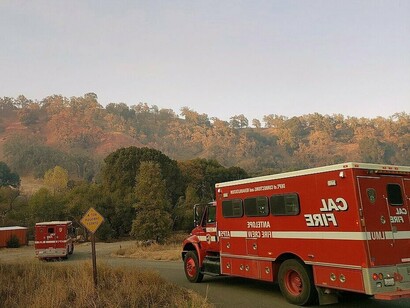
The most well-known of these agencies is the state-wide agency CalFire. CalFire is the state-run firefighting force and has jurisdiction over the state of California. It is the main organization responsible for both firefighting and forest prevention. It has considerable independence from the federal government. This means that while it is a centralized state agency, it has substantial flexibility to act within the state of California, something that is not the case in Greece with its overarching national agency. CalFire has its own central leadership but also relies heavily on partnerships with smaller municipalities and other volunteer organizations.
It’s through these collaborations that CalFire is able to respond urgently to fires and enable proper evacuations if necessary via its highly effective incident command system. This means they can engage faster with wildfires while having fewer communication bottlenecks coordinating with other agencies in their response, as CalFire is the premier firefighting agency within California. This allows them to work in not only fire suppression but prevention without needing federal permission in most cases. Its goal of keeping 95% of fires burning 10 acres or less highlights this commitment to safety and prevention. While a model like CalFire would not necessarily be transferable in its exact form in Greece, and the agency certainly is not perfect, CalFire can potentially serve as a blueprint for decentralizing Greek firefighting by giving more firefighting responsibilities to regions while retaining a national service.
Such a reform would have to be done over time and involve all levels of governance to ensure proper implementation and expertise is transferred. For example, a potential Greek format could have several regional agencies in areas that are deemed high risk and deserve special attention, such as the Peloponnesus or Attica. Transparent and sustainable funding mechanisms would need to be instituted to make sure that regions would have the ability to continuously operate these forces, at least in the summer season, while providing the incentive to do so. Whether it consists of a redirection of existing EU or national funds or the introduction of a new, albeit small, tax to fund regional fire departments. Crucially, more powers would have to be given to these new regional agencies to engage in more preventative means of fire fighting without needing central government permission, as is currently the case.
Toward a more resilient firefighting strategy
All in all, empowering regional governments to run their own fire agencies will not solve everything, but could play a role in creating more resilient and proactive communities that face down the threat of wildfires every summer. The problem of wildfires in Greece will continue to grow, and the initial responses to these fires are crucial. Solutions that emphasize smaller-scale implementation and stakeholder engagement, such as regionally operated fire departments, can play a significant role in a wider solution. These fire departments, with proper funding and staffing, would create shared responsibility and boost fire-fighting capabilities, which could help prevent small fires from becoming fiery infernos.