English
 Español
 Français
 Deutsch
 Italiano
 Português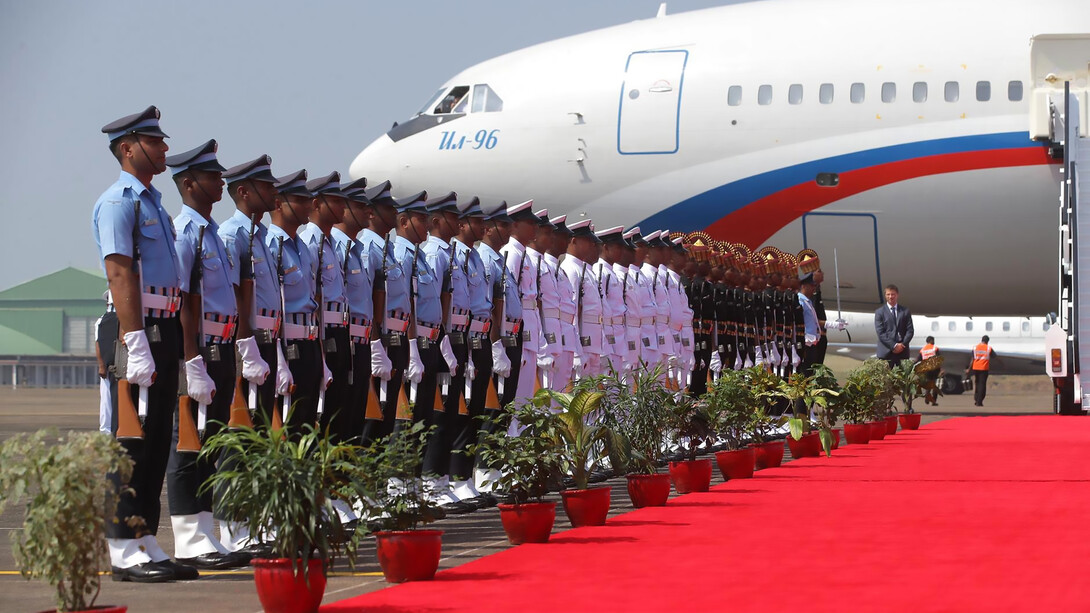
The fanfare that India mounted to receive Russian President Vladimir Putin on a two-day visit was only matched by the attention it received in the West and its media over the world’s largest democracy organizing such a grand welcome to the man whom they singularly blame for the Ukraine war and tense security climate in the region.
Every media house in the larger West, comprising the US and Europe, had its news-gathering teams’ sharp focus on Putin’s visit to New Delhi, the reception he received, and the outcomes of the bilateral talks held between their high-power delegations.
While India’s Prime Minister Narendra Modi broke protocol by receiving Putin himself at the airport, the two leaders drove together in a Toyota Fortuner SUV, although the Russian leader’s fortress-on-wheels Aurus Senat was available.
While there was no official explanation on why even Modi opted for a Toyota Fortuner over his fleet of high-security Range Rovers and Mercedes Maybach S650s, both European brands, a studied guess is that a Japanese brand helped avoid the awkwardness of Putin riding vehicles built by Britain and Germany, respectively, that had sanctioned Moscow over the Ukraine war.
The carpool diplomacy had earlier brought the two leaders together in Putin’s fortress-on-wheels Aurus Senat limousine in Tianjin, China, during the Shanghai Cooperation Organisation (SCO) conference in September. But before that, Putin had a ride with Trump in the latter’s limousine, The Beast, in Alaska.
Yet, the refrain in the Western media was, “How could India, the land of Mahatma Gandhi, accord such a welcome to the Russian leader ‘responsible’ for bloodletting in Ukraine?”
But what was brushed under the carpet, deliberately or not, was the fact that India and Russia—starting from the days of the USSR—have been close allies and strategic partners. India always saw Russia as its “all-weather friend” even as it maintained close ties with the West.
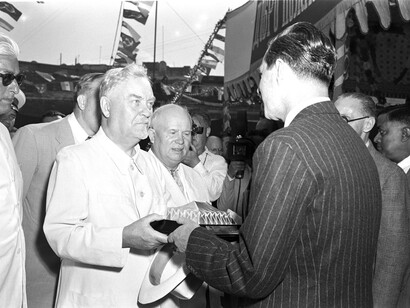
The socialist policies adopted by India’s first prime minister, Jawaharlal Nehru, who had the Himalayan task of lifting millions out of extreme poverty and yet providing employment through public sector investments, had pushed India closer to the Soviet Union than the US.
The 1971 India-Pakistan war that liberated East Pakistan, which has since become Bangladesh, under the leadership of his daughter, then prime minister Indira Gandhi, had sealed India’s pro-Soviet foreign policy.
While the US President Richard Nixon moved his Seventh Fleet, led by the nuclear carrier USS Enterprise, to the Bay of Bengal to pressure India, the Soviets rushed to India’s help by deploying their own naval groups and submarines in a countermove.
Eventually, Pakistan signed an instrument of surrender before India, thus leading to the liberation of Bangladesh.
So, right from Indian Independence in 1947 and through the Cold War, the Soviet Union (later Russia) has been India’s dependable ally and key supplier of military equipment.
But there is still a subtext to the kind of overt display of friendship that India extended to Putin.
While India had long been a “natural ally” of the US, two of the world’s largest democracies, that relationship had come under some amount of strain in recent months after Washington slapped 50 percent tariffs on Indian imports. The reason was quite straightforward. President Donald Trump wanted India to stop its oil imports from Russia.
Indian Prime Minister Narendra Modi was among the first leaders to visit Trump after he assumed his second term in the White House early this year. It was considered a smart diplomatic move to further strengthen the friendship the two leaders had developed during Trump 1.0, when Modi never lost an opportunity to address the US leader as “my friend Donald Trump.”
Modi’s own Bharatiya Janata Party (BJP) and its Hindu right-wing ecosystem had feted the conservative Trump as one of its own and held prayer meetings ahead of his elections. Some even built a temple with Trump as its deity.
But all that morphed into a picture of disappointment and eventually disdain when Trump slapped a 50 percent tariff on India, governed by Modi.
Trump taking credit for ending a brief military skirmish between India and Pakistan in May worsened the scenario. India had launched its Operation Sindoor to hit terror infrastructure within Pakistan after Islamist terrorists brutally shot and killed 26 innocent civilians, all tourists, right before the eyes of their families in Pahalgam, in Kashmir.
But it was Trump who jumped the gun to announce the ceasefire even before India or Pakistan uttered a word. He went on to claim that both sides agreed to the ceasefire at his behest and repeated it multiple times at several forums since then, angering India.
Modi has not met Trump, although the two leaders have exchanged phone calls. Putin’s visit to New Delhi was pitched against this backdrop of underlying tensions with Washington.
Reduced oil imports
With its exports to America taking a severe hit due to the 50 percent tariffs, India has, of late, begun reducing its oil imports from Russia to please Trump. But Putin, in his joint statement in New Delhi, promised “uninterrupted” shipments of energy products, including oil, gas, and coal, in a clear message to Washington that Russia was not unduly worried about its oil exports to India.
Russian assistance in expanding the Kudankulam nuclear energy plant in Tamil Nadu, South India, to full capacity. While two reactors are already operational, Moscow is committed to ensuring it reaches full capacity, with the four plants under construction set to make it India’s biggest nuclear energy plant.
The Russian president promised to improve the trade volume between the two countries to $100 billion by 2030, from the current $65 billion. Russia remains India’s biggest military supplier, although over the past few decades, New Delhi has been gravitating towards the US and Europe for its military wares, including fighter jets.
Another significant outcome of Putin’s visit was the Reciprocal Exchange of Logistics Support (Relos) that enables access to each other’s facilities for military and scientific projects. Widely seen as the most far-reaching agreement between the two countries in the post-Soviet era, this allows the armed forces of the two countries to access facilities in either country.
It would also immensely help the Indian navy and scientific teams to berth at any of Russia’s Arctic ports to conduct experiments, a huge deal since India is far away from the region.
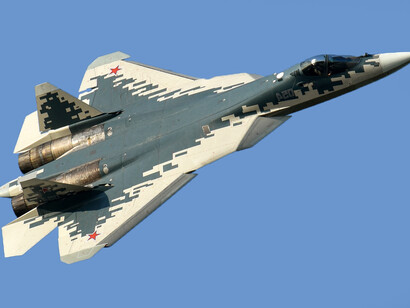
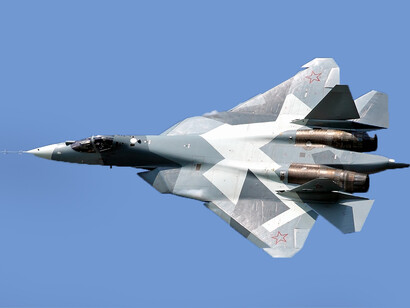
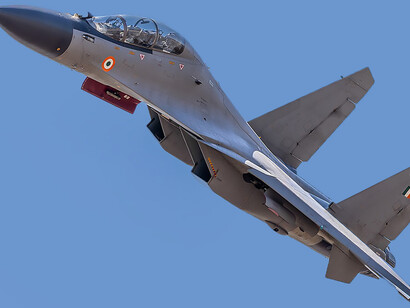
Also on the table were the fifth-generation Sukhoi-57 stealth fighter jets and S-500 air defense systems. India already manufactures Sukhoi-30 multi-role combat aircraft and operates S-400 air defense systems that played a key role in the recent battle with Pakistan.
Balancing act
But the fact remains that the US is India’s largest trade partner at $212 billion in 2024, although it slipped to $191 billion due to the tariff.
The Indo-US trade relation is seemingly set for better days, as an American delegation visited Delhi a week after Putin and agreed to more than double the trade volume to $500 billion by 2030, and this includes more oil imports to supplement the reduction from Russia.
The EU is India’s second-largest trading partner, accounting for trade in goods worth about €120 billion in 2024, an increase of almost 90 percent over the last decade.
India’s non-aligned foreign policy had, over the years, transformed into a multi-aligned approach. New Delhi has time and again reminded the West that being friends with Russia is not an antithesis to its continued friendship and strategic ties with the US and Europe.
In fact, the European Union leadership would be the chief guests at India’s grand Republic Day pageant in New Delhi on January 26, 2026. President of the European Commission Ursula von der Leyen and President of the European Council Antonio Costa have agreed to be the chief guests at India’s national day celebrations that include a much-watched parade of its military might.
But India’s relationship with Russia has an added dimension due to the significant role the two countries play in the BRICS and SCO, the multilateral alignment of emerging economies and Eurasian nations, respectively.
The BRICS bank and the proposed SCO bank aim at reducing the dependence of their members on the West-dominated World Bank and other funding agencies.
De-dollarization
But what is more disconcerting for the US is the idea of exploring the possibility of either developing a new currency solely for bilateral trade between its members or the Indo-Russian model of trading in local currencies, leaving out the US dollar.
Russia had in 2024 reported that 90 percent of its trade with BRICS partners was conducted in national currencies. China and India have engaged in rupee-yuan trade agreements, while Brazil has also pursued such deals using its real.
Putin disclosed at the joint address with Modi that the two countries were conducting 96 percent of their bilateral trade in Indian rupee and Russian ruble.
But there is nothing to indicate a coordinated assault on the US dollar that still remains the world’s most preferred currency.
The emergence of the BRICS and SCO is, however, pointing at a gradual move towards a multipolar world order, which Washington despises but enthuses major European powers.