English
 Español
 Français
 Deutsch
 Italiano
 Português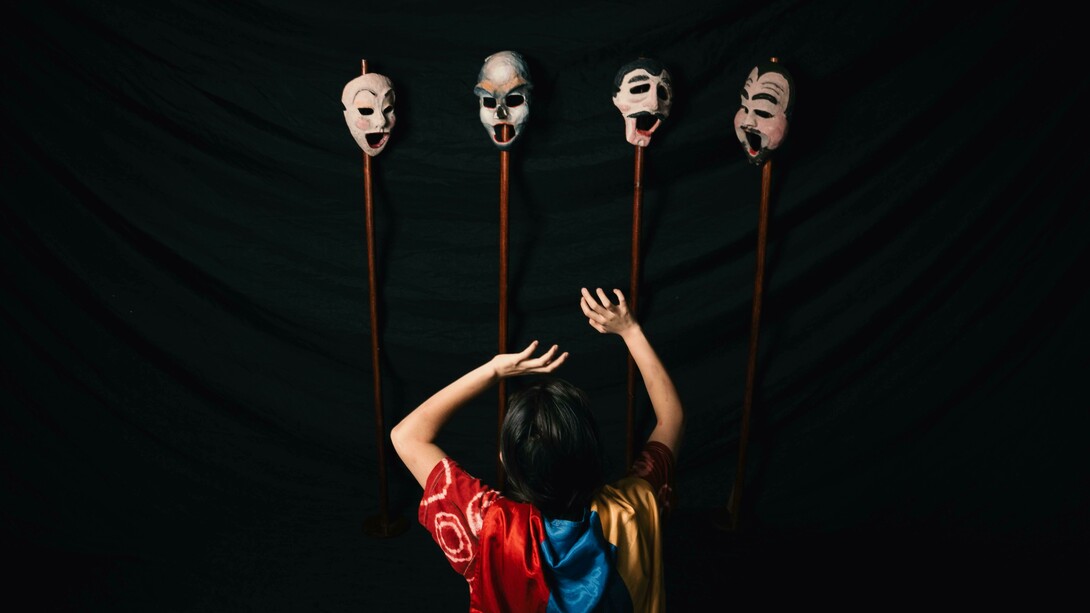
Lately, I’ve felt watched. Not by friends or family, but by something far more abstract. A presence that’s always on, always watching. Not Orwell’s Big Brother in a uniform, but something sleeker, smarter, and quieter. Today, Big Brother is a stream of code. An algorithm dressed as empowerment. It’s the curated Instagram feed, the hypnotic scroll of TikToks, and the aesthetic trends that appear to offer freedom but really offer… a choice between two cages.
This is the paradox of modern identity: we are invited to express ourselves, but only through pre-approved templates. Are you Blair or Serena? A Clean Girl or a Rockstar Girlfriend? Type A or Type B? Kardashian or Diana? Each scroll demands we pick a side, adopt a role. But human nature was never meant to fit neatly into archetypes. We are fluid, contradictory, and impulsive. We are all of the above and none of them. We are not content. We are chaos. And that’s not a bug; it’s a feature.
What we’re witnessing isn’t just a cultural moment; it’s the maturation of a system that transforms people into brands and presence into performance. The feed becomes our personal shopfront, where each post is a product and each story a sales pitch. We spend more time curating than creating. We no longer live; we manage perception.
And even when no one is watching, we keep performing because the watcher is now within us. We’ve internalised the gaze. We can’t take the mask off, because somewhere along the way, it fused with our skin. We no longer know where the character ends and the self begins. We are always “on”, caught in a loop of aesthetic and existential exhaustion.
But this loop comes at a cost. Not just to our sense of identity, but to the spaces where genuine creativity could once breathe. Real creation doesn’t happen under surveillance. It happens in the margins, in the silences, in the boredom we’ve been taught to fear. Boredom is the last refuge from a system addicted to productivity. It’s where the mind stops consuming and starts imagining.
That’s why our best ideas arrive in the quiet, when we’re driving aimlessly, staring at the ceiling, or falling asleep. And yet, by morning, they’ve often vanished. Why? Because the day rushes in, and with it, the performance resumes.
Creativity isn’t dead; it has just gone underground. It lives in spaces with no cameras, no likes, and no algorithms. It grows in solitude and contradiction. We’ve been looking for inspiration in timelines, when we should have been looking into the blank space, into the messy and fertile void of nothingness.
This is perhaps why philosophy, too, has faded into the background of modern life. Tolerated as an academic curiosity but rarely taken seriously as a way of being. In a world obsessed with metrics and deliverables, thought without action is dismissed as impractical. But philosophy is the art of lingering in the question. And in an era of instant answers, lingering feels almost subversive.
Capitalism doesn’t know what to do with slow thought. It cannot monetise contemplation. Thinking, really thinking, is inefficient. It takes time, opens uncomfortable doors, and disrupts tidy narratives. There’s no app to track epiphanies. And yet, that’s precisely why it matters.
In our race to be useful, we’ve forgotten how to be curious. We’ve lost the space for thoughts that confuse us, that destabilise before they clarify, that introduce us to parts of ourselves we didn’t know existed. This isn’t a decline in intelligence; it’s a systemic erosion of the conditions that allow critical thinking to survive.
Maybe thought doesn’t need to be solved. Maybe its purpose is to prepare the ground. To make space for arrival. That’s what makes it fertile, even when it seems useless. Especially when it seems useless.
I believe in creating non-productive spaces. Places where nothing is expected. Where we can write, draw, sing, reflect, cry, and be. Where we can be useless and yet profoundly generative. Where originality isn’t a demand but an accident. Where creativity is not curated but arises spontaneously, like a weed growing through concrete.
The question is not “How do we create something new?” But “How do we allow something unexpected to happen?” True creativity is not manufactured. It happens when we are distracted, open, messy, and unafraid of failure.
Fertile uselessness is exactly that: the revolutionary power of saying no to constant output. Of creating not to be seen, but to feel. Of embracing the beauty of error, of improvisation, of unplanned chaos. A chaos that is not aesthetic but real and, therefore, deeply human.
This piece doesn’t offer a cure for the digital loop. It would betray its own spirit if it did. Instead, it offers the possibility of space. Space to consider another way. A way where boredom is welcome. Where being still is not laziness but resistance. Where we can simply be without performance, without production.
Not a product. Not a persona. But a person.
To feel, to falter, to flow.
To be.
And in that gentle rebellion, you may just find something truly original.
Not because you chased it.
But because you stopped chasing anything at all.