English
 Español
 Français
 Deutsch
 Italiano
 Português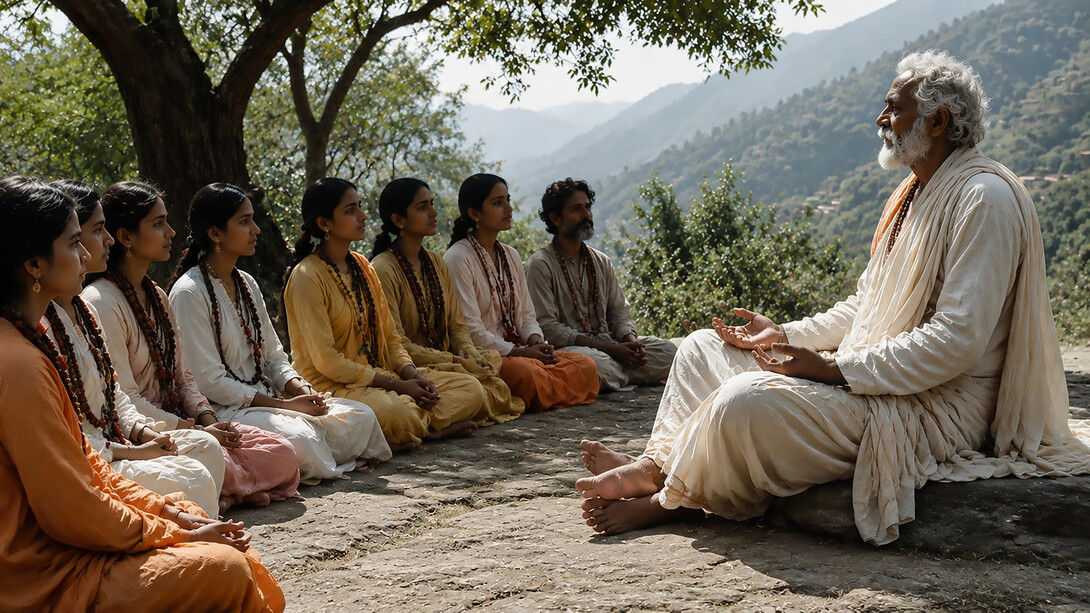
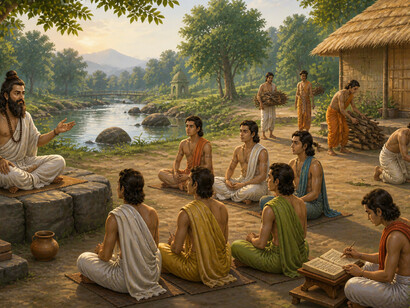
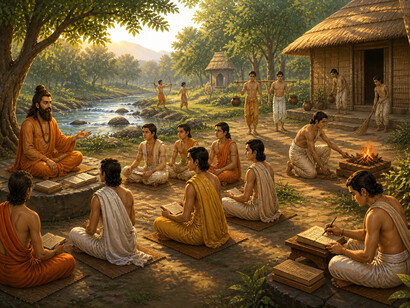
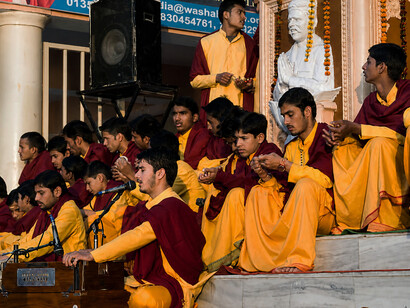
Ancient Indian gurukuls were not ordinary schools. They were living ecosystems of education where knowledge was woven into daily life, character, discipline, service, contemplation, and wisdom. A student did not merely attend classes. He or she lived with the guru, observed conduct, practiced restraint, learned through action, and matured through inner transformation.
The Sanskrit word 'gurukula' combines 'guru' (illumined guide) and 'kula' (family or household). This reveals a profound truth: education was not institutional alone; it was relational. The teacher was not simply an instructor but a living example of dharma, clarity, and responsibility.
Ancient Indian texts repeatedly show that true education was meant to shape the whole human being. In the Taittiriya Upanishad, one of the clearest instructions on education appears:
(सत्यं वद। धर्मं चर। स्वाध्यायान्मा प्रमदः।)
(Speak the truth. Practice righteousness. Never neglect self-study.)
This single verse captures the essence of gurukul life. Knowledge was not for ego, career status, or competition. It was for truthfulness, right action, and awakening.
Modern education often excels at delivering information, whereas ancient gurukuls specialized in the formation of the person. They developed memory, emotional balance, speech, endurance, ethics, leadership, humility, ecological awareness, and spiritual intelligence.
Among the many practices followed in gurukuls, ten astonishing disciplines stand out. They reveal a timeless model of human development that remains deeply relevant today.
Shabdashakti: the power of speech
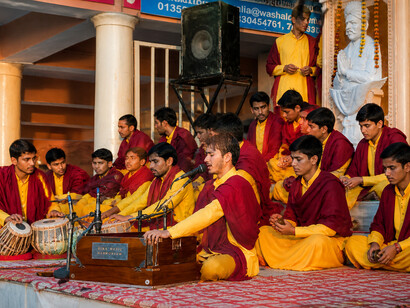
Speech was considered sacred in Vedic culture. Words could heal, guide, inspire, negotiate peace, or create disorder. That is why students were trained in pronunciation, articulation, tone, rhythm, and truthful communication.
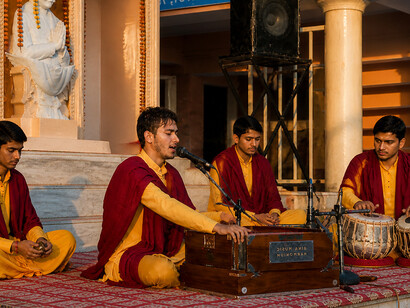
In the Vedic tradition, Shiksha (phonetics) was one of the six Vedangas, the limbs of Vedic learning. Recitation required exact pitch, accent, and breath control. A slight mistake in sound could alter meaning, and this rigorous training sharpened attention and memory.
The Chandogya Upanishad glorifies speech as a primary force of expression. In Indian thought, Vak (speech) is not merely sound but conscious power. Students learned clear pronunciation, persuasive expression, respectful dialogue, scriptural recitation, the discipline of listening before speaking, and the importance of speaking only what is beneficial and true. Later political texts like the Arthashastra also emphasize measured speech in diplomacy and governance.
In modern contexts, communication remains one of the most valuable life skills. Leadership, teaching, negotiation, public speaking, counseling, and relationships all depend on it, yet modern culture often rewards speed over clarity and volume over wisdom. The gurukul model reminds us that powerful speech begins with disciplined thought and inner integrity.
Mauna Sadhana: the discipline of silence
Silence was not seen as emptiness but as a source of intelligence. Students in gurukuls practiced periods of mauna (intentional silence), which helped conserve mental energy, reduce impulsive speech, and deepen observation. Silence sharpened awareness of thoughts, emotions, surroundings, and the subtle teachings of nature.
In many Upanishadic traditions, truth is realized not only through words but beyond them, and silence itself becomes a teacher. When speech is reduced, the noise of the mind becomes visible, and what was unconscious becomes conscious. Through this practice, students developed self-control, awareness of thought, emotional regulation, deep listening, patience, and presence.
In today’s overstimulated world of constant notifications and reactive communication, silence has become even more essential. Modern psychology confirms that mindful pauses improve concentration, emotional regulation, creativity, and stress recovery. Even a few minutes of daily silence can serve as a modern continuation of this ancient discipline.
Jvalita Sadhana: ignited awareness and alertness
The word jvalita means blazing or ignited, and this discipline refers to awakened alertness, mental sharpness, and readiness. Students were trained to remain attentive in study, nature, service, and self-observation, learning to notice details, respond quickly, and remain mentally awake rather than distracted.
Practices such as focused gazing, disciplined movement, breath awareness, and memorization cultivated this state. Yogic traditions later preserved similar methods, such as trataka (steady gazing), described in the Hatha Yoga Pradipika. An alert mind can learn faster, act wisely, and avoid danger. Through such training, students developed concentration, presence under pressure, situational awareness, fast comprehension, mental endurance, and decisive action.
In an age of fragmented attention, this discipline is invaluable. Constant multitasking weakens sustained focus, whereas ancient training reminds us that attention is a trainable power benefiting professionals, athletes, students, and creators alike.
Vashavarti: self-mastery over senses and desires
One of the greatest goals of ancient education was not control over others but mastery over oneself. Vashavarti points toward command over impulses, cravings, emotional reactions, and wandering senses. A person ruled by every desire becomes unstable, while a person guided by discernment becomes free.
The Bhagavad Gita acknowledges the mind's restless nature and teaches that, through practice and detachment, it can be mastered. Students learned moderation in food, sleep, speech, possessions, and emotional responses.
(असंशयं महाबाहो मनो दुर्निग्रहं चलम्।) (अभ्यासेन तु कौन्तेय वैराग्येण च गृह्यते॥)
(Undoubtedly, the mind is restless and difficult to restrain, but through practice and detachment it can be mastered.)
In modern society, which often encourages endless consumption, this discipline is especially relevant. Addictions, impulsive habits, and emotional instability are widespread, while psychology now recognizes the importance of self-regulation, delayed gratification, and emotional intelligence—principles long understood in ancient traditions.
Seva Dharma: education through selfless service
In gurukuls, students actively participated in daily responsibilities such as cleaning, collecting firewood, fetching water, caring for animals, and supporting the household. These were not considered low tasks but essential forms of character training. Service removed entitlement, cultivated gratitude, and reinforced the dignity of all work.
Through such practices, students developed responsibility, cooperation, respect for labor, gratitude, team spirit, and compassion. Many dharmic traditions praise action performed without selfish attachment, a principle later articulated in Karma Yoga.
In modern education, service learning has re-emerged as a powerful tool for building empathy and leadership. Engaging young people in meaningful responsibility fosters maturity and social awareness.
Swadhyaya: the discipline of self-study
Ancient students memorized texts, reflected deeply, debated ideas, and examined their own minds. Swadhyaya encompassed both the study of sacred knowledge and the study of the self.
Students were encouraged not only to repeat teachings but to question and understand them by asking what truth is, what causes suffering, what duty means, who they are beyond roles, and how knowledge should be lived.
Today, while information is abundant, reflection is often lacking. Practices such as journaling, deep reading, contemplation, and honest self-inquiry serve as modern expressions of swadhyaya.
Brahmacharya: conservation of energy and purposeful living
Brahmacharya, often misunderstood narrowly, referred to disciplined living aligned with higher purpose. It included moderation, integrity, clarity of intention, respectful relationships, and wise use of energy.
Students followed structured routines that minimized distraction and maximized growth, cultivating focus, stability, moral strength, respectful conduct, energy management, and long-term vision.
In modern life, where overstimulation and scattered attention are common, this principle can be understood as intentional living rather than impulsive behavior.
Sharira Sadhana: physical discipline and vital health
Gurukuls did not separate mind from body. Students engaged in physical training through yoga, martial exercises, walking, outdoor labor, breath practices, and interaction with nature. Strength and vitality were seen as essential supports for mental clarity.
Training could include yogic postures, martial arts, archery, horse riding, farming activities, breath regulation, and nature walks.
In contemporary life, sedentary habits contribute to fatigue and reduced cognitive performance, while modern research increasingly confirms the deep connection between physical movement and mental function.
Prakriti Sambandha: learning in harmony with nature
Gurukuls were often situated in natural environments such as forests and riverbanks, where nature itself became a teacher. Students observed seasonal cycles, celestial patterns, and ecological relationships, developing humility and environmental awareness.
Learning in open spaces enhanced mental clarity and receptivity. Vedic traditions revered natural elements as sacred, not as resources to be exploited.
Today’s ecological crisis highlights the importance of reconnecting with nature, and practices such as outdoor learning and environmental education help restore both psychological and ecological balance.
Guru Bhakti and character formation
The final discipline emphasized reverence for the teacher and commitment to character. The guru was honored not as a figure of authority alone but as one who dispels ignorance. Students learned by observing the teacher’s conduct, speech, and values.
This relationship cultivated humility, integrity, courage, gratitude, patience, duty, and truthfulness. The maxim “Vidya dadati vinayam” reminds us that knowledge gives humility, and without humility, knowledge can become dangerous.
In modern contexts, mentorship continues to play a vital role in shaping both skill and character.
Why Gurukul education still matters
Ancient gurukuls were not meant to be copied mechanically, yet their principles remain timeless. They aimed to develop a clear mind, disciplined body, truthful character, emotional balance, respectful speech, ecological awareness, self-knowledge, responsibility, wisdom, and inner freedom.
While modern systems often produce specialists, gurukuls sought to cultivate integrated human beings. Many contemporary challenges—anxiety, distraction, and disconnection—require inner education, not just information.
A modern Gurukul for everyday life
These teachings can still be applied today through simple practices such as maintaining daily silence, speaking truthfully, reducing impulsive habits, reading deeply, serving others, exercising consciously, spending time in nature, journaling, learning from mentors, and living with purpose. These small disciplines gradually rebuild the human being from within.
Conclusion
The greatness of ancient gurukuls lay not in their structure but in their understanding of human potential. They recognized that education must transform conduct, perception, and awareness.
The ten disciplines of gurukul life remind us that true learning is not accumulation but refinement. When speech becomes truthful, the mind becomes quiet, senses become balanced, service becomes natural, and knowledge becomes humility, education fulfills its highest purpose.
That wisdom is not merely ancient. It is eternal.