English
 Español
 Français
 Deutsch
 Italiano
 Português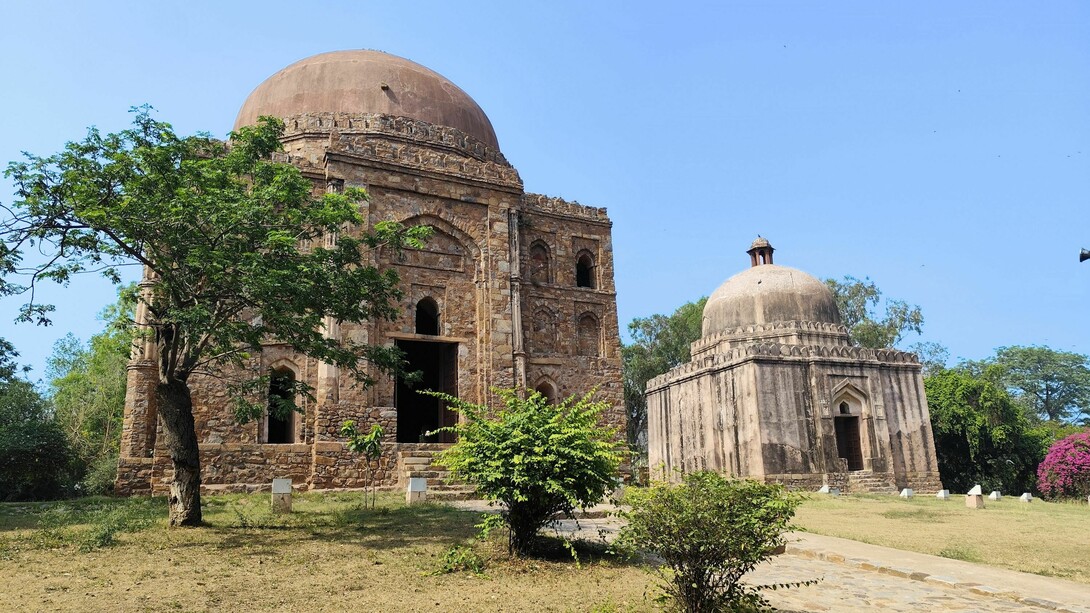
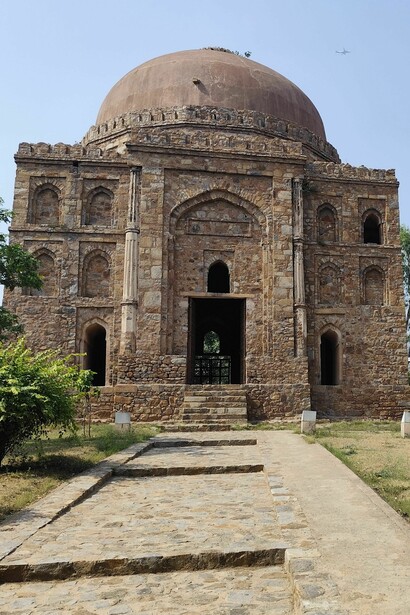
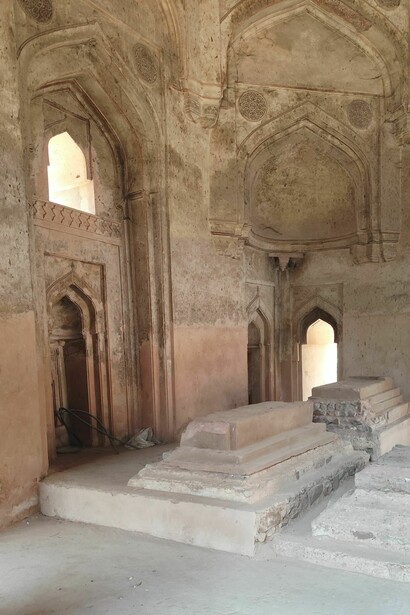
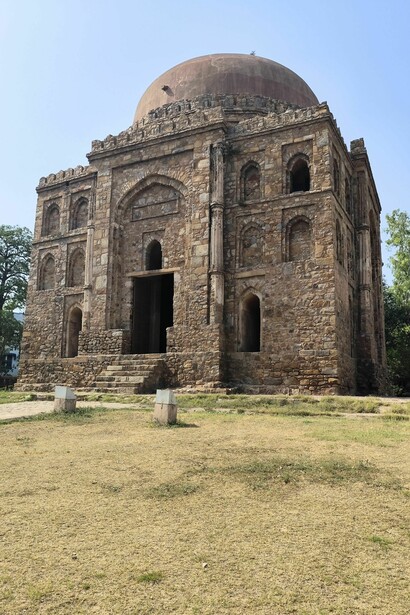
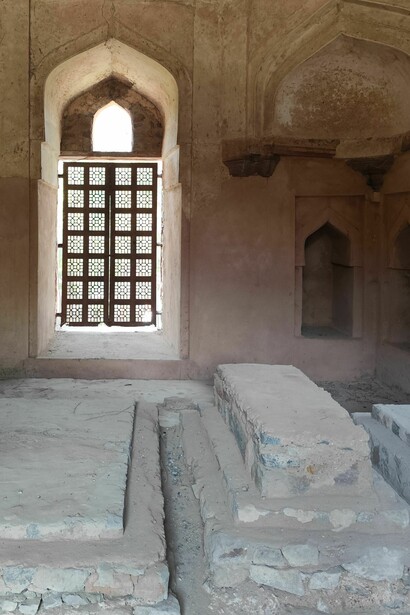
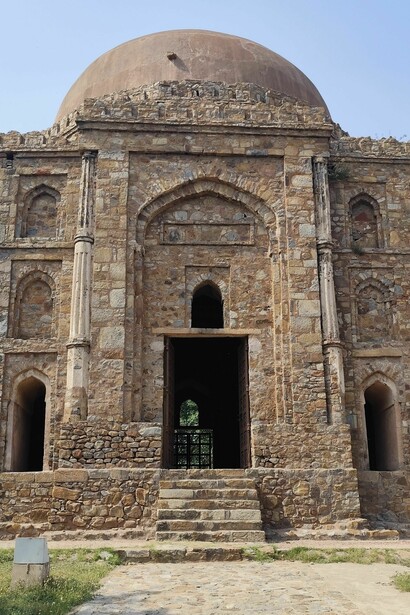
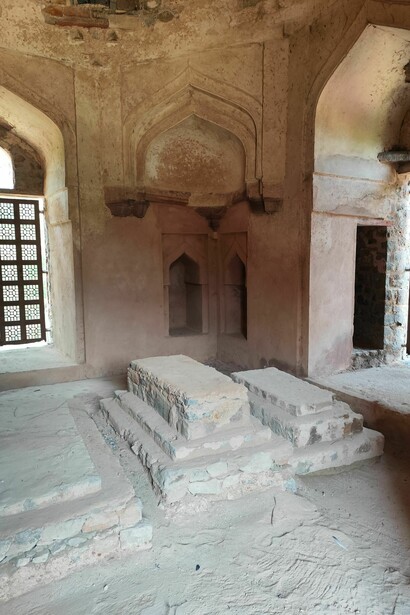
In New Delhi, not far from the cafés and boutiques of Hauz Khas Village, two medieval, domed tombs sit beside a road in partial obscurity. Most people pass them without noticing, although sometimes folks wandering the archeological trail will stop by and take selfies. The structures are known simply as the Dadi-Poti tombs: the “Grandmother” and the “Granddaughter” tombs, because one structure is larger and the other smaller. Beyond that, nobody knows much about them except some obscure history about ruling dynasties that has been half-forgotten even by many historians.
What remains is not simply a pair of tombs, but a meditation on historical erasure and what we do when stone doesn’t want to let us forget completely, but doesn’t supply all the answers we would like to have. No historian knows exactly who was buried in those tombs. There are no inscriptions identifying the dead, no surviving records that explain the relationship between the two buildings, and no oral tradition preserving any identities. The names “Dadi” and “Poti” are folk inventions that emerged later from the size difference between the tombs themselves and their proximity to each other.
So these tombs stand as reminders of how thoroughly history can erase human identity while leaving enough stone behind to make folks wonder who it was that died —a probably unsolvable mystery in this case. This uncertainty is precisely what gives the structures their strange emotional power. We will never know who these people were or why these structures were built next to each other in different dynasties.
In lieu of that, the people of the area named the nameless, resolving all ambiguity to their satisfaction by giving the stones a relationship and a story that becomes a small human act of improvised warmth which no scientific or archaeological certainty can ever reach.
Indeed, the two tombs come from different periods of the Delhi Sultanate, the series of Muslim dynasties that ruled large parts of northern India before the arrival of the Mughal Empire, invaders from Central Asia who reigned from the 1500s to the British occupation. The smaller tomb is generally associated with the Tughlaq period of the fourteenth century, while the larger structure seems to belong to the later Lodi period of the fifteenth century.
So folk inventions already have it wrong in that the granddaughter is older than the grandmother. To the inhabitants of the region, who are not shooting for historical truth, it does not matter.
The Tughlaq dynasty ruled during one of the most turbulent periods in medieval Indian history. Its most famous ruler, Muhammad bin Tughlaq, became legendary for grand and often disastrous political experiments. He attempted to move the capital of India hundreds of miles southward, introduced forms of “token” currency far ahead of their time and imposed severe taxation policies that provoked unrest and famine.
Historians have long debated whether he was brilliant, nutty or both. Still, basically, he was a well-read dictator who wanted a strong centralized government and military and had the imagination to find creative, grandiose and alternative ways to fund it (which always failed).
The architecture of the Tughlaq era actually reflects this atmosphere of instability and militarization, as if the entire nation became armed in style as well as content. Tughlaq buildings often resemble fortresses as much as monuments. The larger tomb appears to belong to the later Lodi dynasty, the final ruling house of the Delhi Sultanate before the Mughal conquest in 1526. The Lodis were of Afghan origin, and their architecture reveals a significant shift in mood and style. Lodi tombs became more balanced, refined and ornamental.
This transition matters because the Lodi period forms a bridge between the older Delhi Sultanate and the later Mughal civilization that would eventually produce monuments such as Humayun’s Tomb and the Taj Mahal. In a sense, both Dadi-Poti tombs contain the DNA of Indo-Islamic architecture across two centuries. The two structures stand side by side, one harsher and older, the other more refined and anticipatory of the Mughal future.
Yet this architectural history fails to answer the central question: who were the dead? Even if biological material survived the climate and centuries of decay, DNA alone could reveal little without known descendants for comparison anyway. Furthermore, these are Islamic tombs, and thus excavation of graves remains culturally and religiously sensitive.
The uncertainty surrounding the tombs also reflects a broader truth about Delhi itself. Delhi is not merely one city, but the accumulated remains of many cities layered atop one another across a millennium. Empires rose and collapsed here repeatedly. Dynasties conquered one another, languages changed, religions competed for power, and entire ruling classes disappeared into historical obscurity at the drop of a hat. In such a landscape, anonymity becomes almost inevitable. The tombs can symbolize the ephemerality of political power in this area of the world.
Today they exist in the strange environment of modern Delhi, where medieval graves stand beside e-rickshaw traffic, apartment blocks, fashionable cafés and tattoo parlors. Young professionals and university students pass within meters of anonymous dead from six hundred years ago. The contrast produces a bizarre effect: the collision of hypermodern urban life with the near-total disappearance of historical memory.
The Dadi-Poti tombs, therefore, become more than archaeological curiosities. They reveal something essential about history itself. Political systems that once appeared permanent, the Tughlaqs, the Lodis and even the later Mughals, eventually vanished. Their rulers imagined dynastic continuity, but instead, many of their names disappeared entirely. Stone survives longer than names, and gives the lie, mostly, to the significance of names.
What remains in New Delhi today is therefore not simply a pair of tombs, but a meditation on historical erasure and what we do when stone doesn’t want to let us forget completely. Two anonymous monuments continue to stand while the civilizations that built them have dissolved into fragments, theories and silence.
Calling them Granny and Granddaughter is a reflection on this type of history. These dynasties, they were so fleeting, so difficult to remember, so meaningless to remember, so painful to remember (these were dynasties of invading armies) that it’s better just to call them Granny and Granddaughter (it’s easy to forget the granddaughter is older).
The names “Dadi” and “Poti” reveal less about the actual dead than about the psychology of later generations confronting historical anonymity. These were once serious monuments connected to political worlds that considered themselves permanent. Dynasties ruled from Delhi, armies marched, rulers issued decrees, and architects built tombs meant to preserve memory across centuries.
Yet history erased the names almost completely. And what did ordinary people do with that silence? They reduced the unknown grandeur of medieval political history into a simple familial relationship: grandmother and granddaughter. There is something almost wonderfully disrespectful about it, given that the dead may have been related to tyrants or bureaucratic bullies.
History, here, morphs into household language. Imperial anonymity becomes village intimacy. Not Sultan So-and-So. Not “The Exalted Defender of the Faith.” Just: Dadi and Poti. That reduction may actually be a form of cultural victory over power. Time humiliates empires by making their bigshots ordinary and anonymous.
It could also be a type of folk wisdom that recognizes that we are all just folks anyway. OK, maybe there were sultans buried in those tombs, maybe courtesans, maybe benevolent lords and ladies or self-absorbed bozos. They are all, ultimately, proven to be just folks when you drop them under a big stone and forget their names ever existed.
At the same time, the naming may also be an act of mercy, as humans do not like anonymous death. We instinctively create stories, kinship structures and emotional categories. If identities disappear, we invent new ones. The tombs become family because family is the smallest and most universal human structure available.
So the names can be read in two opposite ways simultaneously: as a quiet mockery of dynastic ambition and as an attempt to restore humanity to the forgotten dead. After all, there are corpses of human beings under all that stone. That ambiguity is probably why the site stays in people’s minds. The tombs exist in a space between historical erasure and emotional reconstruction.
Is this basically what history is to most of us? The significance? Is it the story of a dead grandmother and granddaughter, and that’s all we need to know, because contemporary problems cannot be resolved by looking back?
For many people, yes, history becomes emotionally symbolic rather than analytically useful. Most people do not carry around detailed knowledge of dynasties, taxation systems, military structures or medieval statecraft. The past survives instead through simplified human images: a grandmother and granddaughter, a tragic king, a saint, a martyr, a love story, a ruined city.
Human beings understand the world narratively and emotionally long before they might even try to understand it structurally. History is a discipline they try to foist on us at school, but we like creating our own cool stories instead.
But the question above also points toward something deeper: whether reducing history to human intimacy is also a way of admitting that the past cannot really solve the present. There is truth in that. The problems of modern India, or modern civilization generally, cannot be solved by studying the Tughlaqs or the Lodis. Medieval political systems operated under completely different assumptions about religion, violence, economics, identity and power.
So for ordinary people, the emotional residue of history may matter more than the factual stuff. At the same time, history still shapes the present indirectly: borders, religions, languages, class structures, national myths, architecture, collective memory and political resentments. Even when we think we have escaped the past, we are usually standing inside institutions and identities that the past created.
The Dadi–Poti tombs almost dramatize this tension perfectly. Their original political meaning has vanished. Yet, they still affect people emotionally centuries later. The historical structures survive after their intellectual content has decayed. In that sense, we inherit structures whose original meaning we no longer fully understand, so we replace lost history with smaller human stories we can emotionally handle, while disregarding the trauma and heartache we’d really like to forget.