English
 Español
 Français
 Deutsch
 Italiano
 Português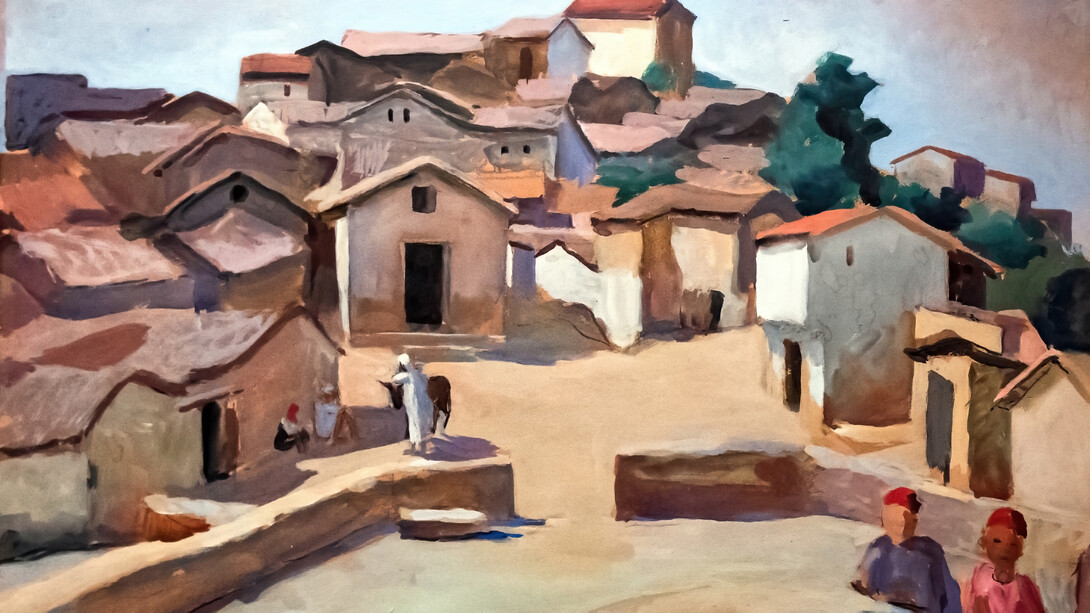
The Berbers belong to a powerful, formidable, and numerous people; a true people like so many others, the world has seen - like the Arabs, the Persians, the Greeks and the Romans.
(Ibn Khaldun)
The summer months of my childhood were spent in central Algiers, a city of vivid contrasts, where the scent of jasmine and strong coffee drifts through the air, carried by the cooling breeze of the Mediterranean. Street vendors shout over each other in a chaotic blend of Arabic, French, and Tamazight, while old men sip coffee and play dominoes outside smoke-filled cafes. It’s a city that is alive with history, resistance, and cultural plurality.
Having learned classical Arabic in school, I remember struggling to communicate with my young cousins. ‘Why do you talk like that?’ they would ask me, again and again. I self-consciously tried to adapt—picking up colloquialisms, copying gestures, and learning that a word like sayyara (car) marked me as a foreigner in a place where tonobil reigned. It was my first hint that Algeria, though officially Arab, was something far more complex.
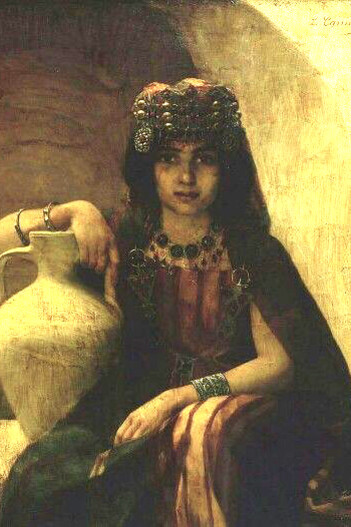
I was a teenager when I fully understood that my Algerian relatives—the ones I had long thought of simply as my 'Arab side'—were in fact Kabyle, one of the many Indigenous communities of North Africa. Like many others, I had internalized the global assumption that Algeria is an Arab country, a belief reinforced by its MENA classification and further perpetuated by official narratives and the national policies that have been established since Algeria’s independence in 1962.
But this perception erases an identity that predates Arab settlement by millennia. The ongoing struggle of the Amazigh people is a fight for cultural recognition, linguistic rights, and political inclusion in a state that has often prioritized Arab-Islamic identity at their expense.
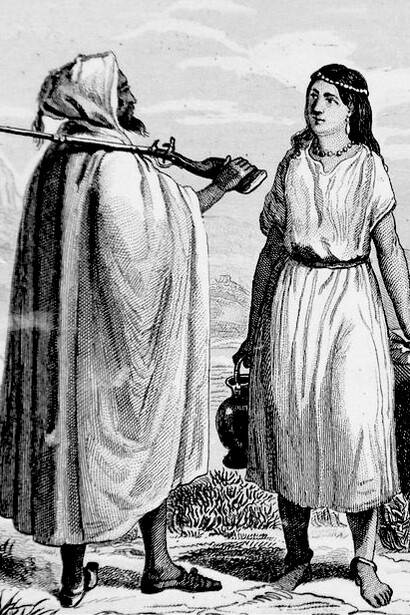
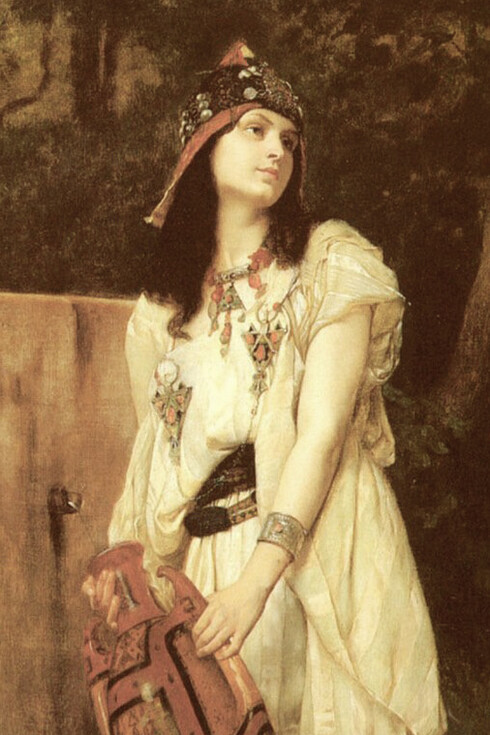
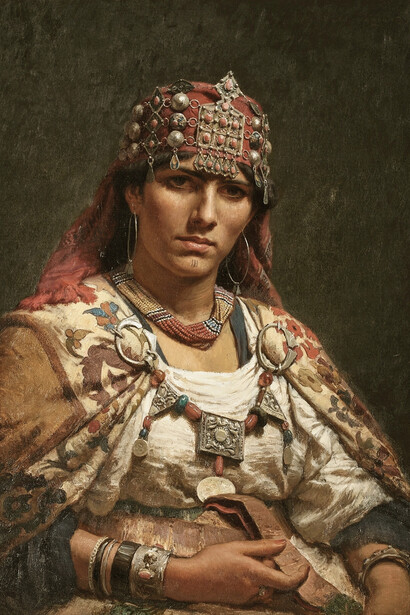
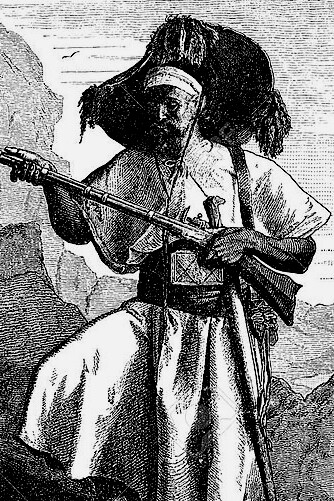
Before any external conquest, Algeria was shaped by its Indigenous populace: the Amazigh (pl. Imazighen), meaning ‘free people’. Growing up, I often heard the Amazigh referred to as ‘Berber,’ a widespread term I used to describe my own identity before I became aware of its deeply problematic and offensive connotations: the word serves as a remnant of colonial imposition rather than a reflection of Amazigh identity.
The term Berber is often considered to originate from the Greek ‘barbaroi,’ meaning ‘foreigner’ or ‘non-Greek,’ a term that was later adopted by the Romans to describe those outside their empire, especially in North Africa. In fact, the Greek word barbaroi comes from the Arabic word barbara (‘babble noisily,’ ‘jabber’), used by conquering Arabs to describe the perceived oddness of the Amazigh language.
Over centuries, ‘Berber’ became a racialized and homogenizing marker, used by colonial authorities to obscure the agency of Amazigh cultures. Indeed, the term itself demarcates a long history of struggle and discrimination. Today, many Imazighen actively reject the term, asserting their right to self-definition and reclaiming the name that reflects their history, autonomy, and resistance.
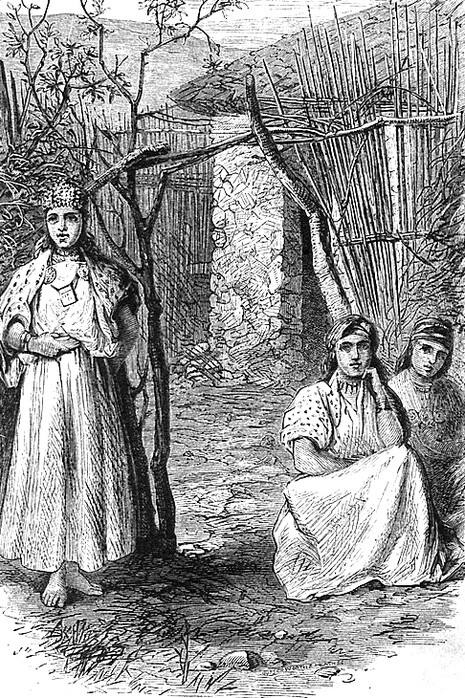
The structure of Amazigh societies was somewhat tribal, governed by communal assemblies or councils (jema'a) that emphasized decision-making as a collective. Although sources on the political organization of pre-colonial Kabylia are relatively scarce, they were still documented in detail by 19th-century French writers. However, their limited understanding of the system led later theorists of Berber society to overlook the significance of Kabyle political institutions, primarily framing them as a reflection of kinship structures and shared religious values.
The early Amazigh appear to have practiced a form of animism, centered on the worship of the sun and moon and belief in an afterlife. However, sustained contact with Phoenician, Greek, and Roman civilizations gradually shaped their spiritual landscape, blending Indigenous traditions with elements of foreign religions. Nonetheless, as historian Gabriel Camps notes, Amazigh societies were 'resilient and deeply rooted in the land, maintaining their institutions and language despite centuries of foreign domination.'
Christianity arrived in North Africa during the second and third centuries AD. The Roman conquest of North Africa was one driven by political and economic motives, underlined by an ideology that justified the colonization of the Imazighen as a means of ‘civilizing’ them. The ‘barbaric’ and ‘savage’ Imazighen were, according to the white colonialist narrative, incapable of self-governance: 'the disconcerting sterility of their nature, incapable, unless constrained by an external power, of surpassing the most primitive forms.'
Whilst the Roman influence rapidly declined in the face of subsequent invasions, certain aspects of Roman institutions and culture remained standing. The ruins in Tipaza, for example, are an ode to Algeria’s pre-Arab colonial history—evidencing the so-called civilizing Roman presence in a way that would prove significant to the later French regime.
It was, however, the Arab conquest that proved to be the most profoundly impactful to the Amazigh. Over time, the arrival of Arab armies bearing the banner of Islam resulted in the religio-cultural unification of the entire region of North Africa—a resilient unification that, of course, remains strongly intact today.
Although many converted to Islam, the Imazighen fought fiercely against Arab conquest, only to find themselves later absorbed into its momentum—
Their myriad experiences over the next millennium would include fierce resistance to, and subsequent oppression by, the victorious and sometimes scornful Arab conquerors; participation in the ranks of the conquerors as they swept across North Africa and into the Iberian Peninsula; religio-political revolts and religious heresies; the creation of Berber Islamic states and empires ruling over vast swaths of territory; and finally, a renewed loss of centrality and eventual marginalization in the centuries preceding the imposition of European colonialism.’
(The Berber Identity Movement and the Challenge to North African States Bruce-Maddy-Weitzman)
The Amazigh language and culture faced significant challenges as Arabization spread, and many Amazigh people were forced to assimilate or face persecution.
Certainly, the process of cultural synergy between Arab and Amazigh was fraught with tension. Berber tribal units serving in Arab armies were not recognized as equals. Relegated to client (mawali) status, the Amazigh were tied to Arab tribes or influential figures and denied their own autonomy. Moreover, the Amazigh were burdened with heavy taxes, such as the head tax (jizya) and land tax (kharaj), despite Islamic law stipulating that such taxes should only be levied on non-Muslims, highlighting a clear contradiction in their treatment.
Despite this, however, initial Amazigh reactions to the arrival of Islam moved relatively quickly from resistance to a broader process of adoption and adaptation. In the centuries that followed, Amazigh dynasties emerged, shaped by intricate tribal alliances, yet operating within a distinctly Islamic framework, reflecting how the Amazigh both embraced and redefined the new faith on their own terms.
Overall, then, the Arab conquest of Amazigh Algeria was met with a strong resistance that eventually subdued. Many Amazigh converted to Islam, often under pressure and unequal conditions. Although they became key players in the Islamic expansion, their cultural and political autonomy was deeply challenged, setting the stage for centuries of marginalization and resistance.
Whilst the dust from the Arab conquest appeared to settle, the arrival of the French in 1830 displaced the Amazigh people even further. The relationship between the French colonial regime and the Amazigh in Algeria was one shaped by manipulation and strategic essentialism: an ‘othering’ of the Imazighen that, once again, had devastating long-term cultural consequences.
France’s conquest of Algiers reflected a traditional form of imperial ideology, rooted in the belief—much like that of the Romans—that it was the responsibility of a 'more civilized' power to rule and educate the colonized population. The French colonial government’s main goal was to 'eradicate Islam from the Algerian identity'—to unpick the effects of the Arab conquest, justified ideologically through the historical precedent of the Roman empire.
In their attempts to redefine Algeria, the French used the Imazighen as a pawn within their manipulation tactics. The so-called 'Kabyle Myth' was a set of ideological assumptions that came to heavily influence the French colonial rationale and the policies they aimed to implement. Rooted in 19th-century Orientalist thought, the Kabyle myth positioned the Amazigh—particularly the Kabyle—as inherently more 'civilized' than Arabs and thus more compatible with European values and governance.
Indeed, official colonial discourse insisted on the Mediterranean origins of the Kabyle: 'Anthropologists agree that the Berbers, in their bodily structure and the shape of their skull, are related to southern Italians and southern Spaniards rather than with African and Oriental races’. The Kabyles were thus portrayed as natural allies of the French, a narrative that helped legitimize the colonial occupation. France positioned itself as the protector of a supposed cultural and spiritual unity, casting the Berbers as civilized and in need of safeguarding from what they framed as the fanaticism and aggression of the Arab population.
The colonial urge to rewrite history and erase indigenous culture is reflected in this quote by Eugène Daumas and Paul-Dieudonné Fabar, published in 1847: 'Beneath the Muslim peel, one finds a Christian seed. We recognize now that the Kabyle people, partly autochthonous, partly German in origin, previously entirely Christian, did not completely transform themselves with their new religion ... [The Kabyle] re-dressed himself in a burnous, but he kept underneath his anterior social form, and it is not only with his facial tattoos that he displays before us, unbeknownst to him, the symbol of the Cross'.
The manipulation tactics of the French authorities were utilized in order to adopt a 'divide and rule' strategy; their portrayal of the Amazigh as more secular and 'cultured' than Arabs was specifically designed to fracture Algerian resistance. As historian Patricia Lorcin explains, the Kabyle Myth 'constructed a hierarchy of Algerian peoples that served colonial aims by suggesting a natural cultural divide between Arabs and Kabyles.'
The ‘Kabyle Myth’ was a project of colonialist zeal, as explained by the French physician and anthropologist Eugène Bodichon: ‘France must develop this disagreeable sentiment between Arabs and Kabyles and put to its use the convenience of two races struggling against one another.’ The French colonial presence, therefore, served to aggravate already existing tensions between the Arab and the Amazigh.
However, although Kabyle communities were often spared some of the harsher religious repression directed at Arab Muslims, they too were subjected to the broader framework of colonial violence. Land expropriation forced conscription during both World Wars, and the suppression of Indigenous languages naturally affected the Imazighen too. By introducing policies like the 1930 'Berber Decree' (which aimed to replace Islamic law with French civil law in Amazigh regions), the Amazigh way of life was, once again, subjugated, subordinated, and silenced.
Furthermore, colonial efforts to institutionalize ethnic divisions in Algeria had long-term effects on post-independence national identity, with the Imazighen caught between state Arabization policies and the lingering legacies of colonial categorization. What may have seemed like preferential treatment was, in reality, a calculated political tool—one that distorted Amazigh identity and sowed seeds of division that Algeria continues to confront today.
Ironically for France, however, Kabyles would also come to have considerable influence in the independence movement. As history has shown, resistance to colonial rule had deep roots in Amazigh society, and the mountainous terrain of Kabylia became a stronghold for anti-colonial fighters. Indeed, Kabyle communities were among the earliest and most active supporters of the FLN (Front de Libération Nationale, a nationalist political party in Algeria), contributing disproportionately to the armed struggle. Historian Hugh Roberts notes that 'Kabylia was a heartland of the FLN’s military and political organization,' not only because of its geography but because of a long-standing tradition of local autonomy and resistance to foreign domination.
Despite this deep involvement, Amazigh identity was often downplayed within the nationalist movement, which promoted an Arab-Islamic narrative of unity in order to rally international support and avoid internal division. The FLN’s official rhetoric largely erased ethnic distinctions, framing the revolution as a united front: an Arab Muslim uprising against French colonialism. Many Kabyle fighters accepted this framing for the sake of independence, but tensions lingered, especially as the revolution wore on and post-independence debates about national identity began to emerge. The Amazigh contribution to liberation was undeniable, yet the movement’s leadership often demanded that cultural specificity be sacrificed in favor of a singular national identity—an erasure that would fuel Amazigh activism in the decades to follow.
With Algeria finally gaining independence in 1962, the FLN succeeded in bringing together Algerian Muslim society under the banner of national liberation and, in the decades following independence, sought to use its revolutionary legitimacy to construct a unified nation-state. The newly formed Algerian state, however, adopted a rigid Arab-Islamic nationalist identity. Amazigh languages were banned from schools, cultural expressions were suppressed, and Arabic was aggressively promoted as a unifying tool.
The state’s refusal to recognize Algeria’s Indigenous heritage led to mounting frustrations and the rise of Amazigh activism. The 1963 Kabyle uprising, led by Hocine Aït Ahmed and the Socialist Forces Front (FFS), was the first act of resistance, challenging the FLN’s authoritarianism and cultural homogenization. The uprising was centered in Kabylia, fueled by the betrayal of a regime that had demanded their full participation in the revolution, only to later suppress their language, culture, and political autonomy. As historian Hugh Roberts writes, 'The rebellion was not a rejection of Algerian nationalism but a protest against its betrayal by a centralizing, Arabizing regime.' Although the uprising was suppressed, it laid the groundwork for future dissent.
The 1980 'Berber Spring' (Tafsut Imazighen) was another landmark event in the Amazigh struggle for cultural recognition. Sparked by the banning of a lecture on Amazigh poetry in Tizi Ouzou, the Berber Spring turned into a major uprising, directly challenging the FLN and Algeria’s single-party system. Tensions reached a breaking point on April 20, when the coordinated arrest of hundreds of Berber activists, students, and medical professionals triggered a widespread general strike. Thousands took to the streets to demand linguistic and cultural rights, and, although the state responded with arrests and violent repression, the Berber Spring was a turning point for the Kabyle and Amazigh communities throughout North Africa.
The Berber Spring galvanized a new generation of Amazigh activism. In 1994, a school boycott known as the année blanche forced the government to acknowledge the demand for Tamazight language education. Tamazight was finally recognized as a national language in 2002, following the Black Spring protests of 2001, during which over 100 Amazigh youth were killed by security forces. Only in 2016 was Tamazight declared an official language alongside Arabic—a symbolic victory, though many Amazigh activists remain critical of the state’s lack of concrete implementation.
While years of activism have led to important recognitions, many Amazigh voices remind us that these reforms remain, for the most part, symbolic. At its core, the Amazigh struggle in Algeria is not simply a call for linguistic or cultural visibility but a powerful act of resistance against historical erasure.
It would take thousands of pages to capture Imazighen history. An online article does not do justice to the legacy of the Imazighen resistance and their struggle for recognition. In a world where marginalized people are often silenced, it is important to remember their resilience, honor their stories, and continue amplifying the voices that have too long been pushed to the margins of history.
As a half-Kabyle woman, I too have often found myself flattened into an Arab identity for the sake of simplicity. And while Algeria is undeniably shaped by Arab-Islamic culture, it is also a land of diverse Indigenous traditions, languages, and histories. The Amazigh people’s ongoing struggle remains a profound demand for recognition of their language, their culture, and their rightful place within a nation that has too often rendered them invisible.
Sources
Brett, Michael, and Elizabeth Fentress. The Berbers. Oxford: Blackwell, 1996.
Chaker, Salem. Berbères. In Encyclopédie berbère, vol. 8, edited by Gabriel Camps. Aix-en-Provence: Edisud, 2004.
Silverstein, Paul A. Algeria in France: Transpolitics, Race, and Nation. Bloomington: Indiana University Press, 2004.
Roberts, Hugh. Berber Government: The Kabyle Polity in Pre-Colonial Algeria. I.B. Tauris, 2014.
McDougall, James. A History of Algeria. Cambridge University Press, 2017.
Aït Ahmed, Hocine. La guerre et l'après-guerre.
Roberts, Hugh, Berber Government, The Kabyle Polity in Pre-colonial Algeria.
Ageron, Charles-Robert. Modern Algeria: A History from 1830 to the Present. Translated by Michael Brett, Africa World Press, 1991.
Lorcin, Patricia M. E. Imperial Identities: Stereotyping, Prejudice, and Race in Colonial Algeria. I.B. Tauris, 1995.
McDougall, James. A History of Algeria. Cambridge University Press, 2017.
Fenwick, Corisande, Archaeology and the search for authenticity: Colonialist, Nationalist, and Berberist visions of an Algerian past.
Macdonald, Peter, Political Discourse in the Maghreb: An Analysis of Amazigh Identity in Algeria and Morocco.