English
 Español
 Français
 Deutsch
 Italiano
 Português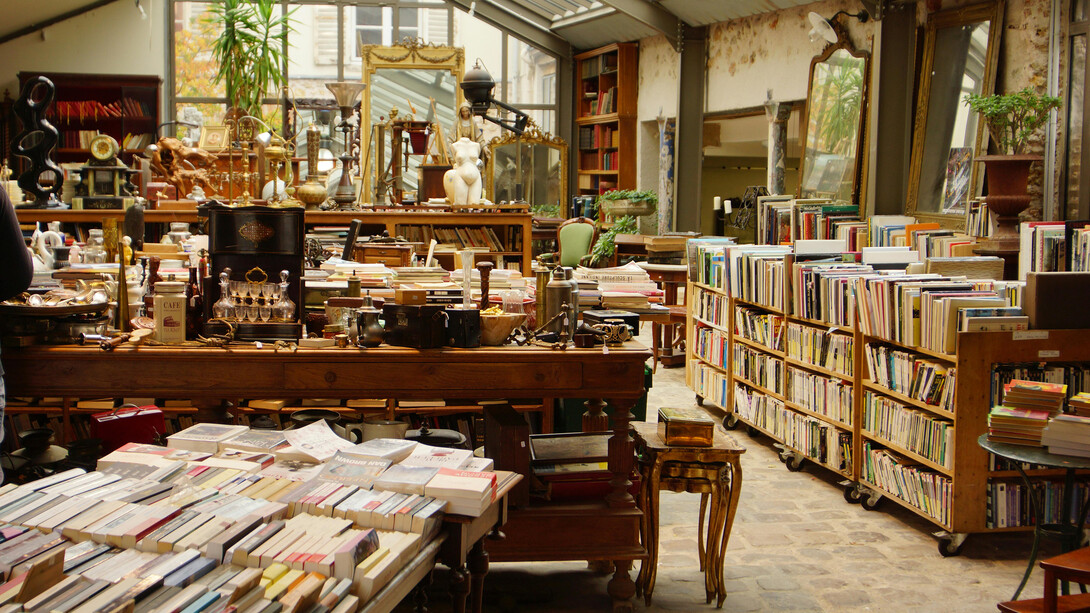
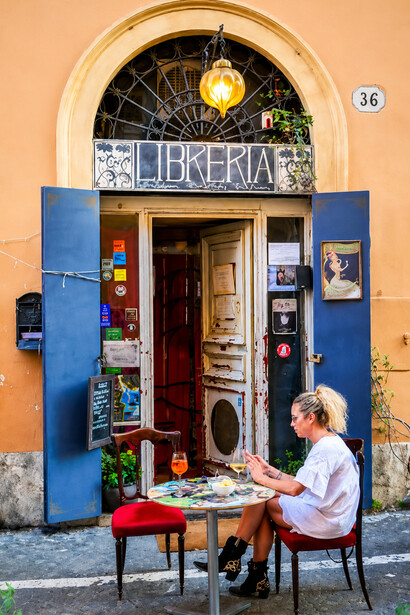
Some people open a shop to tell a vision of the world. In 2016, after an intense experience in a historic Florentine mid-century design shop and fifteen years spent in fashion, the protagonist of this interview chose to start over from scratch: he returned to his hometown of Pavia, rented a tiny seventeen-square-metre space, and transformed it—without capital but with a garage full of treasures collected over more than twenty years from flea markets and abandoned houses—into a unique place. Thus was born a shop built entirely with reclaimed materials, inhabited by books selected according to an emotional criterion—“only what I truly like”—and by objects capable of evoking stories, memories, and identities.
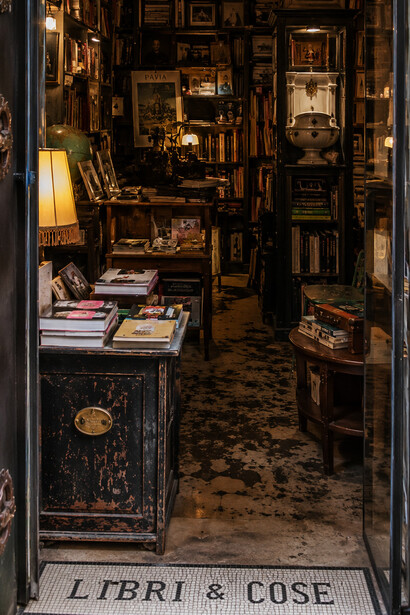
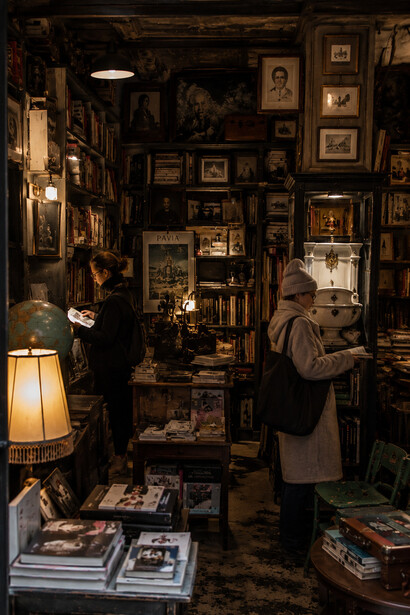
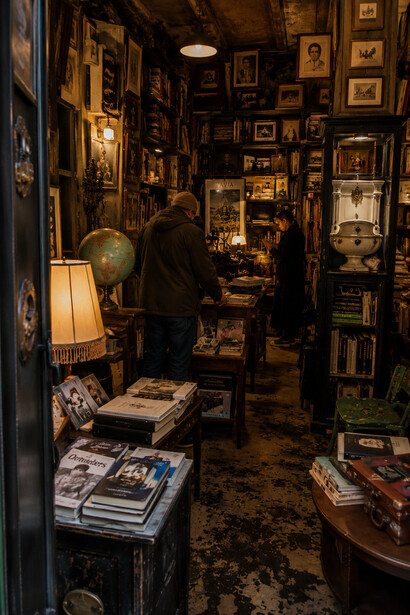
More than a shop, the space immediately became a small laboratory of imagination and material memory: every shelf, every recovered object, and every chosen volume contributes to creating an environment that escapes the logic of commercial standardisation. Here, mid-century design engages in dialogue with printed matter and vintage curiosities with domestic memories in a layering of signs that tells not only the owner’s taste but also a different way of inhabiting time and things. The shop thus takes shape as a place of passage and encounter, where chance epiphanies, conversation, and the pleasure of slow searching replace the speed of digital purchasing.
Today, between a nineteenth-century coffin handle and a rare Richard Ginori sanitary fixture embedded in a bookcase, the shop has become a refuge of wonders, openly analogue: no computers, no online purchases, only authentic relationships. As the tenth anniversary approaches, Iucu tells his story and guides us through his discoveries.
How did the idea of opening one of the most unusual shops ever come about?
It was 2016. I had just returned from Florence after a period in which I had lived and worked in one of the most beautiful mid-century design shops in the city: Ubaldo is a friend who gave me the opportunity to work with him, allowing me to support myself during that unforgettable year.
Yota, the woman who is now my wife, had graduated, and it was time to return to Pavia. Going back also meant reinventing myself once again. Before my Florentine interlude, I had worked for over fifteen years as a fashion designer, but I had grown tired of that world, and it was time to bring a new dream to life.
So, in December 2016, I rented a seventeen-square-metre hole, and, with no money but a garage full of everything imaginable, I built the first shop entirely out of reclaimed materials and filled it with books and objects collected over more than twenty years from flea markets and abandoned houses.
What criteria do you use to select the objects, books, and vintage pieces you sell?
The answer is very simple and quick: I choose only things I truly like! And this also applies to book authors: it doesn’t matter whether a certain book might sell—if I don’t like it, I don’t keep it.
My offering is very personal; I often say that my bookshop is “for everyone, but not for many".
Can you share an anecdote you remember fondly related to the shop, and which of the many objects in the store do you find the most curious?
When in 2022 I moved to a larger space, the restoration work on the new shop dragged on so long that I had to postpone the opening five times over the course of three months. In the end, I opened on an ordinary day in December—no inauguration, no announcement—I simply opened one afternoon at 4:35 p.m.
There are two objects, both not for sale: the first is a nineteenth-century coffin handle, decorated among other motifs with a pirate-like skull; the second is an early twentieth-century Richard Ginori toilet (complete with the crest of the Royal House), which I embedded into one of the bookcases.
Do you have plans for events, exhibitions, collaborations, or other cultural initiatives connected to the shop in the future?
2026 marks the shop’s tenth anniversary! I have so many ideas, and I will certainly carry out at least half of them—but the year has just begun… There's time!
How are you connected to the local community?
I love people and the things that once belonged to them. I experience my shop as a home, and, just like at home, I listen to music only on a turntable. Another curiosity is that I don’t have a computer in the shop; I have never bought anything online in my entire life, and the same goes for my business.
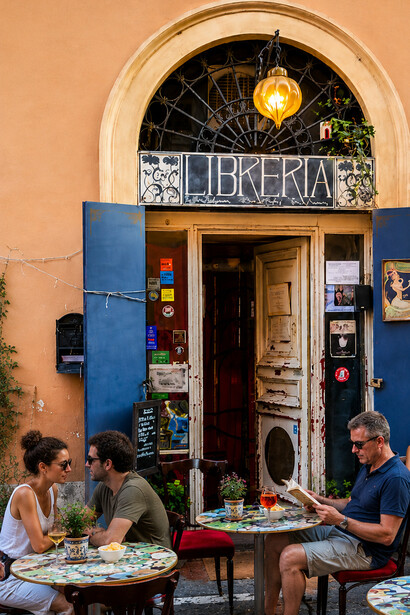
This way of being and working—so anachronistic and radical—has drawn in all kinds of people (especially young people) rather than pushing them away.
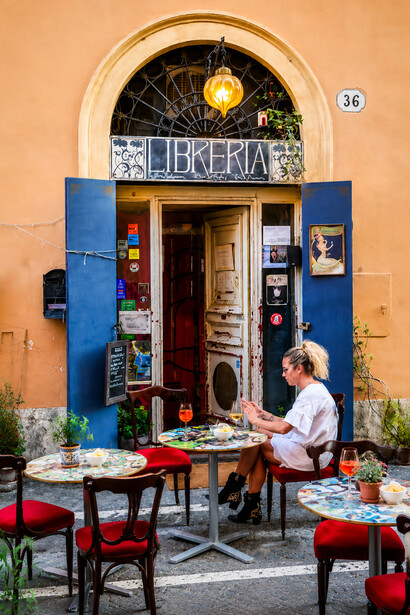
Moreover, the street where I am located is a historic avenue of traditional shops, and that spirit still endures today. This vocation for human relationships is the common thread linking all the shopkeepers in this historic, almost magical place.