English
 Español
 Français
 Deutsch
 Italiano
 Português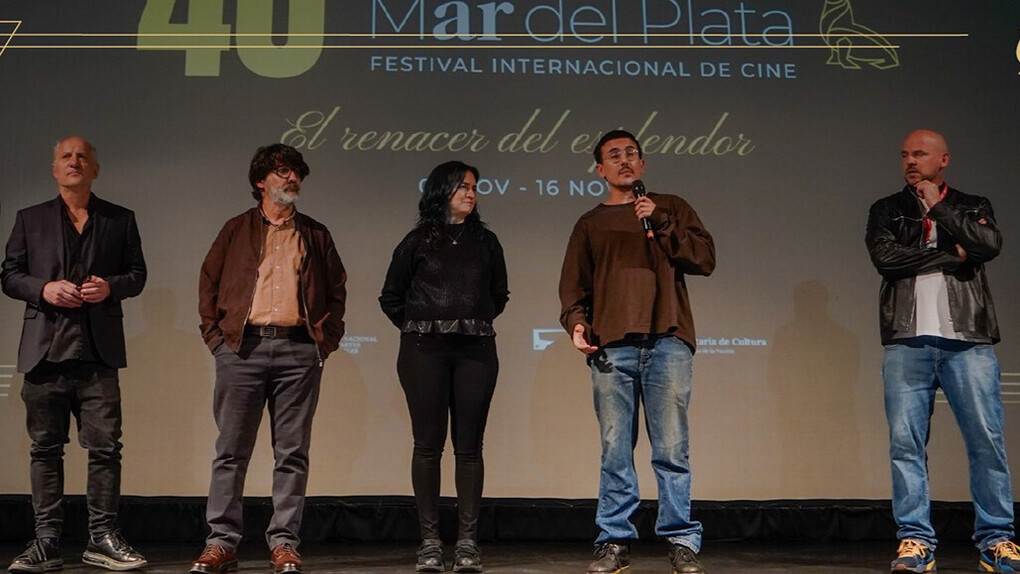
Beyond the red carpets and the shadow of the current administration, the 2025 edition of Latin America’s only Class A festival offered a defiant look at a national heritage that refuses to be erased.
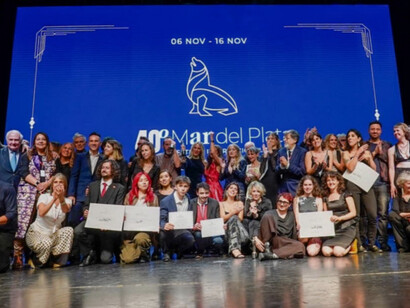
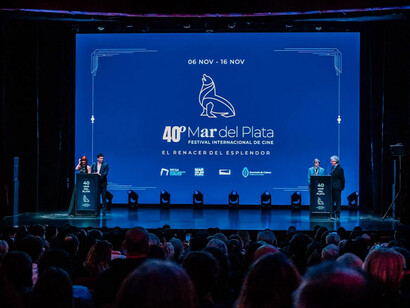
The official ad for the 40th Mar del Plata International Film Festival was an AI-generated fever dream that, frankly, looked fake. It carried a slogan as ambitious as it was tone-deaf: “The Rebirth of Splendor.” Yet, splendor is the bare minimum for Mar del Plata. As the only "Category A" festival in Latin America, the International Federation of Film Producers places it in the same heavyweight league as Cannes, Venice, or Berlin. Just as those festivals boast the Palm, the Lion, or the Bear, Mar del Plata has the Astor Piazzolla.
Personally, I didn’t think the festival would survive. I had no doubt that a government currently laying off thousands of workers would have no qualms about axing a cultural landmark. I was wrong. The 40th edition launched at the Gaumont Cinema, an iconic state-owned venue. The room wasn’t full, but the industry’s ghosts and legends were there—including Víctor Laplace, whose portrayal of former President Perón in Puerta de Hierro is so iconic that, in the Argentine collective unconscious, he has simply become Perón.
It is fitting to invoke Perón, given that he founded the festival in 1954. The choice of location was never accidental: Mar del Plata began as a French-style elite resort but was transformed under Peronism into a working-class vacation hub—a sort of Cannes alla Argentina. Between 1970 and 1995, the festival vanished, a casualty of the country’s chronic political and economic wreckage. Its 1996 resurrection was equally scandalous; the Menem administration announced it in Venice six months prior and poured five million dollars into it—funds whose destination was never transparent. Those were the days of Julio Maharbiz, a polarizing folk-scene figure with no film expertise who famously insulted Mercedes Sosa. Fast forward 28 years, and the pattern repeats. Today, the National Film Institute (INCAA) is led by Carlos Pirovano, an economist with no ties to the cinematic world, though he opts for a significantly lower profile than his predecessors.
Thanks to Meer, I attended the full ten days of the 2025 edition and clocked 25 films. The undisputed crown jewel was the restoration of two films by Vlasta Lah, the first woman to direct a sound film in Argentina. As historian and archivist Fernando Martín Peña points out, the state of Argentina’s audiovisual heritage is beyond "apocalyptic." Recovering Las Furias (1960) and Las Modelos is a massive feat. Las Furias starred five of the greatest actresses of the era—Mecha Ortiz, Olga Zubarry, Aída Luz, Alba Mujica, and Elsa Daniel—a fact that makes one shudder to imagine the fate of smaller, unprotected productions. This historical rescue was complemented by the documentary Vlasta, el recuerdo no es Eterno by Candela Vey and Tino Pereira.
The program also featured Argentine classics like Hugo del Carril’s Beyond Oblivion—long rumored to be the uncredited blueprint for Hitchcock’s Vertigo—and a tribute to Juan José Jusid, who received the Lifetime Achievement Astor. As a devotee of Isaac Bashevis Singer, I must highlight The Jewish Gauchos. In a nod to the future, the festival premiered The Death of a Comedian, the directorial debut of actor Diego Peretti and the first Argentine film funded entirely through crowdfunding. International highlights included a rare retrospective of five films by Yuzo Kawashima, a short-lived but pivotal figure in the 1960s Japanese New Wave, presented by the Japan Foundation and the Japan Embassy.
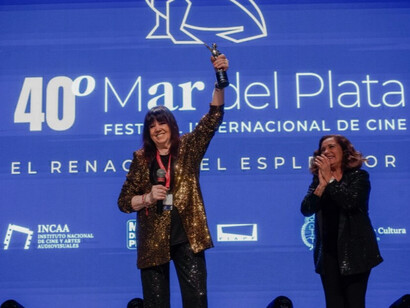
The awards reflected a high bar for performance: the Astor Piazzolla for Best Feature went to Maryam Touzani’s Calle Málaga, with the legendary Carme Maura winning Best Actress, while Nicolangelo Gelormini took home the prize for Best Director. However, the festival’s most poignant narrative happened off-site. Since 2024, a self-organized collective of filmmakers and critics has run a parallel festival. Originally called Contracampo and rebranded in 2025 as Fuera de Campo (Off-Camera), this fringe event exclusively screens Argentine cinema and is endorsed by figures like Fernando Martín Peña. It represents a moderate but firm response from cultural workers who have found themselves in the crosshairs of the current administration.
Throughout its history, the Mar del Plata Film Festival has always lived close to the sun of political power, serving as a prism for the cultural whims of whoever is in office. This latest edition, while boasting a program that clearly surpassed 2024 in both quality and diversity, remains far from its promised "splendor." But it is resisting. The question hanging in the air is whether the 41st edition will be just another trench in Milei’s "cultural battle" or if the authorities will double down on artistic quality. The answer seems obvious. But as we say in Argentina: yo elijo creer—I choose to believe.