English
 Español
 Français
 Deutsch
 Italiano
 Português
Spoilers ahead for Twin Peaks.
The famous question of David Lynch’s show, Twin Peaks: Who killed Laura Palmer? It haunts every season, even past the reveal of the murderer in season two, because of the nature of the murderer: was it Leland or Bob? Was it possession or just the darkest evils of humanity?
As I’ve watched Twin Peaks these last few months, I’ve noticed that a driving force in the show, beyond just the murder mystery, is the violence that women face and the stories of women overall. I believe that this violence, and the experiences of women overall, is the heart of this show, more than the murder mystery, more than the science fiction.
My first time noticing this was while watching Lynch’s 1992 film, Twin Peaks: Fire Walk With Me. Serving as a prequel to season one, the film illustrates the last week of beloved local Homecoming Queen Laura Palmer, who was played by Sheryl Lee, as she struggles with drug addiction, sexual trauma, and suicidal thoughts. A lot of these feelings and her resulting hypersexuality, which is addressed throughout the film as a “dark side” of hers, are likely partially caused by the sexual abuse she suffered at the hands of her father, Leland, who was possessed by Bob, since the age of twelve. She is the central focus of the film, and her own troubles, motivations, and relationships with other characters are developed with enough nuance to make me feel as if I knew her personally.
Her activities with other men, including prostitution, seem to be a result of hypersexuality as a response to her sexual trauma, and yet, it is not portrayed with wanton romanticization or the appearance that it is a sexy thing. On the contrary, the way she is portrayed when being sexual is fairly neutral, showing what is happening without emphasizing any specific part of her body or experience. Also, the camera angles and music used in those scenes make the audience more unsettled than “into” the scene, and Laura’s numbness and distress are very obvious throughout each scene. Some sexual scenes in the movie show Laura being promiscuous, but Lynch did not take liberties in showing her body or show her in the act of any specific act. In addition, most sexual things that involve Laura happen to her, thus not making her seem like a sexual object that enjoys these activities.
The movie, in essence, is driven by Laura and the things she experiences. Her spiralling out of control with her drug use and hypersexuality is never portrayed in a positive light, but rather in a pitiful, depressing way. The monologue around the question of whether you would slow down or speed up in space is delivered so flawlessly, with Laura’s depression and hopelessness very obvious. Her eyes are emotionless and dead; the heaviness of the burden she carries is so obvious here. She truly believed no angels would help her, and at this point, Laura already knew she was going to die. Written in her secret diary, she had said the only way to stop Bob from possessing her was to die, so he would never get her. Laura never got to leave on her own terms, but she had already accepted that it was going to happen.
That being said, the fact that her distress is the focal point of the film is also subject to criticism, given that a teenage girl’s trauma and suicidality had become a form of entertainment. This is not the first time Lynch has been called out for this, but it has been noted as well that Lynch does not use this trauma as a plot device, but rather as a method to humanize the characters as well. These scenes were not shown just to be shown, but rather to emphasize how human these characters were, and how unbearable these things were.
Laura did not become what happened to her, and her multiple sexual assaults throughout the film were not plot points but rather the end of innocence and goodness itself. She was a beloved and gentle girl around Twin Peaks, who had taught Josie Packard English, started Meals on Wheels for the elderly and shut-ins of the town, tutored Johnny Horne, and had done so many more incredible things. And with Fire Walk With Me, Lynch did not negate all of these things, but rather introduced additional struggles for Laura that led to her being in such a dark place. Rather than finding dark excuses for these lovely acts of kindness, Laura was shown with an equal amount of darkness to the light, due to no fault of her own. Lynch had a gentle way of showing this violence while lovingly portraying the women involved, characterizing and developing their characters away from the violent acts. Despite the fact that the abuse and violence Laura faced was a central focal point throughout the show and movies as it was revealed, it was never done gratuitously, and her goodness was never doubted.
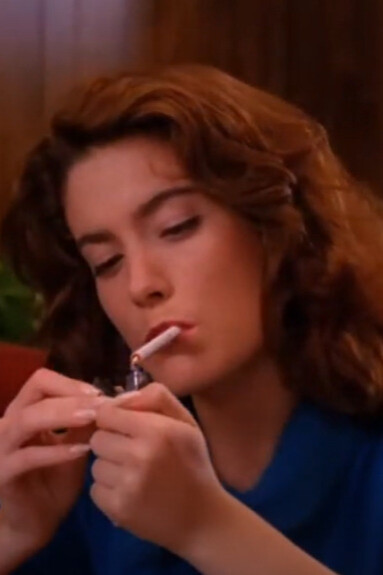
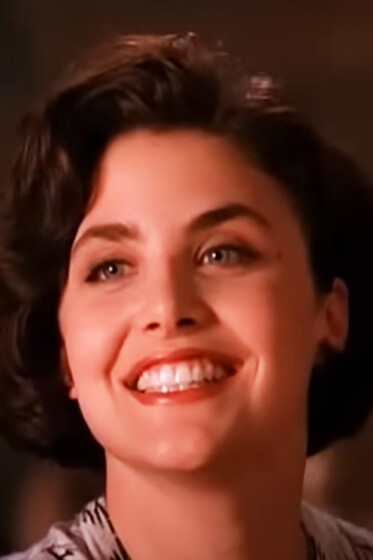
Another good example of this is Audrey Horne, portrayed by Sherilyn Fenn. Audrey, throughout the show, had been flirting with the protagonist, Special Agent Dale Cooper (played by Kyle MacLachlan), despite being several years his junior and also still in high school. This is done in a way that does not oversexualise her but rather showcases her untouched naivety in a way. Her dialogue choices, her clothing, her attitude, and her trusting nature all show that she was still a child, albeit an intelligent one. In the first two seasons of the show, Cooper never acted on these desires, nor was Audrey ever portrayed as an object of his desires. She is shown as a mature, intelligent, and beautiful girl, but not as a target of sexual desire, thus not infantilizing or sexualizing her. She could have been portrayed as stupid and childish, or overly mature and sexually knowledgeable, but she wasn’t; instead, Audrey was portrayed as an eighteen-year-old girl, someone who was grown up in some ways and childish in others. Lynch never took any liberties in Audrey’s character, and she felt all the more relatable and real because of that.
More than that, Audrey found herself in a bad situation when she got herself stuck in the sex club, One-Eyed Jack’s, which is across the border in Canada from the Northwestern American town of Twin Peaks in Washington state. She was used as leverage against the owner of her club, who happens to be her father, Benjamin Horne, as he was unaware of her presence there, and the people involved wanted him to sell the business. During this time, Audrey had tried to escape with a distressing call to Cooper and was subsequently drugged for days at a time when she was caught. She had stated that she was “in over her head” there, after she assumed she knew what she was doing.
It was heartbreaking to see someone so sure of herself in so many ways so frightened and in such a sexual place. It was refreshing to see how she was still never portrayed in lingerie or compromising positions. In the same way with Laura, this traumatizing situation, instead of becoming a plot point or an excuse to hypersexualize an eighteen-year-old, became a way to illustrate her youth. Audrey was not fetishized but instead had life breathed into her humanity. While this traumatizing situation and the violence against her were a major point in the show, it was done in a way that did not taint Audrey but rather strengthened her.
I would argue that the central women of Twin Peaks are Laura, Donna, and Audrey. Laura haunts the narrative throughout the show, with her innocent, beloved presence shadowing every action and motivation of each character. She is given life to Dale, who had never met her, in the forms of his dreams that eventually help him solve the case overall. Donna is one of the central figures to me because of her complex relationship with grief and her additional characterization as her own person away from Laura. Moira Kelly portrayed Donna Hayward in Fire Walk With Me, and her naive, earnest personality is very endearing; she loved and trusted Laura, and that had a variety of consequences. The relationship between them is intimate and loving, and yet complex with a lot of hidden sides.
Laura never wanted Donna to become like her, Donna just wanted to help Laura wherever she was. Donna represented the innocence of childhood without the abuse that Laura wanted, and the goodness of Laura as well. Donna also struggles with grief throughout the first two seasons of Twin Peaks, then portrayed by Lara Flynn Boyle, and all of the complicated emotions that come with it. She had not just lost her best friend but also the image that her best friend was flawless and could do no wrong, especially in the last week before her death. Donna had just discovered Laura’s experiences with other men, and then Laura died in such a horrific way. She hardly had time to process this terrible thing that was happening to her friend before she died. In the pilot episode of the show, Boyle did an incredible job of showing Donna’s slow realization that Laura was gone, the breakdown, and its aftermath, the aftermath being the more intense stages of grief.
This is demonstrated very well in Donna’s monologue at Laura’s grave in Season 2, Episode 3. She was struggling with dealing with the problems Laura left behind, her feelings for Laura’s old fling James, and the loss of her best friend overall. She was struggling with how Laura’s strength and courage, something Donna wanted to emulate, were what got Laura where she ended up in the first place. At one point, in reference to how Laura’s problems still seemed to haunt her, Donna said, “It’s almost like they didn’t bury you deep enough!” Donna’s grief and her own life combine so well here to create this monologue, and I believe it makes Donna so much more compelling as a character. She is not just defined by being Laura’s best friend, she is not just the mess Laura left behind, she was the victim of the crossfire. And her anger helps to characterize her as someone experiencing very realistic grief, rather than the common weepiness so often heralded in the media over a character’s death.
All three girls are young and show different variations of having to grow up too fast. All three of them are given lives and relationships both within and outside of their character arcs, plot points that are not necessary for the show’s plot movement but necessary to make them real. All three of them form the heart of the show, they become the focal point of so many major developments throughout the show.
While the men in this show are incredibly important, especially Dale Cooper as the protagonist, all of their stories revolve around women in some way. Even in Cooper’s case, he was haunted by the trauma of losing his lover Caroline throughout season two, and drawn to Annie; his conflicts included Audrey in most of them, including his own personal conflict of liking her but needing to distance himself, and his relational conflicts of needing to rescue her from One Eyed Jacks. Cooper is also driven by Laura and her presence in his dreams to solve her case, to figure out who could do such terrible things to her. And Donna was someone who represented the humanity of Laura, and she became a huge reason why the need to solve the case intensified. Donna was also involved with James (James Marshall), as he worked to process his grief and romantic feelings for Donna, and the way his life changed after Laura passed away. All of the central male characters, while being developed and loveable in their own ways, had storylines that centred around women, their stories, and violence.
That being said, Lynch takes the time throughout the show to develop the stories of other women as well, like Shelly Johnson (Mädchen Amick). Shelly was portrayed as a victim of domestic abuse by her husband, Leo Johnson (Eric DaRe). Throughout her time on screen, she is shown as someone who is afraid and cautious but also as someone strong, loving, and charismatic. She has scenes of comedy, love, sadness, and violence, without the violence being overstated/exaggerated.
Shelly is never really shown as someone weaker as a result of her abuse, nor is she shown as unaffected by it, illustrating the fact that she was frightened of her husband and deeply affected by the abuse, but it never became her or stopped her from having her own personality or relationships. Following the trend, Shelly is not defined by her abuse, and she is not characterized with that as the focus; she is her own person, she feels real, and it is easy to empathize with her. She does not exist within the shadow of Leo. Shelly is also shown having developed healthy relationships with other characters, especially Norma (Peggy Lipton). So, not only does Lynch portray women as nuanced characters, but he also writes about healthy friendships. This abuse is important for her character and a driving force for Shelly’s arc throughout the first two seasons, but it formulates only one part of her story.
We would not have this show without Sarah Palmer (Grace Zabriskie), Leland’s wife and Laura’s mom. Within a few months, Sarah Palmer had lost her daughter and niece to murder and her husband to suicide after he had committed said murders. Her grief in the pilot episode of Twin Peaks became one of the most devastating portrayals I have ever seen on television; her numbness and strength far exceeded anything I ever could have done in her position. Sarah Palmer was an interesting character throughout the show and movies, given her proximity to Leland’s abuse and her additional abuse and drugging by Leland when he molested their daughter. In Fire Walk With Me, Sarah was shown to object to her husband when he was verbally abusing Laura about her fingernails and her necklace. She says, “She doesn’t like it.” In The Missing Pieces, Sarah was also shown to have memory problems when she was searching for a blue cardigan she was already wearing, likely a result of the consistent drugging she experienced from Leland.
Sarah and Laura were both victims of Leland/Bob in their own ways, and their relationship in The Missing Pieces illustrates this point perfectly. In the pilot episode, her grief was on full display, and several times she broke down in tears recounting Laura’s last night alive. Sarah was wracked with guilt for so many reasons, first for her daughter’s death and not being able to prevent it, and then for her not preventing the molestation and murder of her daughter by her husband. The worst nightmare a mother can imagine became a reality for Sarah Palmer, and the violence of these situations, both emotional and physical, were central to how Sarah was characterized throughout the show. If not for the three girls I listed earlier, Twin Peaks was given foundation by a mother’s grief and love for her daughter.
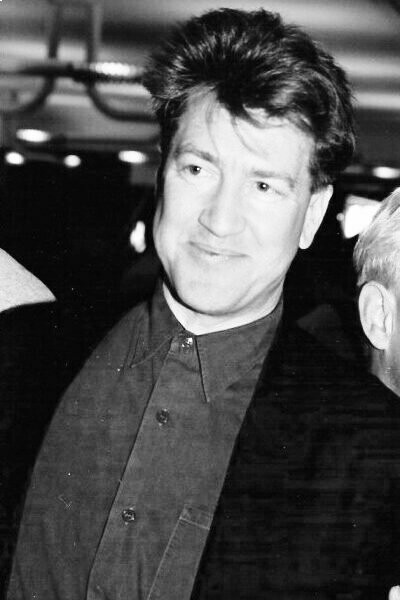
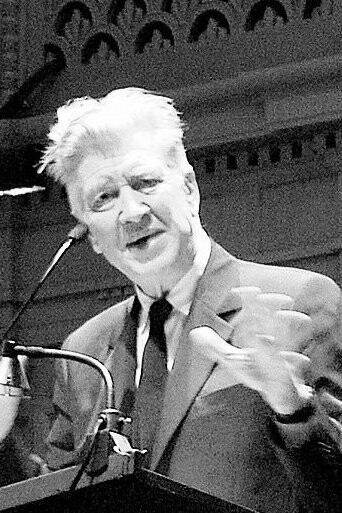
Overall, David Lynch portrayed the feminine experience of both violence and peace, life and death, in such a way that shows he implicitly understood the characters, the actresses portraying them, and the broader context of women overall. His loss will forever be a point of grief for the film community, as I have never seen a male director understand us so well, and I worry I likely never will again.