English
 Español
 Français
 Deutsch
 Italiano
 Português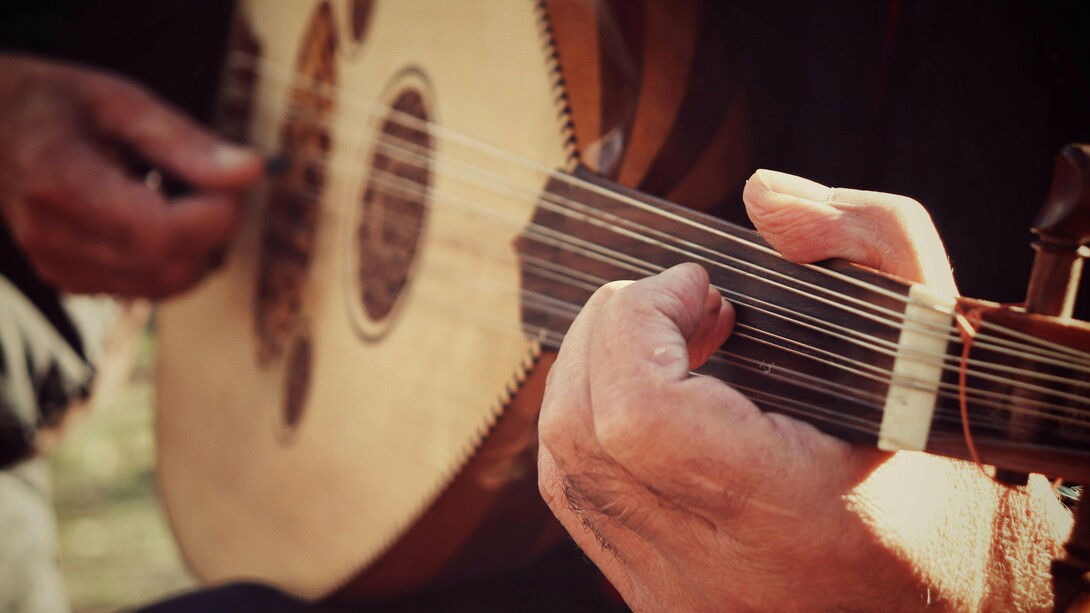
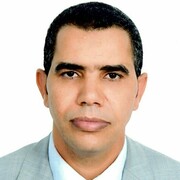
In the Moroccan cultural landscape, there are artists whose fame is not measured by streaming numbers, trending algorithms, or fleeting digital applause. Instead, their legacy lives in something far deeper: the collective memory of a people. Among these rare figures stands Raymond Allon, a musician who has dedicated his life to preserving the emotional and historical richness of Moroccan folk music.
His journey is anchored in professional excellence that traces back to the very heart of the 20th century. On August 24, 1959, Rahamim Alloun (Raymond Allon) was officially admitted as an author-composer to the Société des Auteurs, Compositeurs et Éditeurs de Musique (SACEM). This induction serves as a testament to a career built on formal mastery and international recognition during a pivotal era for world music.
From the banks of the Bouregreg River in Rabat, with a majestic view from the Royal Yacht Club, Allon emerges as a witness to this golden age, an era where music was not made for fleeting platforms but was born to endure. For Allon, music has never been about momentary fame. It is, as he often describes it, “a sung memory and a history preserved through sound.”
As he continues to stand as a pillar of the “Shaabi” tradition, his 1959 SACEM certification remains a symbol of his lifelong commitment: a transition from a young, recognised composer to a legendary guardian of Moroccan musical heritage.
From Settat to the living worlds of “Shaabi”
Raymond Allon was born in the Moroccan city of Settat, a region long recognised as one of the spiritual homes of Moroccan folk expression. Settat has historically nurtured powerful forms of popular art, particularly Aita, the traditional musical storytelling performed by Shikhates and folk ensembles. Growing up in such an environment meant that music was not simply entertainment—it was woven into everyday life, celebrations, and communal memory.
From a young age, Allon developed an intimate relationship with music. The oud became his first artistic companion, an instrument whose expressive range allowed him to explore both melancholy and joy. Long before formal training, he absorbed melodies simply by listening at weddings and local gatherings and through radio broadcasts that carried the voices of Morocco’s musical pioneers.
His childhood unfolded during a transformative period in Moroccan musical history: the decades between the 1960s and the 1980s. These years witnessed profound social change in Morocco, and music reflected this transformation. Traditional forms like Aita were gradually interacting with emerging urban musical styles, giving rise to a new wave of Shaabi music, popular songs rooted in folk tradition but infused with modern rhythms and contemporary themes.
Artists such as Houcine Slaoui had already laid the foundations for this movement. Their songs spoke directly to ordinary people, addressing daily struggles, humour, migration, love, and social tensions. These narratives resonated deeply with audiences, turning Shaabi songs into mirrors of Moroccan society.
Immersed in this rich musical environment, young Raymond Allon began internalizing these songs, not merely as melodies, but as stories of a nation evolving through time.
Artistic path by building a creative identity
Raymond Allon’s early artistic path began in Casablanca, the vibrant cultural capital where Morocco’s musical experimentation often took shape. As a teenager, he performed many of the emerging Shaabi songs that were popular at the time, learning their rhythms and vocal nuances while performing in intimate gatherings and small venues.
During this period, he drew inspiration from major figures of Moroccan folk and urban song, including Maati Belkacem, whose interpretation of Shaabi repertoire left a deep impression on him.
However, Allon did not remain content with simply reproducing existing songs. By the age of seventeen, he began writing his own lyrics and composing melodies. This transition marked a defining moment in his career, signalling the birth of an independent artistic voice.
Several prominent musicians, who shaped Moroccan musical heritage, including Mohamed Joubrane, Ahmed Slimane Chaouki, and Mohamed Fiteh, influenced his creative formation. Each of these artists contributed different elements to Allon’s musical vocabulary—whether in melodic construction, poetic storytelling, or performance style.
Equally important was his fascination with Morocco’s classical vocal tradition. Among the artists he admired most was Ahmed Al-Bidaoui, whose refined style and long-form compositions earned him the nickname “the Umm Kulthum of Morocco.” Listening to Al-Bidaoui’s grand performances taught Allon the importance of patience in music—allowing songs to unfold slowly, giving space for emotion and narrative.
These influences helped shape Allon into a musician who balanced popular accessibility with artistic depth.
The oud is more than just an instrument
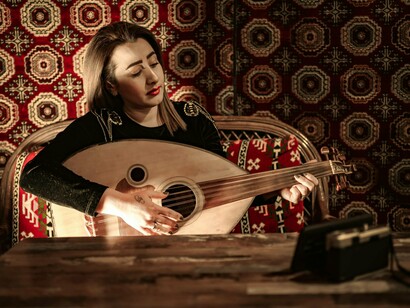
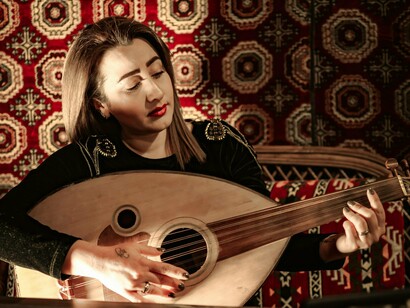
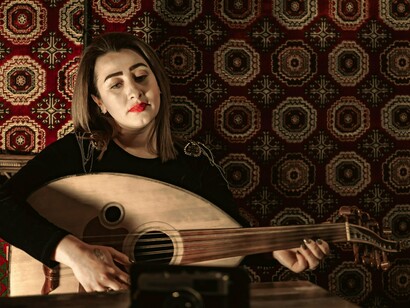
For Raymond Allon, the oud is far more than a musical instrument. It is, in his words, a living archive of emotions and histories.
When he holds the instrument, the gesture carries ritualistic significance. Every note is played with careful attention, and even the pauses between phrases seem deliberate—moments where memory and reflection intersect.
The oud allows him to translate stories into sound. Through its warm, resonant tones, he evokes the atmosphere of older Moroccan gatherings, where music unfolded slowly and listeners engaged with each lyric and melodic turn.
In performances and interviews, Allon often revisits classic passages such as “Ayli Hayani,” interpreting them in a style that blends the emotional intensity of traditional singing with the discipline of a seasoned musician. His approach respects the original spirit of these songs while allowing his personal interpretation to emerge.
This commitment to authenticity has also carried his music beyond Morocco’s borders. Through media appearances, including programs on Radio Shalom in France, Allon has served as a cultural ambassador for Moroccan heritage, presenting Shaabi music not merely as entertainment but as a sophisticated artistic tradition rooted in history.
The obsession with preserving heritage
One of Raymond Allon’s most passionate concerns is the preservation of Morocco’s musical heritage in an era of rapid technological change.
He acknowledges that modern platforms—especially smartphones, streaming services, and YouTube—have made music more accessible than ever before. Yet he also believes that this ease comes with risks.
For Allon’s generation, learning music required patience, dedication, and often physical proximity to older masters. Young musicians would spend hours listening, observing, and repeating melodies until they internalised the art form. The process was slow but deeply immersive.
Today, by contrast, the abundance of digital content can encourage quick consumption rather than deep understanding. Songs are often discovered, enjoyed briefly, and then replaced by the next viral trend.
Allon fears that many classic Moroccan songs may gradually disappear if younger generations do not actively seek them out. He emphasises that these works contain poetic richness and cultural insights that cannot be appreciated through casual listening alone.
With a mixture of concern and hope, he encourages young musicians to return to the roots of Shaabi and traditional music. According to him, “a little patience is enough for these songs to reveal their beauty.”
An artistic message across time
Today, Raymond Allon represents a rare model of artistic integrity. Over decades of musical activity, he has remained faithful to the principles that shaped his career: authenticity, respect for tradition, and commitment to cultural memory.
In a world where artistic success is often measured by instant popularity, Allon’s journey offers a powerful alternative. His music reminds audiences that songs can serve as historical documents, preserving emotions, stories, and social realities that might otherwise be forgotten.
With his oud still resting gently in his hands and his voice carrying the echoes of earlier generations, Raymond Allon continues to perform not simply for applause but for remembrance.