English
 Español
 Français
 Deutsch
 Italiano
 Português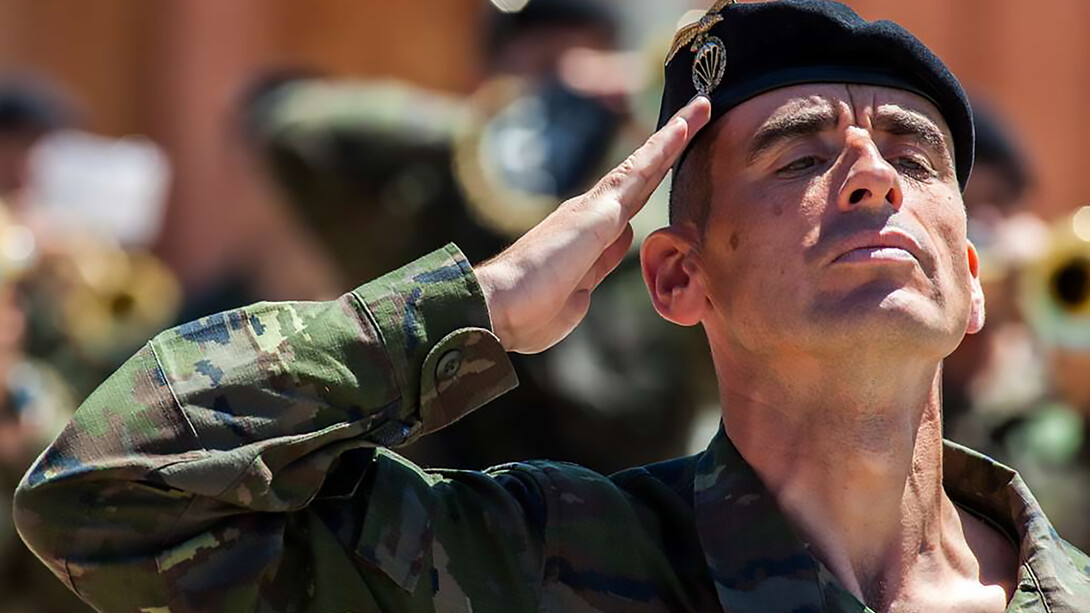
The Spanish Army is undergoing an unprecedented transformation process aimed at equipping its forces with capabilities suited to the challenges of the 21st century. The initiative known as Fuerza 2035 represents a response to the shortcomings observed in the former Multi-Purpose Organic Brigades (BOP) and aims to create modern, versatile, and highly technological units. In this context, Brigada 2035 emerges as the fundamental unit that, through a profound doctrinal reorganization and the incorporation of innovations in weaponry, logistics, and cyber defense, aspires to successfully face an increasingly complex and dynamic operational environment.
Background: the legacy of the BOP and their limitations
In the early 2010s, Multi-Purpose Organic Brigades (BOP) were implemented to provide the Spanish Army with homogeneous, flexible units capable of deploying on international missions. The idea was to have structures that allowed for rapid replacement and efficient interoperability, especially in peacekeeping and mixed operations such as those experienced in Kosovo and Afghanistan. These brigades were configured as units composed of a general headquarters, infantry regiments, cavalry, artillery, an engineer battalion, and a logistics group, distinguished in some cases using wheeled versus tracked vehicles.
However, significant problems arose from the outset. The two logistical variants—wheeled and tracked—became a logistical nightmare, hindering unit integration and cohesion, particularly in a geographically dispersed territory. Additionally, a lack of personnel and adequate facilities prevented planned transfers, such as the case of the cavalry group "Milán," which was supposed to be assigned to the Canarias Brigade but ultimately remained in Valencia. In this context, the organizational failure of the BOP was sealed, highlighting the need to rethink the operational structure of the Spanish Army to adapt to an environment where challenges are not only material but also strategic and logistical.
Force 2035: a new operational paradigm
Force 2035 arises in response to emerging threats and rapidly evolving technology. Modern conflicts, increasingly diffuse and asymmetric, require a rapid, flexible, and coordinated response capability. According to various sources, including statements from high-ranking officials such as General Luis Martínez Mejide, it is acknowledged that the future operational environment will be marked by what has been called the "non-linear battlefield." This implies a convergence of conventional and unconventional conflicts, where traditional military operations are interwoven with disinformation tactics, cyberattacks, and hybrid actions.
In the information age, threats no longer stem exclusively from state armies. The proliferation of terrorist groups, insurgents, and paramilitary units necessitates a reconfiguration of military strategy. Hybrid warfare, which combines conventional and unconventional elements, demands a comprehensive response. For example, Spain's recent performance in cybersecurity exercises such as Locked Shields 2022 revealed weaknesses in response capabilities to cyberattacks, underscoring the need to integrate advanced technologies and new defense systems.
The challenge lies in operating within the "gray zone" of conflict, where the line between combatant and civilian is blurred, and where the military response must be accompanied by diplomatic, economic, and informational actions. In this sense, Force 2035 is not only focused on modernizing weaponry but also on integrating artificial intelligence systems and big data analysis to enable a swift and coordinated response to any eventuality.
The impact of new international actors
The international landscape is also being altered by the emergence of new non-state actors. The availability and easy access to advanced technologies have enabled actors with limited resources to compete in certain aspects with traditional armies. One example is the use of commercial drones by insurgents in conflict zones, a tactic successfully replicated in different scenarios, such as those observed in recent conflicts in the Middle East and Eastern Europe. This trend compels the Spanish Army to consider strategic alliances and foster multilateral agreements to ensure that interoperability with allies becomes a key element for success in future operations.
New technologies and equipment: transforming combat capabilities
One of the fundamental pillars of Force 2035 is the incorporation of advanced technologies that optimize efficiency and reduce dependency on personnel in logistical and operational tasks. In this regard, priority is given to the automation and digitalization of processes, with systems capable of self-diagnosis, failure prediction, and spare part generation through 3D printing. These innovations not only have the potential to reduce costs in the medium term but also enhance the operational capacity of units, providing them with greater resilience in high-demand environments.
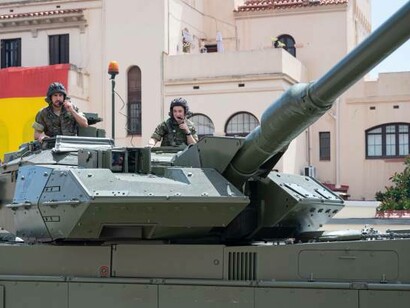
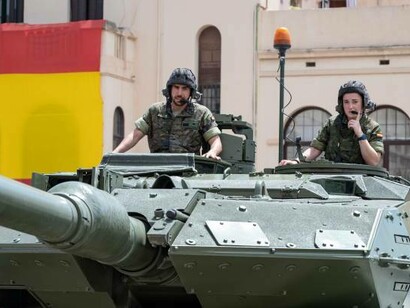
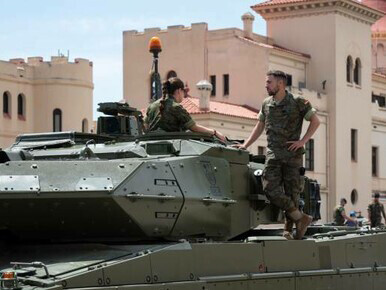
The development and implementation of new vehicles and weapon systems are central to the modernization strategy. One of the most emblematic projects is the VCR 8X8 Dragón, a vehicle designed to replace obsolete models and adapt to a wide variety of missions. This vehicle is characterized by its high mobility, reinforced protection, and "open architecture," facilitating future updates and the integration of new combat systems. Similarly, the modernization of armored vehicles such as the ASCOD Pizarro and the Leopard 2E tank is planned, with enhancements in protection and electronic warfare capabilities.
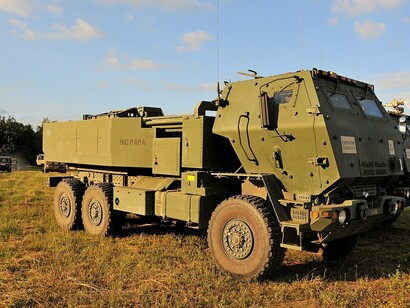
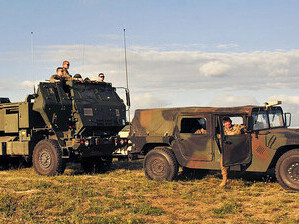
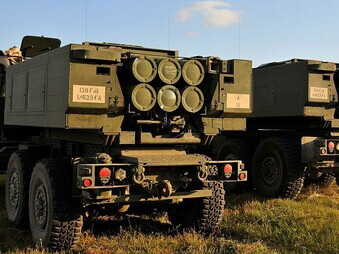
Additionally, improving firepower capabilities through a tiered integration of systems—from 120 mm mortars to long-range rocket artillery—strengthens the offensive potential of future brigades. In this aspect, the incorporation of systems like HIMARS or the Brazilian ASTROS is being considered to equip units with strike capabilities exceeding those of current systems. The inclusion of unmanned ground (UGV) and aerial (UAV) drones complements this strategy, facilitating reconnaissance, surveillance, and tactical support tasks.
Observing international trends, it is evident that other advanced armies have pursued similar modernization processes. For example, the U.S. Army has invested in command and control systems based on artificial intelligence and the integration of unmanned vehicles into field operations. Likewise, the United Kingdom and France have developed defense strategies that combine weapons modernization with command chain digitalization. These international experiences provide valuable lessons that can be adapted to the Spanish context, emphasizing the need for interoperability and a modular, updatable structure that can respond to rapid technological changes and evolving threats.
Brigade 2035: new organization and doctrine
Brigade 2035 stands as the central operational unit of Force 2035. Its doctrinal design is based on the idea that each brigade must be self-sufficient, and capable of carrying out all tactical combat functions without excessive reliance on higher levels. This new model does not imply the disappearance of divisions but redefines their role: while brigades handle tactical operations and direct combat, divisions will consolidate complementary capabilities—such as helicopters, field artillery, and special operations units—to support and enhance field action.
Brigade 2035 represents the cornerstone of the Spanish Army's restructuring at a time when modernization and adaptation to new conflict scenarios are strategic imperatives. However, its success depends largely on overcoming financial and logistical challenges that have plagued previous projects and learning from international experiences in modernization processes. If implemented correctly, Force 2035 could transform the Spanish Army into a more modern, efficient, and adaptable force, setting a new standard for military operations in the 21st century.