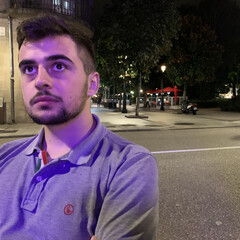
Antonio is a political scientist and security analyst specializing in the Sahel and African security affairs. His work explores the evolving intersection of terrorism, governance, and geopolitical competition across the region—particularly how these dynamics affect European and Spanish security. Over the years, he has developed a reputation for blending rigorous intelligence analysis with accessible geopolitical storytelling, providing audiences with an informed view of one of the world’s most complex security environments.
Trained in political science, with postgraduate studies in both security and defense and intelligence analysis, Antonio combines academic discipline with field-oriented insight. His background allows him to approach the Sahel not just as a theater of instability but as a strategic hinge between the Mediterranean, sub-Saharan Africa, and the global powers competing for influence there. He is fluent in English and French, which enables him to access, interpret, and contrast a wide variety of primary sources from local, regional, and international actors.
Antonio’s research has been published by the Instituto Español de Estudios Estratégicos (IEEE), where he served as an analyst. His work there included a detailed study of Nigeria’s role within the wider Sahelian security architecture, highlighting how local insurgencies interact with transnational jihadist networks and state fragility. The publication, featured on the IEEE’s official platform, remains one of the most cited Spanish-language analyses of the Sahel’s internal security trends. Beyond IEEE, he has contributed to several academic journals—four indexed in minor repositories such as Dialnet and Latindex, and two in top-tier JCR Q1 publications—reflecting both breadth and academic rigor in his research output.
Currently, Antonio collaborates with LISA News and The Political Room (TPR), producing analytical content that translates technical intelligence and defense insights into concise, readable formats for broader audiences. His contributions frequently examine issues such as the reconfiguration of French influence after Operation Barkhane, the growing assertiveness of Russian paramilitary structures, and the local socio-political consequences of energy and resource crises in Mali, Niger, and Burkina Faso. He is also known for integrating African local press sources and field data into his work—an approach that provides richer, ground-level perspectives often absent from Western analyses.
Antonio has participated in two academic research congresses and has completed several specialized courses in terrorism and security studies, totaling more than twenty hours on terrorism alone. These experiences have reinforced his understanding of the Sahel as a space where ideology, crime, and survival economics merge. His analyses frequently explore how armed groups evolve into hybrid actors—part militia, part business network—and how international responses often fail to address the underlying governance deficits that sustain these movements.
Throughout his career, Antonio has emphasized the need for Spain and Europe to reassess their strategic engagement with Africa. His commentary argues for moving beyond reactive military deployments toward deeper political partnerships, regional capacity-building, and genuine attention to African agency. This balanced, historically informed approach has earned him recognition among readers and peers as one of the new generation of Spanish analysts bridging academic research and practical geopolitics.
In recent years, Antonio has also broadened his focus to include cross-regional dynamics—how the Sahel connects with North Africa, the Gulf of Guinea, and the wider Indo-Pacific through energy, migration, and diplomatic channels. His ongoing projects combine classical geopolitical theory with open-source intelligence methods to map these interconnections and their implications for European strategic autonomy.
With his blend of academic precision, linguistic range, and clear communicative style, Antonio continues to provide nuanced perspectives on Africa’s evolving security landscape. His work helps situate the Sahel not as a distant frontier but as a crucial mirror of the global order in transition—where local conflicts, great-power rivalries, and human resilience converge.

 English
 Español
 Français
 Deutsch
 Italiano
 Português