English
 Español
 Français
 Deutsch
 Italiano
 Português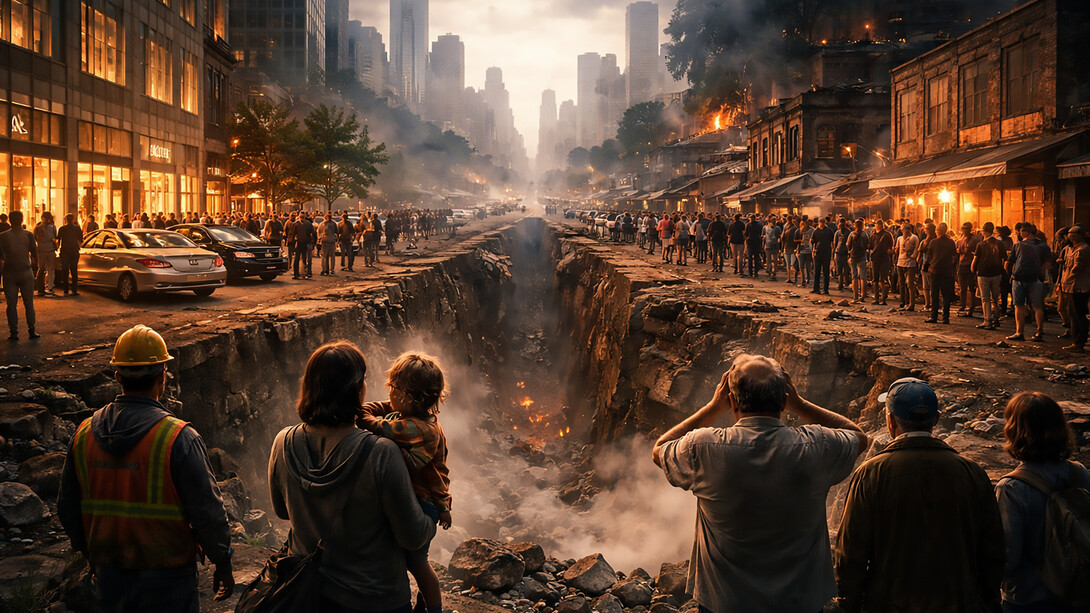
I thought I was familiar with the workings and behavior of the wealthy and powerful, but the Epstein files have come to me as a shock. There has to be accountability for the American elite. Accountability and a sense of justice are essential for creating trust among the Americans. When trust breaks down, so does democracy, and markets can disrupt. Is this even in the interest of the economic elite?
This is complicated by Trump's personal decision to attack Iran, which does not constitute a real threat to the US, is in clear violation of international law, and contradicts the US Constitution that war be deliberated by Congress. Trump has little respect for democracy and has done little to affront the structural problems of America.
The major issue is the lack of accountability for the unfair and lopsided distribution of income and education, resulting in an unsustainable way of life for about a third of our population. Add the high costs of health care, and the situation deteriorates. We have regressive taxes for the super-rich, numerous errors by the current president, including the denial of climate change, and disrespect for democracy. This is a picture of a disaster. Are we waiting for civil war? We need to help ourselves as a country. Let us briefly examine the major problems and explore directions for significant improvement.
The main problems
The distribution of income, especially for the lower 20% of earners, is horrid; they lead very stressful lives. On an average annual income of $36,000, they have trouble making ends meet, often taking multiple jobs. The lowest 20 percent of household income earners receive only 3.1 percent of the total, and the highest 20 percent receive 52.2 percent.1
U.S. healthcare spending per capita is the highest in the world, reaching approximately $13,432 to $14,570 per person in 2023. This amount is roughly double the average of other high-income nations2. Higher costs are driven by high prices for services, drugs, administrative expenses, and greater usage.
The average cost of college in the United States is $38,270 per student per year, including books, supplies, and daily living expenses3. The outstanding federal student loan balance is $1.693 trillion; 42.8 million student borrowers have federal loan debt. The average annual loan payment for a bachelor’s degree is $7,764 and $10,968 for a doctoral degree4.
Two Americas exist today: one for the college-educated and one for those with only a high school diploma or less. College graduates have double the yearly income, four times the retirement savings, and four times the net worth of working-age, non-college Americans. This is not a small issue: non-college adults between 25 and 64 years old are 109 million persons, more than the 63 million educated of working age. Non-college workers are five times more likely to be in poverty and lack health insurance, and more likely to move because of economic trouble5. These differences have been decades in the making, and a person who has only completed high school has a life expectancy of seven years less than a college graduate. Those who never finish high school have a life expectancy of 10.7 years less than college graduates6.
According to a recent paper published by the National Bureau of Economic Research, the total effective tax rates for the 400 wealthiest Americans have declined sharply in recent years. They now pay a smaller percentage, 24% of their true income in taxes, than the average American, who pays 30%. The new study combines data on corporate earnings, private wealth, and individual tax payments, confirming that the country's tax code is regressive, not progressive, at the very top.7
The President’s economic policies have resulted in questionable economic results; namely, the trade tariffs are increasing inflation, and climate change denial puts the US behind in key technologies such as solar power, electrical storage, and vehicles. China is gaining in economic competitiveness. We lack a balanced immigration policy allowing for the legal entry of foreign workers whom we need, plus a controlled inspection by ICE.
Trump’s disrespect for democracy and building of a personality cult is harmful and certainly not the American dream. Within a cult, the person is held as the supreme value; policy results are ignored. Only the narrative of the cult person counts. Last week, he stated that elections were rigged and "Republicans ought to nationalize elections."
It is also true that the US economy is doing well. It has a highly developed, diversified, market-oriented economy with the world's largest GDP, which grew from $18 trillion in 2015 to over $29 trillion by the end of 2024. Unemployment is low at 4.3 percent, and the S&P 500 stock index has grown 15.4 percent annually for the last five years. The "Magnificent Seven" dominant U.S. technology and growth companies—Alphabet, Amazon, Apple, Meta Platforms, Microsoft, Nvidia, and Tesla—are recognized for their massive market capitalization and leadership in AI and technology. However, there have been circumstances of monopoly, and technology’s impact on the consumer is under question. An economy that ignores major externalities and the welfare of its more needy citizens will eventually run into trouble.
The impact of the trade tariffs has been a strain on international relations and has increased inflation. Increasingly, countries, even neighbors like Canada, are seeking alternative trade relations with China and others. This weakens the US position. Studies have shown that the trade tariffs have increased expenses and reduced earnings for companies and have increased costs for households. This should not be confused with the recent stock market gains of the wealthy. Many of our middle- and lower-class families are facing rising grocery, housing, and childcare costs. They have few emergency funds and are delaying retirement and education. More families are forced into "polywork," the modern term for second and third jobs. According to the Bureau of Labor Statistics, this involved 8.6 million persons in January.
In this climate of divisiveness, it is not surprising that Americans are feeling increasingly lonely. People between 30 and 44 years of age are the loneliest group; 29% of people in this age range said they were “frequently” or “always” lonely. The reasons given for being lonely were technology (73%), insufficient time with the family (66%), people being overworked or too busy or tired (62%), mental health challenges that harm relationships with others (60%), and living in a society that is too individualistic (58%)8.
America does not work well for about one-third of its population. We can lose time and wait until the situation gets worse. Or we can do something about it.
Possible directions for a new America
Everything is possible: more of the same; the worst for most, maybe losing democracy; or an attempt to improve: more sharing of the benefits and increasing trust among us. I opt for the latter.
The US has a long history of fighting unwarranted wars and therefore we should be more cautious, more rigorous in the examination of their necessity. Presidents alone should be prohibited to wage war.
Helping our most needy brothers and sisters. We must improve the lives of the 109 million non-college workers who need new training and education. These are the workers who make our transportation and distribution system possible and need to be paid more to keep our system effective. Along with the lowest quartile of income earners, they need better wages, which implies more profit sharing within the companies and greater labor union involvement. Minimum wages may be evaluated.
The less educated and the poor require better health care. Improving Medicare and Medicaid involves integrating care for dual-eligibles, enhancing benefits (dental/vision/long-term care), streamlining enrollment, and adopting value-based payment models to reduce costs. The existing differences in life expectancies are unacceptable.
Online learning and AI should be used to reduce the high cost of training and college education. Collaborative learning could be used among participants. The costs could be reduced by cutting the required semesters and years of physical presence. The results should be applied to the training and education of the neediest workers, preparing them with and for AI.
In general, AI requires public control concerning job security, labor rights, and public safety. Frameworks for democratic oversight, transparency, and human-in-the-loop systems should be implemented to prevent discrimination, bias, and economic disruption. Emphasis should be placed on preparing our best minds for governance, private and public, in a complex world with AI.
Evidently, the super-rich should pay taxes like the rest of us. The loophole should be closed or additional taxes added. A more progressive income tax becomes possible by working together. Our mindset is changing: we can all take pride in helping the entire nation.
More space for social and political participation at the local level is needed, also to combat loneliness. This requires a combination of institutional, digital, and community-driven approaches that move beyond one-off consultations to create sustained pathways for engagement. Effective strategies include enhancing transparency, utilizing technology for hybrid participation, and fostering inclusive, trust-based relationships between citizens and local government. European countries such as Italy should be followed for their local participation examples.
We need to invest more in the application of solar technology and energy efficiency, reversing the unrealistic climate denial policies. This will allow us to compete in these technologies, lower our energy costs, and reduce our dependence on fossil fuels. Investing in energy efficiency increases productivity and employment. For every dollar of energy savings, there is a dollar of other improvements. We must restore our trust in scientists and evidence-based policy. Climate change denial is no longer held by even the petroleum industry. The belief in arbitrary and false narratives is manipulative and not in the country’s interest.
A balanced immigration policy that combines secure borders and enforced, legal, and orderly migration with economic needs-based, high-skilled, and humanitarian pathways. It emphasizes humanitarian treatment of asylum seekers, legal status for compliant immigrants, and strategic economic integration, while strengthening regional security. This can be a key area for bipartisan political action.
A strong program of publicly funded R&D is necessary to compensate for the short-term outlook of private corporations. It should be concentrated on technologies and methods to increase US competitiveness and to safeguard human health, with the help of AI.
Together, we can create a new America for all Americans.
References
1 Kollar, M., Scherer, Z. (2025). Report Number: P60-286, Income in the United States, Census Bureau.
2 Peterson Foundation (2025),mr “How does the US healthcare system compare to other countries?".
3 Hanson, M., (2026), “Average Cost of College & Tuition", EducationData.org, 2026-02-14.
4 Hanson, M., (2025), “Average Student Loan Payment", EducationData.org, 2025-03-11.
5 Colavito, A., Kendall, J., & Moller, Z., (2023), “Worlds Apart: The Non-College Economy" May 19, Thirdway. -109 Million The majority are below the national median, respectively.
6 Sylte, Dillon O et al., (2025), “Life expectancy by county and educational attainment in the USA, 2000–19: an observational analysis," The Lancet Public Health, Volume 10, Issue 2, e136-e147, February.
7 Lempinen, E., (2025), “The Ultra-Rich Have Lower Tax Rates,” UC Berkley Research.
8 Ross, E., (2024), "What is Causing Our Epidemic of Loneliness and How Can We Fix It?", October 25, Harvard School of Education.