English
 Español
 Français
 Deutsch
 Italiano
 Português
In the seminal work published in 1992, James Lee Ray foresightedly presented an argument on “optimists versus pessimists on the future of the world.” In a section of the book Global Politics (5th edition), Ray cautiously posited that “no one knows for sure what the rest of this century (20th) or the beginning of the next (21st) will bring.” 1
The end of the 20th century was marked by heightened optimism as the dominant liberal ideology entrenched itself in many parts of the world. The developments around the world deepened and expanded the liberal democratic project, but this was not without criticism and, of course, cynicism. However, it was indeed apparent that any country that aspired and desired to change its misfortunes from the state of underdevelopment, marginalisation, abject poverty, dictatorship of the political elite, etc., had to embrace both political and economic liberalism as advocated and promoted by the Western countries, chiefly led by the United States of America and its European allies.
In regions of the developing countries such as Africa, the 21st century was declared an African Century, patently an optimistic disposition. In other parts of the world, such as South America, the 21st century witnessed the emergence of left-leaning movements, which some scholars referred to as a “Pink Tide.” Pink was a euphemism for “red,” signifying the divergence of ideological leanings to the left and the strategic orientation or preferences of the leaders who led the movements, who largely were united by their common rejection of the neoliberal economic policies, or the Washington Consensus.
The beginning of the 21st century marked the birth of a new dawn in most regions of the developing countries. The optimism was largely centred around the perceived defeat of imperialism and its conjoined twin of neo-colonialism, or the second scramble for control and ownership of natural resources.
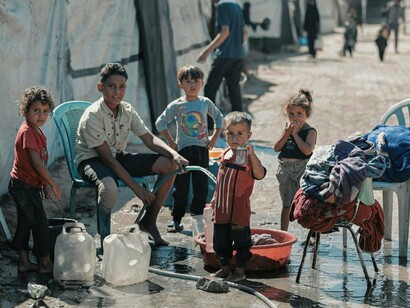
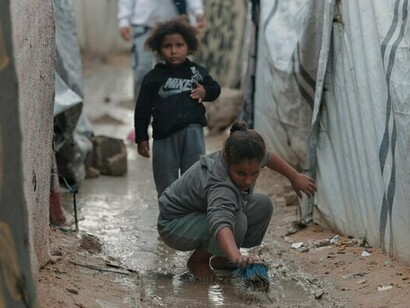
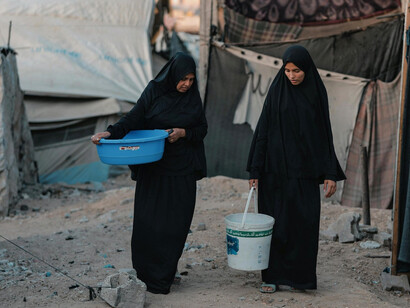
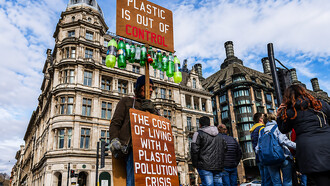
The latter is one of the key issues discussed by Ray more than three decades ago when he predicted that the future of the world will, inter alia, be signified by four global challenges, namely, poverty and starvation, population explosion, shrinking natural resources, and pollution. The latter has evolved to become a full-fledged academic and professional discipline packaged under the tutelage of the politics and economics of climate change.
There is no gainsaying that the 1992 pessimistic prediction of the future of the world and its concomitant challenges remains relevant to this day. The United Nations, the foremost universal intergovernmental institution, still lists the four issues as critical in the international agenda for development, among a host of other interrelated challenges, underscoring not only their relevance but also their significance in the current century.
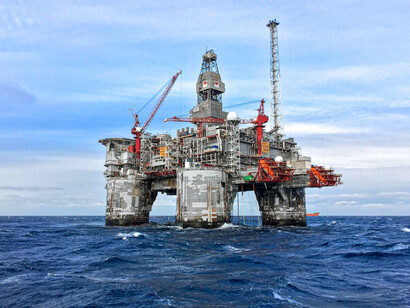
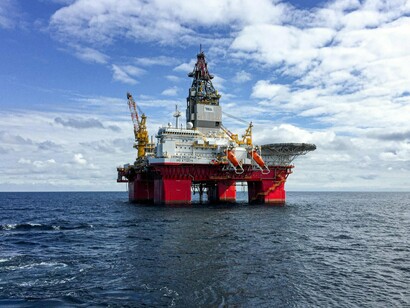
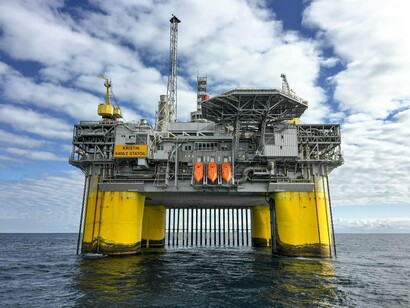
Shrinking natural resources, or increased demand for these resources, particularly energy, has been a major source of conflicts across the globe. Energy is, as Hughes Barry (1985) put it, “the master resource because the extraction of all other resources depends on its availability and prices.”2 According to the United Nations, in 2023, “30 countries were operating 417 nuclear reactors for energy generation and 62 nuclear reactors were under construction.” 3
The countries leading in the nuclear energy production industry are the United States, France, and China. Clearly, the three countries act on what other countries also know, that is, everything is produced by energy from domestic necessities, such as daily meals, to global transactions, shipping and trade in its various forms. Therefore, reliable, consistent, and guaranteed energy reserves are a top priority or should be for all countries, especially for the sustainable survival of their economies and livelihoods.
Disguised as a move motivated by the unadulterated desire to advance the noble political ideals of democracy and political rights of the people, on 3 January 2026, the United States conducted a military operation to remove an elected leader of a sovereign state, President Nicolás Maduro of Venezuela, against the letter and spirit of the United Nations Charter. The latter provides universal commitments by all United Nations Member States to desist and discourage any forms of the use of force against a sovereign state, albeit in the interest of collective security and endorsed by the United Nations Security Council, not unilaterally.
It is common knowledge that Venezuela possesses the world’s largest natural oil reserves at 17%. Given the fact that natural crude oil is used for various purposes such as transportation fuels, petrochemicals, heating and power, industrial products, and consumer goods, the action of the United States against Venezuela was disappointing but not surprising. The pessimists, supported by the realist scholars of foreign policy, argued decades ago that states will always advance their national interests and will do whatever it takes to attain this objective, including military interventions or use of force.
Dedicated disciples of the realist school of thought consider war as an alternative strategy to achieve political ends through other means. In the same vein, it cannot be disputed that the state and its leaders who resort to war, both admit and demonstrate their failure and weaknesses to engage in strategic thinking conducted through the peaceful enterprise of diplomacy. Therefore, as those who attain political victory and celebrate their gains acquired through war, they equally declare their intellectual inferiority on matters of creative and innovative capacity in the generation of ideas that keep the world at peace and safe from the ravaging effects of war.
Following the abduction of President Maduro, the United States president stated that the Venezuelan president was an outlaw and dictator who would be brought to justice in the American courts. Apart from being labelled a dictator, by implication, suppressing the rights of his countrymen and women, additional allegations of transgressions by the Venezuelan President, are related to narco-terrorism and drug trafficking. Whether Maduro committed the alleged crimes or not, the state-sanctioned military operation in Venezuela amplified the pessimists’ belief about the future of the world, that, in the words of Thucydides, “the strong do what they can and the weak suffer what they must.”
The capture of President Maduro, instead of entrenching the values and principles of democracy, especially the interrelated international law principles of the protection of state sovereignty, non-interference in the domestic affairs of another country, and respect for territorial integrity, dashed whatever remaining degree of hope there was that economically developed and militarily dominant countries would one day embrace the values of Ubuntu, in short meaning demonstrating humanity towards others.
Optimists have always hoped that human beings across the colour or racial lines, anywhere and everywhere in the world, would one day surrender their self-centred interest in the service of humanity at large. The 21st century international system is still reeling from a credibility crisis caused by callous and bigoted individuals at the helm of political structures of their nations.
Fundamentally, the military operation conducted by the United States in Venezuela in January 2026 undoubtedly emboldened other aspirant military men in other parts of the world. In Africa, several countries are under military rule, namely, Mali, Burkina Faso, Niger, Chad, Guinea Conakry, Sudan, Gabon, and Madagascar. Certainly, this marks a reversal of the optimists' perspectives and hopes for a more democratic, united, and prosperous continent in the 21st century. For the pessimist in the realist school of thought, none of these developments should be surprising because, to them, human beings are intrinsically competitive and self-centred, thus, wars and conflicts are both inevitable and inexorable.
In the 2026 Global Risks Report (21st edition), the World Economic Forum (WEF) presents the state and future of the world, which, I must say, looks bleak. The global risks identified and discussed by the WEF include but not limited to, state-based armed conflicts, geoeconomics confrontation, extreme weather, social polarisation, misinformation and disinformation, economic downturn, erosion of human rights and civil freedoms, adverse outcomes of the artificial intelligence technologies, cyber insecurity, increased inequality, lack of economic opportunities, and rising unemployment. Obviously, these risks present a melancholic picture of the future of the world, thus corroborating the pessimistic perspective of the future of the world as simply a game of the survival of the fittest.
Realities and available evidence dictate that those who are optimistic about the future of the world have a mammoth task to process the multitude of polycrisis currently rocking the world. These range from a multipolar world with declining faith in multilateralism or erosion of international cohesion and integration to direct interstate wars for access and control of natural resources such as oil and sources of energy, deepening poverty, and skyrocketing unemployment.
Can the little that is left of the so-called international common values and principles be salvaged and reinvigorated? Could the dictum that optimists are actually “pessimists well prepared for all eventualities, not blind adventurers” be a ray of hope in these trying times of hopelessness, despair, and adversity? I guess only time will tell.
Notes
1 Ray, J.L. 1992. Global Politics (Fifth edition). Florida: Houghton Mifflin.
2 Hughes, B.B.1985. World Futures. Baltimore: John Hopkins University Press.
3 United Nations, Global Issues.