English
 Español
 Français
 Deutsch
 Italiano
 Português
In a nutshell:
- China’s nuclear and military expansions are reshaping the global power dynamics.
- China’s aggressive actions in the Indo-Pacific are threatening global trade and security.
- Regional and global responses focus on defense alliances, supply chain resilience, and technological innovation.
The Indo-Pacific region has emerged as one of the most strategically important regions in the world, not only because of its economic significance but also for its role in shaping global security dynamics. I chose this topic because China's rapid military expansion and its assertive regional policies are altering the balance of power in the Indo-Pacific and reshaping the global order. As tensions rise over Taiwan and disputes intensify in the South and East China Seas, understanding China's military advancement is crucial for evaluating its far-reaching impact on trade, diplomacy, and regional and global security. This research aims to analyze China's military growth alongside the strategic responses of neighboring countries, offering insights into the shifting power dynamics and their implications for stability in this critical region.
China's military expansion: the push for a "World-Class Military"
Xi Jinping's vision
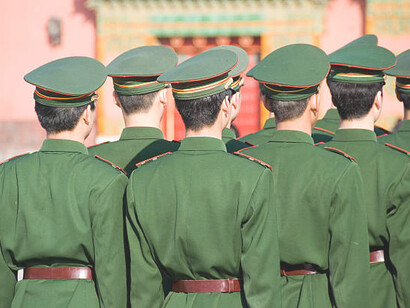
President Xi has made clear that a "world-class military" is essential to his vision of China's national rejuvenation 1 by 2049, a goal that has defined his agenda since he assumed control of the Chinese Communist Party in 2012. In 2015, the People's Republic of China underwent a major restructuring, which flattened the command structure and allowed the Chinese Communist Party (CCP) more control over the military.
China's military rise focuses on two major components: developing a fully survivable nuclear triad and constructing technologically state-of-the-art conventional forces. The former seeks to counterbalance the coercive value of the US nuclear arsenal 2. At the same time, the latter decisively tilts the regional military balance, particularly within the First Island Chain, in China's favor.
Nuclear expansion
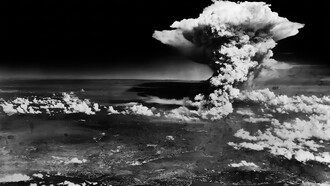
China's nuclear expansion presents a long-term challenge to the United States, which dominates the nuclear warhead industry. According to the Stockholm International Peace Research Institute's 2024 yearbook, China's nuclear stockpile grew from 410 warheads in January 2023 to 500 in January 2024 and is expected to reach 1000 by 2030. While the number remains smaller than the US arsenals, the pace at which China is growing its nuclear warheads raises significant concerns. China has been enhancing its nuclear delivery systems and improving its intercontinental ballistic missiles (ICBMs), multiple independently targetable re-entry vehicles (MIRVs), and road-mobile platforms.
These developments reflect a strategy to diversify its capabilities, allowing for a broader range of applications in potential conflicts. The ongoing diversification of China's nuclear delivery systems signals a growing willingness to differentiate between the strategic and non-strategic use of atomic weapons. This diversification may result in a so-called imbalance of political resolve 3, in which China may be willing to accept much greater risk over Taiwan than the US. As a result, the US has become 'concerned about the erosion of what it sees as a longstanding position of nuclear advantage relative to China.'
Defense spending and conventional military force
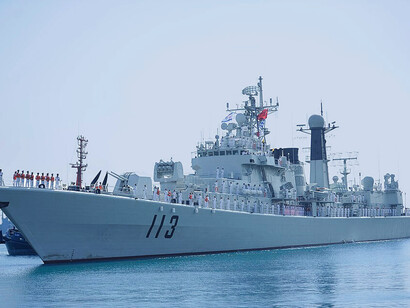
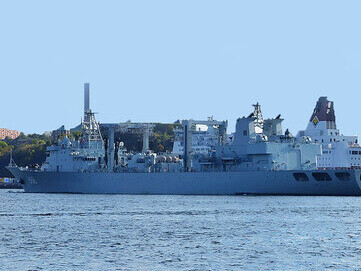
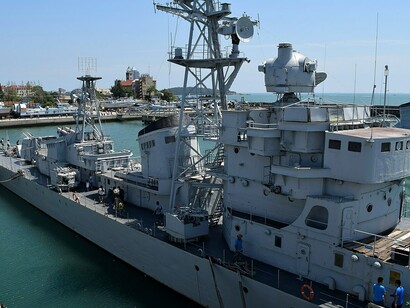
Simultaneously, the US and its Indo-Pacific allies are concerned with China's growing defense budget. China's defense spending has increased significantly from CN¥ 720 billion in 2013 to CN¥ 1.67 trillion (US$ 230 billion) in 2024. This consistent increase in the budget has allowed China to improve its conventional military capabilities. China already operates the world's largest navy in numerical terms, with an overall battle force of over 370 ships and submarines, including more than 140 major surface combatants. According to the US Department of Defense (DoD) report, this number is expected to rise to 395 ships next year and reach 435 by 2030 4.
In addition to expanding its naval capabilities, China has fielded an impressive missile inventory, which, for instance, includes the DF-21 and DF-26 intermediate-range ballistic missiles, the DF-17 hypersonic-glide vehicle-armed medium-range ballistic missile, and a broad suite of short-range ballistic missiles, etc. China has also started fielding ground-launched cruise missiles like the DH-10 and DF-100, which have approximately 1,500 km and 2,000 km ranges. Such advancements in the defense sector have allowed China to challenge US dominance and project its military power, which often infringes on the sovereignty of its neighboring countries.
Escalating tensions: China and its neighbors on the brink
East China Sea
China's military expansion has significantly heightened tensions in the Indo-Pacific region, with its ripple effects being felt globally. Increased naval activity in the East China Sea, particularly the China Coast Guard's (CCG) daily presence near the disputed Senkaku Islands/Diaoyutai Qundao, has drawn sharp criticism from countries like Japan. These aggressive actions directly challenge the sovereignty of nations in the region and undermine international norms.
In November 2023, President Xi, during his inspection of the CCG's East China Sea command office, emphasized strengthening law enforcement to bolster China's maritime claims 5. Following this, the CCG drafted a plan to maintain a persistent presence near the islets and conduct inspections of Japanese fishing vessels. By implementing such measures, Beijing aims to normalize its sovereignty claims over disputed territories. Such aggressive policies of Beijing have left regional powers like Japan with no option but to increase their defense budgets. The potential for escalation in this area poses a clear risk to global trade routes and regional stability.
South China Sea
The situation is even more precarious in the South China Sea, which is a critical maritime shipping route with around one-third of global trade passing through it. China's aggressive naval and coast guard activities, often described as "grey zone" operations, have created an environment of tensions for other island states in the region, which share maritime disputes with China. In November 2023, Philippines President Ferdinand Marcos Jr. stated that the situation in the South China Sea 'has become more dire' due to China's 'coercive tactics and dangerous maneuvers 6.' This situation prompted Manila to partner with Washington and other nations worldwide to come to some resolution and maintain peace. At a summit meeting the same month, Marcos and his Japanese counterpart, Fumio Kishida, shared 'serious concerns' on the situation in the South China Sea and East China Sea, referring to China's assertive maritime actions.
Taiwan strait
China's growing aggressive stance over Taiwan's unification has heightened Indo-Pacific security and global supply chain tension. China has been conducting frequent military drills around Taiwan to showcase its strength and reinforce its territorial claims over the island. In December, China staged what is said to be the largest naval deployment near Taiwan since 1996, involving over 90 vessels. These actions coincided with Taiwanese President Lai Ching-te's overseas trip and US stopovers, signaling Beijing's disapproval of Taiwan's closer ties with Western nations. Taiwan's strategic importance lies in its production of over 60% of the world's semiconductors, including more than 90% of the most advanced chips, which are critical to modern technology.
Additionally, nearly 40% of global shipping 7 flows through the Taiwan Strait. A conflict over Taiwan could disrupt the trade passing through the Taiwan Strait, destabilize high-tech industries reliant on Taiwan's semiconductor production, and escalate into a broader geopolitical crisis involving the US and its allies. The escalation of the Taiwan issue can have a significant impact on economies all around the world and can affect the global supply chain.
Evolving responses to escalating tensions
Regional efforts
China's growing assertiveness and strategic ambitions in the Indo-Pacific region have raised concerns for regional and global powers. The Indo-Pacific nations are improving their defense capabilities, strengthening alliances, and increasing their defense budgets to counter China's aggressive actions. Public support for such measures is strong—61% of Japanese citizens back acquiring counterstrike capabilities, 70% of South Koreans express concern about worsening security, and 64% of Australians, according to a 2022 Lowy Institute poll, see a U.S.-China conflict over Taiwan as a critical threat.
Japan aims to increase its defense spending to 2% of GDP by 2027, prioritizing investments 8 in long-range strike systems, missile defenses, and cross-domain strategies. It has also started initiatives to improve its space and cyber capabilities. Similarly, Australia, the Philippines, South Korea, and Taiwan have increased their defense budgets to counter China's influence. These countries are also forging regional cooperation through multilateral coalitions and trilateral military exercises with the US. The collaboration between these regional powers represents a unified front against China's growing aggression.
Global reactions
Beyond Asia, Europe is also reassessing its security policies in the wake of China's military rise. European nations recognize that a contingency in the Indo-Pacific region can significantly impact global trade and risk economic crises. European countries are also concerned about the strain a conflict in the Indo-Pacific could have on the US military resources. As the U.S. has been the key provider of the EU's security, and if US resources are diverted to address challenges in the Indo-Pacific, it could leave fewer resources available to counter potential Russian aggression in Europe. Moreover, China's expanding power projection, illustrated by PLA-Russian naval 9 exercises in the Baltic Sea and its support for Moscow's revisionist endeavors, has added to European concerns.
In response, European allies are increasing defense spending, enhancing resilience against economic coercion, and symbolically contributing to freedom of navigation operations in the Indo-Pacific. Europe's "derisking 10" strategy aims to safeguard its technological and industrial base. Meanwhile, the growth of China's nuclear arsenal introduces nuclear tripolarity, challenging US extended deterrence commitments worldwide. When adapting to the evolving global security environment, NATO's nuclear posture must now consider these emerging cross-theatre interdependencies.
Conclusion
China’s military expansion and assertive policies in the Indo-Pacific represent a transformative shift in the regional and global balance of power. Xi Jinping’s vision of a "world-class military" has not only heightened tensions but also catalyzed an arms race, forcing neighboring countries and global powers to reexamine their defense strategies and forge stronger alliances. The ripple effects of Beijing’s actions, from the East China Sea to the Taiwan Strait, have drawn a unified response from regional actors like Japan, South Korea, India, and Australia, as well as global players like the United States and Europe, who are adapting their security policies to counter the growing threat.
As the Indo-Pacific emerges as the epicenter of geopolitical competition, fostering cooperation among like-minded nations is vital to preserving peace, stability, and a rules-based international order. Initiatives like QUAD and AUKUS, along with strategic multilateral efforts, will play a decisive role in deterring aggression and promoting collective security. The developments in this region are not only reshaping the global security architecture but also serving as a critical test for the efficacy of multilateralism in navigating shared challenges and safeguarding the future of international peace.
References
1 Tirziu, A. G. (2025). GIS Reports Online. China’s peak power: A strategic shift.
2 Kuo, J. (2023, November 28). The real motives behind China’s nuclear expansion. Foreign Affairs.
3 Kroenig, M. (2007). Nuclear superiority and the balance of resolve: Explaining nuclear crisis outcomes. International Organization, 61(3), 403–433.
4 U.S. Department of Defense. (2024). Military and security developments involving the People's Republic of China 2024.
5 The State Council of the People's Republic of China. (2023, December 1). China's economic performance continues to improve, report shows.
6 Manila Standard. (2023, December 17). Marcos slams Chinese threats.
7 Risk Intelligence. (n.d.). East Asia: Impact of China and Taiwan conflict.
8 Japan Ministry of Defense. (2022, April 20). Defense budget 2022.
9 Hoffman, F., & Yarbrough, B. (2023, February 22). Assessing Chinese-Russian military exercises: Past progress and future trends. Center for Strategic and International Studies.
10 European Parliament. (2024). The role of the European Union in global security: Key challenges and opportunities.