English
 Español
 Français
 Deutsch
 Italiano
 Português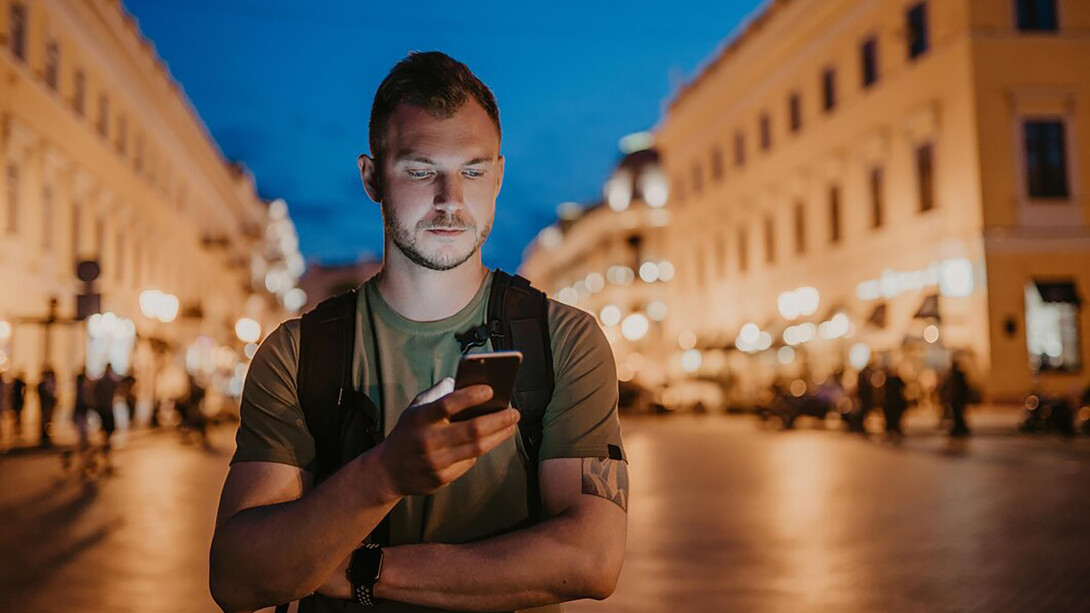
Last night, I called my friend, eager to hear about her much-anticipated trip to see the Northern Lights. She had been planning and saving for months, her excitement palpable every time she spoke about it. Naturally, I couldn’t wait to hear all about her adventure. But when I called her, instead of the joy I expected, her voice carried a tinge of disappointment.
“My phone got damaged,” she said. “I couldn’t take any pictures or make videos. I can’t believe I went all the way there and have nothing to share.”
Curious, I asked, “But what about the Northern Lights? Did you see them?”
“Oh yes, I did,” she replied, “But if it’s not on Instagram, did it even happen?”
Her words stayed with me long after the call ended. When did our experiences and joys become incomplete without a digital record? People have long documented their memories, whether through journals, photos, or videos—it’s how we create something tangible to cherish. But in today’s world, it feels different. Documenting has morphed into creating share-worthy memories. The pressure to capture every moment perfectly can sometimes pull us away from fully experiencing the present. In fact, memories aren’t just recorded for personal joy; they are now carefully crafted and polished for an audience.
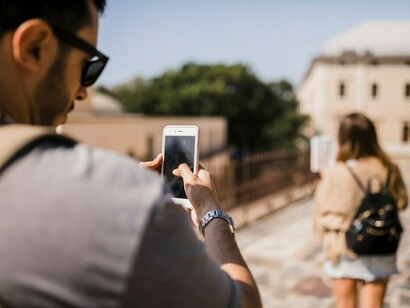
This brings with it a subtle pressure. Consider watching a sunrise through the lens of a camera desperate to catch the perfect frame. Or, walking along a stunning beach with your arm outstretched to record every step. In moments like these, am I truly feeling the cold morning breeze on my skin or the soft sand beneath my feet? Trying to balance the act of experiencing and documenting can feel like a tug-of-war inside my head.
Holidays are meant to be a break—a time to escape our routines, recharge, and soak in new experiences. It could also mean taking a break from our digital habits, stepping away from the 122 apps that keep us busy during a normal workday. Yet for many travelers, the idea of being without a smartphone feels almost impossible. No smartphone means no GPS, no instant snapshots, no entertainment, and no real-time connections to the world. For some, vacations are the perfect excuse to lean further into their phones. Whether it’s catching up on social media, streaming binge-worthy shows, or editing perfect holiday photos, the smartphone becomes a companion rather than a tool. The constant chimes, vibrations, and notifications demand our attention, pulling us back into a digital world and drifting us away from the moment to savor even in the most serene settings.
The utility of digital devices is undeniable—they have shaped how we work, socialize, learn, and even relax—making their integration into our lives profound. People say, “My smartphone gives me freedom. It feels like I have everything under control,” and I get it. There’s a sense of empowerment in holding a device that is so powerful yet so accessible.
When I reflect on my own journey with technology, I think back to my first email account. It feels like a lifetime ago, long before social media and smartphones became integral to my day-to-day life. I couldn’t have imagined then that checking my phone would become the first thing I’d do each morning. And yet, my smartphone is now my alarm, my planner, my bank, and my entertainment hub—it’s intertwined with every aspect of my life.
My neighbor, for example, recently shared her holiday plans. Her family had everything mapped out. She said, “My friends and I have been planning this OTT binge-watch marathon for weeks now. I mean, there are so many new shows to catch up on! We’ll probably spend the entire day glued to the screen." Her teenage daughter was also heading to a friend’s house to test out her brand-new phone. Of course, how could one forget creating family memories? After all, it's a tradition. Post-holidays they had reserved the time to sit together for editing and sharing unforgettable videos online.
These stories aren’t unusual. In fact, they highlight how our relationship with the digital medium has evolved over time. It’s no surprise that even children are becoming deeply attached to smartphones. Some parents worry about the distraction these devices cause, even when turned off. Others fear that denying their kids a phone might lead to social exclusion. Smartphones are now part of playground dynamics, with kids as young as nine or ten using them to socialize. Children haven’t just adapted to this trend; social media has become their gateway to connection, validation, and self-expression. Getting likes or hearts on their posts or photos is seen as a reward, making getting addicted to these pleasures quite foreseeable.
This dependence spills into our workplace, too. A colleague once joked, “I’m not going to waste time staring at other people’s faces in that meeting when I can watch football on mute.” Access to digital devices easily becomes an escape route—to mindlessly browse online, shop, or play games. It’s fun until you realize it is robbing you of your focus and productivity. It is like a double-edged sword: hyperconnectivity leads to a spillover, rather an invasion, of work time into personal time and personal time into work time.
So, is the smartphone just an easy communication device gaining popularity every day, or is there more to it? What happens when we step back from it for a few days?
Perhaps these are the questions worth exploring, not just for us but for the next generation growing up in a world where smartphones are as essential as the air we breathe. The ever-growing number of smartphone users speaks volumes about their perception as an indispensable device. Beyond our personal and work lives, smartphones allow us to peek into others’ curated lives. However, even those who think that smartphones and social media have made things easier for them are skeptical of their impact on well-being. Being wished a happy birthday by 250 strangers on social media can’t compare to sitting face-to-face with a dear friend and feeling truly loved and satisfied.
A lot of it has to do with the anxiety that urges us to use smartphones excessively and view the world through social media. One of these anxieties emerges from what is commonly known as the fear of missing out. Scrolling through social media, seeing others enjoying life more than we are, can leave us feeling that we perhaps lack something. The picture-perfect holiday posts, enviable relationships, glamorous career highs, affluence, and popularity can make us believe that we have nothing interesting to talk about. Seeing a friend’s Instagram posts of working out in the gym can make us feel we might not be doing enough. A small handheld device can quickly trap us in a cycle of comparison and self-doubt. We scroll endlessly to stay updated on who’s doing what.
“Others are doing all sorts of cool things while I can’t” can be an awkward feeling. No one can tell what triggers this negative self-talk and overindulgence in technology. Simply avoiding quick checks on social media with every notification can help avoid social comparisons and the inadvertent micro-assessment of one’s worth. Mental health experts suggest that taking a sabbatical from smartphones can work wonders for the body and mind. Call it digital minimalism, unplugging, or screen time management—the goal is to regain control. It’s not about questioning the need for smartphones or giving up social media entirely. Instead, it’s about reflecting on the value of choosing not to be consumed by them—the freedom of missing out!
Perhaps the next time we feel the urge to document a moment, we could pause and ask ourselves, “Am I recording this to remember, or to impress?” After all, the most precious memories are often the ones we carry in our hearts.