English
 Español
 Français
 Deutsch
 Italiano
 Português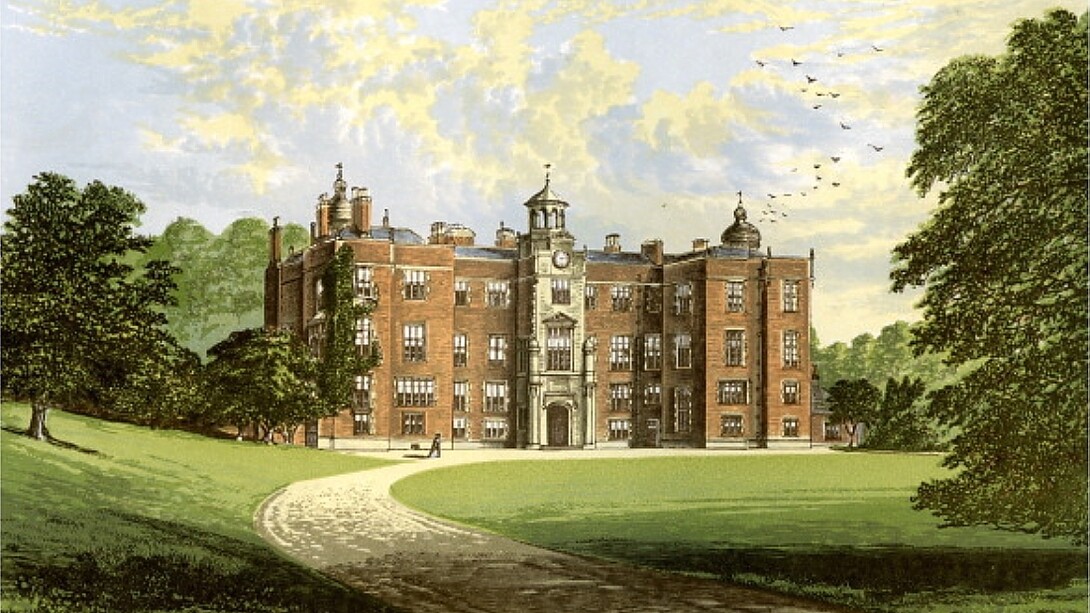
Perched on Cannock Chase, Beaudesert Hall stands as a silent witness to nearly eight centuries of English history. Once a grand Episcopal residence and later the seat of the influential Paget family, the hall has seen splendor, decline, and renewal. From its medieval origins to its Tudor transformation and eventual ruin, Beaudesert’s story mirrors the shifting fortunes of the nation itself. Today, the site—now home to the Beaudesert Trust—serves as an outdoor center inspiring new generations, as we discussed with one of its members: Bob Marsh.
I would like to begin by asking you to briefly outline the history of Beaudesert's construction for our readers.
Beaudesert Hall is situated on Cannock Chase, just to the east of Castle Ring, an Iron Age hillfort, at the highest point of the Chase. The Chase was declared a royal hunting ground in Norman times and thus subject to the strict forestry laws of the kingdom.
Two hermits approached King Stephen for land to build a hermitage and were given land on Cannock Chase, the precise site of which is uncertain. A ruin in Castle Ring may have been the location for what became a Cistercian order. Pressures caused the monks to seek a new site, and Henry II gave the monks Stoneleigh, where they built Stoneleigh Abbey.
Henry II took over the former chapel and made it his hunting lodge. There is evidence of his presence in sealing documents at “our hunting lodge at Radmore” (the ancient name for the area). His chancellor, Thomas Beckett, would have been part of his entourage.
Richard the 1st sold the whole of Cannock Chase to Bishop Nonant of Lichfield and took over the hunting lodge. In 1290, Bishop Langton of Lichfield decided to move the site of his hunting lodge down the ridge to the east, where he built a new hall 80 feet by 22 feet, “baronial rather than manorial.” From here, he could see Lichfield Cathedral, and he called the new hall ‘Beaudesert,’ Norman French for ‘Beautiful Wilderness.’ The stone used in the building is from the quarry near the hall. In addition to the hall, there were several domestic buildings to support the bishop and his household.
In 1536, King Henry VIII dissolved the monasteries and took over their lands and their wealth. Beaudesert included several manors, with their extensive lands.
Sir William Paget, an influential agent of the king, bought Beaudesert, possibly at an advantageous price.
In 1560, Thomas Paget, 3rd Baron, began rebuilding Beaudesert Hall. Much of the old hall was retained, and a “Great East Façade” was added, built with locally produced bricks. By 1593, it had become a “very fair brick house.” Beaudesert Hall has been remodeled several times over by generations of the Paget family, and extensive work has been undertaken to create gardens and landscapes. In 1771, William Emes, a follower of ‘Capability Brown,’ was engaged to landscape the gardens. In 1773, a marble stable block was added, with a coach house and a kitchen garden of 1.5 hectares created.
In 1812, Henry William Paget played a pivotal role at the Battle of Waterloo, where he commanded the cavalry, leading a decisive charge. Overseeing the last actions of the battle with the Duke of Wellington, he was struck by a piece of shrapnel, which shattered his knee. His leg was subsequently amputated. As a result of his contribution to the battle, he was made Marquess of Anglesey by the Prince Regent, who visited him at Beaudesert. Much of the wealth of the Paget family came from the vast deposits of coal and iron ore on their estates.
In 1904, following the death of the Fifth Marquess, Charles Paget, a cousin, inherited Beaudesert and set about sorting out the estates and the difficult finances after the extravagances of the Fifth Marquess. Charles made Beaudesert his main residence and, after a fire in 1909, renovated the property, adding a new dining wing with a billiard room and a new kitchen garden. Beaudesert was the Sixth Marquess’s main home, where he married Lady Marjorie Manners.
After the First World War, taxation was considerable, and with the financial burden from the Fifth Marquess, it was decided that the family should dispose of Beaudesert. The Sixth Marquess left Beaudesert in 1920 to live at Plas Newydd, their Anglesey seat. There was a photo shoot by Country Life Magazine in 1919, providing a record of some of the interior.
In October 1932, 2010 acres of the estate were offered for sale at auction. This included Castle Ring, nine lodges, and Beaudesert Golf Course. No buyer was found for the hall, and it was decided to sell it for demolition in 1935. The builder contracted for the demolition went bankrupt, and the demolition was not completed, leaving the ruin of the hall and a little of the brick-built house.
What role did Henry Cyril Paget, 5th Marquess of Anglesey, play in the decline of Beaudesert?
Born in 1875, Henry Cyril Paget had a lonely upbringing. He was brought up by an aunt who was married to an actor in Paris and came to know the bohemian lifestyle of their circle. He was fascinated by the theater and developed a deep love for it.
Aged 8, he was brought back to Plas Newydd, the family’s other big estate, where he was cared for by an “ancient Scottish nurse of pious life.” His father did not take much interest in Henry and had married an American heiress, his third wife. Henry was known as ‘Toppy,’ and he was highly strung and sickly; a cold could send him to bed for weeks (he missed his own extravagant 21st birthday party because of a cold). His only companion was his imagination, and he was lonely. He developed a love of pets, particularly dogs. He was neglected whilst his father pursued his other interests “of hunting, shooting, and seduction.”
Toppy was educated at Eton and then by private tuition. He learned painting and singing in Germany and spoke fluent French, good Russian, and grammatical Welsh. He was briefly commissioned as a lieutenant in the 2nd Volunteer Battalion of the Royal Welsh Fusiliers.
In January 1898, he married his cousin, Lillian Chetwynd. Possibly a marriage of convenience, it unlocked family money to fuel extravagance. He was fascinated by jewels and, whilst on honeymoon, bought an entire jeweler’s window display for his wife. She was required to lie naked on the bed, with the jewels displayed on her body. Toppy did not touch her; he just stared. Lillian did not like the opulent display of money, and after six weeks, the marriage was over due to non-consummation.
In October 1898, he inherited the title of the Fifth Marquess of Anglesey—and the family estates. The estates of some 30000 acres yielded an income of some £110000 per year (about £6 million in today’s values), and Toppy was able to indulge his love of jewels and the theatre. He created the “Gaiety Theatre” at Plas Newydd and hired actors to perform in his shows. To get some ready cash, Toppy took out mortgages on parts of the estate and began to spend, spend, spend.
Toppy converted the chapel at Plas Newydd into the ‘Gaiety Theatre,’ seating 150, for whom admission was free. The theater company employed many famous actors but never achieved any great performances. They went on a European tour, at great expense, with 50 people and five truckloads of luggage, costumes, and theater paraphernalia. Toppy followed in his car, adapted to resemble a Pullman Railway Car, and its exhaust was blowing out perfume for exhaust! He hugged his jewelry case containing £30000 of gems!
Toppy’s favorite show was Aladdin, in which he played the part of ‘Pekoe,’ and productions were characterized by lavish expenditure on the Marquess’s wardrobe. Many of the costumes were decorated with real jewels, and some thought it was just a chance to dress up. Sadly, the productions rarely rose above the level of pantomime or, perhaps, a light opera. Toppy loved to photograph himself and loved to perform a sinuous, sexy dance surrounded by gossamer wings—hence his nickname, ‘The Dancing Duke.’
He continued to spend a fortune on jewelry, and soon every jeweler in Europe knew that, if he acquired a special gem, he would find a buyer in the Marquess of Anglesey.
After his divorce, the Marquess was able to fully indulge his self-indulgent lifestyle. Money was lavished on firework displays, dogs, and his apartments, which were fitted out in mauve velvet with gold filigree. However, he continued to mortgage his estates to fund his expenditure. “Dressed in outlandish clothes, his willowy figure could be frequently spotted walking around in central London, with a snow-white or a pink beribboned poodle under his arm. With his flowing peacock robes and jeweled highlights in his long, silky hair, he adored attention and was sometimes referred to as the ‘most eccentric English aristocrat ever.’”
By 1904, Toppy was declared bankrupt, and a stream of jewelers headed the list of creditors. A great sale was held, spread over 40 days and comprising 17000 lots. The jewelry alone raised £32819 (over £15 million today). The list included 30 pairs of the finest silk pajamas, 100 dressing gowns, suits of every color and kind, smoking jackets, florid waistcoats, 260 pairs of white kid gloves, 280 pairs of socks, and 100 overcoats. Boots were laid out as a “complete collection of everything that could be strapped, buckled, or laced upon the foot of man,” according to a local paper.
Toppy moved to France for the rest of his days. He was found by the Daily Mail in Dinard and referred to as a “splendid pauper.” They reported that “The Marquess lives a retired life amid perfume, hair tonic, and cheap jewelry.” Plas Newydd was left empty but for a few old servants whose future was far from certain.
Toppy complained that the press always got him wrong. He was, generally, well-liked by his tenants and servants. He maintained that his fall from grace was temporary and that he would be back within a couple of years. However, he contracted TB-induced pneumonia on top of his poor health and died in 1905. He was nursed by his former wife and Madame Cocquelle in Monte Carlo, where he had traveled, having devised a system to break the bank! He was just 29.
His estates were inherited by his cousin, Henry Alexander Paget, who spent a considerable time restoring the estates to their former condition. He burned most of the Fifth Marquess’s papers and photographs and restored the Gaiety Theatre back to a chapel at Plas Newydd.
Even the most sympathetic obituaries pointed to “the appalling fact that from his earliest recollection, he (the Fifth Marquess) had been one of those extraordinarily isolated creatures who have never known affection.” The Daily Mail described his demise as “the sad end of a wasted life.”
Following the First World War, taxes were particularly high in Britain, and the burden of inheritance taxes on top of the bankruptcy of the Fifth Marquess caused the Paget family to consider how to reduce their liabilities. It was decided to retain Plas Newydd, the seat in Anglesey, and Uxbridge House in London, and to dispose of Beaudesert.
Most of the land was sold in various parcels, but there were no buyers for the hall. It was therefore eventually decided to strip the hall of valuables and paneling and the Waterloo Staircase and, in 1935, to sell the shell of the building for demolition.
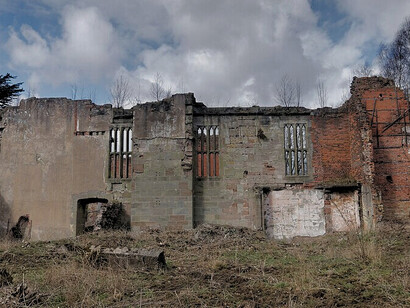
A builder purchased the hall for £600 and commenced to demolish the stables, with their marble finish; the great East Façade, with its brick and stone finish; and, finally, the stonework of the Great Hall. However, the builder became bankrupt, and the job was not finished. A ruin was left comprising the south wall of the Great Hall, part of the north wall, and sundry other remnants.
What is the significance of the ruins for the Cannock area, and what conservation plans do you have for the future?
Put simply, in the words of the county archaeologist, “Beaudesert was the most important house on Cannock Chase.” This was where the decisions regarding the Chase were taken for hundreds of years. First, the Bishops of Lichfield and then the Paget Family owned most of Cannock Chase, a greater expanse than today.
Beaudesert Hall was a significant Episcopal hall and then a great Tudor house from which power was exercised and decisions made about agriculture, commerce (mining and minerals), and, of course, hunting!
As a great house, the guests included royalty from home and abroad and eminent figures from across the land. There were many rooms, extensive stables, and a magnificent kitchen garden (two actually, an 18th-century garden and a later Edwardian walled garden), and the grounds were landscaped by followers of Capability Brown. This was a house to entertain as well as being at the heart of a busy farming estate and then a developing industrial and mining enterprise.
The hall itself was described as one of the finest examples of its period in the County of Staffordshire.
In 1937, the Sixth Marquess bought back 123 acres of his former estate and gifted it to a charity established for the benefit of Scouts, Guides, and other young people. What was to become The Beaudesert Trust was opened by the Princess Royal in 1937 and has been operating as a charity ever since.
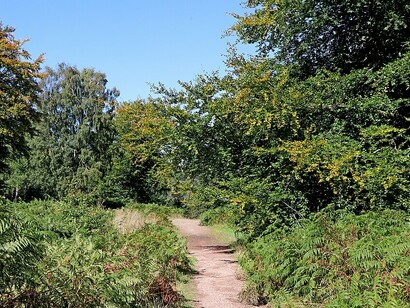
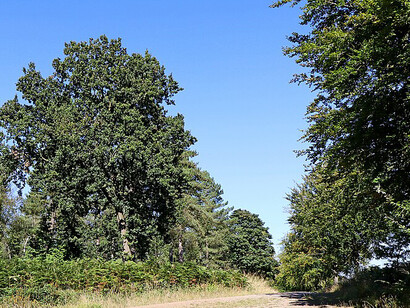
Over the years, many volunteers have worked at Beaudesert to develop facilities for young people. There is now indoor accommodation for upwards of 150, camping facilities for 1500 plus, and a range of activities from kayaking and coracles to via ferrata and archery. Full use is made of the 123 acres of woodland and forest glades for adventurous activities for young people across Staffordshire and further afield. A team of qualified instructors caters to groups of young people all through the year, and the full list of activities is too long to include—the website has further information.
Beaudesert Outdoor Activity Center does not receive any subsidies but has to trade to make its income. There are constant improvements and new activities, and after nearly ninety years, there are many people in the area who have memories of formative time spent at Beaudesert in their youth. Beaudesert has an important role for these people in helping to shape them as adults and fit them for life. This work continues today.
What types of activities for adults and children are currently taking place in the area, and what do you think is its major appeal for visitors?
From its magnificence as Beaudesert Hall, the remaining ruins are a small symbol of what has been here at Beaudesert. Nonetheless, the upstanding ruins are partly those of the original medieval Great Hall of the Bishops, and it is the 700 years of tales that they can tell that make the ruin important. Then the great house has another 450 years of tales to tell of an important family and their lives. There is enough remaining to illustrate the size of the hall and the layout of the great house, and enough to conjure up the many stories of Beaudesert.
Our interest is to research and share the stories of Beaudesert for today’s visitors. The ruin gives us a foundation upon which to build those stories.
Young people (and adults) have been passing the ruin for ninety years without knowing too much about it. Young people like to explore, and in the 1950s, the Territorial Army was called in to blow up the cellars to stop young people from getting into their cavities. The job was botched, and now we have to fence off the remaining dangerous cavities for the safety of our young people.
The ruin itself is in a dangerous condition, with vegetation growing from the top and roots causing cracks. Twenty years ago, a section fell. More may follow unless we are able to undertake work to fill the cellars and stabilize the ruins. The Beaudesert Trust has no money for this work, and so a project has been launched, which it is hoped will lead to stabilizing the ruin and interpreting it for the community.
A small group of volunteers has been formed and is working to better understand the ruins and what they represent. Old plans, illustrations, and photographs are being collected and cataloged. A virtual 3D model of the Hall has been developed and is used to illustrate a program of talks about Beaudesert. Community involvement is vital, and, in addition to taking talks about Beaudesert out into the community, a program of guided walks has been introduced at Beaudesert. This has been very successful, with over 200 members of the public chaperoned around the historic features of the site in 2025.
The community of young people who use the site also needs to have access created to the history, and work is in progress to provide a suite of information boards around the site explaining what can be seen and its significance. This is being facilitated by a grant from the Cannock Chase National Landscape, an example of the developing partnership work being undertaken by Beaudesert. Members of the team at Beaudesert are assisting with improvements to paths and steps around the site to facilitate access, and it is hoped to enhance the team of volunteers so that we may further our research and increase access to Beaudesert and all its stories.
Ultimately, we shall have to apply for funding to stabilize what is left of the ruin and its surroundings to preserve the visual evidence whilst it remains. We do not want any more to fall off! We will have to consider the listing of the building (currently grade II). We believe that a report on the importance of Beaudesert warrants an uplift to Grade II*. If we can achieve this, then we may get onto Historic England’s ‘At Risk’ Register, and it may be possible to rescue the ruin.
We aim eventually to clear the area around the ruin and to create an outline of where the Great East Façade used to be so that visitors may gain a better impression of the scale of Beaudesert Hall.
Then there are the historic gardens that have become overgrown. We have two young men and a tractor—Beaudesert had 55 gardeners! There is much to do, but stabilizing the ruin must come first!