English
 Español
 Français
 Deutsch
 Italiano
 Português
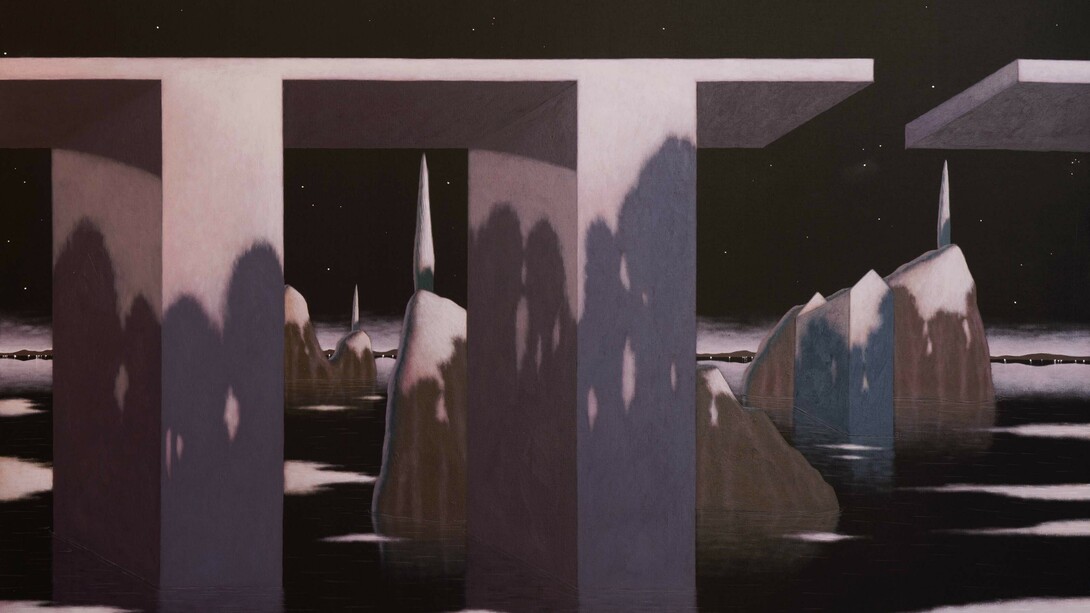
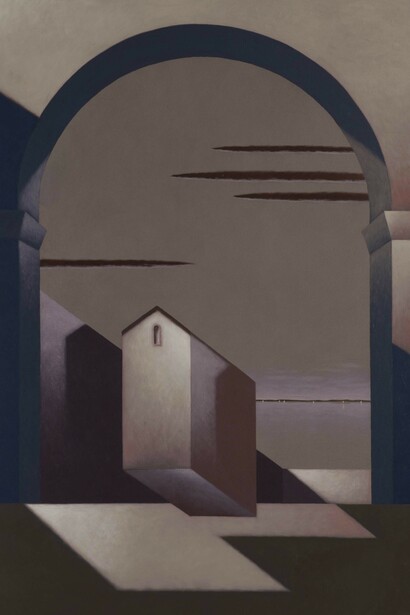
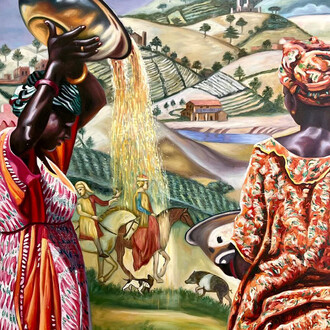
Imaginary landscapes, impossible architectures, primordial mountains, solitary houses suspended in timeless spaces: for over forty years, Enrico Lombardi has been constructing a fantastical geography through painting, transforming places of memory into enigmatic visions poised between the rigour of geometry and dreamlike apparitions. This pictorial universe, deeply rooted in the Italian artistic tradition of the fourteenth and fifteenth centuries, is the focus of The untimeliness of painting, a solo exhibition by the artist from Romagna, curated by Alessandro Riva and presented at Galleria Vik Milano from 26 November 2026 to 10 January 2027.
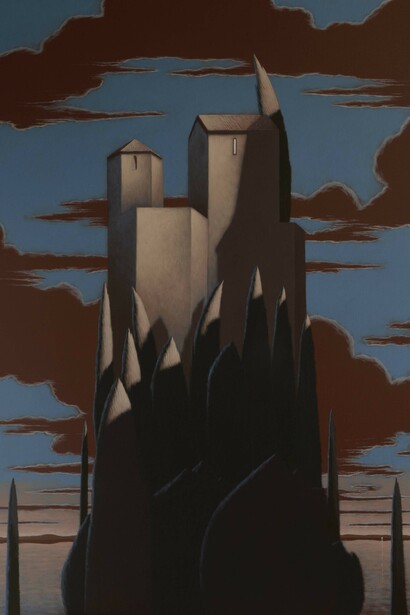
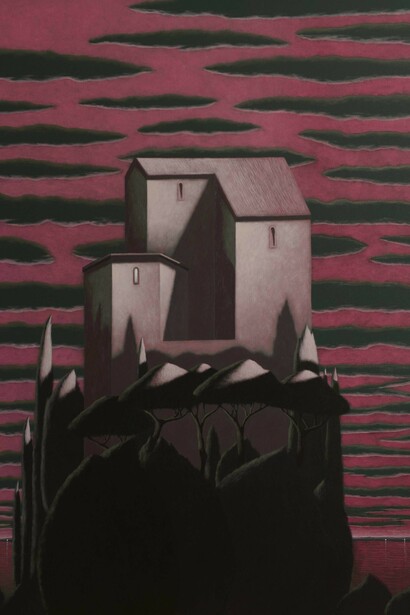
Conceived as a small retrospective, the exhibition revisits some of the fundamental themes of Lombardi's artistic research through works created between 2012 and 2024. From labyrinthine architectures to metaphysical landscapes, from still lifes to the more recent compositions of the Isolitudine series, the paintings on display trace the evolution of a pictorial language that has progressively transformed the real landscapes of the Romagna Apennines into an inner geography, populated by enigmatic presences, absolute spaces and visions suspended in an indefinable time.
Born in Meldola, near Forlì, in 1958, where he still lives and works, Lombardi has always maintained a profound connection with the landscape of his childhood. The hills, villages, houses, fields and trees of Romagna have gradually become the elements of a visual repertoire subjected to continuous transformation. Through a rigorous geometric construction rooted in medieval and Renaissance painting, from Giotto and Fra Angelico to Piero Della Francesca, the artist creates images in which perspective multiplies, architecture defies the laws of space, and shadows seem to follow a logic of their own. “The houses, hills, fields, trees and skies that filled his childhood gaze have become metaphysical landscapes, posthumous places in which imagination, memory, nostalgia and formal rigour endlessly pursue one another, transfigured through the lens of fourteenth- and fifteenth-century painting — the much-loved Piero della Francesca, Fra Angelico, Masaccio and Bellini — until painting itself becomes a spiritual exercise, a rigorous discipline, a vision inevitably untimely yet rich in references and meaning”, writes curator Alessandro Riva, who has known and followed Lombardi's work since his youth.
Reflection on painting has always accompanied the artist's practice. In his Notebooks, Lombardi has developed an extensive theoretical exploration of the relationship between image, space, time and vision. The exhibition's title draws on one of his most radical convictions: “Great painting must have the courage to remain perpetually untimely.” For Lombardi, untimeliness means remaining faithful to a pictorial tradition that retains its ability to question the visible world, beyond the fashions and conventions of the contemporary art system.
One of the most recent expressions of this approach can be found in the Isolitudine series, in which architecture becomes increasingly essential, mountains take on almost mineral forms, and the landscape is transformed into a mental space permeated by a still, mysterious light. Time appears to have come to a standstill, while the images preserve something of a primordial world, preceding human presence yet deeply connected to memory and desire.
On the occasion of the exhibition, on Thursday, 26 November, at 6:30 pm, the book Dipingere è un dare alla luce. Scritti e opere (Painting is an act of bringing to light: writings and works), published by Danilo Montanari Editore, will be presented. The volume brings together a selection of works and reflections drawn from the artist's Notebooks, in which painting intertwines with a theoretical investigation encompassing art history, philosophy and the very meaning of painting itself.
Enrico Lombardi will be joined in conversation by Piersandro Pallavicini, a writer and distinguished connoisseur of contemporary Italian painting, to which he has also devoted significant critical and curatorial work.