English
 Español
 Français
 Deutsch
 Italiano
 Português
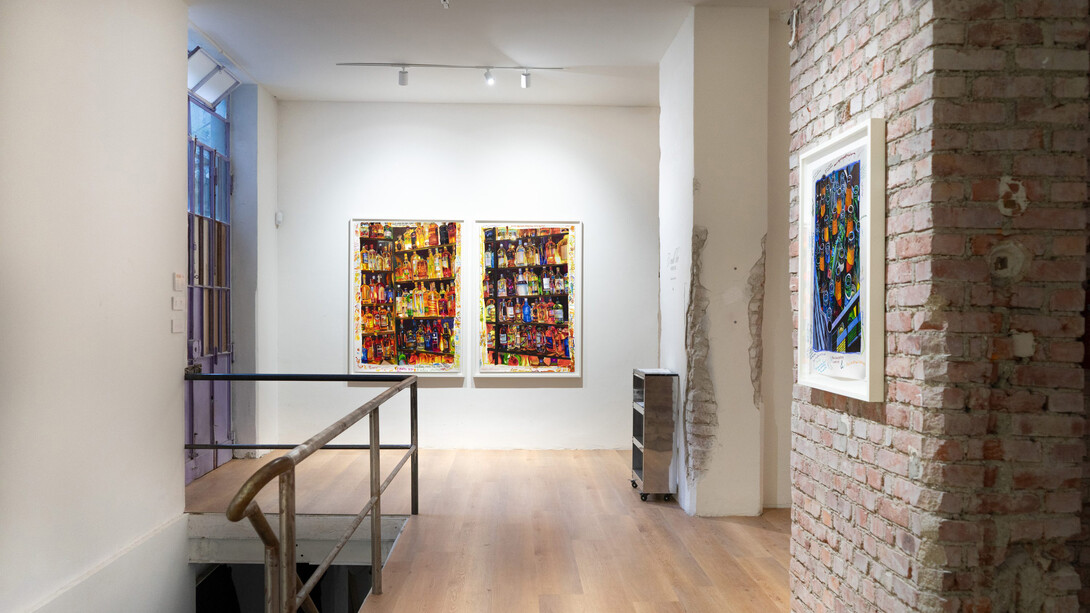
Laid tables, overflowing glasses, opulent banquets and the traces of uninhibited sociality have long occupied the centre of Giulia Messina’s practice. Moving between painting, performance and installation, the artist observes the rituals through which individuals enter and inhabit a collective space: the gestures we repeat, the objects we consume, and the subtle obligations that regulate belonging. In I could live without you, Messina turns her attention to alcohol, using it as both subject and metaphor to investigate desire, intimacy, excess and control.
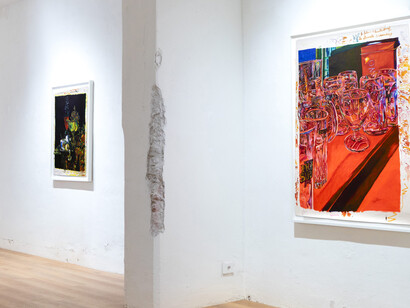
Glasses and bottles populate the exhibition in a state of suspension, caught immediately before consumption. Filled with seductive coloured liquids and illuminated by candles themselves destined to disappear, they carry an inherent sense of obsolescence: the glass will be drunk, the bottle emptied, the candle consumed. Messina freezes this moment, transforming familiar objects of conviviality into ambiguous presences charged with loneliness, lust, anticipation and abandonment.
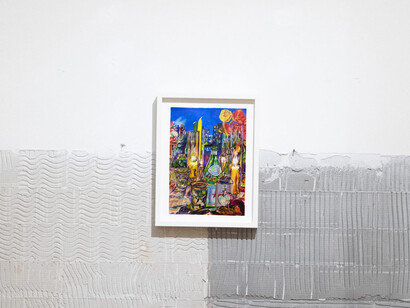
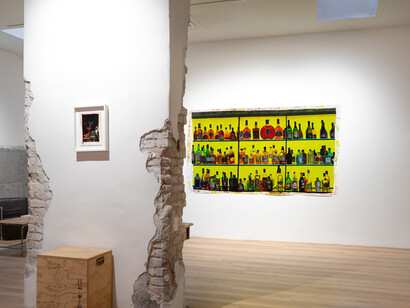
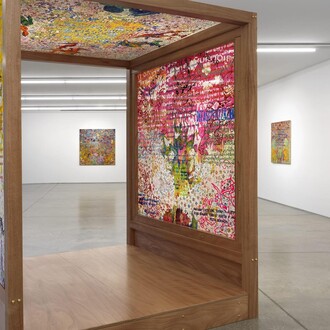
This tension between attraction and distance runs throughout the exhibition. Bottles and spirits appear as if enclosed behind the glass of an immense display case: desirable yet inaccessible, presented to be observed rather than consumed. Across the paintings, handwritten annotations, crossings-out and colour tests interrupt the pictorial surface, exposing fragments of the artist’s thought process. Phrases such as Antico nettare potente antidoto, I love you like and alcoholic and Everything I dream of but can never possess shift the works between still life and confession, image and internal monologue.
Drawing on seventeenth- and eighteenth-century Flemish and Dutch painting, Messina brings the historical language of the still life into dialogue with cinema and popular culture, from Jean Cocteau’s Beauty and the beast to Rainer Werner Fassbinder’s Querelle. Seduction is repeatedly paired with danger, while pleasure carries within it the possibility of its own dissolution. Alcohol becomes a means of examining a broader contradiction: what facilitates social connection can simultaneously bring us closer to others and distance us from ourselves.
Unlike Messina’s previous solo exhibitions, I could live without you does not originate from a specific performative dinner, but from a question concerning the choices through which we construct our relationships and our perception of ourselves. In Fernet Branca give me back my first kiss, the courage to move towards a first kiss collides with the unsettling feeling that the same impulse has been altered — and its memory potentially erased — by a substance. Desire, autonomy and vulnerability consequently occupy the same space.
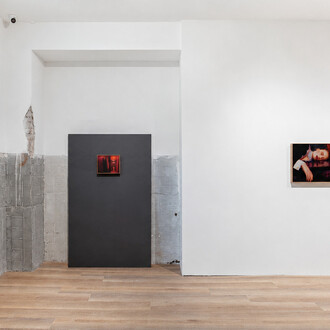
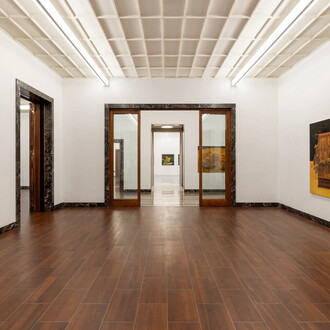
The exhibition extends beyond painting to transform the gallery itself into an imaginary bar. Small tables, bottles, music, light and scent evoke a prohibition-era venue, seductive and faintly disorienting, shifting the viewer from observer to participant. Downstairs, the atmosphere becomes darker and more intimate: works including Je dors tout le temps and Drink your poison responsibly are accompanied by sculptures offering drinks, while a video performance projects Messina singing Peggy Lee’s Is that all there is? from within another fictional, psychedelic bar.
Through this immersive environment, Messina constructs a space in which conviviality is neither rejected nor idealised. I could live without you remains suspended between participation and abstention, surrender and control, collective ritual and individual agency. The title ultimately remains an unresolved proposition: we could live without it, but do we want to?
After painting 490 bottles, the artist can no longer hold her liquor.