English
 Español
 Français
 Deutsch
 Italiano
 Português
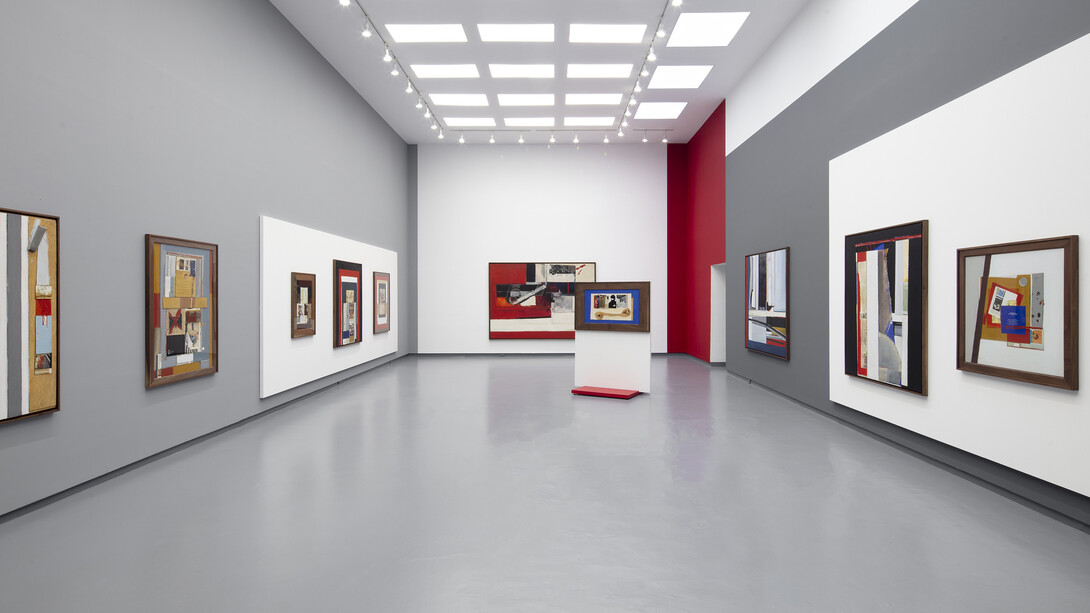
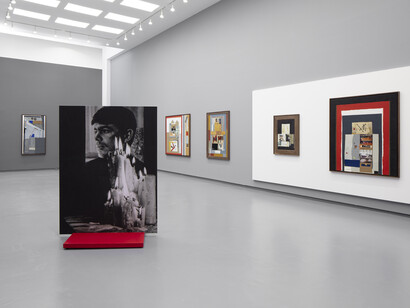
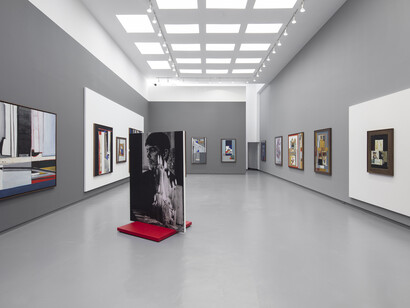
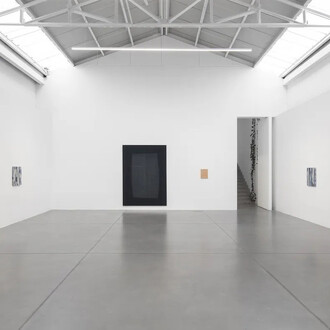
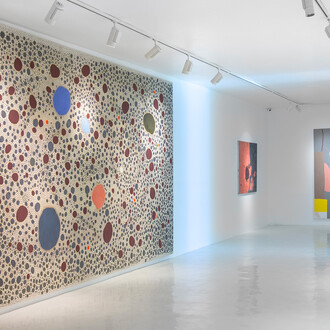
Proyectos Monclova Gallery presents La conciencia del espacio (The consciousness of space), an exhibition devoted to Mexican artist Fernando García Ponce (1933–1987). García Ponce was a member of the so-called Generación de la Ruptura (Rupture Generation), which stewarded the movement that transformed Mexico’s artistic landscape by embracing internationalist visual languages beyond the figurative and nationalist tradition of the Mexican School of Painting. Through a selection of paintings, mixed-media works and collages, the exhibition revisits different moments in the artist’s output and explores the relationships between architecture, geometry, color and composition that defined his practice. The exhibition opens on November 14 and remains on view through December 19, 2026.
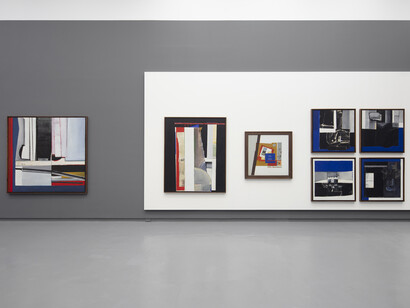
La conciencia del espacio brings together three distinct groups of paintings. The first comprises the pictorial exercises García Ponce produced after returning from Europe in the late 1950s, when he decided to devote himself entirely to painting. In these early works, compositions close to Cubism stand out as a visual principle for organizing pictorial space, geometry and overlapping planes of color.
The second group includes mixed-media paintings in which García Ponce explores the possibilities of pictorial space through the construction of planes, the layering of elements and the incorporation of found materials. These compositions establish relationships between texture, form and color while revealing the influence of his training as an architect— evident both in his conception of the canvas as a structured space and in the arrangement and organization of the elements that make up each work.
The third group highlights the artist’s approach to collage as a principle of visual composition. Although these paintings do not directly incorporate found and assembled materials, they draw on strategies associated with the technique, such as the geometrization of forms, the layering of planes and the interplay between blocks of color.
The exhibition also presents a selection of collages that sheds light on another facet of García Ponce’s work. In his early years, the artist used collage as a preliminary study for his paintings, and, by the late 1970s he had begun to conceive of it as an autonomous work. In these compositions, he incorporated images and texts drawn from exhibition catalogues and art books as well as from newspapers such as Novedades and magazines such as National Geographic and Domus. These works reveal his interest in the formal and expressive possibilities of montage.
La conciencia del espacio thus offers a journey through Fernando García Ponce’s different approaches to painting and collage, revealing the continuity of a visual inquiry in which architecture, abstraction and material experimentation played a central role throughout his career.