English
 Español
 Français
 Deutsch
 Italiano
 Português
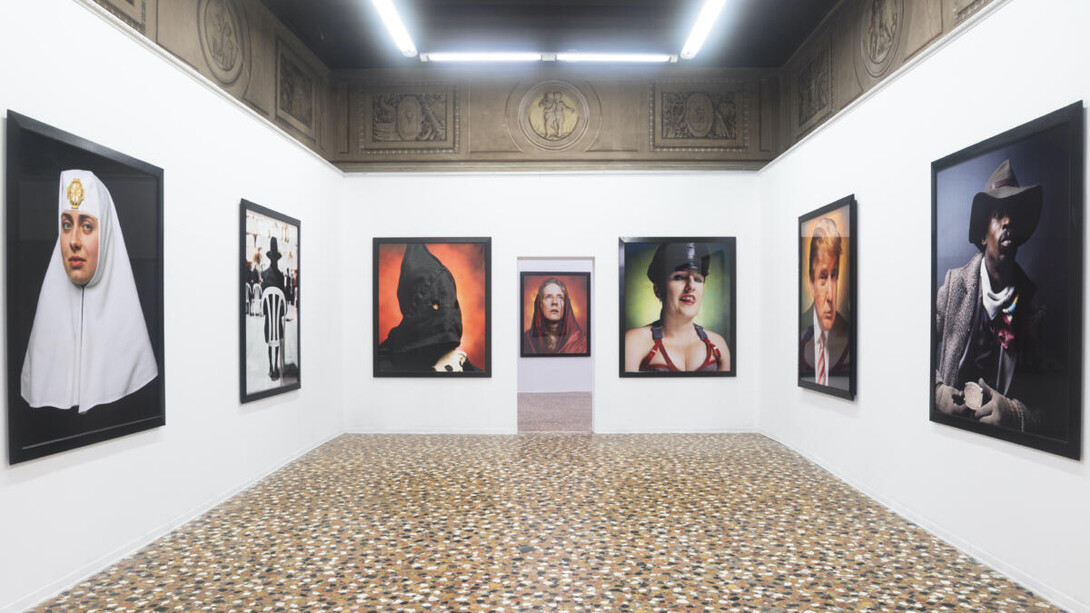
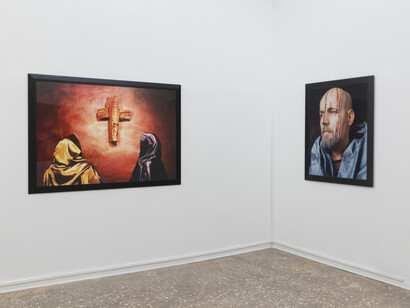
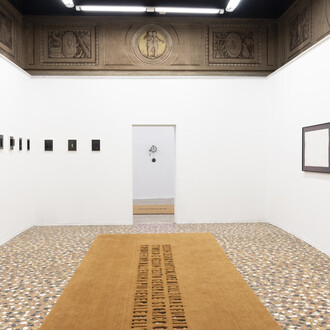
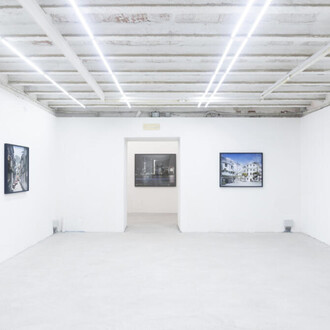
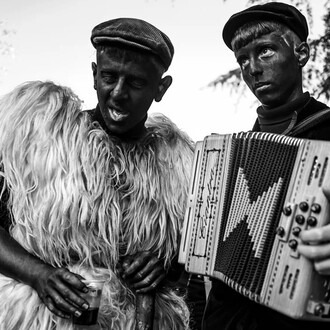
The artistic career of Andres Serrano (New York, 1950) is already the stuff of legend. Many of his photographs have become contemporary icons, and he is one of the artists who has had the greatest influence on visual culture from the 1980s to the present day. By presenting a retrospective of his work in Venice, comprising around twenty major pieces, the exhibition offers audiences and collectors an extraordinary journey through his creative practice, from the splendid works of his early period (Early works), such as Crucifix (1983) and Pietà (1985), to Black face (from the Infamous series, 2019). Serrano has always considered himself an artist who uses photography, and has drawn inspiration from Marcel Duchamp, his provocations and his playful approach to the interpretation of artworks, as well as the different meanings of powerful images, often placed in a dialectical relationship with their titles. Piss discus (1980) and Black Jesus (1990) belong to the Immersions series, photographs in which Serrano depicts objects representing sacred or artistic subjects immersed in urine. Some works, such as Piss Christ (1987), have frequently provoked attacks from Catholic organisations, although the American artist himself grew up in a strongly religious family environment.
The significance of the Immersions does not lie in the banal offence of symbols associated with religion or the beauty of art, but rather in showing how bodily fluids do not conceal the power of symbols, but instead enhance it. The liquid immerses the subjects in a slightly veiled, metaphysical yellowish-red light. Moreover, Serrano always works in the studio, with very rare exceptions; what is “seen” in his works is always the result of careful planning and never mere chance. His engagement with the art world is constant and goes hand in hand with his extraordinary subjects, who seem to have stepped out of the pages of literature but actually belong to the reality of places close to home, such as the United States, or as distant as Jerusalem. He often lends dignity to unknown individuals, homeless people (Nomads series) and unconventional characters. In this regard, Andres Serrano explicitly states that these photographic portraits, always taken in the studio, are true self-portraits: the subjects arrived dressed and prepared to become icons.
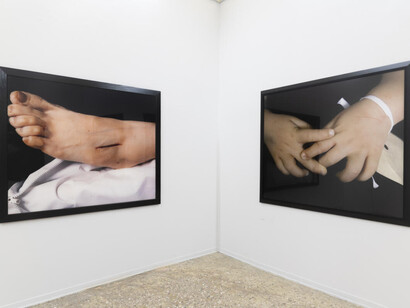
Another particularly distinctive and outstanding series is devoted to the Morgue, the mortuary, where the bodies of mostly unidentified individuals (Dead unknown, 1992) are brought in to establish the causes of death. These images possess an extraordinary intensity, focusing on details such as hands or specific features of the face, as in the case of a young girl who died of meningitis, Fatal meningitis (1992). The series conveys profound human compassion and possesses unique iconographic value.
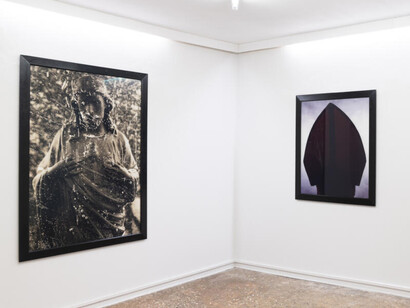
The exhibition title, Sacred and profane, conveys how the work of the New York photographer constantly oscillates between these two poles, bringing together lived experience and art, as well as sacredness as experienced on an iconic and popular level. Three works from the 2011 Holy works series represent a perfect point of balance: El gran cabrón, The grand cardinal and Pietà are images that inspire both reverence and fear, exploring the boundary between light and shadow, fanaticism and reason. These are photographs of symbols situated between religion and superstition; once again, Serrano addresses the theme of divinity in humanity and in the human imagination.
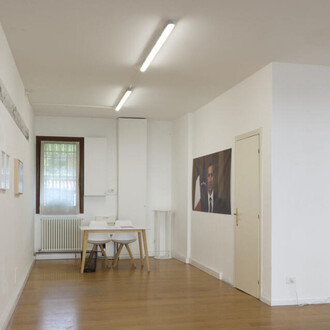
This exhibition also explores other characteristic themes in Serrano’s work, such as sexual taboos in their various, sometimes extreme, forms, as well as the presence of anonymous, hooded members of the KKK. It also features a portrait of Donald Trump, taken in 2004 as part of the America series. Following Trump's first election as President of the United States, Serrano developed the installation The game: all things Trump, a kind of multimedia portrait of the man and of how he managed to become President, assembled through an extensive collection of merchandise, objects, images and documents. The project was proposed for the United States Pavilion at this year's Venice Biennale.