English
 Español
 Français
 Deutsch
 Italiano
 Português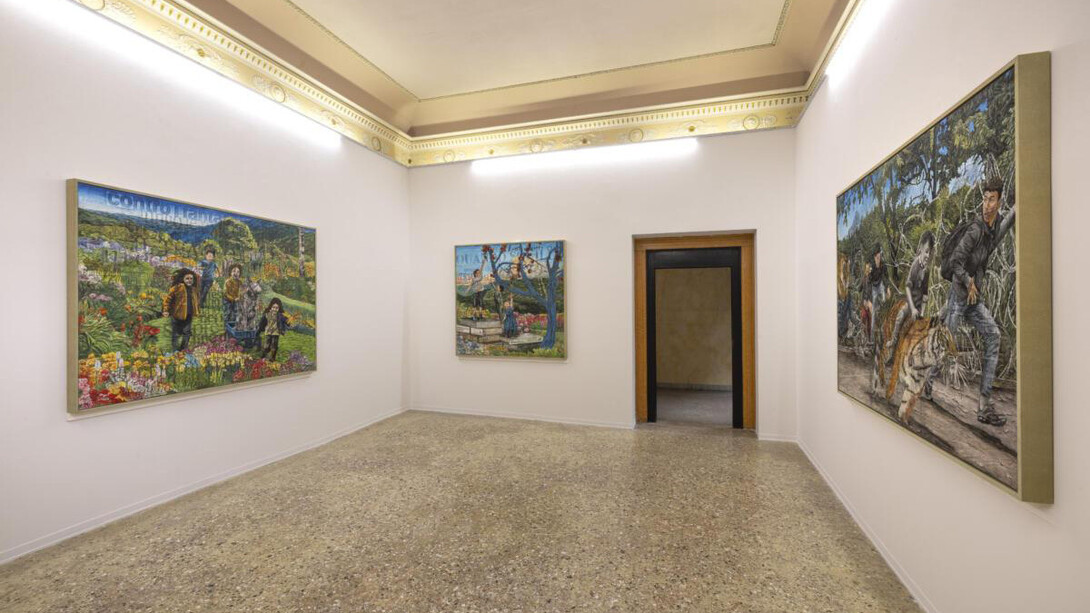
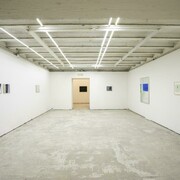
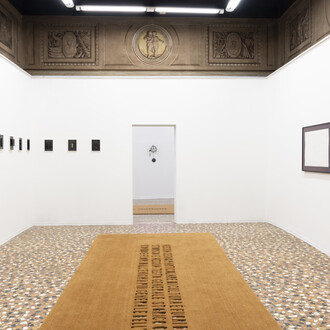
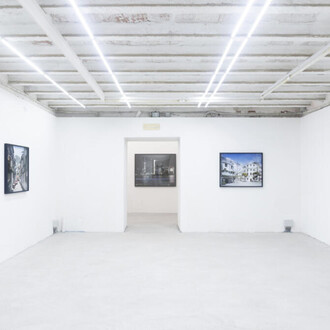
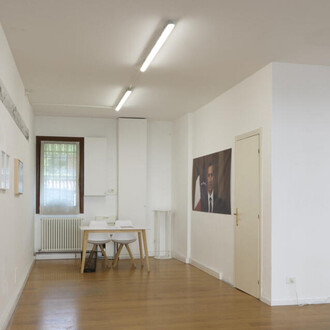
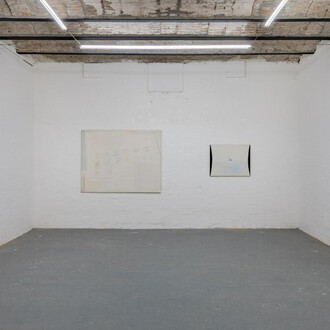
Galleria Michela Rizzo is pleased to present Quando il cielo finisce (When the sky ends), Andrea Mastrovito's second solo exhibition. The exhibition inaugurates the new spaces of Palazzo Palumbo Fossati in Venice, marking a moment of renewal and continuity in the gallery's history.
With this new project, Mastrovito pays tribute to the historical artists who have contributed to the history of the Michela Rizzo Gallery, reinterpreting their works and intertwining them with his own visual imagery. The starting point is the exhibition La diseducazione al reale (2021), which inaugurated the collaboration with the gallery and laid the foundations for a reflection on drawing as a layered language and a device for rewriting reality.
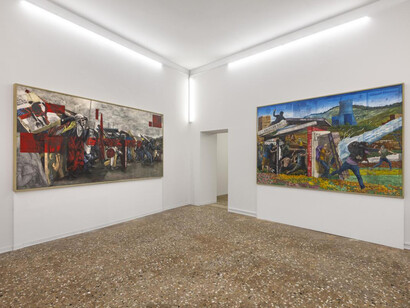
In Quando il cielo finisce (When the sky ends), the artist develops a choral narrative in which engraving, inlay, painting, pastel drawing and frottage overlap in a web of images, materials and meanings. The title itself represents a poetic paradox: the sky, a symbol of infinity, is in reality a physical boundary, a threshold that separates our perception from space. Mastrovito moves on this threshold, constructing a dialogue between the masters of the past and the youth of the present, between heritage and possibility.
The works of Vito Acconci, Hamish Fulton, Lawrence Carroll, Fabio Mauri, Maurizio Pellegrin, Roman Opalka, Nanni Balestrini and Antoni Muntadas emerge as foundational presences, united by a reflection on limits, resistance and perseverance. Mastrovito uses them as a basis for comparison, creating a new iconographic landscape in which childhood, adolescence and the formation of the individual take centre stage: figures who play, fight, rebel and learn, giving shape to an imaginary world that is both poetic and political.
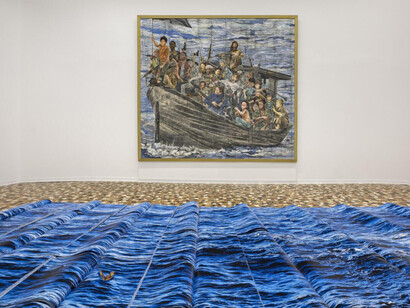
Among the works on display, La crociata dei bambini (The children's crusade) stands out, in dialogue with Fabio Mauri's Muro occidentale o del pianto (Western wall or wall of tears), The frontline is everywhere, inspired by Maurizio Pellegrin's Alcuni (Some), and Non vogliamo niente (We want nothing), where child figures move among Nanni Balestrini's typographic collages. In these compositions, drawing and inlay merge in a play of iconographic and semantic planes that dissolves the boundaries between languages.
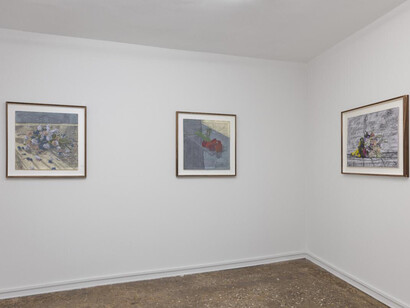
The exhibition continues with a series of frottages/collages that reinterpret images of commemorative flowers, transforming mourning into gesture, in dialogue with the works of Fulton, Balestrini, Opalka and Carroll. In the last room, small blackboards with abacuses depict scenes of urban guerrilla warfare: figures taking shelter behind books, catalogues and historical texts from the gallery – from Nanni Balestrini's Vogliamo Tutto to Antoni Muntadas' Ladies and Gentlemen – in an act of resistance and remembrance.
Through this body of unpublished works, Mastrovito pays homage to the history of the Michela Rizzo Gallery, but also reflects on our times: a sky that, even as it ends, offers a glimpse of new possibilities for vision.