English
 Español
 Français
 Deutsch
 Italiano
 Português
“A hill that is silent” is the most common comment on what the Silent Hill franchise came to be. I wrote previously on the distinction between “Silent Hill" as a brand and as a concept, and this entry definitely steered more towards the “brand” aspect of Silent Hill.
It does not mean that the game is bad: it has some interesting ideas, an immersive, atmospheric town, and at times a great delivery of both. In this article, I want to focus mainly on how the game represents topics of (social) trauma, guilt, and justice. In analyzing those, I believe the answer to why this is not a Silent Hill game can be found.
In many ways, I think the game’s bad reviews are partly due to the blandness of its message. To understand this further, I will use some opinions articulated by Catherine Liu in one of her interviews regarding trauma culture.
The way we understand trauma
For Liu, trauma culture is a way the USA’s liberal party responded to structural conditions of economic insecurity, exploitation, and inequality. These are then being reframed as individual psychological injuries requiring personal recovery. Trauma itself, her argument follows, becomes a place of personal legitimation, or cultural capital, a way to “connect” with the people (especially for the higher-class public figures—she gives examples of Oprah, AOC, and Prince Harry). I also think that discussing personal trauma adds to the authenticity of the speaker, a trait highly valued in the “fake” social media reality (and content creation sites such as Instagram or YouTube promoting authenticity as an esteemed quality for content creators is a whole other related, but separate issue).
In other words, it’s the standard neoliberal ideology at work: kill off any idea of class consciousness, any thoughts on how trauma is related to socio-economic conditions, by forcing individual responsibility for collective problems. Instead of being reconciled with, instead of forcing political action, trauma is “being witnessed," acknowledged, but ultimately unresolved. Liu rejects the idea that a culture where the cornerstone of trauma defines your identity is something healthy for a subject or wise as a political strategy.
I haven’t read her book that coincided with Townfall’s release a few days apart (both released at the end of September 2026), so I don’t have a firm stance on this, but I don’t think her argument is disregarding the impact of a traumatic event on a person or a collective.
I think her point is that the existing culture, which embraces, acknowledges, and witnesses trauma, does (almost) nothing tangible in addressing the underlying conditions that enabled the trauma. Instead, each confessed individual trauma is commodified and ascribed to a subject’s social identity, freezing and preserving it for future use. This is neither healthy for the traumatized individual nor for the represented collective; it mainly serves to pacify the social antagonism between the interests of capital and the interests of humanity.
Before proceeding to why I think this is relevant for understanding Silent Hill: Townfall (and what Townfall can say about our media culture), firstly, a few paragraphs about the game itself.
A silent town
I’ll try to obscure as much of the story as possible, but since the article will analyze some aspects of the story, major spoilers ahead are necessary.
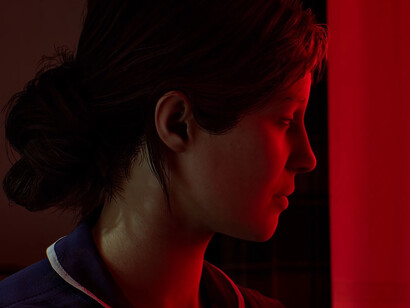
Silent Hill is a place where players encounter personal and collective trauma, fears, and repressed emotions, manifested as monsters. In Townfall, this is St. Amelia, an island town located in Scotland, in the mid-90s of the previous century. We’re let know from the start that something horrible happened there—we see posters calling for protests, and we know there’s an emergency.
In the first scene, we’re being pulled out from the water to a desolate shore. To give credit where it’s due, the town looks and feels genuinely real. The amount of detail given to it and the hyper-realistic photos of its community do point toward the fact that one of the main characters of the game is the town itself. And the town demands justice—"our grief is their failure."
First-person view enables the focus on the town, not the character—regardless of who we’re playing with, we’re seeing it through their eyes, as if they were our own. And since there are three different stories/characters, this was an important decision to make.
In a sense, this immersiveness increases the sentiment of voyeurism too: with our own eyes, we’re entering people's houses, watching their photos, reading their mail, and lurking around their kitchens (though we’re always polite enough not to open the fridge).
Horrors of responsibility—Zoe
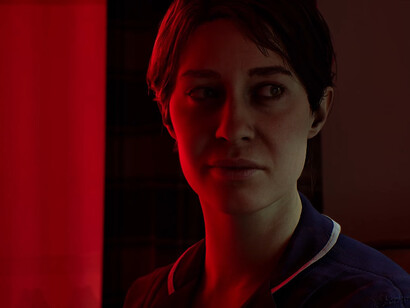
One scene in particular stands out as a showcase, that being escaping from Mr. Stewart’s home (video at the end of the article).
Silent Hill Townfall escapes Mr. Stewart's house.
The cut from a cutscene to being given control is perfect and seamless, resulting in a panic response; the walls suddenly become claustrophobic, and we realize we have only our bare hands to fight off the monster.
But the monster is painfully human—seconds ago with the wheelchair, we were witnessing how helpless the person was; the hot water we see in the bathroom, the focus on the nakedness ("Are you decent?”), and the skin that’s burned humanizes the monster at the same time it’s creating it.
These are some of the brilliant moments the game has to offer, as they convey a lot of things at once: responsibility (is it our neglect that caused this?), disgust, pity, and fear. Fear comes not just from the monstrosity but from the fact that we might have caused this suffering. Is the monster that’s the victim here, have we wronged him, or is it seeking justice?
This is the core theme of Zoe’s arc, much like the specific reason why she’s stuck in Silent Hill, and for me, those are the points the story still holds.
Seeking justice—Simon
With the main character, Simon, is where the story starts to get bland.
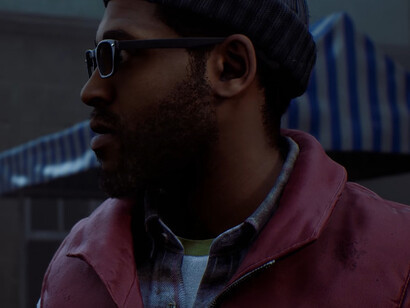
To a point, it’s completely fine that Simon is kind of one-dimensional; after all, he’s an outsider to the town, and it is his role (not identity) in the town’s fall that makes him a protagonist. But this blandness shouldn’t come at the expense of motivation, especially when this motivation is what creates the environment (monsters and the Otherworld).
I know it’s unfair to compare the flagship monster The Weight with the design of the now-iconic Pyramid Head from Silent Hill 2, but it’s necessary because both are integral to their respective stories. On the surface, the design follows the same logic: the unbearable monster is a manifestation of the protagonist’s core trauma. It’s a function that enables the realization of the resolution of guilt.
The design is especially important because it mimics the mind logic of the protagonist, and as such, it defines the game. Pyramid Head is something James (the protagonist) manufactured from the images he saw, from the feelings he has, from the symbols of the psyche, and by the mercy of the town. It’s an active participant in the story, a gatekeeper of James’ psyche. Its design is dream logic faithfully portrayed in a game, and it represents the archetypal pursuer, id, and shadow—it's many things all at once, and they all have a purpose and a function specific to James.
The Weight, on the other hand, represents how Simon represses and carries the weight of the whole town on his shoulders and how overwhelming this weight is. The whole artistic process, the whole idea, is flattened and streamlined: we only see the manifested dream.
At the core of psychoanalysis was always the dream-work itself: not simply what a dream meant, but how its manifest content was produced. So, this is not just about the fact that the audience is familiar with Silent Hill logic, so there can be no surprises.
It’s the fact that Simon knows this too—"I'm here to get punished," he realizes.
But why is he getting punished, and who is the punisher?
Systemic violence—Mr. Shaw
And for me, the previous question is not something the game asks, but it’s something the game doesn’t know. We see this best with another character, Mr. Shaw.
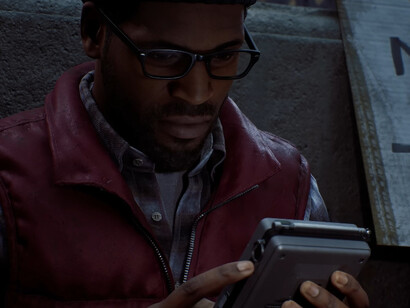
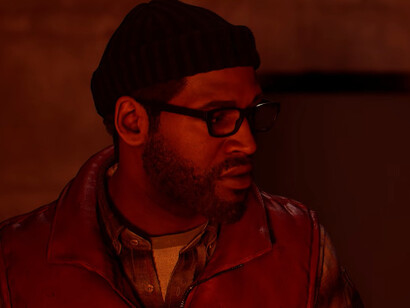
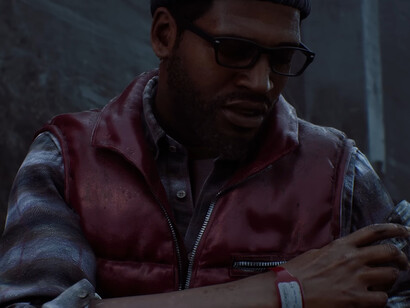
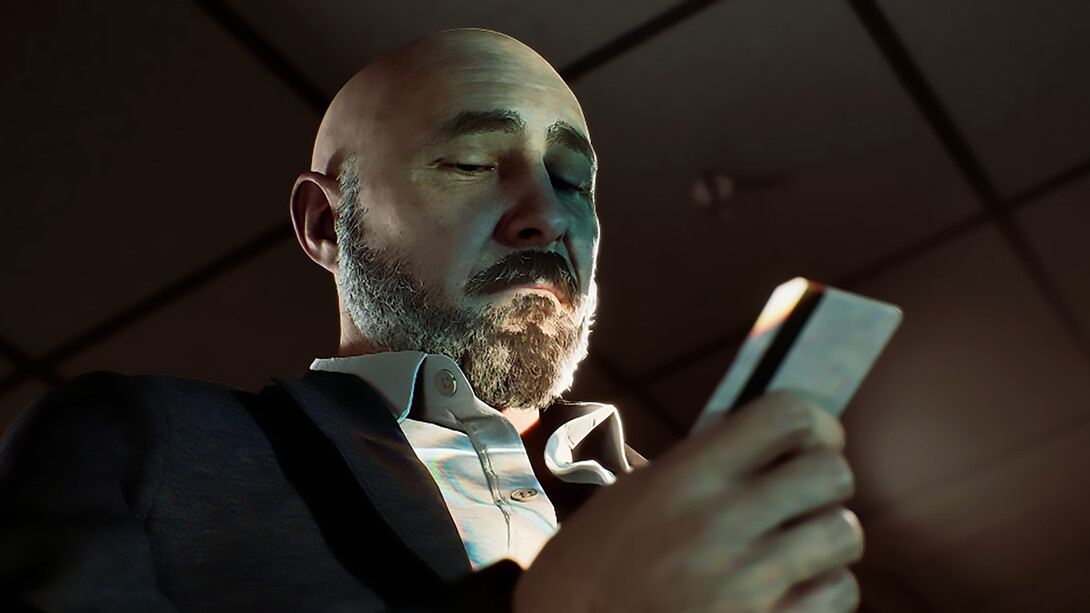
Mr. Shaw is the prototypical capitalist villain, and firstly, the actor did a great job in portraying him (hey, it’s John Locke from the Lost series!). Mr. Shaw really is the one mainly responsible for not preventing the catastrophe that happened to the town; it was his neglect that caused the deaths of dozens of people. Or, put in other words, he was placing the interests of capital above the interests of people. Unlike Zoe, his sin was a depersonalized, systemic neglect. It’s the dispersion of responsibility that he tries to argue.
We see Shaw being stuck in the “Silent Hill Phenomenon” as a man to whom self-preservation by any means necessary is at the core of his being. We see dozens of his own murdered bodies, murdered in previous attempts to change the town’s perception of him. He’s the one who calls Simon in to help him do so.
Although I dislike the purgatory/loop interpretation of Silent Hill, the contrast between Shaw’s will to survive and his own dead bodies is a nice touch. It enhances both the sentiment of frustration (paired well with how frustrating dealing with his monsters is) and adds to the relentless character of Mr. Shaw.
But those stuck in Silent Hill of their own volition are, ultimately, there for their own self-preservation, even if their own monsters are trying to kill them. The point is that they won’t, and before facing them, the protagonists need to understand them. To remain a human subjects, these protagonists needed to face their own fear and their own responsibility before proceeding to move forward.
But besides being relentless, Shaw is also unrepentant. It was his management skills and his extortion of the capital that created the new community in the town of St. Amelia. If the money kept flowing, everyone was ready to look the other way when there were dubious activities. Now, when a catastrophe happens, everyone else is ungrateful and wants to ascribe the town’s fall to him.
Even if he does feel guilt, Shaw absolves himself with mental gymnastics of caring about the future of the town without him and without the company. He knows that to keep things functioning, you need to prioritize capital over humans—in his view, sacrificing a hundred people is well worth the benefits for thousands of people. It’s not even an opinion; that’s a fact. There is no contradiction in his identity, and there is no turmoil in his psyche; that is to say, it’s not his own sense of guilt that brought him there; it’s something external that keeps him stuck there.
Collective trauma—St. Amelia
So, this should point out that this paranormal activity is due to St. Amelia. St. Amelia's collective consciousness, because of the trauma the community experienced, keeps Shaw, Zoe, and Simon in the loop. The alternative is, as per the new canon, that the “Silent Hill Phenomenon" is individual. If that’s the case, then all of them are still bound by the St. Amelia disaster, and that’s how they find themselves in the same place, able to interact and affect each other.
I don’t think this is something that needs proving inside the game’s own narrative, but it does need some comment because it contradicts the "phenomenon" idea. The point of the game, and the one who is in Silent Hill, is the town. The community is the one that needs closure, and the only one that can do so is Simon, because Shaw said so to all of them, and all of us.
That is to answer one of the questions: it’s St. Amelia who does the punishment of these 3 individuals; it’s not that they’re punishing themselves. They only get the means by which they’re punished to be accommodated to their own psyche.
St. Amelia is so angry, Shaw states. St. Amelia needs closure, and for the game, this closure is justice, and justice is finding and holding accountable the person mainly responsible for the tragedy—Mr. Shaw.
But in my opinion, the real horror, which the game doesn’t acknowledge, begins with Shaw being correct in his assessment. Without him, and without the company, the future of the town is one of being frozen in trauma, albeit “closed” and "witnessed." St. Amelia will be a ghost town, forever marked by its tragedy; the real horror is living, not the nightmare.
Closure with (out) justice
And for me, the endings are where the game’s narration truly crumbles. Due to the explicitly stated purgatory/loop characteristic of this Silent Hill phenomenon, there is only one true ending—"Justice" (because that’s the one that ends the loop, and the loop will keep on repeating until it’s resolved).
Simon is the only one who doesn’t understand that it’s a loop. His time spent in Silent Hill is to make him realize that he does have some agency, which is in contrast to Shaw, who needs to accept he doesn’t have any agency anymore. The reason why Simon keeps forgetting he’s in a loop, and everyone else is remembering it, is beyond me. And we know Simon is in the loop too because of multiple bodies of Shaw at the very end and Simon falling to the sea again.
In good faith, I’ll extend some parallels between Simon and the town that might show how Simon functions as a narrative vessel for the town. Simon is, just like the town, forced into submission by Shaw and by the lifeline he provided. Just like St. Amelia, Simon didn’t choose to be saved by Shaw.
But even if Simon did choose what Shaw enabled him to do, that was the only way to survive and the only way to bring about the needed closure for the town (otherwise, he’d be dead). Why then is Simon being punished, by himself or the town?
Secondly, Simon didn’t get a chance to testify—so, again, why is he getting punished?
Punishment would make sense if he indeed has falsely testified—and let’s say he really did (thus extending the good faith, we interpret what the story has actually offered). But then the ending “Justice” doesn’t make any sense—why use his hard-gained agency to kill himself and remove any agency in bringing Shaw to justice? It defeats the purpose of the story.
If he didn’t testify, but he’s still getting punished just for planning to falsely testify, then him realizing that he has agency in this matter only to kill himself as a way to “frame” Shaw and give peace to St. Amelia is (in the absence of a better analytical description) just… stupid.
The ways trauma is utilized
I don’t believe inconsistencies and/or contradictions of the story are just the result of bad artistic interpretation or lazy research or the uninspirational potential of the topic. I’ll say again, even as presented, the story has some great aspects.
I think the core problem of the game starts with how trauma is being perceived in today’s media culture and how it’s utilized as a bargaining chip to mark something supposed-to-be important. The game’s story is built on this understanding of trauma.
This is noticeable firstly by skipping to represent the dreamwork needed to create the monster and jumping straight to the manifested dream—"The Weight." We’re just witnessing it, not engaging with it. Secondly, as we see by the endings, this shallow understanding of what trauma is results in an inability to say anything important about trauma, about guilt, or about the human condition. Instead of artistic value, we get content representing something that should feel important.
So to say the game is a symptom of the trauma culture would be an understatement, precisely because it deals with topics of systemic violence. And instead of diving deep into it, the game does the ideologically acceptable answer: we find the one to blame, we witness it, and we find closure in this. As if that would put the dead to rest, as if that ensures a just future, as if that amends the core conflict between the system, unsustainable without human victims, and the humans of the system. As if it’s just the individual’s fault, not a feature.
As Liu notices, “suffering is decontextualized, medicalized, pathologized, and commodified." This is the essence of what the “Silent Hill Phenomenon” is. Without a better understanding of what trauma is and how it affects a human being, every new Silent Hill entry will suffer from the same erosion of meaning. It will only be selling aestheticized schizophrenia.
A hill that is silent
And again, this is not to say the game is bad; it’s just that compared to the canonical Silent Hill entries, it’s missing the point. But without the title ascribed to it, chances are a significant number of people wouldn’t play it; even fewer would discuss it. So despite the criticism, it’s understandable why new horror entries will keep the name of Silent Hill.
But the name is not what we need.
More than ever, I believe, the gaming scene needs something that genuinely discusses trauma and the psyche. It needs Silent Hill, the town, the town that somewhere along the way was erased from our mental maps.