English
 Español
 Français
 Deutsch
 Italiano
 Português
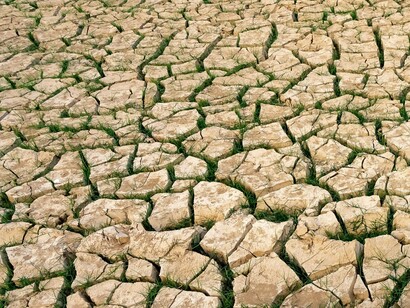
International leaders will convene in Turkey tomorrow for their 31st annual discussion about confronting climate change. What can we expect? If recent history is an indication, not much, and certainly not enough.
The climate conference follows another international environmental conference: the 17th annual meeting on protecting the Earth’s oceans and lands. Countries are falling short of their goal to conserve 30 percent of the planet’s lands and oceans by 2030.
Countries are also underperforming on the United Nations’ historic sustainable development goals (SDGs) for society, the economy, and the environment.
That’s not all. By one count, over 3,000 environmental agreements involve two or more countries. Yet, scientists say that civilization has crossed into dangerous territory on seven of nine critical ecological factors that support life on the planet.
The international community clearly knows about the ecological crises it’s causing and has plenty of ideas on what to do. But we have not shown the political will to prevent these cascading perils. Something’s got to give.
I’ll offer a suggestion, but first, more background.
The seeds of several current international environmental agreements were planted in 1992 at the United Nations’ Earth Summit in Rio de Janeiro. One was the United Nations Framework Convention on Climate Change (UNFCCC), which established the architecture for nations to stabilize the planet’s rapidly changing climate.
Under the UNFCCC, nearly 200 countries meet annually to discuss, commit to, and review progress on climate action. These meetings are called “conferences of the parties” or COPs. Tomorrow’s COP in Turkey will be the 31st.
The highlight of this long process is the 2015 Paris Climate Agreement. Countries agreed to create voluntary plans to address climate change, in part by reducing fossil-fuel pollution, the main driver. They review progress every five years and are encouraged to increase their ambitions. The second such review is currently underway.
Under the Paris Agreement, countries agreed to limit global warming to no more than 1.5 degrees Celsius above pre-industrial levels, if possible, and in any case well below 2 degrees. The lower target would require nations to cut fossil-fuel emissions by 55 percent by 2035 collectively; to keep warming below 2 degrees, emissions must fall by 35 percent.
Unfortunately, human-caused warming has already reached as much as 1.4C. Under current national commitments, the Earth’s temperature will rise 1.5C around 2030 and 2.5C by the end of the century. The difference between the two outcomes is significant. Warming of 1.5C is expected to cause severe but manageable climate impacts, while warming of 2.5C will result in “widespread ecological and societal disruption.”
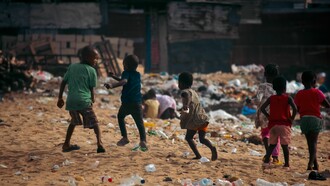
The COP negotiations involve more than emission reductions. For example, they include funding for less-developed countries, those least culpable for but most vulnerable to climate impacts, to adapt to the changes.
However, the principal solution to climate change is clear: the world must rapidly transition from fossil fuels to clean energy. Clean energy from sources like sunlight, wind, and geothermal heat is already cheaper than fossil fuels. Their use is growing rapidly worldwide. But powerful corporations and nations that produce coal, oil, and natural gas are doing everything they can to keep the shift from succeeding. Fossil fuels still provide about 82 percent of the world’s energy.
The most important outcome of this year’s COP would be a plan and timetable to phase fossil fuels out of the world economy and replace them with clean, renewable energy. But under the UNFCCC, all nations must agree on a policy before adopting it.
So, over the last 34 years, the idea of phasing out fossil fuels has been endorsed only once, in 2023. Then it disappeared again in 2024 and 2025. Recent COPs have been dominated by legions of fossil-fuel lobbyists, outnumbering the delegations of many nations. Nearly 5,830 fossil-energy lobbyists attended the last three conferences.
International leaders have just concluded their 17th COP on biodiversity, a conference that has so far produced suboptimal results.
The UN’s sustainable development goals (SDGs) are another set of aspirations whose seeds were planted at the Earth Summit in 1992. At the summit's 20th anniversary, the world reconvened in Rio. It produced “The Future We Want,” a report that purposely shifted the conversation from the dystopian future we must avoid to the positive future we can create. It contained more than 280 agreements that reaffirmed existing economic, social, and environmental commitments and created new ones. It set in motion a process that produced the UN’s 17 sustainable development goals, 169 specific targets, and 230 “indicators” to measure progress, all by 2030.
By mid-2026, however, the UN found progress on only 36 percent1 of the targets.
“Meaningful gains have been made across the SDGs, but they remain uneven and insufficient in the face of serious headwinds—from escalating conflicts, slowing global economic growth, climate change, rising debt burdens, and declining official development assistance,” the UN reported. “Without a decisive push to rapidly scale up proven solutions, the promise of the 2030 Agenda risks slipping out of reach...The choices made over the next four years will determine not only whether the goals are achieved by 2030, but also the well-being of people and the planet for generations to come.”
The international community clearly knows about the crises it’s creating. It has thousands of ideas on what to do. But it lacks the political will to do what it knows it must. It remains afflicted by short-termism, economic inertia, and vested special interests.
That brings us to the suggestion. A longstanding impression is that science and religion are mutually exclusive. Yet, the stewardship of creation converges with the science of human health and well-being.
As one pastor puts it, “Science is God’s way of revealing the genius of his creation.” French chemist Louis Pasteur noted, “A little science estranges a man from God, but much science brings him back.” Albert Einstein said, “Everyone who is seriously involved in the pursuit of science becomes convinced that a spirit is manifest in the laws of the universe—a spirit vastly superior to that of man.”
In 2015, Pope Francis issued Laudato Si, his brilliant encyclical on the environment and climate change. Pope Leo XIV celebrated the document's 10th anniversary last year and issued his own encyclical: Magnifica humanitas2. Although he focused principally on the challenges of artificial intelligence, Leo cited “the bonds that unite us to the natural environment.”
“Some have chosen to deride the increasingly evident signs of climate change, to ridicule those who speak of global warming, and even to blame the poor for the very thing that affects them the most,” Pope Leo said. “God will ask us if we have cultivated and cared for the world that he created for the benefit of all and for future generations, and if we have taken care of our brothers and sisters—what will be our answer, my dear friends?"
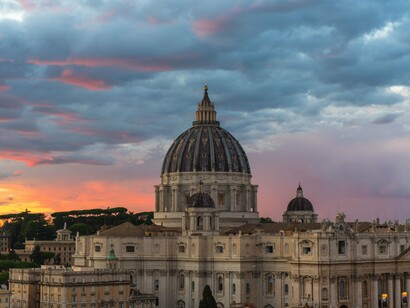
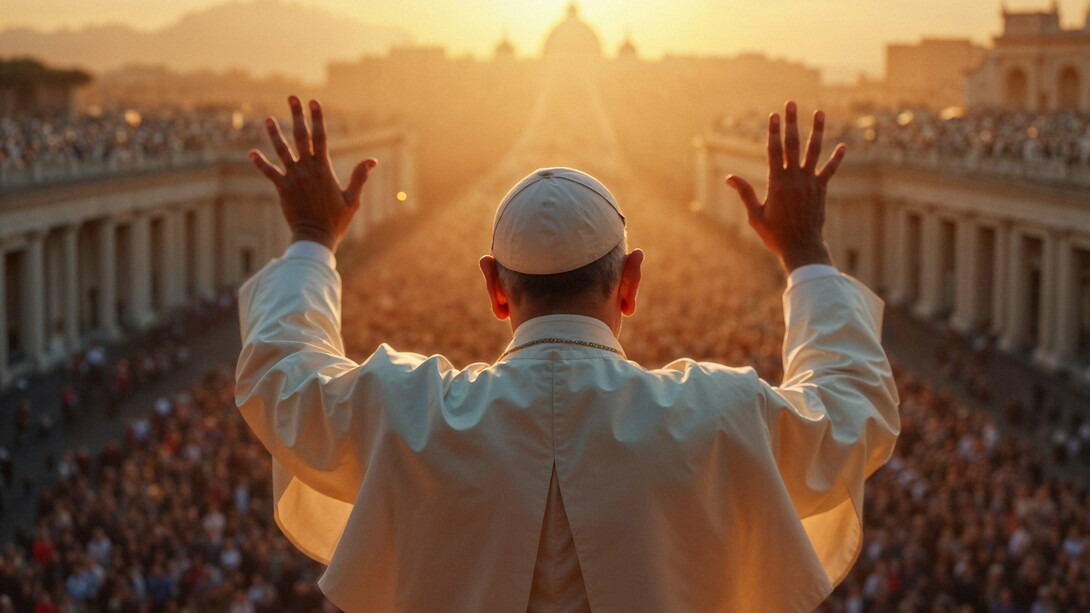
I humbly suggest that Pope Leo invite the world’s top climate scientists and religious leaders to the Vatican for a globally broadcast convergence of science and faith on humanity’s relationship with nature—a wedding between the moral and physical necessity of ecological stewardship.
Our wisest, smartest, and most spiritual leaders should issue a compelling call to heal the damage we have caused to life on Earth and to achieve productive harmony with nature.
Notes
1 The Sustainable Development Goals Report 2026.
2 Magnifica Humanitas of his holiness Pope Leo XIV on safeguarding the human person in the time of artificial intelligence.