English
 Español
 Français
 Deutsch
 Italiano
 Português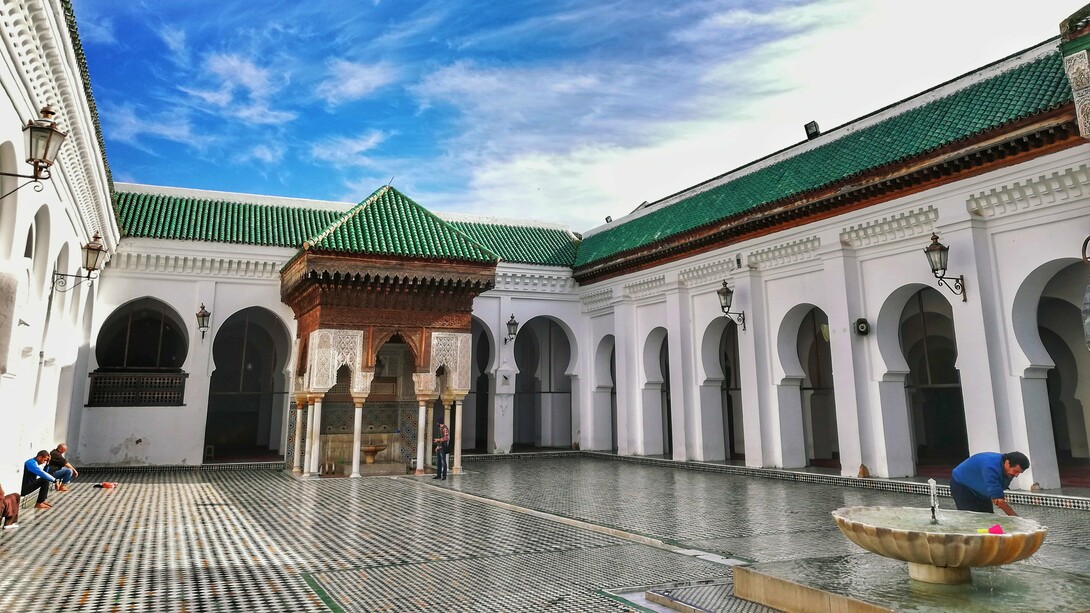
Academic excellence and spiritual heritage
At the heart of the thousand-year-old medina of Fez, Al Quaraouiyine University embodies more than twelve centuries of uninterrupted academic and spiritual excellence. Founded in 859 by Fatima al-Fihriya, this legendary institution—recognised by UNESCO and the Guinness Book of World Records—remains a beacon of Islamic knowledge and a living testament to global intellectual history.
Since its inception, Al Quaraouiyine has cultivated a holistic approach to education that unites religious sciences, philosophy, mathematics, astronomy, and medicine. This revolutionary pedagogical tradition has trained generations of illustrious scholars—including Ibn Khaldun, Al-Qarafi, and Averroes—whose influence radiated far beyond the borders of the Maghreb.
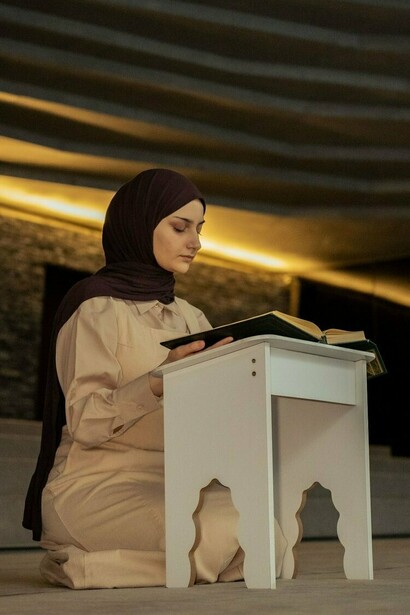
Today, the university perpetuates this excellence through modernised programmes that blend Islamic heritage with contemporary sciences. This unique synthesis attracts international students and researchers seeking an authentic and rigorous education in the Islamic sciences.
Almohad architecture and UNESCO heritage
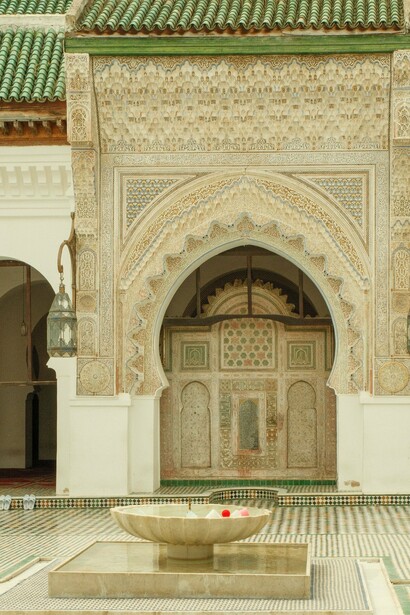
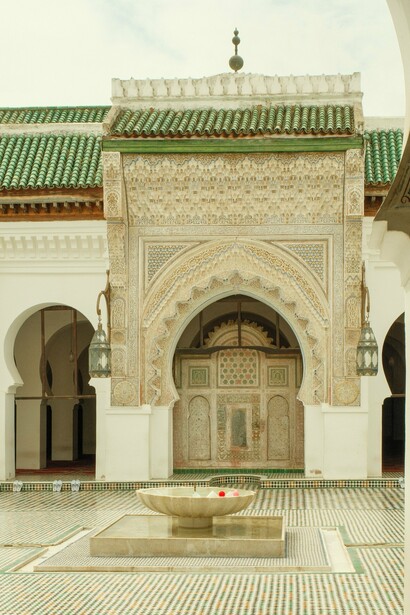
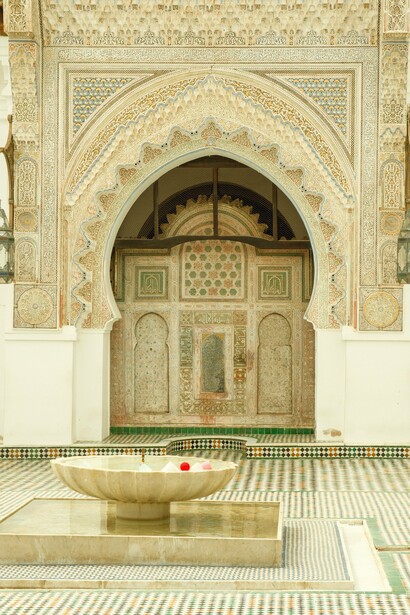
The architecture of Al Quaraouiyine illustrates the evolution of Islamic art in the Maghreb across the centuries. The Almohad minaret, the courtyards adorned with millennia-old mosaics, and the prayer halls featuring carved ceilings create an environment conducive to meditation and study.
This architectural harmony, preserved with extreme care, allows visitors to immerse themselves in the spiritual and intellectual atmosphere that has nurtured so many generations of scholars. Its seamless integration into the urban fabric of the medina bears witness to the university's central role in the life of Fez.
Historical library and precious manuscripts internationally
The Al Quaraouiyine library houses one of the world's most precious manuscript collections: over 30,000 ancient volumes, including illuminated Qurans dating back to the 9th century and unique scientific treatises. This exceptional collection bears witness to the intellectual Golden Age of mediaeval Morocco.
Restored using the most advanced techniques, these manuscripts reveal the richness of scientific exchange between Al-Andalus, the Maghreb, and the East. This written legacy constitutes an invaluable treasure for research into the history of science and Islamic thought.
Al Quaraouiyine maintains privileged relationships with major Islamic universities worldwide and international research centres. This openness enriches its academic curricula and fosters high-level academic exchanges.
The university regularly hosts international colloquia, conferences, and intellectual gatherings that reaffirm its status as a leading authority in Islamic studies. This international dimension contributes to the cultural prestige of both Fez and Morocco.
The University of Fez—Al Quaraouiyine—and its historical role
A woman named Umm al-Banin Fatima al-Fihriya founded the University of Al Quaraouiyine in the year 245 AH (Hijri) – in the mid-9th century AD. Al Quaraouiyine is a mosque located in the old city of Fez, Morocco; its name, Jami' al-Qaraouiyine, translates to "The Central Mosque of the City Dwellers".
The university's historical role extends far beyond the realm of religion alone. On the contrary, it has played a significant cultural, social, and political role in the education, guidance, and reform of the lives of individuals within the Muslim community across the globe.
Al Quaraouiyine is also renowned for being the very first "university" ever established in the world. Indeed, it rivals Al-Azhar University in Cairo, Egypt—which also lays claim to being the first university ever founded—for this title, spanning all civilisations. Al Quaraouiyine gave birth not only to religious scholars but also produced great jurists, Hadith specialists, historians, mathematicians, astronomers, physicians, ascetics, literary masters, linguists, and poets.
Moreover, classes were not limited to enrolled students; they were also open to merchants, artisans, farmers, labourers, and others who attended with the aim of refining their knowledge of their various trades and crafts.
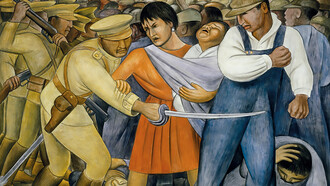
During Morocco’s most difficult years—under French occupation—it was the students and professors of Al Quaraouiyine who rose up to reawaken the heart of the nation and unite its ranks in resistance to the occupation until the so-called "Protectorate" (Himaya) was lifted and Morocco’s Muslim King, Mohammed V, returned to the throne.
The role of Al Quaraouiyine in Morocco
When Morocco regained its political independence in 1956, the role of Al Quaraouiyine eventually shifted; it was integrated into a network of Western-style universities, comprising branches located in Fez, Tetouan, Marrakech, and Agadir.
As for the traditional school situated within the central mosque, it remained closed until King Hassan II reopened it in 1988—though solely for short-term study programmes. It was not until the year 2000 that the first students to graduate under the university’s original, traditional system finally emerged.
Yet, despite all this, the traditional role historically accorded to Islamic scholars—both in Morocco and across the Muslim world—has been circumscribed by the government. While the government seeks their counsel on matters strictly pertaining to domains such as family law and issues related to the Five Pillars of Islam, it does not consult them in the same manner regarding national affairs—specifically those concerning criminal law, commercial law, and the mechanics of governance.
These scholars hold limited functions and earn very meagre salaries; consequently, their societal role has been significantly diminished—a trend further exacerbated by the fact that the Muslim masses are now inundated with Western philosophy, materialism, and morally subversive teachings.
Thus, the populace has begun to turn its gaze toward the allure of technological advancement and the freedom to engage in shameful conduct within society without fear of sanction. The standardisation of the Islamic curriculum at Al Quaraouiyine—mandated by the government—has further eroded the university’s traditional character, as well as the standing of its scholars; yet, the people have failed to rise up and oppose this tragedy, which is gradually dismantling the legacy of traditional Islamic education.