English
 Español
 Français
 Deutsch
 Italiano
 Português
Wake up, world leaders; for the sake of mankind, let the tragedies end, and save our humanity from ourselves. We never had any glory days. The human condition has always been a real challenge in literally every historical era. Every historical era has faced unique versions of the same fundamental struggle: balancing survival, meaning, and social connection, while operating within human physical and emotional limits. Early eras fought famine, infectious disease, and harsh weather. Modern eras fight economic instability, burnout, and chronic lifestyle illnesses. Rapid urbanisation, loss of connection to nature, and mechanised labour. And the information era: extreme digital connectedness, paired with unprecedented physical isolation. It cannot be denied that in all epochs of history we have continuously resorted to war and violence to solve conflicts, and humanity has failed to organise societies truly capable of addressing the unequal distribution of resources.
United Nations – Climate change refers to long-term shifts in temperature and weather patterns. Human activities have been the main driver of climate change, primarily due to the burning of fossil fuels like coal, oil, and gas. Above all, climate change remains the most pressing problem to be tackled on a global scale. Meanwhile, the systemic degradation that has been wrought on the natural environment in the name of progress still cries out for our care and attention. Humans are overconsuming. Our planet has paid the price. We've been influenced to consume at the expense of our mental and spiritual wellbeing. And unless the sharp inequalities in different regions of the world are truly addressed, the world will remain bedevilled by uncontrollable immigration, hatred and terrorism. And humanity is on the path of self-destruction.
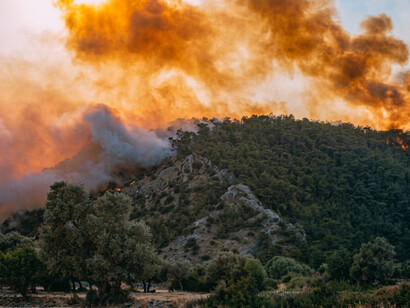
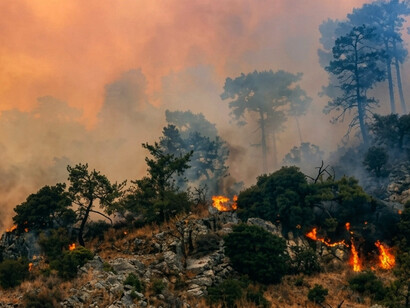
The recipe of self-destruction: greed, envy, selfishness, self-centredness and self-pity. We're living in a world where these forms of self-destruction are far too prevalent. Greed will lead to human downfall. Science is clearly telling us we are overextracting and causing unprecedented imbalances within our ecosystems. Climate change fuelled by the use of fossil fuel and deforestation is the main issue that must be tackled. Planet-warming greenhouse gas emissions are expected to rise to 70 billion tonnes a year by 2050, a nearly 50% jump from today. This will destabilise the climate and lead to a surge in heatwaves, which are expected to affect nearly everyone on Earth. Almost no corner of the planet will remain untouched by extreme heat. Resource extraction will lead to widespread environmental devastation.
By 2050, humans will be pulling 165 billion tonnes of raw materials from the Earth annually. The extraction of all these metals, minerals and fossil fuels will destroy many natural spaces, worsening climate change and feeding biodiversity loss. Air pollution will continue to plague cities – and take lives. Natural spaces will continue to disappear at an alarming rate. The world will lose 1 million square kilometres of forests, peatlands and other natural spaces, and the loss of ecosystems. More people will suffer from the double whammy of droughts and floods.
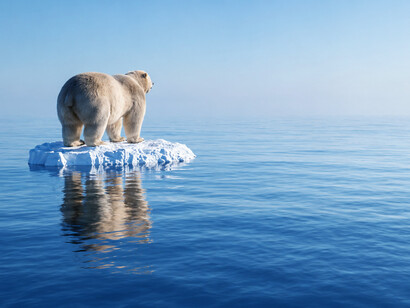
The Greenland and Western Antarctic ice sheets could collapse, causing sea levels to rise to 10 metres. The Amazon rainforest may wither into savannah, depriving the planet of one of its most important carbon sinks. Ocean currents could be affected, and nearly every warm-water coral would disappear, devastating undersea ecosystems and threatening fisheries around the world. So, there is time for humanity to address climate change, nature loss and pollution. Unless greenhouse gas emissions fall dramatically, warming could pass 2.9°C this century, which could have catastrophic consequences for life on this planet. UNEP (United Nations Environment Programme) with a Paris Agreement – provides cutting edge research to support science-based decision-making on climate change, and develops sustainable mechanisms to unlock financing to help countries both, mitigate and adopt to climate change. Africa is using strategies on emerging and pressing issues related to environmental governance, climate change, biodiversity conservation, pollution, and other environmental matters.
China is tackling climate change through a massive build-out of renewable energy and aggressive clean technology deployment. Aiming to peak carbon emissions before 2030 and achieve carbon neutrality by 2060. At the same time, it remains the world's largest consumer of coal and fossil fuels. The future of humanity can only be truly safe if humans accept that they are mortal beings, and that happiness on this planet can only be achieved if the comfort and convenience bestowed on us by technological improvement is recognized, with meaningful and simple and peaceful way of living. The two biggest threats that face humanity are global warming and nuclear war. While we face severe, unprecedented threats, like climate change, nuclear proliferation, and misaligned technologies, human history shows persistent capacity for adaptation, correction, and restoration. Core challenges to overcome:
Ecological risks: overusing resources and degrading natural systems threaten the stability required for modern civilisation.
Technological risks: advanced tools like autonomous weapon systems and AI (artificial intelligence) present existential risks if left without regulatory and moral guardrails.
Political and economic structures often prioritise immediate gains over long-term planetary survival. Global cooperation and transnational agreement on carbon reduction, nuclear safety, and AI regulation are vital to curb systemic threats. Climate change, AI/technology, and geopolitical conflicts concern me the most. The United States Military is clearly the biggest threat to the world and humanity and the largest consumer of fossil fuels on the planet.
In the world that produces enough to feed, one third of people starve, and live in dire poverty, without access to a clean drinking water, health care, education, and the necessities for a decent life. And if we change our mindset, values, and priorities, we can still protect our planet and future generations. I believe it is our duty to find some way to be in collective action to slow down or stop the climate apocalypse for the sake of all future generations and non-human friends. The more we emit, the worse it gets. We should be pushing to reduce emissions. Scientists say it is not too late to stop the worst effects of global warming, but we must cut carbon pollution fast and change how we use energy.
And today, together with the climate, we have to rescue humanity from weapons and wars. Rescuing our humanity from weapons and wars is possible through persistent international cooperation, strict arms control, and prioritising diplomacy over armed conflict. And the question of Albert Einstain posed to Sigmund Freud in a letter written 1932 – “Shall we put an end to the human race, or shall mankind renounce war”, more than ever demands fresh and honest answer. To save humanity – stop arms production. Stop wagging your tail. War is a human-made disaster, rather than an inevitable law of nature, meaning human systems and political choices can prevent or end it. There is always a chance to stop a war.
History shows that conflicts eventually end when leaders choose diplomacy over destruction. Nuclear reductions make the world safer. Active war requires overcoming deep mistrust, high political costs, and competing demands. We need, and we can, reduce arms production and prevent wars, devastations, and killings through strong global rules, international peace treaties, and public pressure on governments to choose diplomacy over conflict. Nations need to use peaceful talks and courts to solve conflicts instead of sending troops and weapons. Big weapon companies make huge profits and lobby governments to buy more gear.
Citizens can push leaders to spend tax money on health and education, instead of tanks, guns, missiles, drones, fighter jets, bombs and other lethal weapons, used for destruction and pollution of the environment (toxic waste, depleted uranium). Unfortunately, nations, global groups, organisations and the UN cannot often stop rich or powerful nations from fighting. We need to stop attacks, bombardments, environmental pollution, catastrophic devastation of cities and whole countries (Gaza, Iran), energy facilities, and killing innocent people, killing each other. And stop producing scary drones, dangerous armaments, and nuclear stockpiles. When weapons speak, humanity suffers. The world doesn’t need more weapons; it needs more wisdom. When dialogue begins, peace has a chance. But NATO’s European members are rapidly increasing defence spending, although their economy is collapsing.
We need to achieve a change of mindset that over time would make war a relic of the past. We need a concrete programme of complete disarmament, starting with nuclear and other weapons of mass destruction, and to establish an inclusive system of collective security. In this moment, the world is in catastrophic failure. We find ourselves closer to a global war in the nuclear age that could bring about the end of all complex life on Earth. Fortunately, there are a few but powerful voices of people at the frontlines across the globe for humanity to avoid self-destruction and create a new future that respects the Earth and each other. Author Yuval Noah Harari speaks about the power of human imagination to redirect our ingenuity from self-destruction to self-creation.
So, sit at the table, and let the tragedies stop. The fight against the war machine and the fight to save the planet are the same fight.
Brighter and futuristic predictions for our planet: Some scientists consider that we will solve ageing in the next five to ten years by applying AI to medicine. We will achieve this by simulating biology with AI. As we apply AI to all fields, it will accelerate everything—medicine, energy, manufacturing—basically everything we care about, all at once. And we are going to live healthfully with an abundance of resources. (How?) Civilisation progresses through tightly interconnected feedback loops. More wealth means better education, better healthcare, and healthier people, creating more wealth. If we look at energy, we’ve used supercomputing and AI to find better materials for solar cells and energy storage. Having inexpensive and unlimited energy will allow us a revolution in food production.
AI is going to make food healthier (artificial meat and insect flour), cheaper, and abundant. Unlimited power will also allow us to create an abundance of things, like houses manufactured with 3D printers. And when we merge with AI in the late 2030s, nanorobots – electronics the size of red blood cells – will go into our brains, through the capillaries, and provide wireless communication between the top layer of our brains and additional digital neurons hosted in the cloud. When we expand our brains digitally, our intelligence will no longer be constrained by the size of our skulls.
This is the Singularity. The pace of technological change will be so rapid, and its impact will be so deep that human life will be changed forever. AI will reach and immediately soar to post-human-level intelligence by 2029. AI has already overtaken humans in many ways. Information technology is advancing at an exponential rate. A broad education in the humanities can help save our understanding of humanity. Understanding the humanities will ultimately make us more humane. Whether in times of war, terror, or peace, increasing humanity can save us. And there is still time to save the planet – and us.