English
 Español
 Français
 Deutsch
 Italiano
 Português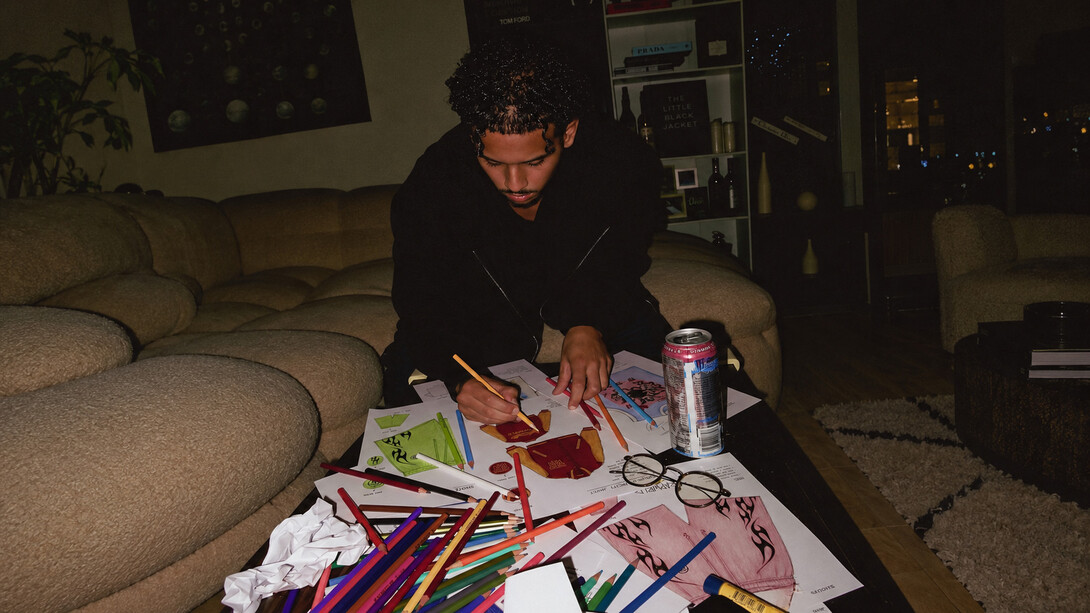
In Dubai, a young streetwear label raises a larger question: how does a generation move forward without leaving its identity behind?
There is a particular anxiety that belongs to places changing quickly: the fear that, somewhere in the rush toward the future, something intimate will be left behind. A language becomes less frequently spoken. A gesture survives only among grandparents. Objects that once belonged to ordinary life become "heritage". Young people inherit a culture they deeply value, yet live in a world whose visual language is increasingly shared – the same music crossing borders, the same silhouettes appearing in different cities, and the same references arriving simultaneously on millions of screens.
Dubai understands this tension perhaps better than most cities. Few places have transformed so visibly within a single lifetime. The city is relentlessly associated with what comes next: new architecture, new technology, and new ambitions. Yet beneath that appetite for reinvention sits another question, quieter but increasingly present among a younger generation of Emirati creatives: how do you become global without becoming culturally anonymous?
It is here that TRAPWRLD becomes interesting. Not simply as another streetwear label, but as an example of what happens when fashion becomes a place to negotiate identity.
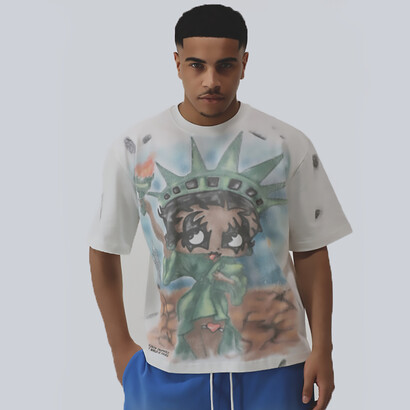
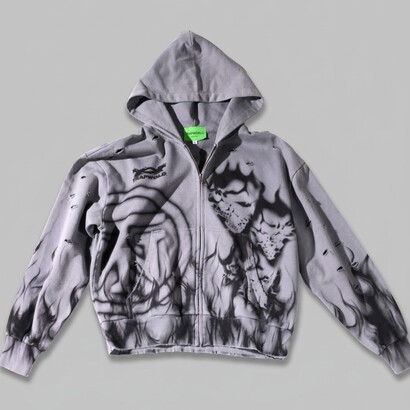
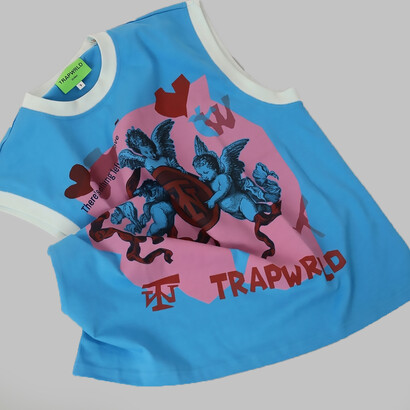
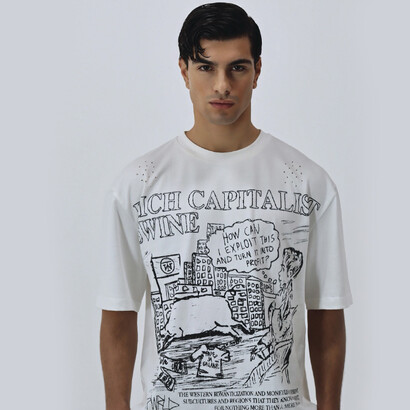
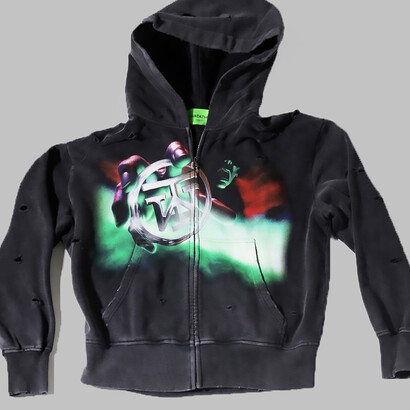
Born in Dubai under the creative direction of Emirati designer Ali Haider, TRAPWRLD describes itself as existing between contemporary streetwear and Emirati heritage. Its language is intentionally youthful; its garments belong unmistakably to the vocabulary of global street culture: T-shirts, oversized shapes, distressed finishes, zip-ups, shorts, and varsity jackets. Yet the philosophy Haider places behind the label repeatedly returns to heritage, dignity, resilience and the idea of knowing where one comes from.
That contradiction is precisely what makes the project worth examining. Because heritage, for a long time, was often treated as something to preserve rather than something to disturb. It belonged to museums, ceremonies, family traditions and carefully protected forms. Fashion inspired by heritage could easily become nostalgic: an attempt to reproduce the past beautifully and faithfully.
A younger generation appears less interested in reproduction. They want permission to interpret. And interpretation is a more complicated act. It means accepting that culture does not remain alive simply because it is protected. It remains alive because people continue to argue with it, reshape it, wear it differently and find themselves inside it.
Haider proposes that Emirati identity does not have to be visually frozen in order to remain authentic. TRAPWRLD's own manifesto speaks of tradition being “reimagined” rather than replicated. The distinction matters. A culture confident enough to be reinterpreted is different from one that must be kept behind glass. This conversation extends well beyond a single brand.
Dubai has developed a remarkably energetic streetwear culture in recent years. Labels across the UAE are drawing from Arabic typography, Gulf imagery, family memory, regional music and the complicated experience of growing up between local traditions and global influences. Streetwear, once imported largely as an international aesthetic, is gradually acquiring a local accent. Perhaps this was inevitable.
Streetwear has always been about more than fabric. At its most interesting, it records where people belong. Cities leave fingerprints on clothes: New York gave streetwear one language, Tokyo another, and London another. Why should Dubai merely borrow theirs?
The more intriguing possibility is that a city once known primarily as a destination for international luxury is beginning to produce its own visual narratives. TRAPWRLD enters that conversation from a specifically Emirati perspective. Its collection does not resemble an archive of obvious heritage symbols. In fact, some pieces could initially be read simply as contemporary streetwear: acid-washed cotton, large graphics, relaxed shoulders, and varsity construction. One made-to-order jacket can even be personalized with the wearer's name or initials.
This restraint may be more revealing than covering every garment in recognisable cultural motifs. Heritage does not always need to announce itself. Sometimes it exists in attitude - in ideas about dignity, confidence, belonging and continuity. Sometimes cultural identity is not the picture printed on a shirt but the reason someone decided to make the shirt in the first place.
That distinction also protects heritage from becoming costume.
There is an important difference between using culture decoratively and allowing culture to shape a creative point of view. The first turns identity into an aesthetic resource. The second asks something more difficult: what have I inherited, and what am I going to do with it?
TRAPWRLD seems most compelling when viewed through that question. Its name itself feels almost deliberately at odds with the polished vocabulary normally associated with Gulf luxury. “Trap” belongs to contemporary global youth culture; “world” suggests something without borders. Place that beside a philosophy centred on Emirati heritage and an interesting friction appears. It is the friction experienced by many young people far beyond the UAE.
They are simultaneously local and global. They can be deeply attached to traditions they did not personally create while consuming culture from everywhere. They may speak one language at home and another at work, inherit one set of social codes and participate in another online. Their identities are not neat. Perhaps their fashion should not be either. This is where clothes acquire an emotional dimension that commerce often forgets.
We dress for practical reasons, certainly, and sometimes for vanity. But we also dress to locate ourselves. The things we choose to put on our bodies can quietly answer questions we rarely say aloud: Where do I belong? What part of my parents' world is still mine? How much can I change before I no longer recognise where I came from?
For societies undergoing rapid transformation, these are not sentimental questions. They are questions about continuity. And there is something particularly striking about asking them in the UAE, a country where the distance between memory and modernity can sometimes be measured in a single generation. People who remember a very different physical landscape now watch their children inhabit one of the world's most internationally connected cities.
The challenge for that younger generation is not simply to remember. It is to decide what remembering looks like. Maybe it looks like poetry. Maybe architecture. Maybe film.
And sometimes, unexpectedly, it looks like a T-shirt.
That is why independent Emirati labels such as TRAPWRLD deserve attention beyond the familiar language of fashion launches and seasonal collections. Their real significance will not ultimately be determined by how many garments they sell, nor by whether they successfully follow the machinery of international streetwear.
The more interesting question is whether they can develop a language recognisably their own.
Ali Haider's work is still part of a young creative story. That makes certainty premature and curiosity more appropriate. What will be worth watching is not simply how far TRAPWRLD travels, but how deeply it is willing to investigate the place from which it began.
Because globalisation has made it remarkably easy to look like everyone else. The harder task is to participate in the world without erasing the particularities that made you who you are.
Perhaps that is the quiet challenge facing contemporary fashion in the Gulf.
Not choosing between heritage and modernity.
Learning how to carry both.