English
 Español
 Français
 Deutsch
 Italiano
 Português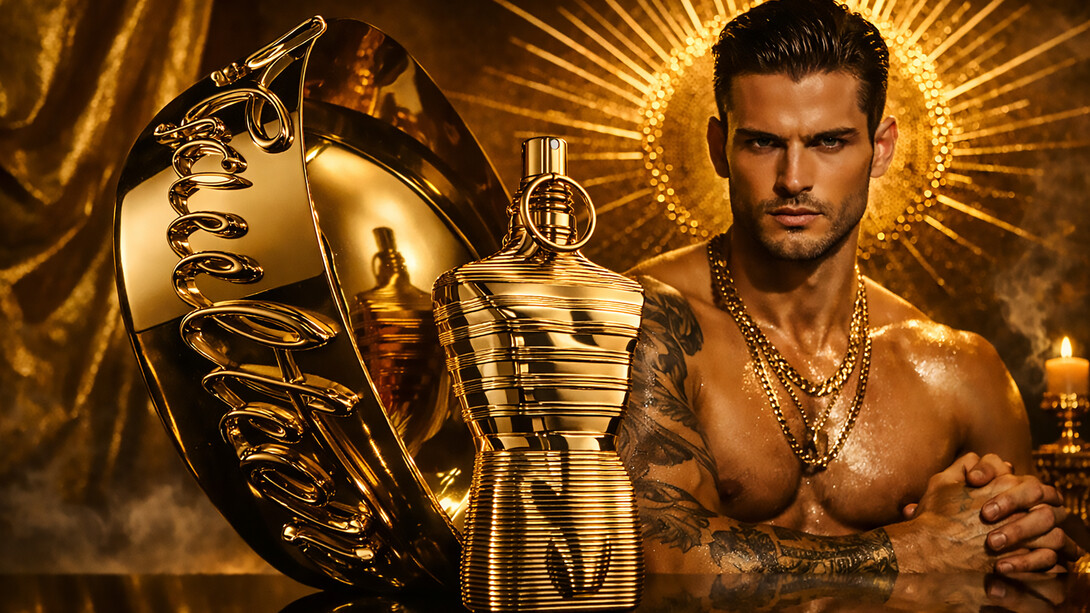
Scent, identity, and the power of image, In the world of luxury branding, scent is no longer just an invisible accessory—it is a statement of identity, narrative, and seduction. Jean Paul Gaultier’s new fragrance, “Le Male Elixir Absolu,” launched under the iconic “Le Male” line, exemplifies this shift. Not merely a perfume, it is a meticulously curated aesthetic object. The packaging, advertisement, and in-store visual merchandising transform the act of fragrance consumption into a ritual of self-mythologizing. This article investigates how “Le Male Elixir Absolu” engages with historical and contemporary codes of masculinity, how its visual rhetoric aligns with Gaultier’s fashion legacy, and why it resonates with shifting ideals of sensuality in the 21st century.
The legacy of "Le Male"—From Subversive to Sacred: When Jean Paul Gaultier first launched “Le Male” in 1995, it revolutionized the fragrance industry. Packaged in a torso-shaped bottle and drawing visual references from sailor uniforms and fetish culture, it stood in stark contrast to the sterile minimalism of other masculine perfumes of the time. “Le Male” wasn’t just a scent—it was a rebellion, wrapped in camp, sensuality, and the politics of visibility.
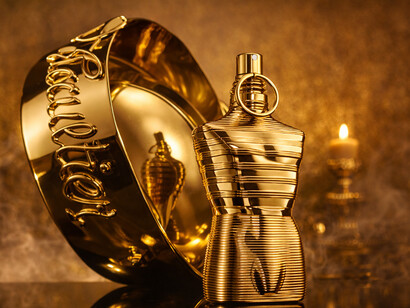
“Le Male Elixir Absolu” continues this legacy but with a heightened sense of grandeur and divine sensuality. The gold bottle—muscular and gleaming—recasts the original sailor as a quasi-mythological figure, perhaps a modern-day Adonis. The visual presentation draws heavily from religious iconography: in the in-store display, the model stands shirtless, surrounded by a gilded halo reminiscent of saintly portraits from Renaissance art. Tattoos, muscles, and intense eye contact mix the sacred with the erotic, creating a visual language of both worship and seduction.
Decoding the visual merchandising, the image accompanying this article, captured from an in-store display, speaks volumes about the narrative being constructed. A few key elements stand out:
The model as icon, centered and illuminated, the model’s pose is reminiscent of Christ Pantocrator or other divine masculine archetypes. His gaze is proud yet inviting, and the golden frame behind his head amplifies his status as a secular deity of desire.
Typography and Color: The use of white serif typography for “Jean Paul Gaultier” and “Le Male” contrasts with the richly bronzed and golden background. This contrast communicates luxury, authority, and purity—an interesting balance between bold sensuality and classic refinement.
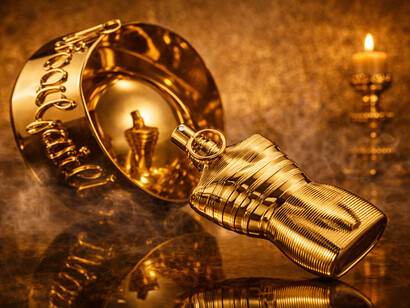
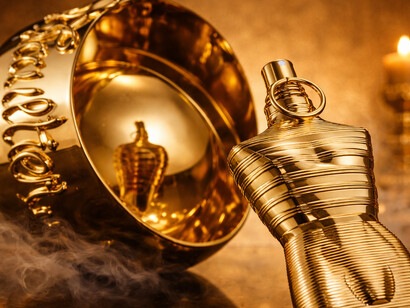
The golden bottle, the torso-shaped bottle, now rendered in gold, is more than a design flourish. It becomes a trophy, a grail-like object that encapsulates the wearer’s ideal self. It is simultaneously aspirational and worshipful—a perfect extension of Gaultier’s fashion ethos, which often blends fetishwear with regal extravagance.
The Masculine Divine—Aesthetic Shifts in Male Beauty: Traditionally, masculinity in fragrance advertising leaned on minimalism, toughness, or athletic virility. “Le Male Elixir Absolu” breaks from these tropes by presenting masculinity as not only sensual but also adorned—glorious, vulnerable, and artistic. This reframing of the male body as both object and subject of beauty invites discussion.
In the modern context, masculinity is no longer singular. Fluid identities, queer visibility, and the blending of fashion and gender performance are transforming how we understand male beauty. Gaultier’s Elixir version reflects this shift: it is no longer enough to be strong or stoic—the modern man must also be radiant, expressive, and worthy of aesthetic contemplation.
By casting a tattooed, hyper-stylized figure within a frame of golden reverence, the advertisement challenges us to see masculine sensuality as divine rather than deviant. This vision aligns with Gaultier’s long-standing commitment to gender play, from his couture runways to his long partnership with Madonna.
Fragrance as Fashion—Materializing Intangible Seduction: What sets Jean Paul Gaultier apart in the fragrance world is his ability to make perfume visible. The bottle designs, ad campaigns, and even shelf placements are theatrical. Perfume becomes wearable fashion—not just olfactory but also visual, tactile, and collectible.
“Le Male Elixir Absolu” is part of this strategy. Its bottle resembles a finely sculpted statue, drawing links between the art object and the body itself. The gilding hints at royalty and timelessness, appealing to a customer who sees their personal brand as curated, expressive, and performative.
In this way, Gaultier extends his fashion philosophy—where clothing is armor, art, and attitude—into the invisible world of scent. Wearing “Le Male Elixir Absolu” is a form of self-costuming. It evokes not just attraction but transformation.
Retail theatre and the ritual of purchase: fragrance is often bought in moments of self-reflection or transformation—a gift, a new season, a personal reinvention. The design of the sales environment acknowledges this. Retailers increasingly create immersive, mini-theatrical moments where the fragrance is the star and the shopper is both spectator and protagonist.
The display in the image reflects this. Carefully lit, framed with golden textures, and featuring a powerful central figure, the space becomes a stage. Shoppers don’t merely browse—they encounter. The act of selecting “Le Male Elixir Absolu” becomes performative: a declaration of taste, desire, and identity.
Why it matters—fragrance as a cultural artifact: Why should we take a perfume display seriously in academic or cultural discourse? Because it is in these micro-sites of consumption—boutique counters, advertising spreads, Instagram reels—that society negotiates values, identities, and aesthetics.
Jean Paul Gaultier’s “Le Male Elixir Absolu” doesn’t just sell a scent. It sells a philosophy: that masculinity can be sacred, sensual, and styled. That desire can be dramatic. That the body, even in commodified form, can carry artistic meaning.
As our visual culture becomes more saturated and more nuanced, brands like Gaultier play a crucial role in shaping what gender, beauty, and elegance mean. In doing so, they also reveal the aspirations and anxieties of their time.
A fragrance for the age of expression, in a saturated market of masculinity tropes, Jean Paul Gaultier dares to mythologize rather than minimize. “Le Male Elixir Absolu” is not for the man who wants to blend in—it is for the one who wishes to be adorned, remembered, and possibly even worshipped.
From the opulence of its bottle to the baroque drama of its display, this fragrance reminds us that luxury is performance, that scent is sculpture, and that identity is a curated stage. In Jean Paul Gaultier’s world, even a perfume becomes a revolution in a bottle.
Scent as power, bottle as body: The reign of Le Male Elixir Absolu: In today’s hyper-visual, highly curated luxury landscape, fragrance is no longer confined to its olfactory function. It is a coded language, a wearable myth, and increasingly, a sculptural object that competes for aesthetic authority alongside fashion itself. No house has mastered this fusion of fashion and fragrance more iconoclastically than Jean Paul Gaultier—the French couturier renowned for collapsing binaries, celebrating subversive eroticism, and immortalizing the human form as an altar of identity. With the latest chapter in the Le Male saga, “Le Male Elixir Absolu,” Gaultier has offered not merely a perfume, but a semiotic explosion: a shimmering gold torso, a devotional image of a tattooed icon, and a marketing narrative that elevates masculine beauty to divine status.
Since its initial release in 1995, the Le Male line has operated as a countercurrent in the stream of commercial masculinity. Where other fragrances drew on athleticism, minimalism, or classicism, Le Male introduced sailor stripes, queer-coded references, and a bottle shaped like a male bust—a choice both sensuous and sculptural. With its hyper-embellished aesthetics and erotic undertones, it quickly evolved into one of the most recognizable and enduring scent collections of modern perfumery. Now, Le Male Elixir Absolu steps boldly into the spotlight not as a subtle update but as a gilded culmination—a version that fully embraces the baroque, the sacred, and the hyper-stylized.
Displayed prominently in stores, as shown in the accompanying in-store photograph, Le Male Elixir Absolu is framed like a Renaissance painting. The imagery—featuring a shirtless model against a glowing, golden radial backdrop—evokes religious iconography and fashion editorial simultaneously. The fragrance's visual strategy is crystal clear: the male body is not only beautiful but also worthy of worship. The perfume bottle itself, gleaming like polished armor or a golden statue, recalls both ancient deities and contemporary trophy culture. The design language interweaves mythology, sensuality, and spectacle, resulting in a product that is as much about desire and identity as it is about scent.
But what does this aesthetic shift signify in broader cultural terms? Why this fusion of masculinity, gold, and iconography now? And what does it tell us about the evolving role of the fragrance as both a fashion artifact and a medium of self-performance?
This article unfolds across several thematic chapters. First, it traces the visual and cultural evolution of the Le Male fragrance line. Then it decodes the specific aesthetic choices behind Le Male Elixir Absolu, from bottle design to advertising to retail display. Drawing on fashion theory, marketing semiotics, and gender studies, the analysis positions the fragrance as a key player in contemporary discussions of masculinity, luxury, and visual storytelling. Finally, it situates Le Male Elixir Absolu within the growing trend of fragrance as an immersive, performative, and almost theatrical retail experience—where scent becomes a form of spectacle and where buying becomes a form of ritual.
In doing so, we understand Le Male Elixir Absolu not simply as a product, but as a cultural gesture—one that reflects the deep interplay between body, desire, luxury, and modern myth-making.