English
 Español
 Français
 Deutsch
 Italiano
 Português
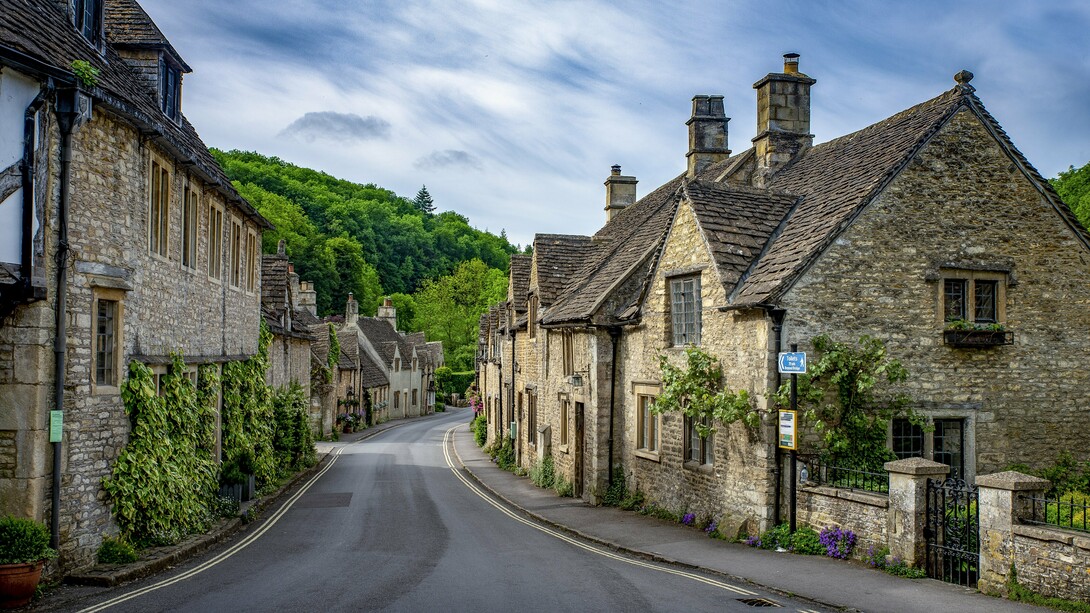
Buildings and the construction industry account for 37% of the world’s carbon emissions, according to the UN Environment Programme. For decades, the sector focused on operational carbon. However, the climate crisis is driving the need to reorient to account for this massive up-front carbon expenditure. Natural stone offers a promising solution.
The industrial revolution's detour and a return to form
The architectural world is rediscovering an ancient material for its proven performance and low environmental impact. Natural stone has a low embodied carbon of 8.6-12.5 kg CO₂ eq/m² compared to materials like steel and reinforced concrete, which often exceed 60 kg CO₂ eq/m². Embodied carbon is the total carbon footprint from its extraction, manufacturing and transportation before it even arrives on the construction site.
Architectural stone was the default material for humanity’s most enduring structures, from the Pyramids of Giza to the cathedrals of Europe. Many favour it for its abundance and compressive strength.
After the Industrial Revolution, stone and timber were largely shelved in favor of mass-produced steel and concrete. Companies still prefer these new materials for their speed, predictability and standardisation, helping modern cities grow rapidly. However, this shift came at a hidden carbon cost.
Many architects and engineers are looking back at these traditional construction elements and realising their potential. For example, natural stone and similar sustainable building materials release minimal toxic substances1, which helps maintain indoor air quality.
Redefining natural stone's potential
Modern buildings typically integrate stone facades, using the natural material as a luxury finish rather than a structural asset. This is inefficient. The process consumes energy and wastes a huge portion of the material. For example, in a stone-rich country like Switzerland, nearly half of the extracted stone is classified as residual waste because it’s only used for surface applications.
London’s 15 Clerkenwell Close project challenged this mindset. This six-story building’s load-bearing stone exoskeleton2 was so innovative that it was shortlisted for the prestigious RIBA Stirling Prize. The award acknowledged that this project was both an engineering curiosity and a work of significant architectural merit.
The London Stone Demonstrator is another ambitious venture. Made of stone blocks secured by steel tendons, it aimed to test, prove and scale the concept for the wider construction industry. Its prefabricated columns and beams could be dismantled and reused after the installation was complete.
Case study: resilience and beauty in the Swiss Alps
Traditional wooden architecture defines the village of Mogno in the Swiss Alps. In 1986, an avalanche destroyed its 17th-century church. In the aftermath, the community wanted to rebuild it stronger. Renowned architect Mario Botta responded with a stone structure that’s both a fortress and a piece of sculpture.
The Church of San Giovanni Battista has a captivating black and white striped pattern on a bold, cylindrical form. The stonework stands as a beautiful contrast to the surrounding timber villages. Despite the church’s visually delicate appearance, its thick stone walls can withstand3 natural disasters. An all-glass ceiling floods the interior with daylight.
This case study exhibits natural stone’s versatility. It can be used to create both a sense of impenetrable shelter and spiritual uplifting, proving its value goes beyond its low carbon footprint.
The life cycle advantage and economic choice
Stone’s longevity is legendary. People can still visit many Roman temples and mediaeval cathedrals built centuries or millennia ago. These structures demonstrate the natural stone’s ability to withstand fire, rot, pests and the elements in a way few other materials can.
This resilience translates to an economic advantage over a building’s lifespan. Stone’s durability significantly reduces long-term costs4 for repairs, maintenance and replacements. Heavy and dense, natural stone has a high thermal mass, meaning it absorbs heat and releases it slowly. This directly lowers heating and cooling costs and carbon emissions for the life of the building.
When a concrete building’s life is over, it’s often demolished into rubble. In contrast, engineers and architects can disassemble stone. They can reclaim blocks or panels for use in new buildings, supporting the principles of a circular economy in construction.
Stone’s advantage over synthetics
It’s important to compare stone with popular synthetic and composite materials that often imitate its look. Many companies market modern materials as durable alternatives to stone. However, their complex manufacturing processes carry significant carbon penalties.
An in-depth comparison found that natural stone has significantly lower embodied carbon than alternative5 materials, such as precast concrete cladding, terrazzo flooring and engineered quartz countertops. For example, it takes immense energy to crush natural quartz, mix it with polymer resins and cure it into slabs using heat and pressure. However, natural stone is more simply quarried, cut and finished.
Building a stone-solid future
Natural stone is a material of the past and a critical solution for a sustainable future. It outperforms concrete and steel in terms of embodied carbon, and can be used to build modern structures. Ultimately, natural stone demonstrates that the challenge for 21st-century architecture is to rediscover, with modern intelligence, the profound wisdom embedded in the ground and use it to fight the climate crisis.
Notes
1 Renovated, Sustainable Building Materials: A Guide to Eco-Conscious Construction. Rose Morrison, 12 June 2025.
2 World-Architects, The Stone Demonstrator. John Hill, 29 October 2025.
3 Mario Botta Architetti, Church San Giovanni Battista. 17 September 2023.
4 Modul Marble, How Does Natural Stone Fit Into Sustainable Design?. 5 August 2025.
5 Natural Stone Institute, Embodied Carbon and Natural Stone. 10 August 2023.