English
 Español
 Français
 Deutsch
 Italiano
 Português
While architecture has progressed in many dimensions, portable or mobile design has been largely forgotten. This overlooked field, however, may be essential to a renewed understanding of architecture.
Mobile architecture is a living entity that can only flourish when not just architects and engineers work together but when all sides of the technological and artistic areas share information and all remain receptive to outside influence (Halford, 2002).
Current-day issues
Throughout architectural history, construction, design, and civil engineering have maintained a closely intertwined relationship. However, with the onset of the twentieth century, many traditional design values were deemed obsolete, a shift that has continued to shape contemporary practice.
As a result, architecture has, in some respects, ceded its broader cultural and conceptual significance, with emphasis increasingly placed on construction and civil engineering concerns. This shift underscores the need for more diverse and expansive design approaches.
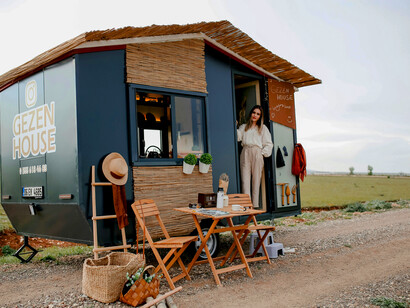
One such approach lies in portable, mobile, or prefabricated design. As defined by Cody (1996), a portable building is composed of prefabricated elements assembled in one location and transported, in part or whole, to another, often beyond the direct oversight of the original designer or builder. Despite their widespread use, American portable buildings remain underexplored, with existing studies largely limited to domestic innovations such as balloon framing and mail-order housing.
A renewed focus on this overlooked field can extend the role of architects, generate new professional opportunities, and offer meaningful social benefits, particularly for communities with limited access to conventional architectural resources.
The rapid population increase, coupled with the dwindling of residents in certain municipalities, makes it more difficult to estimate construction needs. Suburban areas that are exploding in size require more day care centers, schools, and health care and social welfare facilities, so portable buildings are used to combat the shortage in the fields of education and health care, for example (Palomäki, Nevala, 2020).
Portability and mobility
The idea of a portable house or building may not be immediately intuitive, yet the concept of mobility opens the door to far broader possibilities. Over time, numerous attempts have been made to explore this idea—some successful, others less so—but all contributing to an evolving discourse.
In fact, portability can be traced back to the origins of human civilization. Nomadic societies relied on tents as their primary dwellings, exemplifying early forms of mobile architecture. Today, however, advances in materials, technology, and construction methods offer far more sophisticated solutions capable of addressing nearly every aspect of contemporary living.
Ho Chu (2008) highlights Japanese traditional architecture as a notable example, arguing that transportable and collapsible houses emerged in response to technological developments in fields such as the military, automotive, aerospace, and leisure industries. In this context, flexibility and adaptability are closely tied to user participation. Japanese houses achieve this adaptability through elements such as tatami mats, sliding doors (shoji), and movable panels (fusuma), allowing spaces to be continuously reconfigured. The architectural plan thus functions as a sequence of interconnected spaces that can be joined or divided through sliding partitions, enabling a dynamic relationship between dwelling and inhabitant.
Another example: at the turn of the 20th century, portable barracks were mostly made of wood. These structures offered by various suppliers were generally based on the same concept: they were supposed to be more comfortable and hygienic than a tent, cheap to manufacture, easy to assemble, and convenient to transport. This resulted in the development of special systems of frames and interlocking mechanisms, as well as board elements. During World War II, Germany designed modular systems for portable barracks that enabled easy adaptation to various purposes; their manufacturing was later standardized to ensure compatibility of parts coming from various suppliers (Koryciński, Kozakiewicz, 2017).
Designers and professionals in the construction field emphasize the speed, ease of quality control, and cost efficiency of modular construction. Module construction is an industrial process that can be streamlined to increase cost efficiency (Palomäki, Nevala, 2020).
The earliest instance of prefab housing in the modern sense dates back to 1624, when the English brought a wooden panelized building to Cape Ann, Massachusetts. It was used as housing for the fishing fleet. The house was mobile in that it was disassembled, moved, and reassembled several times as the needs and location of the fleet evolved. This early experiment marks one of the most prominent uses of prefab housing: temporary settlement (Bruce, Sandbank, 1943).
Overall, portable design encompasses a wide range of architectural ventures, including complete mobile dwellings, modular and patterned manufacturing, prefabrication, and—more recently—applications within interior architecture.
Conclusion
Portable and mobile design remains a significantly undervalued field. Yet it holds considerable potential to strengthen the role of architecture within society while offering solutions that are more adaptable, sustainable, and economically accessible for users. A renewed and sustained focus on this area is therefore both timely and necessary.
References
Bruce, A. Sandbank, H. 1943, A history of prefabrication, John B. Pierce Foundation.
Cody, J. 1996, Site Unseen: American Portable Buildings for Export, 1879-1945, ACSA European Conference, Copenhagen.
Halford, R. 2002, Architecture, Mobility, and Evolution.
Ho Chu, M. 2008, Expandable House for Disaster Relief and Flexible Dwelling, Massachusetts Institute of Technology.
Koryciński, W., & Kozakiewicz, P. 2017, Portable wooden buildings at the turn of the 20th century—a historical review of structural solutions, Forestry and Wood Technology, 100, 176-183.
Palomäki, V., Nevala, M. 2020, How to construct a portable building? Circular economy.