English
 Español
 Français
 Deutsch
 Italiano
 Português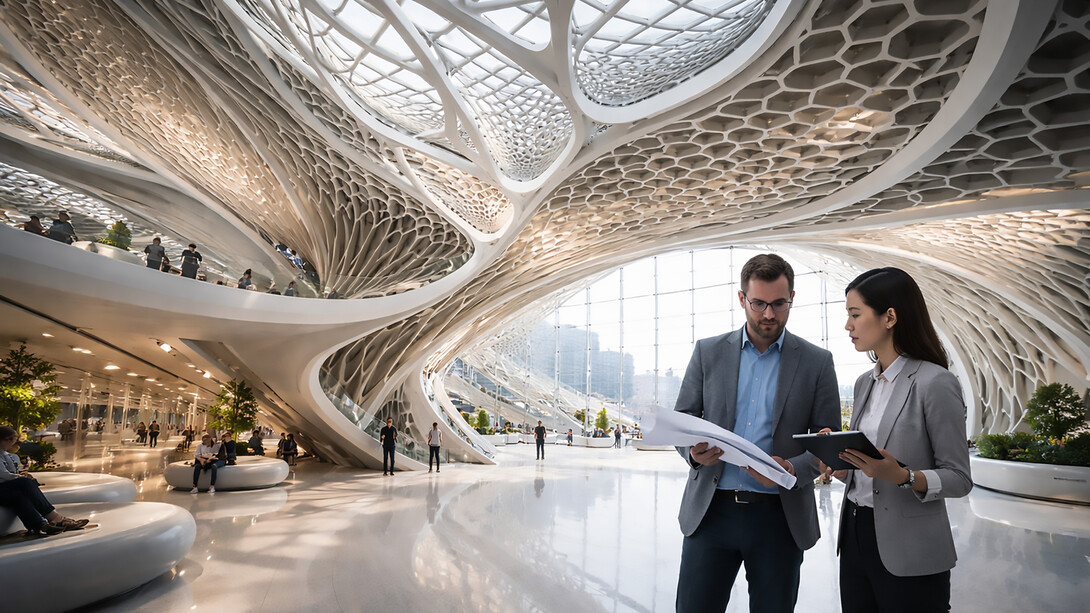
Parametric design has emerged as one of the most influential paradigms in contemporary architecture and product design. Enabled by computational modeling and algorithmic systems, parametricism allows designers to generate complex geometries and adaptive forms through variable-based relationships. While the methodology has significantly expanded the creative and technical possibilities of design, critics increasingly question whether its visual complexity sometimes comes at the cost of functional performance.
This article examines the relationship between parametric design and functional compromise in architecture and design practice. It explores how the pursuit of algorithmic aesthetics may overshadow considerations of usability, accessibility, and human experience. Through theoretical discussion and selected case studies, the paper argues that parametricism is most effective when integrated with human-centered design principles rather than driven solely by computational formalism.
Introduction
Over the last two decades, computational technologies have dramatically transformed design methodologies. Among these developments, parametric design has emerged as a dominant approach in architecture, product design, and digital fabrication. Parametric systems allow designers to define relationships between variables so that changes in one parameter automatically generate corresponding changes in form, structure, or spatial organization.
This approach has enabled the creation of highly complex and fluid geometries that were previously impossible to conceive or construct using traditional drafting techniques. Architects and designers now use parametric modeling software to simulate environmental conditions, optimize structural systems, and explore dynamic forms.
However, as parametricism gained prominence, a critical debate emerged within design discourse. While computational design offers unprecedented formal freedom, some scholars and practitioners argue that excessive reliance on algorithmic generation may lead to functional compromises, particularly when aesthetic complexity becomes the primary design driver.
The central question, therefore, is not whether parametric design is beneficial; its advantages are well established, but whether its application sometimes prioritizes visual novelty over human usability, spatial clarity, and practical functionality.
This article investigates this tension, examining how parametric design influences functional outcomes in contemporary design practice.
Understanding parametricism as a design paradigm
Parametric design refers to a computational methodology in which geometric elements are defined by parameters and relationships rather than fixed dimensions. When these parameters are adjusted, the entire design model updates automatically.
This approach allows designers to explore numerous design variations quickly while maintaining coherence within the overall system. Instead of manually redrawing each iteration, designers manipulate variables that generate multiple design outcomes.
The architectural theorist Patrick Schumacher famously described parametricism as a new global style in architecture, suggesting that it represents a paradigm shift comparable to modernism or postmodernism. According to this perspective, parametricism replaces rigid geometries with fluid, continuous forms that respond dynamically to contextual parameters such as site conditions, structural constraints, and environmental factors.
Parametric tools are widely used in contemporary design software such as Grasshopper, Rhino, and generative modeling platforms. These tools allow designers to construct algorithmic workflows in which geometry evolves through mathematical relationships.
The appeal of parametric design lies in several advantages:
Rapid generation of design alternatives.
Optimization of structural and environmental performance.
Integration with digital fabrication technologies.
Exploration of complex geometries.
However, the same characteristics that enable these possibilities can also create unintended design challenges.
The rise of algorithmic aesthetics
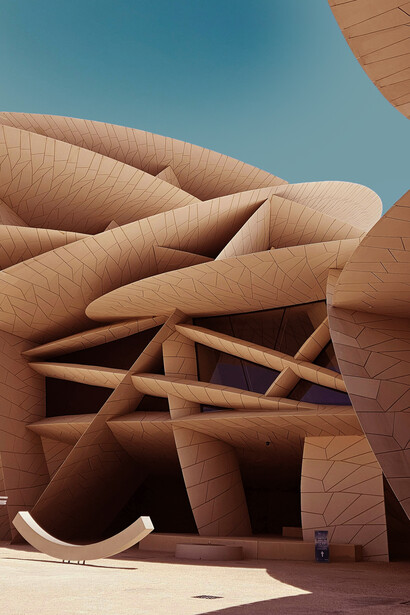
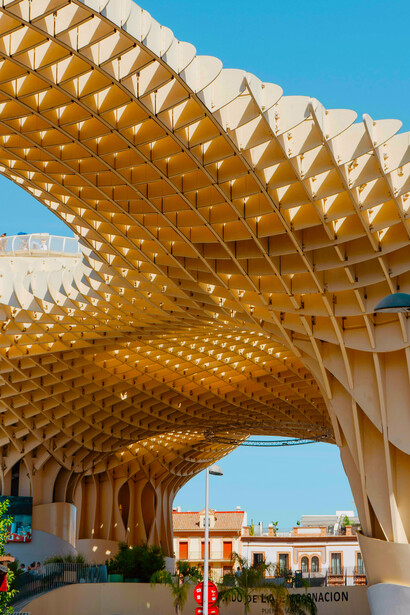
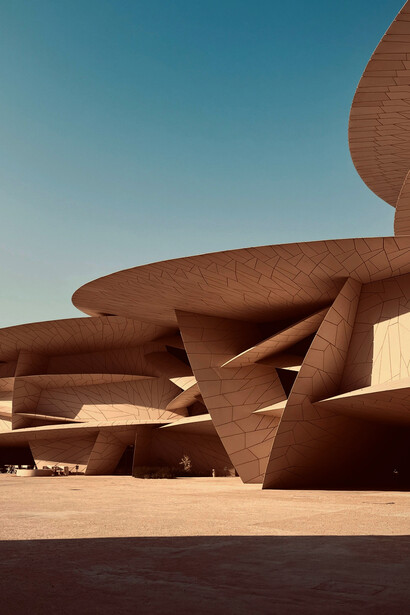
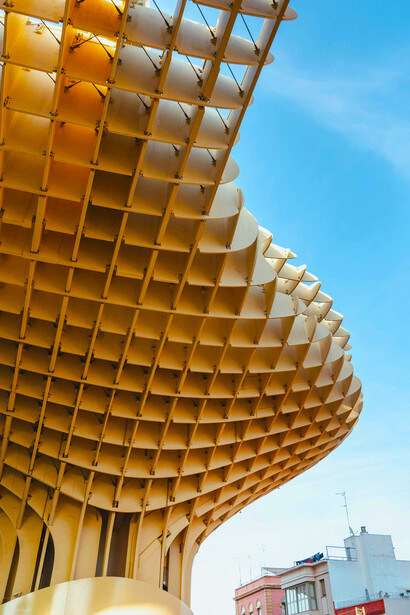
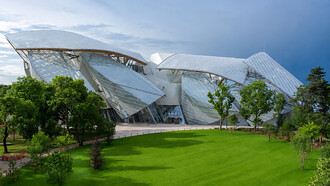
One of the defining characteristics of parametric design is its ability to produce visually striking forms. Curvilinear surfaces, flowing spatial sequences, and intricate structural patterns have become common features of parametric architecture.
Such forms often convey a sense of innovation and futuristic aesthetics. As a result, parametric design has been widely embraced in landmark architecture, cultural institutions, and experimental installations.
However, critics argue that in many cases, parametric design has become aestheticized computation, where the primary goal is visual complexity rather than functional clarity.
In architecture, this phenomenon can manifest in several ways:
Overly complex circulation systems.
Difficult-to-maintain building envelopes.
Inefficient structural geometries.
Confusing spatial organization.
In product design, similar challenges may appear in the form of ergonomically impractical shapes or manufacturing inefficiencies.
The issue is not the use of parametric tools themselves but the prioritization of algorithmic novelty over user-centered functionality.
When complexity undermines usability
Design fundamentally exists to serve human needs. Architecture must provide comfortable, accessible spaces; products must be intuitive and ergonomic; urban systems must facilitate movement and interaction.
When parametric design focuses primarily on formal experimentation, these functional requirements may be overlooked.
One common issue arises in circulation and spatial legibility. Buildings with highly fluid or irregular geometries can create confusion for users navigating interior spaces. Wayfinding becomes difficult when spatial hierarchies are unclear or when corridors and circulation paths lack intuitive organization.
Similarly, parametric façades with complex geometries may present challenges for maintenance and energy performance. While visually impressive, such façades often require specialized fabrication techniques and costly maintenance systems.
Another concern relates to accessibility. Highly experimental spatial configurations sometimes fail to adequately accommodate universal design principles, making spaces less inclusive for elderly users or people with disabilities.
These examples illustrate how the pursuit of computational aesthetics can unintentionally undermine the practical usability of a design.
Structural and construction challenges
Parametric designs frequently involve complex geometries that challenge conventional construction techniques. Although digital fabrication technologies have made it easier to produce non-standard components, such projects often involve higher costs and technical risks.
Irregular geometries can require custom structural elements, non-standard joints, and advanced engineering solutions. These complexities increase construction costs and can extend project timelines.
In addition, maintenance and repair of highly customized structures can become difficult over time. Replacement components may require specialized fabrication rather than standardized materials.
From a sustainability perspective, these factors raise questions about the long-term environmental and economic viability of some parametric projects.
Parametric design in urban contexts
Beyond individual buildings, parametric approaches are increasingly used in urban planning and landscape design. Computational models can simulate pedestrian movement, environmental conditions, and spatial networks.
In theory, such tools enable designers to create responsive urban systems that adapt to social and environmental data. However, challenges arise when computational models fail to capture the complexity of human behavior and cultural context.
Cities are not purely mathematical systems. They are shaped by social interactions, informal practices, and historical layers that cannot always be reduced to algorithmic parameters.
When parametric models attempt to simplify urban dynamics into numerical inputs, important social dimensions may be overlooked. As a result, computationally optimized urban designs may not always translate into vibrant or inclusive public spaces.
Reconciling parametricism with human-centered design
The tension between parametric design and functional usability has generated substantial debate within contemporary design discourse. While parametricism offers designers unprecedented freedom to explore complex geometries and adaptive systems, human-centered design emphasizes usability, accessibility, and the experiential quality of spaces and products. Reconciling these two approaches requires a shift in design thinking, from treating computational tools as primary drivers of form to using them as instruments that support human needs and behaviors.
Human-centered design places people at the core of the design process. It prioritizes empathy, observation, and understanding of how individuals interact with spaces, objects, and systems. In contrast, parametric design typically begins with a set of mathematical relationships or computational parameters that generate form through algorithmic processes. When these methodologies operate independently, conflicts may arise: algorithmic complexity may overshadow clarity, and aesthetic exploration may override practical usability.
However, the integration of human-centered principles within parametric workflows has the potential to transform computational design into a powerful tool for enhancing functional performance. Rather than treating parameters purely as geometric variables, designers can define parameters based on human factors such as movement patterns, ergonomic requirements, accessibility standards, and environmental comfort.
One of the most promising approaches in this integration is data-informed human behavior modeling. Parametric systems can incorporate data related to pedestrian movement, spatial usage patterns, and behavioral responses to environmental conditions. By embedding such data into computational models, designers can generate spatial configurations that respond to how people actually move and interact within environments. For example, circulation networks in buildings or urban spaces can be optimized by analyzing real movement patterns rather than relying solely on formal intuition.
Similarly, parametric tools can be used to enhance environmental comfort and well-being. Instead of producing purely sculptural forms, parametric algorithms can simulate daylight distribution, ventilation patterns, thermal performance, and acoustic conditions. When these environmental parameters are integrated into the design process, the resulting forms are not merely aesthetic experiments but functional responses to human comfort. In this sense, computational complexity becomes a means of improving spatial performance rather than creating visual spectacle.
Accessibility is another crucial dimension where parametric design can align with human-centered principles. Universal design frameworks emphasize the need for environments that accommodate diverse users, including elderly individuals and people with disabilities. Parametric modeling allows designers to simulate multiple user scenarios, adjusting spatial dimensions, circulation paths, and interface elements to ensure inclusivity. For instance, algorithms can evaluate ramp gradients, wheelchair turning radii, and visual accessibility within spatial layouts, allowing designers to refine environments to meet universal design standards.
Ergonomics also plays an important role in bridging parametric and human-centered methodologies. In product and furniture design, parametric systems can integrate anthropometric datasets to generate forms tailored to human body dimensions and movement patterns. Instead of producing abstract geometries, parametric tools can help designers optimize shapes for comfort, efficiency, and adaptability. Adjustable furniture systems, adaptive wearable technologies, and responsive interior environments are examples of how computational design can enhance human interaction rather than complicate it.
Another key strategy in reconciling parametricism with human-centered design is participatory design integration. Contemporary design processes increasingly involve users, stakeholders, and communities as active participants rather than passive recipients of design solutions. Parametric models can support participatory processes by allowing designers to visualize and test multiple scenarios in real time. Stakeholders can interact with digital simulations, providing feedback that informs further iterations of the design.
For instance, urban planners may use parametric modeling tools to simulate different configurations of public spaces, transportation systems, or environmental infrastructures. Communities can evaluate these proposals through visualizations or interactive platforms, contributing their insights into how spaces might function in everyday life. This collaborative approach ensures that computational models remain grounded in lived experiences rather than abstract algorithmic logic.
Education and interdisciplinary collaboration also play an important role in aligning parametric design with human-centered principles. Designers working with computational tools must develop a deeper understanding of social, psychological, and cultural aspects of human behavior. Similarly, collaboration with engineers, behavioral scientists, and environmental researchers can help ensure that parametric systems incorporate meaningful performance criteria.
Such interdisciplinary approaches shift the role of parametric design from a purely aesthetic methodology to a comprehensive problem-solving framework. Computational tools become instruments for synthesizing diverse forms of knowledge, allowing designers to explore complex relationships between human behavior, environmental conditions, and spatial configurations.
Ultimately, reconciling parametricism with human-centered design requires a philosophical shift in how designers perceive computational technologies. Instead of viewing parametric tools as generators of visually complex forms, designers must treat them as analytical and adaptive systems capable of responding to human needs. This shift emphasizes responsibility in design practice, ensuring that innovation serves functional, social, and experiential objectives.
When used in this manner, parametric design does not undermine usability; rather, it enhances the capacity of designers to address complex human requirements. The true potential of parametricism lies not in its ability to produce intricate geometries but in its capacity to integrate diverse parameters, human, environmental, and technological, into coherent design solutions. Through this balanced approach, computational design can move beyond formal experimentation and contribute meaningfully to the creation of inclusive, functional, and responsive environments.
Toward responsible computational design
The future of parametric design lies in developing responsible computational practices that balance creativity with functionality.
Several principles can guide this approach:
Prioritize human experience: design decisions should begin with user needs rather than algorithmic possibilities.
Integrate performance metrics: parametric models should evaluate environmental, structural, and usability performance alongside formal exploration.
Maintain design clarity: complex geometry should not compromise spatial legibility or accessibility.
Embrace interdisciplinary collaboration: architects, engineers, sociologists, and designers must collaborate to ensure that computational models reflect real-world conditions.
Consider lifecycle impacts: designers should evaluate the long-term sustainability, maintenance, and adaptability of parametric structures.
These principles help ensure that parametric design contributes positively to the built environment rather than becoming a purely formal exercise.
Conclusion
Parametric design represents one of the most transformative developments in contemporary design practice. By enabling designers to manipulate complex systems of relationships, computational tools have expanded the boundaries of architectural and product design.
However, the rise of parametricism has also introduced a paradox. While computational design offers unprecedented formal freedom, it can sometimes lead to functional compromises when aesthetic experimentation becomes the primary objective.
The challenge for contemporary designers is therefore not whether to use parametric tools but how to use them responsibly. When integrated with human-centered design principles, environmental performance analysis, and interdisciplinary collaboration, parametric design can enhance both creativity and functionality.
Ultimately, the success of parametricism will depend on its ability to move beyond visual spectacle and contribute meaningfully to the usability, sustainability, and experiential quality of the environments we design.
References
Burry, M. (2011). Scripting cultures: Architectural design and programming. John Wiley & Sons.
Cross, N. (2011). Design thinking: Understanding how designers think and work. Berg.
Frazer, J. (1995). An evolutionary architecture. Architectural Association.
Kolarevic, B. (2003 Architecture in the digital age: Design and manufacturing. Taylor & Francis.
Lawson, B. (2006). How designers think: The design process demystified (4th ed.). Architectural Press.
Norman, D. A. (2013). The design of everyday things (Revised and expanded ed.). Basic Books.
Oxman, R. (2017). Thinking difference: Theories and models of parametric design thinking. Design Studies, 52, 4–39.
Picon, A. (2010). Digital culture in architecture: An introduction for the design professions. Birkhäuser.
Schumacher, P. (2011). The autopoiesis of architecture: A new framework for architecture. Architectural Design, 81(4), 14–23.
Woodbury, R. (2010). Elements of parametric design. Routledge.