English
 Español
 Français
 Deutsch
 Italiano
 Português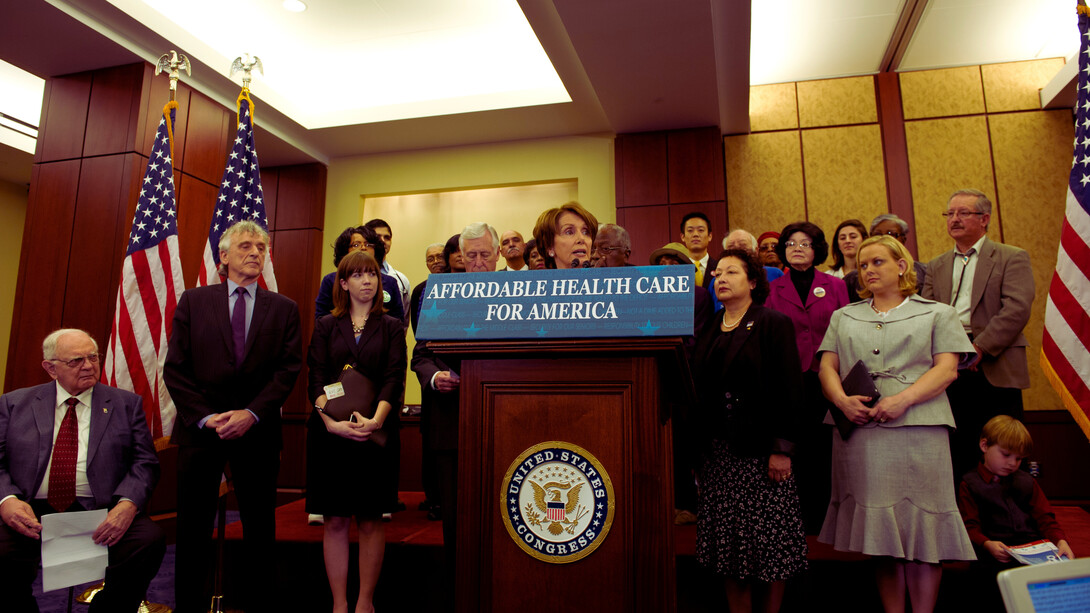
Our healthcare system in the United States? It’s more like a haunted house than a safety net. Flickering lights, creaky floors, unexpected screams in the basement; yet, we keep paying for tickets. The law of the land (and commerce) says: pay up or wait until someone else pays for your ride. But what if the ride never existed? What if the Affordable Care Act, sometimes affectionately “Obamacare,” (often venomously “the socialist scheme”), had never been passed? How bad could it be now? Buckle up, because we might be in for a cheerful nightmare.
Before we get to “what if,” we have to admit that the system was already broken long before 2010. Costs were sky-high, coverage inconsistent, and the phrase “pre-existing condition” was basically a polite way of saying “you’re on your own.” We’ve always had a patchwork of employer-based insurance, public programs, and uninsured limbo. Add in more bureaucracy per hospital room than some countries have hospitals, and it’s no wonder the system groans under its own paperwork.
What’s worse is that the distrust comes from all sides. The wealthy often dislike the ACA because it disrupts favorable tax arrangements or threatens profit margins, while some of the very people it was designed to help, lower-income Americans, still reject it. Some find enrollment cumbersome or coverage limited; others mistrust government programs altogether. Somehow, a law meant to help everyone ended up equally annoying both the rich and the poor.
When the ACA was passed in 2010, it was meant as a patch, not a panacea. It expanded Medicaid in participating states, created insurance marketplaces with subsidies for those outside employer plans, and barred insurers from denying coverage for pre-existing conditions. Millions more Americans gained coverage, but the system remained fragile, uneven, and constantly under political siege. Still, for all its flaws, the ACA became the duct tape holding the country’s healthcare system together.
So, what if it had never been passed? Imagine a parallel universe where 2010 came and went, Congress balked, and the Affordable Care Act died in committee. In that version of America, the coverage gap would have exploded. Tens of millions more people would likely remain uninsured today, unable to afford care or relying solely on emergency rooms. Premiums and costs would have risen dramatically because, without the ACA’s rules about pre-existing conditions and shared risk pools, healthier individuals would have dropped coverage altogether. Insurance companies would hike prices or flee markets, leaving sicker, costlier patients behind.
Hospitals, especially rural ones, would bleed out under the cost of uncompensated care. Many would close, others would slash services, and the emergency room would again become America’s primary care clinic. Meanwhile, employer-based coverage would tighten its grip, keeping workers tethered to jobs they hate just to hang onto insurance. Job mobility would shrink, entrepreneurship would suffer, and the rich-poor divide in healthcare access would stretch into a canyon. Wealthy families could still buy boutique coverage. Middle-income families would struggle with soaring premiums. The poorest would fall through the cracks altogether.
And politically? The fallout would be volcanic. Skyrocketing premiums, hospital closures, and tens of millions uninsured would inflame both sides of the aisle. The outrage we saw during the ACA debates would look like a polite book club meeting compared to the populist backlash of a country with no safety net and no plan B.
Even with the ACA, though, the system still limps. Costs remain staggering, driven by an aging population, expensive technology, and an incentive structure that rewards quantity of procedures rather than quality of outcomes. Each state plays by its own rules, creating a jigsaw puzzle of policies and coverage standards. Funding debates flare up every election cycle, and when subsidies threaten to expire, millions of families brace for premiums that could double overnight. The Affordable Care Act made the American healthcare system less cruel, but it didn’t make it healthy.
The irony is that both rich and low-income groups sometimes oppose it, albeit for very different reasons. The wealthy resent increased taxes or regulations that threaten their benefits and autonomy. The low-income side, meanwhile, often sees the system as confusing or impersonal, plagued with bureaucratic fine print. They’re not wrong. For many, “affordable” care still doesn’t feel affordable, and coverage too often depends on which state line you live behind.
Well, where does that leave us? Somewhere between progress and collapse. Without the ACA, our system would likely have imploded under the weight of its own contradictions. With it, we’re merely teetering on the edge, clinging to the reforms that have prevented a total free fall. The next question isn’t whether the ACA should exist; it’s what we do next. Do we keep patching the cracks or finally rebuild the foundation?
If the ACA disappears in the near future, as some political winds threaten, we’ll find ourselves once again asking who deserves care and who can afford to live. Maybe it’s time to reimagine healthcare not as a commodity to be rationed, but as a public good: messy, imperfect, but shared. Humans will always question, revise, and reinterpret whatever system we create, and that’s healthy. But the one thing we shouldn’t be debating anymore is whether people deserve to see a doctor without going bankrupt.
And yet, if that debate returns… if we allow healthcare to erode back into privilege, then we’re not just talking about policy anymore; we’re raising an old and uncomfortable question of ethics: who gets to decide who lives? That’s definitely a far more serious conversation for another day, but it’s the shadow lingering at the edge of every healthcare debate in this country.
So, without the ACA, it’s safe to say we’d be deeper in the hole. But even with it, we’re still climbing out. The question is: will we keep climbing or slide back into that haunted house and pretend it’s home?