English
 Español
 Français
 Deutsch
 Italiano
 Português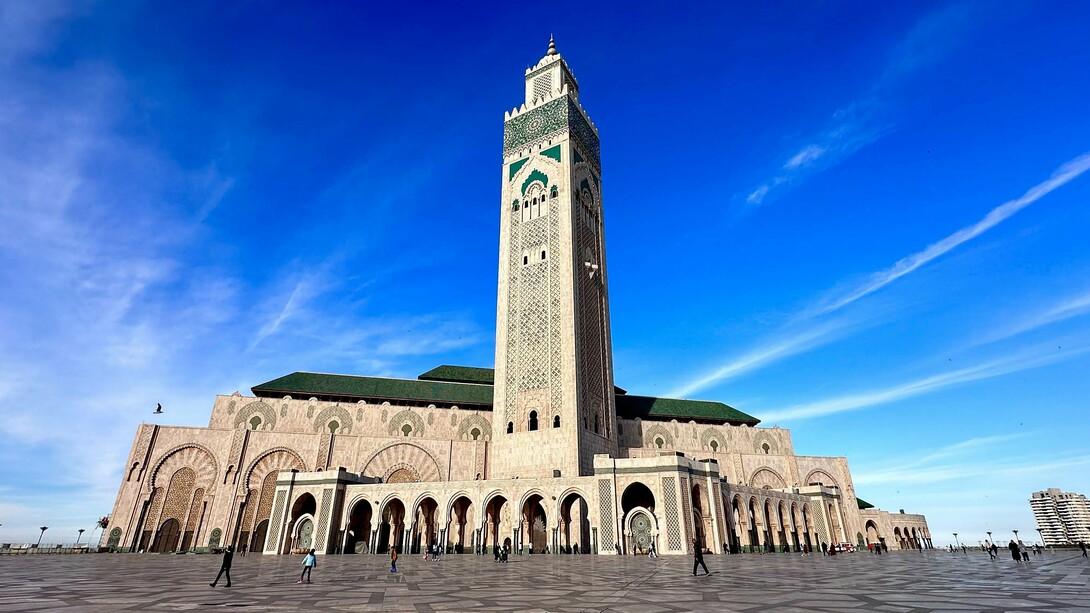
Colonialism has been studied through history, politics, economics, sociology, and literature. Yet the more I read about it, the less it felt like a historical event and the more it resembled a profoundly human experience. Every book I finished answered one question while opening several more. What began as an academic curiosity gradually became an attempt to understand how power reshapes not only institutions and borders but also the inner life of societies.
Over time, I found myself reducing the immense field of postcolonial thought to one deceptively simple idea: Nations have personalities, and colonialism wounds them much like trauma wounds the human mind.1
Imagine a nation as an individual. Imagine someone who spends generations living under another person's authority. Their wealth is extracted, their labour exploited, their history rewritten, their language diminished, and their culture transformed from a living civilisation into an object of observation. Generation after generation, they are told explicitly and implicitly that their value depends on external recognition. Eventually, they no longer ask who they are. They ask who they are allowed to become. Perhaps this is colonialism's greatest achievement. It does not simply occupy land; it gradually occupies imagination2.
Its violence is not limited to armies or administrations. It extends into education, memory, language, aesthetics, and even self-perception. The empire rarely introduces itself as an oppressor. Instead, it arrives carrying the language of civilisation, progress, modernisation, and reform3. Roads are built, institutions are established, and legal systems are introduced, yet beneath these visible accomplishments lies a quieter transformation: a people slowly persuaded that their future can only be imagined through someone else's standards.
This psychological dimension is precisely what drew me toward the great thinkers of postcolonial theory. Reading Frantz Fanon, Edward Said, Homi K. Bhabha, and Gayatri Chakravorty Spivak, I came to realise that although they wrote from different intellectual traditions, they were all exploring different expressions of the same historical wound. Fanon revealed how domination fractures identity from within, producing internalised inferiority that survives long after political liberation4.
Said demonstrated how knowledge itself could become a technology of power, exposing how literature, scholarship, and art collaborated in constructing the "Orient" as Europe's opposite5. Bhabha shifted attention toward the ambiguities of colonial identity, examining the unstable spaces where cultures imitate, negotiate, and transform one another6. Spivak, meanwhile, asked perhaps the most unsettling question of all: whether those historically silenced could ever truly speak through institutions created by those who had silenced them7.
Collectively, these thinkers transformed the way colonialism is understood. They moved the conversation beyond territory and military conquest toward discourse, psychology, identity, and representation. Their work remains indispensable. Yet while reading them, another question slowly emerged in my mind.
Not whether Edward Said was wrong.
But whether postcolonial scholarship has, in some cases, become too comfortable applying the same conceptual framework to every formerly colonised society8. In Orientalism, Said never claimed that "the Orient" existed as a coherent civilisation. His argument was precisely the opposite. He demonstrated that it was an intellectual construction, a category invented by Europe in order to define itself against an imagined Other. Ironically, I sometimes wonder whether later scholarship has unintentionally preserved this very abstraction. The imagined Orient has become so deeply embedded within academic and cultural discourse that it occasionally overshadows the extraordinary diversity of the societies it supposedly describes9.
Colonial archives, Orientalist paintings, romantic travel narratives, and European scholarship produced an image so influential that representation often became more familiar than reality itself. In attempting to dismantle colonial narratives, parts of postcolonial theory occasionally continue to operate within the very categories those narratives created.
This becomes especially visible when considering Morocco.
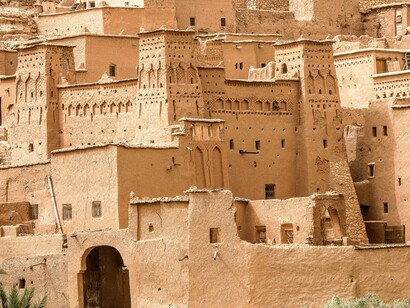
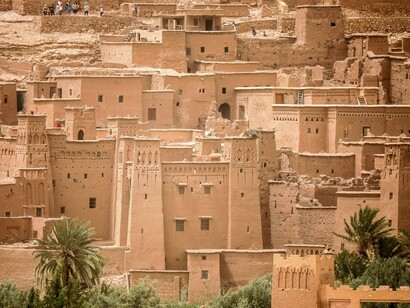
Morocco has always resisted simple classification. It cannot be adequately understood as merely part of "the Orient," nor can it be explained exclusively through an Arab nationalist narrative. Its foundations are profoundly Amazigh10. Its Arab-Islamic heritage became one of the defining layers of its civilisation, but it did not erase the civilisations that preceded it. Its geography places it simultaneously within Africa, the Mediterranean, the Atlantic, and the broader Islamic world. Throughout its history, Morocco has continuously negotiated these overlapping identities without fully dissolving into any single one of them.
Its identity is therefore not singular but cumulative.
It is not a replacement of one civilisation by another, but the gradual accumulation of civilisations across time11.
This complexity complicates many of the binaries through which colonial history is often interpreted. Morocco cannot simply be understood through the familiar oppositions of East and West, coloniser and colonised, tradition and modernity, or Europe and the Arab world. These frameworks illuminate certain aspects of Moroccan history, but they do not fully explain its civilisational continuity12.
Consequently, Morocco's contemporary challenge is not merely recovering from colonial rule. It is recovering historical consciousness.
Political independence in 1956 marked the end of the protectorate, but it did not conclude the process of decolonisation. Genuine decolonisation continues wherever a society reclaims its historical narrative, restores confidence in its own institutions, revitalises its cultural memory, and defines progress according to its own aspirations rather than inherited colonial expectations. Perhaps this is where Homi Bhabha's concept of the Third Space becomes especially illuminating13.
Rather than existing between civilisations, Morocco increasingly appears to be constructing a space beyond inherited colonial classifications altogether. It is a space in which Amazigh heritage, Arab-Islamic civilisation, African belonging, Mediterranean openness, Atlantic strategy, and global engagement coexist without competing for legitimacy. Identity becomes neither a compromise nor a hierarchy but a synthesis. Today, this process extends far beyond cultural theory.
It is becoming visible in Morocco's diplomatic strategy, its expanding partnerships across Africa, Europe, the Atlantic, and the Middle East, and its growing ambition to define itself as an autonomous regional actor rather than a peripheral postcolonial state14. Whether one agrees with every governmental decision is ultimately secondary. What appears historically significant is the broader trajectory: a nation increasingly attempting to narrate itself instead of accepting narratives written elsewhere.
Yet even as classical colonialism recedes further into history, another challenge quietly emerges.
Neocolonialism rarely arrives through military occupation. Instead, it operates through financial dependence, unequal geopolitical relationships, cultural influence, technological asymmetries, and global systems that often define development according to externally constructed standards15. The struggle has become less visible, but perhaps more sophisticated.
For me, however, the most compelling question remains psychological rather than political.
What happens to the collective personality of a nation after centuries of domination? If nations develop personalities, then Morocco's seems to have been shaped by endurance. It is resilient without becoming naïve. Proud without becoming arrogant. Open to the world while remaining instinctively attentive to the intentions behind every extended hand. Like an individual recovering from years of manipulation, it has learned that trust is not freely given; it is patiently earned.
Sometimes I imagine Morocco as an ancient traveller crossing an endless desert. Across the centuries, different empires appeared on the horizon carrying different maps of the world. Each promised prosperity, stability, friendship, or protection. Some undoubtedly contributed to the country's development. Others simply pursued their own interests beneath the language of partnership. After generations of encountering these travellers, Morocco no longer asks only whether the stranger can be trusted. Instead, it asks a more profound question.
Can I trust myself again?
Perhaps that is colonialism's deepest psychological legacy. It does not merely encourage nations to distrust outsiders. It teaches them to question their own history, their own memory, and ultimately their own capacity to define themselves.
Our grandparents survived domination.
Our parents inherited caution.
Perhaps our generation has inherited the most demanding responsibility of all: rebuilding confidence.
Not the confidence of nationalism rooted in exclusion, nor the confidence of isolation from the world, but the quieter confidence of a civilisation that no longer requires external validation to recognise its own worth. A confidence capable of embracing every layer of Morocco's identity without forcing those layers into competition, and of engaging with the world from a position of self-knowledge rather than historical insecurity.
History should remain our teacher, never our prison.
Perhaps the defining postcolonial question is no longer, "What did colonialism make us?" Perhaps the more urgent question has become far more difficult and far more liberating: Who were we before colonialism, and who do we now choose to become?
Notes
1 This concept mirrors the psychological frameworks established by colonial psychiatrists and sociologists who studied collective trauma. See Fanon, Frantz. The Wretched of the Earth. Grove Press, 1963, specifically Chapter 5, "Colonial War and Mental Disorders."
2 For a thorough analysis of how colonialism occupies the consciousness and imagination of the colonized, see Ngũgĩ wa Thiong'o. Decolonising the Mind: The Politics of Language in African Literature. James Currey, 1986.
3 This references the French concept of the mission civilisatrice (civilizing mission), which served as the ideological justification for the French Protectorate in Morocco (1912–1956) under Resident-General Hubert Lyautey. See Lyautey, Hubert. Paroles d'Action. Colin, 1927.
4 Fanon, Frantz. Black Skin, White Masks. Grove Press, 1952. Fanon explores the existential neurosis and internalized inferiority complex inflicted upon the colonized subject.
5 Said, Edward W. Orientalism. Western Printing Services, 1978. Said traces how Western academic discourse constructed the "Orient" as an exotic, stagnant, and submissive "Other" to validate imperial domination.
6 Bhabha, Homi K. The Location of Culture. Routledge, 1994. Bhabha introduces the concepts of "mimicry" and "hybridity" to describe the unstable, ambivalent relationship between colonizer and colonized.
7 Spivak, Gayatri Chakravorty. "Can the Subaltern Speak?" in Marxism and the Interpretation of Culture. Macmillan, 1988, pp. 271–313. Spivak questions whether marginalized groups can possess true agency when forced to speak through the vocabulary of Western institutional frameworks.
8 This critique aligns with a growing body of scholarship warning against "homogenizing" the postcolonial experience. See Ahmad, Aijaz. In Theory: Classes, Nations, Literatures. Verso, 1992.
9 For a critique of how postcolonial theory can inadvertently reify the categories of the colonizer, see McClintock, Anne. "The Angel of Progress: Pitfalls of the Term 'Post-Colonialism'." Social Text, no. 31/32, 1992, pp. 84–98.
10 The foundational Amazigh (Berber) identity of Morocco, historically minimized by both French colonial scholarship (which sought to divide Berbers and Arabs) and early post-independence pan-Arab nationalism, has been a major focus of modern Moroccan historiography. See El Moudden, Fatima. "The Amazigh Renaissance and the Re-writing of Moroccan History." Journal of North African Studies, vol. 14, no. 3, 2009.
11 This cumulative identity aligns with the preamble of the 2011 Moroccan Constitution, which formally recognizes the country's unified identity formed by the convergence of its Arab-Islamic, Amazigh, and Saharan-Hassani components, enriched by African, Andalusian, Hebraic, and Mediterranean currents.
12 Unlike much of the Arab world, Morocco was never absorbed into the Ottoman Empire, allowing it to maintain a distinct state continuity and institutional memory through successive dynasties (Idrisid, Almoravid, Almohad, Marinid, Saadi, and Alaouite). See Laroui, Abdallah. The History of the Maghrib: An Interpretive Essay. Princeton University Press, 1977.
13 Bhabha, Homi K. The Location of Culture, 1994. The "Third Space of Enunciation" is an ambivalent site where cultural identity is continually negotiated, disrupting fixed binaries and allowing for new cultural syntheses to emerge.
14 This refers to Morocco's strategic geopolitical repositioning over the last two decades, including its 2017 return to the African Union, South-South cooperation initiatives, and multi-vector diplomacy spanning the Atlantic and global partnerships. See Zoubir, Yahia H. "Morocco's Foreign Policy in Africa: Geopolitics and Strategy." Journal of Contemporary African Studies, vol. 38, no. 4, 2020.
15 Nkrumah, Kwame. Neo-Colonialism, the Last Stage of Imperialism. Thomas Nelson & Sons, 1965. Nkrumah defines neocolonialism as a state that is independent in theory but has its economic and political systems directed from the outside.