English
 Español
 Français
 Deutsch
 Italiano
 Português
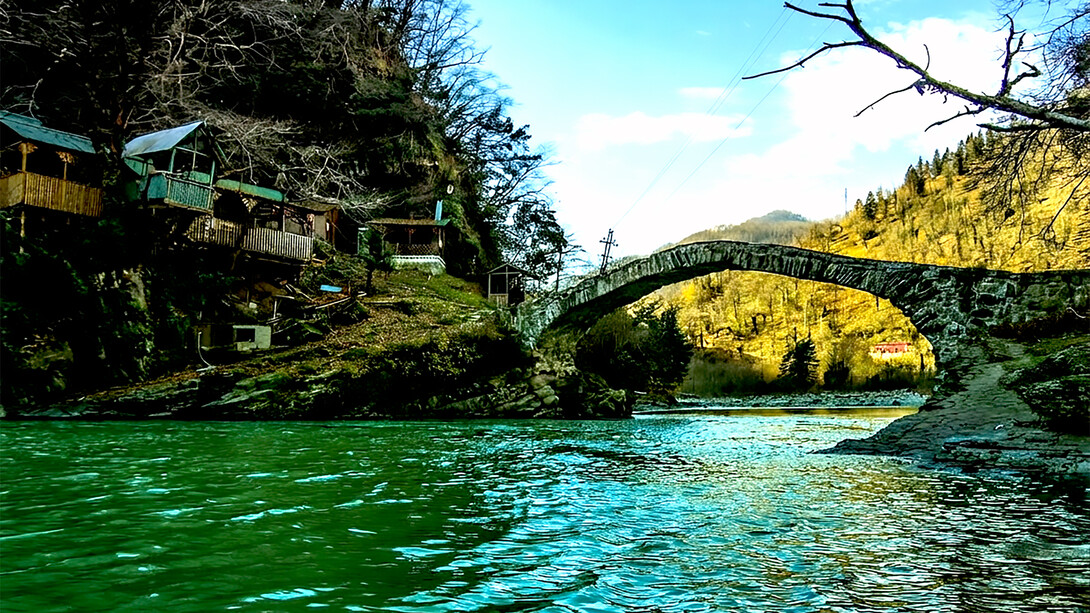
In Georgia’s western region of Adjara, a visit to a small family cellar became a reminder that behind a bottle of real wine are months of waiting, years of work and, sometimes, generations of memory.
There are products whose price we question almost automatically. Wine is often one of them.
Standing in a supermarket aisle, it is easy to look at two bottles and wonder why one costs several times more than another. They are both wine. They both contain fermented grapes. They may even come from the same country.
But during my summer travels through western Georgia, I was reminded how misleading that simplicity can be.
Among the places I visited was Buknari, a green village in Georgia's Adjara region, not far from the Black Sea. Here I came across Khimshiashvili Cellar, a family marani that quietly tells a much larger story about what it actually takes to make wine well.
It made me think about something we rarely consider when opening a bottle: good wine begins long before fermentation and involves far more than grapes. It begins with land.
Then come vines, weather, pruning, disease, rain, harvest, human judgement, fermentation, months of waiting, and the constant possibility that nature will refuse to cooperate.
And when wine is produced on a small scale, with traditional methods rather than industrial shortcuts, there is another ingredient that cannot be manufactured cheaply: time.
To understand a Georgian family cellar, one first has to understand that wine in Georgia is not simply an agricultural product. Georgia has an 8,000-year history of winemaking, making it one of the world’s oldest wine-producing countries.
In 2013, UNESCO inscribed the ancient Georgian qvevri winemaking method on its Representative List of the Intangible Cultural Heritage of Humanity. UNESCO's description is revealing because it does not treat the tradition simply as a technique. Knowledge passes between generations, families participate in harvesting and winemaking, and the cellar itself traditionally holds an important place in the family home.
This is important because the romantic image of Georgian wine can sometimes hide the difficult part. Tradition alone does not guarantee quality.
A qvevri does not automatically produce excellent wine simply because the method is ancient. Natural fermentation is not another word for effortless fermentation. On the contrary, when there is less technological intervention, cleanliness, healthy grapes, experience, timing, and judgement become even more important. Making wine is easy in one sense: grapes want to ferment. Making good wine is another matter entirely.
Adjara is not the first Georgian region international wine drinkers usually associate with wine. Kakheti dominates that conversation. Western Georgia tells a different story.
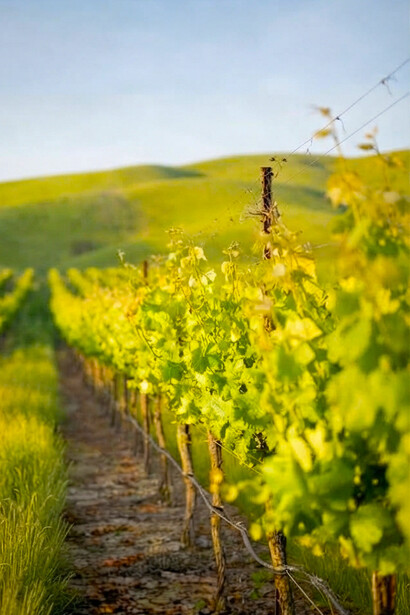
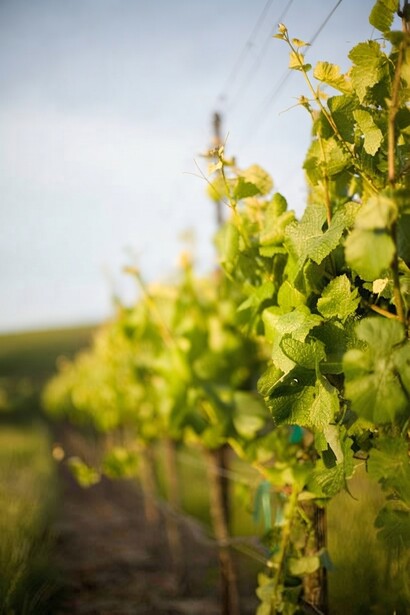
Buknari lies close to the Black Sea, in an extraordinarily humid environment. Khimshiashvili's coastal vineyard sits at only about 27 metres above sea level, while the family's second vineyard is approximately 50 kilometres away in Nigazeuli, high in mountainous Adjara, at around 850 metres. The contrast is remarkable.
Buknari is subtropical, warm and wet, with yellow clay-loam soil and annual rainfall reported by the cellar at around 2,500–3,000 millimetres. Nigazeuli offers cooler days, cold nights and a very different mountain environment.
One family therefore works with two very different expressions of Adjara: the Black Sea coast and the mountains.
The family's Tsolikouri vineyard in Nigazeuli was planted in 2012. According to Georgia's national export platform, the vineyard is surrounded by spruce and fruit trees, and the Tsolikouri produced from it is made by the traditional qvevri method.
When you hear these details while standing inside a cellar, wine stops feeling like a beverage assembled from a recipe. You begin to see it as agriculture. And agriculture is uncertainty.
The producer cannot order perfect September weather. He cannot negotiate with rain. He cannot accelerate the life of a vine because the market needs more bottles. This is perhaps the first reason genuinely handcrafted wine struggles to be extremely cheap: nature does not operate according to economies of scale.
The Khimshiashvili family's relationship with Adjara stretches much further back than the modern cellar. The family traces its history in the region through centuries, including figures such as Selim Khimshiashvili and Sherif Khimshiashvili, names connected with some of the most complicated chapters of Adjarian history. Historical scholarship has also examined Sherif Khimshiashvili's role during the political transformation of Adjara following the Russo-Ottoman War of 1877–1878. But the winemaking story in its present form began much later.
In 1991, an extraordinary year in Georgia's modern history, the family established a small wine cellar and vineyards in Buknari. Think about that date for a moment.
Georgia had just regained independence. The country was entering years of political and economic instability. Starting an agricultural project at such a moment was hardly the obvious business decision. Yet the family returned to the land.
In 2012 came the mountain vineyard in Nigazeuli. Bottled Tsolikouri followed. In 2016, the Batumi and Lazeti Eparchy recognised the property as a leading family vineyard. A year later, the family expanded the marani in Buknari and buried 25 qvevris beneath its floor. The cellar's annual capacity remained around ten tonnes rather than becoming a mass-production operation. That last figure interested me most. In modern business, success is so often expressed through expansion: produce more, sell more, and become larger. Wine can demand the opposite mentality. Sometimes protecting quality means knowing how much not to produce.
This was the part of the visit that changed the way I looked at the bottle on the table. A qvevri is a large, egg-shaped clay vessel buried in the earth. The earth surrounding it helps create a naturally stable environment for fermentation and ageing. At Khimshiashvili Cellar, the harvest is gathered by hand in September and October. Grapes enter the qvevri with their skins, pips and other grape solids. Fermentation begins spontaneously through naturally occurring yeasts rather than simply following an industrial formula. Then comes something modern life has made us increasingly uncomfortable with. Waiting.
The wine remains in contact with the grape material for months. At this cellar, the process can last around five to six months before the qvevri is opened in spring and the wine is transferred and eventually bottled. The family's cellar contains 25 qvevris buried beneath the ground.
UNESCO describes the traditional Georgian method in similar terms: pressed grapes, including juice, skins, stalks and pips, are placed in the qvevri, which is sealed so fermentation and maturation can continue underground for months. There is something almost radical about this process today.
We live in an economy built around acceleration. Food arrives in minutes. Products are manufactured by the million. Technology promises to remove waiting from almost every part of our lives. Wine refuses.
You can improve knowledge. You can improve hygiene. You can understand fermentation better. But you cannot command a vineyard to mature overnight, nor can you ask a wine that needs months underground to become ready next Tuesday. And every month that wine remains there represents capital, labour and risk locked inside a clay vessel without certainty about the final result. That changes how you understand price.
There are certainly well-made, enjoyable wines at accessible prices, and a high price is never proof of quality. Branding, prestige and scarcity can inflate the cost of wine just as they do with fashion, hotels or art.
But the opposite assumption is equally misleading: that carefully made wine should always be inexpensive. Consider what a small producer must absorb before a bottle reaches us.
The vineyard has to be maintained throughout the year. Grapes must survive weather and disease. Harvesting requires labour. Selection matters because poor fruit cannot magically become exceptional wine. Qvevris and cellars require maintenance and rigorous cleaning. Fermentation must be observed. Wine occupies valuable cellar space while it matures. Some vintages will inevitably be stronger than others. Then come bottling, storage, transport and distribution. And unlike an industrial producer making millions of bottles, a small family cellar cannot spread those costs across enormous volumes. Cheap wine is possible. Cheap handcrafted wine, made in small quantities with uncompromising attention at every stage, is much harder to explain economically. The bottle is only the final container. What we are really paying for is everything that happened before it was filled.
Yet Khimshiashvili Cellar would be difficult to understand through production methods alone. There is another element here that cannot be measured in litres. Hospitality.
The Georgian supra, the traditional table structured around food, wine, conversation and toasts, remains central to how the family receives visitors. A tasting can turn into stories; stories lead back to family history; wine leads to food; and somewhere along the way the distance between producer and visitor begins to disappear.
The cellar itself describes the principle simply: the person arriving should become a guest at the family table rather than remain merely a customer. Its visits are built around cellar walks, wines, local food and, for longer gatherings, a traditional supra with a tamada, the person who guides the sequence of Georgian toasts. That distinction matters.
Wine tourism can easily become theatre: picturesque barrels, carefully positioned glasses and a rehearsed story repeated every hour.
What stayed with me in Buknari was something less polished and more human, the feeling that the story existed before the visitor arrived.
There is independent testimony to this openness as well. Japanese wine enthusiast Kanji Sakemi wrote that after travelling around Adjara looking for a winery where he could learn traditional Georgian winemaking, he eventually discovered Khimshiashvili Cellar. He was impressed by its Tsolikouri and by the quality of its traditional qvevri production. After explaining that he wanted to learn winemaking, the family welcomed him to stay and work with them. He later moved to the area.
Perhaps that tells the story of Georgian wine culture better than any advertisement could. Knowledge survives because somebody is willing to share it.
One idea associated with Nugzar Khimshiashvili stayed with me after learning more about his approach. His philosophy is essentially that the human being does not manufacture wine in the conventional sense. The qvevri, grapes and natural process create it; the winemaker's role is to help.
A person who spent time learning at the cellar recalls Nugzar expressing precisely this philosophy: the wine is not made by the human being; the qvevri makes it, while the person assists the process. At first this can sound almost too poetic. But the more you think about traditional winemaking, the more practical the statement becomes.
The winemaker cannot invent the year's grapes after harvest. He cannot manufacture the soil. He cannot recreate the mountain nights of Nigazeuli inside a factory. His work is partly intervention, but equally restraint: knowing when to act, when to wait and when not to interfere.
I left Buknari thinking differently about something as ordinary as price. We have become accustomed to asking why quality products cost so much. Perhaps occasionally we should reverse the question.
How can something that took a year of agricultural work, months of maturation, specialised knowledge and generations of accumulated experience cost almost nothing?
Somewhere along the chain, somebody – the farmer, the worker, the material, the process or the quality itself – usually pays the difference. This does not mean the most expensive bottle is the best bottle. It means that genuine quality has a cost because care has a cost.
At Khimshiashvili Cellar, the story is visible beneath your feet: 25 Qvevris buried in the earth. Above them is a family table. Beyond them are vineyards at two dramatically different altitudes. Behind them are decades of modern winemaking and centuries of family history.
And inside them, wine is doing what wine has always done. It is taking its time.
Perhaps that is the real luxury today. Not an expensive label. Not a prestigious bottle. Not exclusivity. Time, land, knowledge — and the refusal to rush any of them.