English
 Español
 Français
 Deutsch
 Italiano
 Português
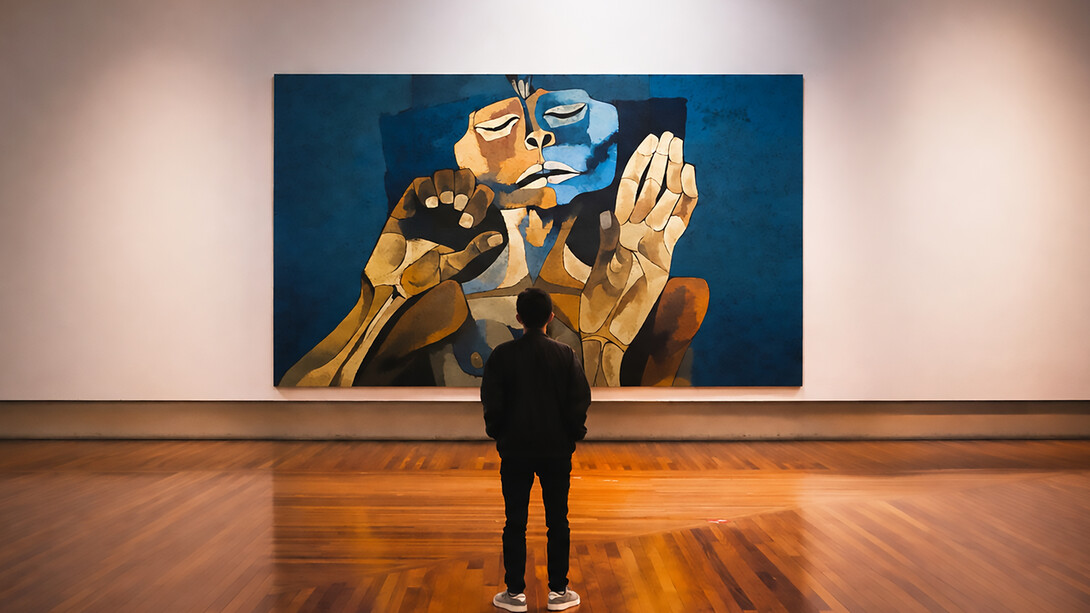
The introduction suggested that the question “What is art?” may be less straightforward than it first appears. This chapter examines why that question has proved so difficult to answer.
The purpose is not to propose yet another definition. It is to show why previous attempts have been both illuminating and incomplete. Each captures an important aspect of artistic experience, yet none succeeds in explaining the extraordinary diversity of art across cultures and throughout history. Their failure prepares the way for a different question:
What does art do?
How we answer this question matters. Definitions of art influence the way art is taught, exhibited, collected, funded, and evaluated. They shape the decisions of museums and galleries and affect the goals artists set for themselves. More fundamentally, they determine the questions that aesthetics attempts to answer.
Rather than viewing this history as a succession of failures, we will see it as a gradual exploration of a remarkably complex human activity—one that prepares the way for a different approach developed in the chapters that follow.
The problem of definition
One of the oldest answers to the question “What is art?” is that art is representation.
In ancient Greek thought, art was often understood through the idea of mimesis, or imitation. Plato and Aristotle both discussed art as a form of imitation, although they understood its value very differently. Aristotle saw mimesis as a natural and creative process through which art could reveal universal truths about human nature. Plato, on the other hand, he criticized artistic representation because it imitated the visible world, which he regarded as already removed from ultimate truth. Art, in this view, could become an imitation of an imitation.
During the Renaissance, mimesis acquired new power through the study of nature. Artists such as Leonardo da Vinci (1452–1519) sought to represent the visible world with increasing accuracy, using perspective, anatomy, light, shadow, and proportion to create convincing images of three-dimensional form.
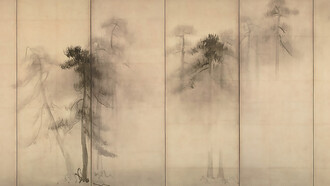
In East Asian traditions, however, representation often had a different aim. The goal was not simply to copy external appearance but to capture the inner vitality or spirit of nature. In Chinese painting theory, the idea of “spirit resonance” suggested that art should convey the living energy of its subject rather than merely reproduce its surface. In this sense, Eastern theories answered one of Plato’s objections to mimesis: the highest form of representation was not mechanical copying but the revelation of a deeper reality.
The representational theory of art remained powerful in the West for centuries and continues today in realism, naturalism, and photorealism. Yet another idea gradually became increasingly important: art as expression.
During the period of Western Romanticism (c. 1800–1850s), artists prioritized individual imagination and human feelings over accurate representation. They attempted to capture the sublime in nature: an aesthetic experience of awe, terror, and grandeur felt in natural environments that are completely beyond human scale, comprehension, or physical control.
This emphasis later became even more explicit during German Expressionism (c. 1905–1930), when artists rejected conventional representation in order to communicate anxiety, intensity, spiritual struggle, or inner turmoil.
In the twentieth century, the rise of modern art transformed the discussion again. With increasing abstraction, many artists and critics shifted attention away from subject matter and toward form itself.
One of the most influential statements of this view came from Clive Bell (1881–1964). In Art (1914), Bell argued that the essential quality of art was “significant form”: the arrangement of lines, colors, shapes, and relations that produce aesthetic emotion.
For Bell, the emotional power of art did not depend primarily on representation, narrative, or subject matter. It depended on formal relationships.
Bell was defending the post-Impressionist and early modernist painting of his time, in which visual organization had become increasingly independent of realistic depiction. His theory helped explain why an abstract or semi-abstract painting could move viewers even when it did not imitate the visible world. But the theory also created a problem. If formal organization alone defines art, then works whose power depends strongly on subject matter, memory, symbolism, ritual, or social meaning become harder to explain.
The history of aesthetics therefore presents us with a series of powerful but conflicting answers. Each identifies something real about art. None captures the whole phenomenon.
Modern dictionary definitions seem, at first, to solve the problem by combining several of these elements. They commonly describe art as something created by human beings through skill and imagination, often intended to express ideas, emotions, or beauty.
Such definitions sound reasonable because they include many qualities people instinctively associate with art. But they are also extremely broad. Human beings create many things that require imagination, technical mastery, and skill, yet we do not automatically classify all of them as art. Architecture, engineering, fashion, mathematics, scientific theories, and even elegant tools may display extraordinary creativity and beauty, but they are usually distinguished from what we conventionally call art.
The challenge, therefore, is not simply to identify qualities that artworks often possess. It is to explain what distinguishes art from other forms of human creativity and why art affects us in the distinctive ways it does.
This task has proved remarkably elusive.
Cluster theories and their limitations
Recognizing the difficulties faced by traditional definitions, some philosophers abandoned the search for a single defining feature and proposed what are known as cluster theories of art. According to this approach, something may count as art if it possesses enough features commonly associated with art, even if no single feature is strictly necessary.
One influential version was proposed by Denis Dutton (1944–2010) in The Art Instinct (2009). Rather than defining art by one property, Dutton identified twelve recurring characteristics found in artistic traditions across cultures:
Art gives direct pleasure.
It requires specialized skill.
It is made in recognizable styles.
It is valued for novelty, creativity, originality, and surprise.
It is judged and appreciated.
It represents or imitates real or imaginary experience.
It is set apart from ordinary life and made a special focus of attention.
Individuality or individual style is important.
It is emotionally saturated.
It involves intellectual challenge.
It gains significance from its place in history and tradition.
It provides an imaginative experience for both maker and audience.
Dutton’s approach represented a significant advance over simple definitions because it acknowledged the complexity and diversity of artistic practice. It recognized that art cannot easily be reduced to beauty, imitation, expression, or form alone.
Nevertheless, difficulties remain. Many accepted forms of art do not satisfy all, or even most, of Dutton’s criteria. Ritual objects may not be created primarily for pleasure. Found objects may involve little technical skill. Islamic geometric design often emphasizes pattern, symbolism, and spirituality rather than imaginative representation. Conceptual works may privilege ideas over visual appearance, while anonymous traditional crafts can possess profound artistic value despite lacking obvious individuality.
The philosopher Berys Gaut (2000) proposed another influential version of cluster theory. His list includes ten features:
Possessing positive aesthetic qualities.
Expressing emotion.
Being intellectually challenging.
Being formally complex and coherent.
Conveying complex meanings.
Exhibiting an individual point of view.
Exercising creative imagination.
Displaying a high degree of skill.
Belonging to an established artistic form.
Being made with the intention of creating art.
The advantage of this approach is that it reflects the diversity of artistic practice while avoiding rigid boundaries. A Renaissance altarpiece, a Japanese woodblock print, an Aboriginal ceremonial object, and a contemporary installation may have little in common individually, yet each may possess enough overlapping characteristics to belong within the broad category of art. The system is also flexible enough so that as new forms of art emerge, they can be included in the definition by expanding the number of criteria.
However, there are several problems with this approach:
Since no single property is required, determining exactly how many criteria must be satisfied to cross the threshold into "art" is fundamentally arbitrary.
Some criteria are specific to one culture and may not apply to others. For example, “exercising creative imagination” is valued in Western societies, but not in certain non-Western societies.
Other criteria, such as “expressing emotion” or “being intellectually challenging," are characteristics of other things that humans create. Therefore, the theory does not fully explain what fundamentally separates artworks from those other things.
If the list can always be expanded to include new cases, then the boundary between art and non-art becomes potentially increasingly unclear. Almost anything can be included if it shares enough similarities with previously accepted works.
More fundamentally, cluster theory attempts to classify artworks rather than explaining why artworks affect us. It tells us which objects may belong to the category of art but provides less insight into the processes that make artistic experiences meaningful.
This distinction points toward a deeper question. Are philosophers searching for the essence of artworks when they should instead be investigating the mechanisms through which artworks influence the human mind?
The challenge of contemporary art
The twentieth century made this problem even more apparent, as artists themselves began deliberately challenging every traditional assumption about the nature of art.
Throughout history, artists have challenged established conventions and expanded the boundaries of artistic practice. The Impressionists rejected the standards of the French Salon and developed a new visual language based on the direct observation of light and atmosphere. Their innovations transformed painting while preserving the assumption that a work of art was something created through artistic skill and visual design.
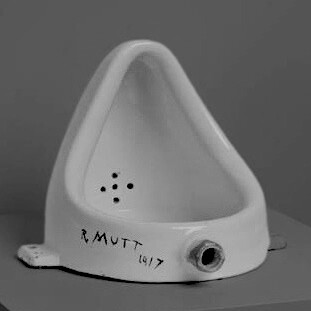
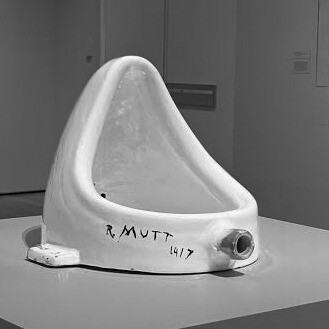
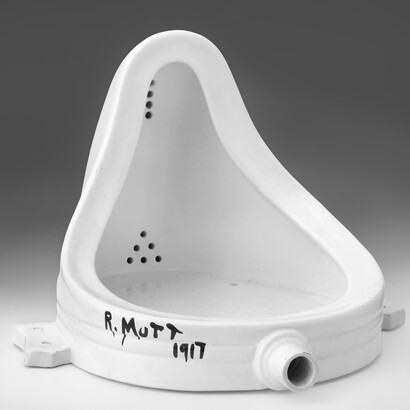
A far more radical challenge emerged in 1917 when Marcel Duchamp (1887–1968) submitted a porcelain urinal, entitled Fountain, to an exhibition organized by the Society of Independent Artists in New York.
At first sight, the object appears entirely ordinary. It was not carved, painted, or modeled by the artist but selected from an industrial catalog and presented in a gallery. Its significance lay not in its craftsmanship but in the question it posed.
If an everyday manufactured object can become art because an artist chooses to exhibit it, what distinguishes art from ordinary life?
Duchamp’s gesture shifted attention away from the physical object and toward the idea behind it. The artwork no longer resided solely in visual qualities but in the act of selection, naming, and change of context. The artist’s decision became part of the artwork.
The implications were profound.
For centuries, philosophers had sought to define art through qualities inherent in the object itself. Duchamp showed that an object possessing none of the traditional qualities associated with art could nevertheless occupy a central position within its history.
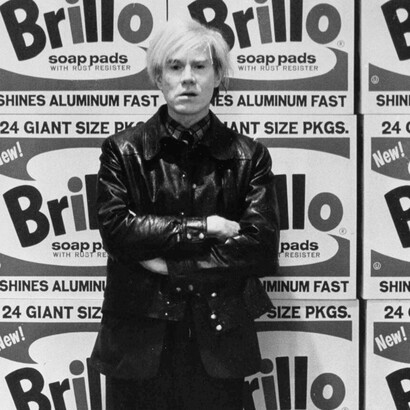
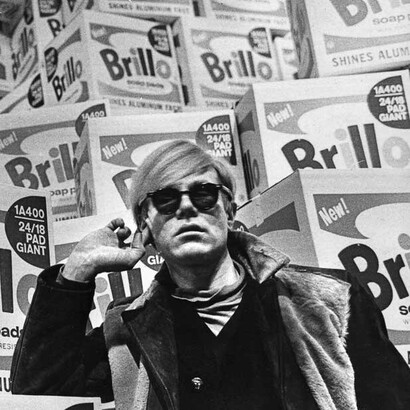
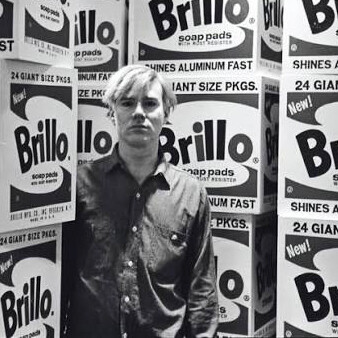
The same challenge later appeared in the work of artists such as Andy Warhol (1928–1987), whose Brillo Boxes were visually almost indistinguishable from ordinary commercial packaging, and in conceptual art, where the idea itself often became the primary artistic medium.
Contemporary art therefore exposed a fundamental weakness shared by traditional definitions. Every proposed criterion could be rejected while the resulting work could still be accepted as art. Beauty could be rejected. Representation could be rejected. Technical skill could be rejected. Even the physical object itself could be rejected.
Rather than resolving the philosophical problem, twentieth-century art made it more difficult.
The natural response was to shift attention away from the artwork itself and toward the cultural and institutional context within which it is understood. This led to one of the most influential philosophical approaches of the twentieth century: the artworld theory.
The artworld theory
Perhaps the most influential philosophical response to the challenges of modern art came from the American philosopher Arthur Danto (1924–2013).
Reflecting on works such as Andy Warhol’s Brillo Boxes, Danto (1964) observed that two objects can appear visually identical while belonging to entirely different categories. One may be an ordinary commercial package; the other may be a work of art displayed in a gallery. The difference cannot lie in physical appearance alone.
Danto therefore argued that an artwork derives its identity from its meaning and its place within a broader cultural and theoretical context. To understand a work of art is to understand the ideas, history, and interpretations that surround it. Art is distinguished not simply by what we see but by what we know.
This insight represented an important advance in aesthetics. It recognized that artworks are not merely physical objects but participants in an ongoing cultural conversation. Their significance often depends on historical context, artistic intention, and shared interpretation.
A related approach was developed by George Dickie (1926–2020), whose Institutional Theory proposed that something becomes art when it is accepted as such by the institutions of the art world: museums, galleries, critics, curators, collectors, and artists (Dickie, 1974). According to this view, art is whatever the art world recognizes as art.
These theories successfully explain why an ordinary object displayed in a museum may be regarded as a work of art while an identical object encountered in everyday life is not. They also acknowledge that artistic meaning frequently depends on cultural knowledge and historical understanding rather than visual appearance alone. As accounts of how the contemporary artworld functions, they are insightful and influential.
But as definitions of art, they encounter a serious difficulty. If an object becomes art simply because it is designated or accepted as art by the appropriate institutions, then there is no intrinsic limit to what may be included. Almost any ordinary object may become art if the art world accepts it.
The theory therefore struggles to distinguish art from non-art. Instead of identifying the properties or effects that make something art, it transfers the authority of definition from the artwork itself to a social institution.
More importantly, institutional recognition and aesthetic experience are different questions. A museum may declare an object to be art, but that declaration does not explain why a landscape painting evokes tranquility, why a Bach fugue produces intellectual delight, or why a portrait moves us to compassion.
The question that remains unanswered is not only whether an object belongs to the art world but also why human beings experience certain objects, images, sounds, performances, and symbols as aesthetically powerful in the first place.
The problem of definition becomes even more apparent when we move beyond the assumptions of modern Western aesthetics and examine artistic traditions from other cultures.
The diversity of artistic behavior
Many aesthetic theories have developed from particular cultural and historical contexts and therefore reflect the artistic practices most familiar to their authors. Yet the world’s artistic traditions encompass an immense variety of forms, purposes, and aesthetic priorities. A definition that appears convincing within one tradition may prove inadequate when confronted with the broader diversity of human artistic behavior.
Anthropological research reinforces this point. In many societies, creative activity is inseparable from ritual, religion, craftsmanship, storytelling, music, dance, and everyday social life rather than existing as an autonomous category of fine art (Dissanayake, 1988; Morphy & Perkins, 2006).
Aboriginal sand paintings, African masks, Māori body decoration, Native American textiles, Islamic geometric designs, and Amazonian ritual objects frequently function within ceremonies, systems of belief, expressions of cultural identity, or practices of social cohesion. They are not simply objects to be admired. They are active participants in communal life (Dissanayake, 1992; Morphy & Perkins, 2006).
From this perspective, artistic behavior appears less like a separate cultural institution than an integral part of human social life. Music, dance, storytelling, body decoration, ritual, and visual design become ways of marking experiences as socially and emotionally significant. Art is something people collectively do, not only something people passively observe (Dissanayake, 2000).
These observations reveal a limitation shared by many philosophical definitions of art. Theories developed from particular artistic traditions often identify important aspects of those traditions but prove difficult to generalize across the full diversity of human artistic behavior.
Archaeology extends this perspective even further. Long before the emergence of civilization, human beings and earlier hominins used ochre pigments for body ornamentation and produced engravings, musical instruments, carvings, and symbolic artifacts whose practical function appears secondary to their social, symbolic, or aesthetic significance. The habitual use of red ochre appears by about 165,000–140,000 years ago and was probably used to decorate the body or face or to color clothing and other materials (McBrearty & Stringer, 2007; Wolf et al., 2018).
Such discoveries suggest that symbolic and aesthetic behavior accompanied the emergence of modern human cognition rather than appearing as a late cultural invention (Henshilwood et al., 2002; Lewis-Williams, 2002; Mithen, 2005).
The cumulative evidence points toward a remarkable conclusion. The impulse to create art appears to be a universal feature of all human societies, even though the forms it takes, the purposes it serves, and the meanings it carries vary enormously across cultures. Evolutionary accounts similarly argue that artistic behavior emerges from cognitive and social capacities shared by human populations (Dissanayake, 2000; Boyd, 2009; Dutton, 2009).
Conclusion: from “what is art?” to “what does art do?”
Every major theory of art has identified something important. None of these insights should be discarded. Yet none has provided a universal definition of art. Every theory explains certain forms of artistic experience while struggling to account for others. The extraordinary diversity of human artistic behavior continually resists reduction to a single defining characteristic.
Seen in this way, the history of aesthetics takes on a different meaning. Rather than representing a succession of failed theories, it becomes a gradual discovery of different aspects of artistic experience. These are not rival explanations. They are partial insights into a far richer phenomenon.
This persistent difficulty suggests that the question itself may need to change. For more than two thousand years, philosophers have asked the following:
- What is art?
Perhaps a more productive question is:
- What does art do?
Rather than searching for a single defining essence, we can begin investigating the many ways in which artworks engage perception, thought, emotion, imagination, memory, and social experience.
The next chapter begins that investigation by asking why art and science, so often separated in modern thought, need to be brought back into conversation.
References
Bell, C. (1914). Art. Chatto & Windus.
Boyd, B. (2009). On the origin of stories: Evolution, cognition, and fiction. Harvard University Press.
Danto, A. C. (1964). The art world. The Journal of Philosophy, 61(19), 571–584.
Dickie, G. (1974). Art and the aesthetic: An institutional analysis. Cornell University Press. Dissanayake, E. (1988). What is art for? University of Washington Press.
Dissanayake, E. (1992). Homo aestheticus: Where art comes from and why. Free Press. Dissanayake, E. (2000). Art and intimacy: How the arts began. University of Washington Press.
Dutton, D. (2009). The art instinct: Beauty, pleasure, and human evolution. Bloomsbury Press.
Gaut, B. (2000). “Art” as a cluster concept. In N. Carroll (Ed.), Theories of art today. University of Wisconsin Press.
Henshilwood, C. S., d’Errico, F., Yates, R., Jacobs, Z., Tribolo, C., Duller, G. A. T., Mercier, N., Sealy, J. C., Valladas, H., Watts, I., & Wintle, A. G. (2002). Emergence of modern human behavior: Middle Stone Age engravings from South Africa. Science, 295(5558), 1278–1280.
Lewis-Williams, D. (2002). The mind in the cave: Consciousness and the origins of art. Thames & Hudson.
McBrearty, S., & Stringer, C. (2007). Paleoanthropology: The coast in color. Nature, 449, 793–794.
Mithen, S. (2005). The singing Neanderthals: The origins of music, language, mind, and body. Weidenfeld & Nicolson.
Morphy, H., & Perkins, M. (Eds.). (2006). The anthropology of art: A reader. Blackwell Publishing.
Wolf, S., Dapschauskas, R., Velliky, E., Floss, H., Kandel, A. W., & Conard, N. J. (2018). The use of ochre and painting during the Upper Paleolithic of the Swabian Jura in the context of the development of ochre use in Africa and Europe. Open Archaeology, 4, 185–205.