English
 Español
 Français
 Deutsch
 Italiano
 Português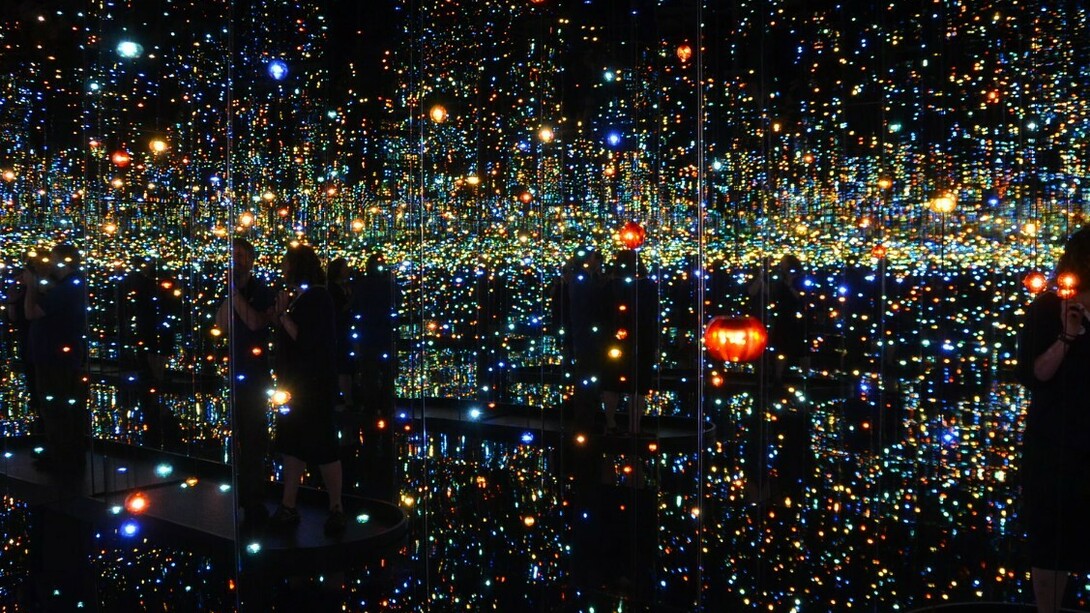
There is a question that surfaces with weary regularity whenever contemporary art is discussed in mixed company. It arrives with the faint air of provocation disguised as curiosity: “But is it art?" The phrase has the peculiar ability to halt a conversation rather than illuminate it. One senses not an invitation to inquiry but the prelude to a contest.
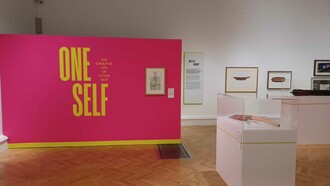
The mood of the titular captures the spirit of such exchanges as resembling the familiar challenge in a 1970s pub: “Come and have a go if you think you’re art enough.” The image is painfully apt. One is transported to a (now probably defunct) smoky local boozer, being “offered out” for a scrap over an argument that no one can win. My own response was, and still is, less indignation than a certain sinking of the heart. The question gestures toward an answer that cannot exist, because it is not, in the end, an intelligible question. It was popular in British art schools once, though, fuelled by the drive for articulacy and content, partly for fear of appearing foolish, whimsical, or ‘unrigorous’ in one’s practice. The cardinal sin and most hurtful accusation, of course, that can be leveled at any ‘serious’ artist is the label vanity publisher, egocentric/eccentric, fanciful, uncritical, nepo-baby, and the most damning of all, untalented.
The Second World War also had a lot to do with it; whilst it may be a bit of a generalization, the generation of gifted artist/teachers and art school lecturers emerged from that experience as traumatized, damaged, and deeply sensitized individuals. Leslie Cole, Ed Middleditch, Ruskin Spear, and Edward Bawden all returned from military service to become influential artists and educators. No wonder they took art so seriously. But behind the apparent due diligence of the title question lurks the comforting fantasy that somewhere there exists a reliable tribunal of taste capable of issuing authoritative judgments about what qualifies as ‘art’ or ‘real art’ or ‘good art.' Yet history offers little evidence or encouragement to such hopes. The very works that now populate museums with quiet authority were often greeted initially with bewilderment, ridicule, or moral alarm.
Consider, for instance, the peculiar gravity that surrounded the work of Joseph Beuys: To encounter his installations—felt, fat, chalkboards scrawled with diagrams of obscure cosmologies—was to step into a territory where sculpture, political theatre, and mysticism seemed indistinguishable. For some observers he appeared a visionary who had reimagined the very scope of artistic practice; for others he was an inspired confidence trickster, a charismatic conjurer of philosophical fog trading as the man who quite literally fell to earth from his role as a pilot in the Luftwaffe. The disagreement has never quite resolved itself, and perhaps it should not, but museums, mortality, and collectors have lent credibility to what was in reality a precarious practice.
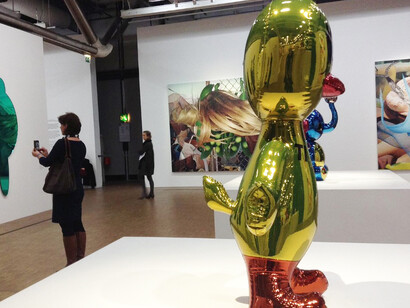
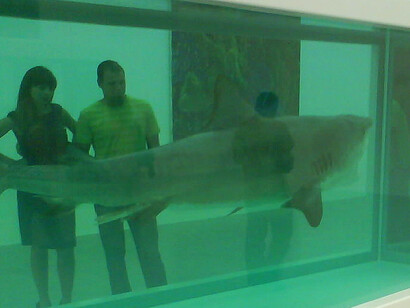
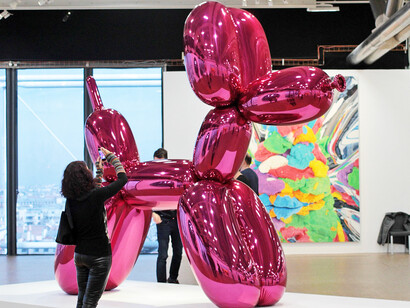
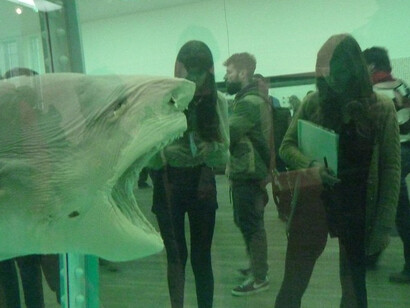
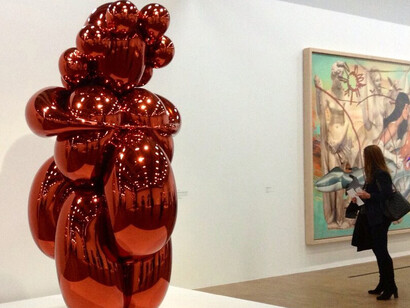
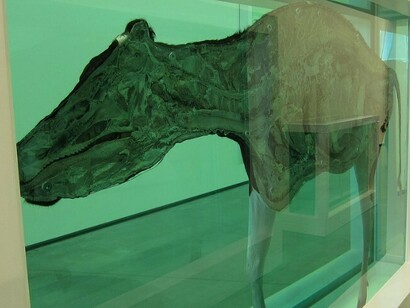
That same division of opinion follows many artists who arrived later. Damien Hirst’s vitrines, with their suspended animals hovering lifeless in antiseptic blue, have been described alternately as meditations on mortality and as spectacles of immaculate emptiness. Jeff Koons, polishing consumer kitsch to mirror-like perfection, inspires equal measures of admiration and disbelief. One group sees a forensic reflection on the psychology of consumption; another sees merely the triumph of immaculate surfaces.
The same unsettled territory surrounds artists whose work engages more directly with personal narrative or political tension. Tracey Emin’s confessional installations, so openly autobiographical, have been read as courageous acts of vulnerability and dismissed as diary entries placed under museum lighting. Marina Abramović, subjecting her body to prolonged endurance, evokes for some viewers a profound exploration of human limits, while for others the performances resemble austere theater sustained by reputation.
But without wishing to degenerate into lists and descriptions rather than arguments, and just when we hoped the question/provocation of the title was dead, along comes Maurizio Cattelan. Cattelan’s gestures, extraordinary, beautiful, and varied, hover somewhere between satire and absurdity. It is unfortunate that a banana taped to a gallery wall became synonymous with an artist of enormous depth and talent. Who knew that a Gaffa-taped banana as artwork could command an extravagant price? Itgaffer-taped seemed to many to be less a gravity-defying sculpture than a philosophical prank played upon the art market. Yet perhaps that was precisely the point: the work effectively exposed the machinery of value simply by participating in it.
Questions of authenticity complicate matters further. Artworks appear to become authenticated through enigmatic signals, whilst art objects themselves can be fugitive and their significance/longevity unstable. ‘Authentication’ relies partly on commodification, partly on rumor, and sometimes on notoriety. The question of provenance—once the sober domain of museum registrars—suddenly acquires the drama of detective fiction. Enter Yayoi Kusama, whose mirrored rooms filled with endless polka-dotted reflections have become global tourist selfie destinations. Standing inside them can feel like entering a hallucination carefully engineered for a cell phone lens. Yet behind the spectacle lies a lifelong exploration of obsessive perception. The popularity of her environments, particularly in the age of social media, provokes its own skepticism: can something so widely loved retain artistic seriousness? But perhaps the question says more about our rampant suspicion of pleasure and content-fueled cynicism than about Kusama’s achievement.
Back in the UK, Linder’s (Linder Sterling) work reminds us that contemporary art did not always inhabit such polished institutional or media-savvy settings. Her photomontages emerged from the combustible Manchester of the late 1970s, where the visual language of magazines collided with the abrasive energy of punk. Domestic imagery was spliced with fragments of pornography and advertising until the familiar became suddenly disquieting.
The work shared the atmosphere of the clubs and rehearsal rooms around it, where music and image fed off the same raw cultural electricity. From her lead role in Ludus to the now legendary Buzzcocks (Orgasm Addict) and Magazine (Real Life) record sleeves, now in her 70s, her current recognition feels a bit belated and a bit of a lifetime achievement award for being largely unrecognized by the Establishment. In a similar vein, and to inject a note of reality, I had the privilege of working with the late Helen Chadwick (on Ego Geometria Sum The Labours I–X) in the early 1980s, when everyone within her immediate orbit seemed to think she was a) temperamental and b) overemotional. (Just to say in defense that the making of Geometria was technically very difficult and extremely stressful). Chadwick approached the question of artistic legitimacy from yet another angle.
Her installations explored the fragile border between beauty and repulsion, drawing on bodily forms and organic processes that seemed at once intimate and unsettling. Encountering her work was to realize how thin the line can be between fascination and discomfort. Placed side by side, these artists share very little in formal terms. Their mediums, intentions, and temperaments diverge widely. What unites them is their remarkable ability to divide opinion—to generate the very uncertainty that prompts the weary question with which we began.
Perhaps what I am asserting by implication is that uncertainty is not a defect but a condition of art’s vitality. If every work arrived accompanied by universal agreement, the gallery would resemble a furniture showroom (some do, of course) rather than a site of intellectual adventure. Disagreement, in other words, is not an unfortunate side effect of art but one of its primary engines.
The difficulty is that we now experience this argument within a landscape of unprecedented abundance. Whatever the 12th century lacked in visual stimulation, our own moment more than compensates. Images proliferate with astonishing speed. Social media platforms disgorge an endless cascade of photographs, performances, installations, and conceptual gestures. The challenge is no longer access but navigation.
Faced with such excess, it is tempting to look for reliable guides—to defer to curators, critics, or market signals that promise clarity. Yet reliance on such authorities risks surrendering the very independence that art requires from its audience. Taste, after all, cannot be outsourced without losing something essential.
Which returns us to my own melancholy observation about being invited to “have a go.” The challenge embedded in the phrase reflects a misunderstanding of what ‘aesthetic conversation’ ought to be. Art is not a boxing ring in which rival factions trade blows until a winner emerges. It is closer to an ongoing philosophical discussion, one that rarely produces final answers but continually sharpens perception and throws light onto intellectual and emotional shadowlands. For my part, as a scarred participant in the interrogative asceticism of British art schools in the 1980s, I have no desire to descend into the swamp of taste arbitration or the murky rituals of connoisseurship.
The only workable solution is the simplest one. Encounter the work. Spend time with it. Argue with friends/opponents if necessary. Change your mind occasionally. Above all, resist the temptation to accept someone else’s verdict as definitive. Advocate for art endlessly. In a culture drowning in unmediated “content creation,” the responsibility falls inevitably on the viewer. Sort it out for yourself—and do not trust anyone (including myself) to do it for you.