English
 Español
 Français
 Deutsch
 Italiano
 Português
World Art Dubai has, over the past decade, established itself as a singular phenomenon within the global art fair ecosystem: a vast, energetic, and commercially driven platform where emerging artists meet an exceptionally diverse collector base in one of the world’s most dynamic cities. Positioned at the crossroads of Europe, Asia, and Africa, Dubai offers not only geographic centrality but also a unique cultural permeability—an environment where new artistic voices can gain immediate visibility across regions and markets.
More than a marketplace, the fair functions as a testing ground and launchpad. It reflects the acceleration of the MENA art scene while simultaneously absorbing practices, aesthetics, and professional standards from across the globe. Its scale, diversity, and accessibility generate a particular curatorial tension: how to maintain openness while raising quality and how to remain inclusive while ensuring coherence. It is precisely within this tension that World Art Dubai has been redefining its identity.
The 2026 edition of World Art Dubai, taking place from 23 to 26 April in Dubai, will once again welcome collectors, artists, and audiences from across the globe, with visitor information and ticket access to be released shortly via the official platform.
In this conversation, we speak with Gottfried Eisenberger, curator of World Art Dubai since 2021, about the fair’s evolution from an accessible marketplace to a structured, internationally ambitious platform, its role within a rapidly expanding regional art infrastructure, and the curatorial strategies shaping its current consolidation phase.
Since 2015, how has the identity of World Art Dubai evolved, and what have been the key moments that have shaped its curatorial direction? What kind of fair does it aspire to be today?
World Art Dubai has evolved from a small, accessible marketplace into a major international platform for emerging artists.
I first visited in 2016 as a visitor, when it was still a tiny fair in its second edition. I returned in 2019 as an exhibitor and could clearly see the shift: World Art Dubai was becoming an emerging art hub in the Middle East and a real stepping stone for artists from the region and beyond to gain visibility and move their careers to the next level.
Since 2019, I’ve been involved in shaping the fair in multiple roles as an advisor, curator, exhibitor, and technology supplier. It’s been incredible to watch it grow into one of the world’s largest fairs by exhibitor numbers and the go-to destination in the Middle East for emerging artists to get discovered.
Today, it aspires to be the leading commercial art fair for emerging artists globally, and I believe the UAE’s economic strength and geographic position give World Art Dubai the potential to become the most important emerging artist fair in the world.
How has the relationship between artists, galleries, and audiences from the MENA region and the international art scene evolved through the fair? Has this role changed over time, or is it still in transformation?
World Art Dubai has helped tighten the link between MENA artists and the international art ecosystem by creating a low-barrier, high-visibility marketplace where artists, galleries, and audiences actually meet, talk, and transact. Over the years, I’ve seen more regional artists present themselves with stronger pricing logic, clearer storytelling, and more professional booths, while international exhibitors increasingly use Dubai as a gateway to collectors, partners, and new networks across the Gulf.
This role is definitely still in transformation. The clearest signal is what’s happening around the wider region: Art Basel launched Art Basel Qatar, debuting in Doha in February 2026, and Abu Dhabi Art is set to evolve into Frieze Abu Dhabi starting with the 2026 edition. That tells you everything about the market’s trajectory. It’s booming, and the future is bright.
In that context, World Art Dubai’s “emerging artist engine” becomes even more important. It doesn’t just reflect demand; it helps build the pipeline: new artists, new collectors, and a more confident, internationally readable MENA art scene that can keep growing year after year.
What have been the main challenges the fair has faced in recent years, and how have they influenced your working methods as well as your strategic and curatorial decisions?
One of the biggest challenges in recent years has been maintaining a consistent level of quality while operating at World Art Dubai’s scale and diversity. With exhibitors from more than 65 nationalities, you naturally get an enormous mix of genres, mediums, aesthetics, and cultural approaches to presentation. That diversity is a strength, but it also creates friction: different expectations around booth design, labeling, pricing transparency, edition control, and what “professional presentation” means.
This has directly shaped my working methods and my curatorial approach. I’ve become much more systematic and standards-driven: clearer pre-selection criteria, stronger pre-fair guidance, and more structured checks around booth plans, artwork lists, and display logic. Curatorially, it means prioritizing coherence and buyer readability, not just artistic variety. Strategically, it means protecting the visitor experience by pushing for consistent presentation standards, encouraging disciplined editing of what’s shown, and making sure the fair feels curated even at high volume.
In short, the challenge has been turning global diversity into a compelling, high-quality, fair experience, and it has made my decisions more focused on clarity, consistency, and professional standards without losing the openness that makes World Art Dubai unique.
What is the guiding concept of this year’s edition, and what sets it apart from previous ones?
This year’s guiding concept is the same clear idea that has always defined World Art Dubai: “Where the World’s Art Comes Together.”
What sets this edition apart is how strongly that promise is realized at scale. We’re bringing an exceptionally broad mix of artists and galleries from across the globe into one place and presenting them in Dubai, a true cultural and commercial melting pot for the Middle East. The result is a fair that feels both international and locally relevant: global diversity, meeting a fast-growing regional collector base, in a city that naturally connects Europe, Asia, Africa, and the wider MENA region.
Are there any emerging trends—such as new media, new geographies, or new artistic practices—that have become particularly visible over the past two years and that you expect to be reflected in this edition?
Over the past two years, World Art Dubai has made several emerging trends especially visible, and I expect them to be strongly reflected again in this edition.
New geographies: We have seen a noticeable increase in applications and participation interest from the USA and Canada, and increasingly South America. For an emerging artist fair, that matters a lot because it signals that Dubai is not only a MENA hub but also a global launchpad. It strengthens World Art Dubai’s position as a leading international meeting point for emerging talent.
New practices and formats: Alongside this geographic expansion, the fair continues to reflect how emerging artists present work today: more cross-medium approaches, a stronger emphasis on highly finished, collector-friendly series, and a growing confidence in bold, contemporary visual language that performs well in a public fair context.
Overall, the trend is clear: World Art Dubai is becoming even more global in who applies, who exhibits, and who collects, while staying focused on discovery and market access for emerging artists.
Does this year’s edition represent a shift in direction for World Art Dubai, or does it instead mark a consolidation of the path you have been developing?
This year’s edition is less a sudden shift and more a consolidation of the direction we’ve been building for years.
It strengthens World Art Dubai’s core position as the Middle East’s key marketplace and launchpad for emerging artists, while pushing further on what matters most at this scale: clearer quality standards, more professional presentation, and an even more international exhibitor mix. In other words, it confirms the path and amplifies it.
What kind of collectors attend World Art Dubai today? Has their approach to viewing and acquiring art changed compared to the past?
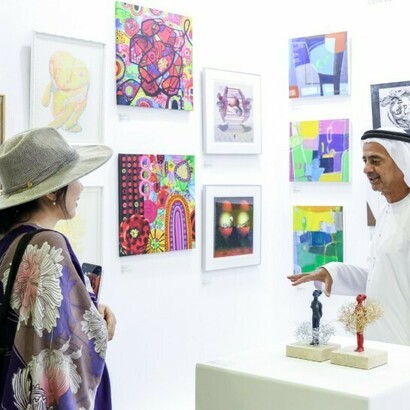
World Art Dubai attracts a very broad collector base today, reflecting Dubai itself: collectors and buyers from many nationalities, age groups, and demographics, from first-time buyers to seasoned collectors looking for discovery and direct access to artists.
One clear change compared to the past is the rise of a younger audience that actively values and buys art. They tend to be faster in decision-making, more open to new styles, and more driven by personal connection and the story behind the work, not only by established names. Overall, the collector mix has become more diverse and more dynamic, which is exactly what you want for a fair built around emerging artists.
From a curatorial perspective, what do you find to be the most representative, distinctive, or surprising aspect of this year’s edition?
From a curatorial perspective, the most representative and genuinely surprising aspect of this year’s edition is the sheer scale.
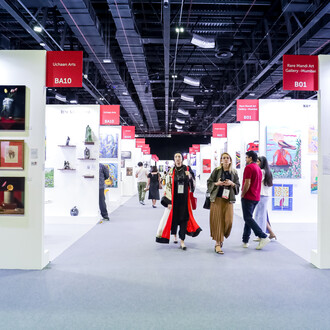
Every year, World Art Dubai grows again, and it still amazes me how consistently the fair expands while keeping its core identity intact: a place where a huge diversity of emerging artists can be seen, compared, and collected in one visit. That size is not just a number. It creates a unique curatorial challenge and also a unique visitor experience, because it turns the fair into a true global survey of emerging art in one city.
This year, the fair appears more structurally curated. What motivated this choice, and how does it shape the experience for visitors?
We pushed for a more structurally curated approach this year to raise the overall presentation and visitor experience without losing the fair’s emerging artist spirit.
At this scale and diversity, structure becomes essential. It helps visitors navigate more easily, compare works more clearly, and engage longer, while exhibitors benefit from clearer expectations around presentation, storytelling, and professionalism. The goal is not to make the fair feel exclusive or restrictive but to make it feel more coherent, readable, and compelling for both new buyers and experienced collectors.
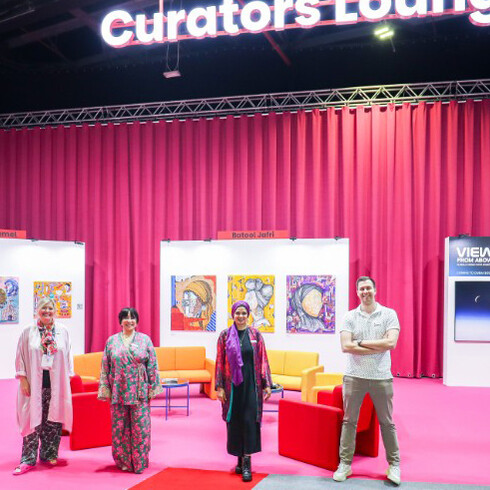
A key factor is that we have a strong, well-balanced curatorial team with expertise across different fields and artistic practices. That mix allows us to apply consistent standards while still respecting the wide range of styles, cultures, and mediums that make World Art Dubai what it is.
Beyond the exhibitors, how do the talks and live programming enhance the fair experience? What elements of this year’s program should audiences be especially attentive to?
Talks and live programming add an important extra layer to World Art Dubai, but they should remain exactly that: an enhancement, not the main event. The core of the fair must always be the art, the exhibitors, and the direct connection between artists and audiences.
When programming is done well, it elevates the visitor experience in two ways. First, it creates energy and rhythm in the hall through performances and stage moments that make the fair feel alive. Second, it delivers real value, especially for emerging artists, through practical and inspiring talks that support professional growth, visibility, and career development.
This year, audiences should be especially attentive to two elements:
Main stage performances, which add atmosphere and draw wider audiences into the fair experience.
Artist- and art collector-focused talks and panels, particularly those offering actionable insights on building an art career or collection, positioning works or collections, and navigating the market.