English
 Español
 Français
 Deutsch
 Italiano
 Português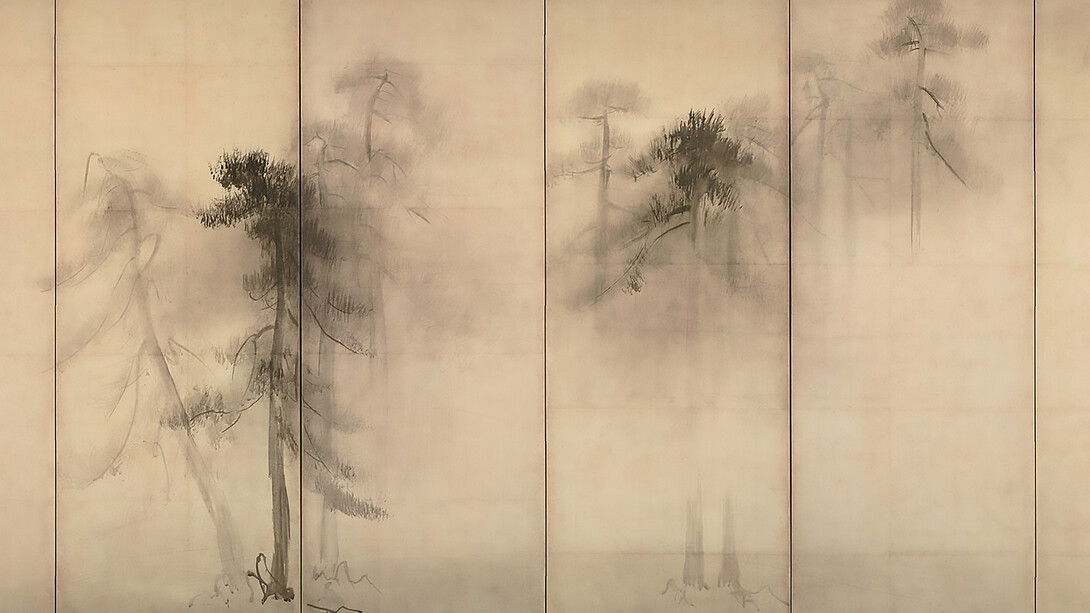
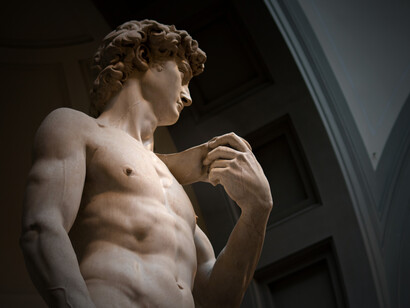
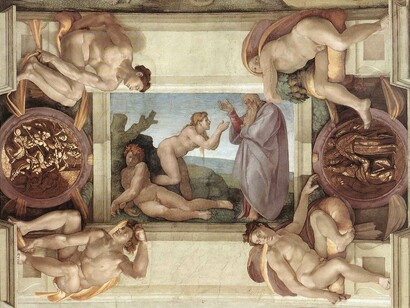
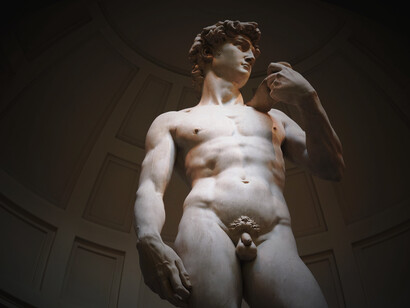
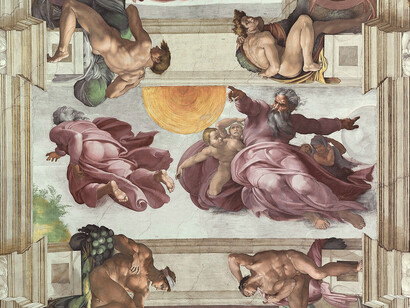
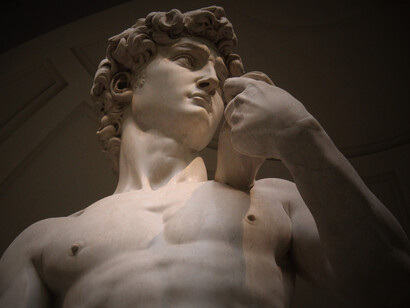
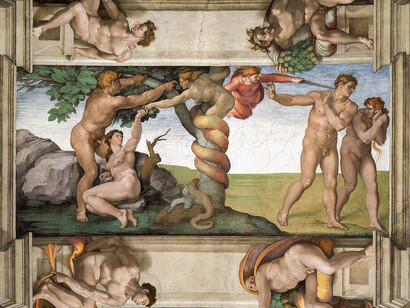
When I was seventeen years old, I made my first trip to Italy. In Florence, I encountered Michelangelo’s David. In Rome, I stood before the Pietà in St. Peter’s Basilica and gazed up at the extraordinary ceiling of the Sistine Chapel. Seeing these masterpieces firsthand was a profound experience. It awakened in me a lifelong dedication to art.
Many years later, I returned to Rome and experienced an even stronger emotional response to the Pietà. More recently, at an exhibition in Paris, I found myself captivated by Valentin Serov’s magnificent portrait of the artist Konstantin Korovin. Standing before these works, I was overwhelmed by their beauty and moved to tears.
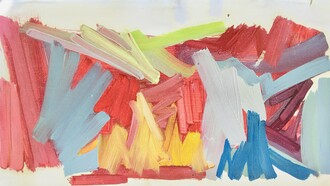
Visitors to the Rothko Chapel in Texas frequently describe being deeply affected by the paintings they encounter there. Some report tears, while others speak of a powerful sense of contemplation or spiritual reflection. Rothko himself understood the emotional intensity that his work could evoke. Whatever the precise circumstances, the chapel has become a powerful example of the way abstract painting can produce unusually deep emotional responses.
What is happening in these moments? What is it about great works of art that can affect people so deeply?
These questions have occupied me for most of my artistic life.
For more than two thousand years, philosophers have attempted to answer a deceptively simple question:
What is art?
The answers have been remarkably diverse. Some have argued that art is the imitation of nature, others that it is the expression of emotion, the embodiment of beauty, the communication of ideas, or the product of social institutions. Every generation has proposed new definitions, yet none has proved capable of explaining the extraordinary diversity of human artistic experience.
A Renaissance altarpiece, a Chinese landscape, a Greek tragedy, a Bach fugue, an Aboriginal painting, a Japanese garden, an African mask, and a Rothko canvas can all move us profoundly, yet they do so in very different ways. Any theory that explains one category of art often struggles to explain another.
Perhaps the problem lies not with the answers but with the question itself.
Rather than asking only What is art? This book asks two further questions: What does art do? And how does art work?
That change transforms the discussion. Instead of searching for a single abstract definition, we can begin investigating the biological and psychological mechanisms through which artworks affect the human mind.
From music to painting
As a student at King Edward VI Grammar School in Stourbridge, England, I studied music. During one memorable lesson, our teacher distributed scores of Beethoven’s Fifth Symphony and carefully explained its structure. For the first time, I began to understand how a great work of music was constructed and why it possessed such power. I have loved classical music ever since.
Only much later did I realize that this lesson contained an important clue to understanding painting.
The more I studied art, the more I felt that the secret of great painting had much in common with the principles that make music so compelling. I became increasingly convinced that both forms of art must engage underlying mechanisms in the human brain that shape our emotional responses.
A major influence on my early development as a painter was Rodney Winfield, a gifted artist and designer of stained-glass windows, including the celebrated window of the Washington National Cathedral. While living in Pacific Grove, California, I studied abstract design under his guidance. His teaching deepened my understanding of the relationship between visual structure and musical composition and strengthened my conviction that abstraction plays a central role in artistic expression.
As I began incorporating both realism and abstraction into my own work, I started exhibiting nationally in the United States and was elected to the Carmel Art Association and later the California Art Club. More importantly, these experiences convinced me that the relationship between abstraction and representation lay at the heart of great painting.
Throughout this period, I devoted myself to studying painting. I read the writings of master artists, examined historical traditions, and sought to understand why certain works continued to move viewers across centuries and cultures. Gradually, a framework emerged that I came to call Visual Music & Poetry.
At first, I regarded this simply as a practical way of designing paintings. But the more I studied art history, the more I noticed that master artists across different cultures and centuries appeared to converge on remarkably similar principles. That observation led me to ask a deeper question: were these merely artistic conventions, or were they reflections of something fundamental about the human mind?
The idea that painting and music are connected is far from new. The American artist Arthur Wesley Dow argued that visual art should be composed in much the same way as music, through harmonious arrangements of line, value, and color. Dow drew inspiration from Ernest Fenollosa, who admired the expressive, rhythmic qualities of Japanese painting. Later artists such as Wassily Kandinsky and Paul Klee also explored the parallels between visual and musical structure, often using musical terminology to describe their work.
The connection between painting and poetry has an even longer history. Plutarch described painting as silent poetry, while Leonardo da Vinci referred to painting as poetry that is seen rather than heard. Across cultures and centuries, artists and thinkers have repeatedly sensed that visual art possesses qualities that transcend simple representation.
Beginning in the early 2000s, I documented these ideas in a series of books and founded the Virtual Art Academy, an online art school, where they have since been explored by thousands of artists from more than seventy countries.
Yet one question remained unresolved:
Why do these principles work?
Was there a deeper biological explanation? Could there be a theory broad enough to explain why certain artworks consistently move people across cultures, historical periods, and artistic styles?
From definitions to mechanisms
As I began preparing this book, those questions led me into cognitive psychology, anthropology, archaeology, evolutionary biology, neuroscience, and the emerging field of neuroaesthetics. I also revisited the history of aesthetics and art philosophy, exploring both Western and Eastern traditions in search of answers.
Gradually, I realized that I had been approaching the problem from the wrong direction. Instead of asking only what art is, I needed to ask what art does, and then how art works.
This shift has become possible because of advances in our knowledge of how the brain and emotional systems work and how these mechanisms may have evolved. We can increasingly study aesthetic experience as a natural phenomenon and ask why certain images, sounds, stories, and symbols produce powerful emotional responses across cultures and throughout history.
The more I studied, the more I found that artists throughout history had often arrived intuitively at principles that modern neuroscience is only now beginning to explain.
One insight proved especially important. Great paintings rarely reveal everything at once. Instead, they invite the viewer into a process of discovery. Like a compelling mystery novel, they provide clues, suggestions, and ambiguities that encourage active participation. The viewer becomes a collaborator in the creation of meaning.
The culmination of this process is often a moment in which perception, understanding, and feeling converge into a single emotional experience. At its most powerful, this experience can be profoundly moving. It may even bring the viewer to tears.
I believe this is the phenomenon reported by many visitors to the Rothko Chapel and experienced by countless others standing before great works of art.
A pluralist theory of art
The central argument of this book is that there is no single mechanism responsible for art.
Artworks engage multiple evolved systems within the human brain. Some reward us through discovery; others evoke empathy, memory, instinctive preferences, social emotions, or feelings of awe and transcendence. Different works combine these mechanisms in different ways, producing the extraordinary diversity that characterizes human artistic expression.
The limitation of traditional aesthetics is therefore understandable. Philosophers often searched for a single essence of art when art itself is fundamentally pluralistic.
This book proposes a pluralist theory of art, grounded not in a single abstract definition but in the mechanisms that generate aesthetic experience.
To organize those mechanisms, I introduce two complementary concepts.
"Visual music" describes the perceptual and cognitive processes through which artworks engage us in active discovery, rewarding the recognition of scenes, patterns, structures, and ideas.
"Visual poetry" describes the instinctive and emotional processes through which we evaluate things in our environment—such as choosing a mate, evaluating a landscape, and avoiding potential threats—as well as our instinctive reactions to other human beings involving care and empathy.
Together, visual music and visual poetry provide a framework for understanding why different artworks can produce such diverse yet profoundly human aesthetic experiences.
My aim is not to dismiss historical, cultural, or philosophical approaches to art. Artworks exist within traditions, societies, religious systems, personal histories, and cultural meanings, and these contexts remain essential to understanding them. But such approaches do not, by themselves, fully explain how artworks produce their emotional effects.
To investigate that question, we must also explore the nature and origins of human emotions. Cognitive psychology, neuroscience, evolutionary biology, anthropology, archaeology, and the history of art do not reduce art to science. Rather, they can help explain how art works upon the human mind.
Reuniting art and science
This approach suggests a renewed relationship between art and science.
The artists of the Renaissance did not regard these disciplines as separate. Leonardo da Vinci studied anatomy, optics, geometry, engineering, and botany because he believed that understanding nature would make him a better painter. Perspective emerged from mathematics, realism from anatomy, and the observation of light from optics. The achievements of Renaissance art arose in part from the integration of artistic practice with scientific inquiry.
Over the following centuries, those disciplines gradually separated. Artists and scientists increasingly occupied different intellectual worlds, while philosophy attempted to bridge the gap through abstract definitions often detached from both artistic practice and empirical evidence.
Today, we have an opportunity to restore that partnership.
Artists have spent thousands of years conducting experiments in human perception, discovering principles that consistently produce powerful aesthetic experiences. Science is now beginning to explain why those discoveries work.
The research explored in this book transformed my own understanding of painting. It revealed unexpected connections between aesthetics, neuroscience, evolutionary biology, and the history of art, while strengthening my conviction that many traditional explanations remain incomplete. Too often, contemporary art criticism has relied on obscure language and changing intellectual fashions while neglecting the fundamental question of how artworks actually affect the human mind.
The future of art will therefore depend neither on rejecting tradition nor on rejecting science but on bringing them together once again.
If the first Renaissance united painting with anatomy, geometry, and perspective, the next great transformation may unite art with neuroscience, psychology, cognitive science, anthropology, and evolutionary biology.
Writing this book has allowed me to revisit questions that first emerged while standing before Michelangelo’s sculptures many decades ago and to explore them with the benefit of modern scientific knowledge. Along the way, I discovered that many ideas long regarded as mysterious or purely subjective can now be investigated in the light of empirical research.
My hope is that the ideas presented here will not only provide artists with practical tools for creating more powerful works but also encourage readers to look at paintings—and perhaps the world itself—with fresh eyes.
The goal is ambitious but simple: to build a scientific theory of art broad enough to explain the masterpieces of the past, useful enough to guide the artists of the future, and comprehensive enough to begin a new conversation between art and science.
Perhaps that conversation marks the beginning of a second renaissance.